• KGS/USD = 0.01144 0%
  • KZT/USD = 0.00215 0%
  • TJS/USD = 0.10599 -0.28%
  • UZS/USD = 0.00008 0%
  • TMT/USD = 0.28571 0%
  • KGS/USD = 0.01144 0%
  • KZT/USD = 0.00215 0%
  • TJS/USD = 0.10599 -0.28%
  • UZS/USD = 0.00008 0%
  • TMT/USD = 0.28571 0%
  • KGS/USD = 0.01144 0%
  • KZT/USD = 0.00215 0%
  • TJS/USD = 0.10599 -0.28%
  • UZS/USD = 0.00008 0%
  • TMT/USD = 0.28571 0%
  • KGS/USD = 0.01144 0%
  • KZT/USD = 0.00215 0%
  • TJS/USD = 0.10599 -0.28%
  • UZS/USD = 0.00008 0%
  • TMT/USD = 0.28571 0%
  • KGS/USD = 0.01144 0%
  • KZT/USD = 0.00215 0%
  • TJS/USD = 0.10599 -0.28%
  • UZS/USD = 0.00008 0%
  • TMT/USD = 0.28571 0%
  • KGS/USD = 0.01144 0%
  • KZT/USD = 0.00215 0%
  • TJS/USD = 0.10599 -0.28%
  • UZS/USD = 0.00008 0%
  • TMT/USD = 0.28571 0%
  • KGS/USD = 0.01144 0%
  • KZT/USD = 0.00215 0%
  • TJS/USD = 0.10599 -0.28%
  • UZS/USD = 0.00008 0%
  • TMT/USD = 0.28571 0%
  • KGS/USD = 0.01144 0%
  • KZT/USD = 0.00215 0%
  • TJS/USD = 0.10599 -0.28%
  • UZS/USD = 0.00008 0%
  • TMT/USD = 0.28571 0%

Viewing results 2401 - 2406 of 4969

Uzbekistan to Supply Extra Water to Kazakhstan for Irrigation

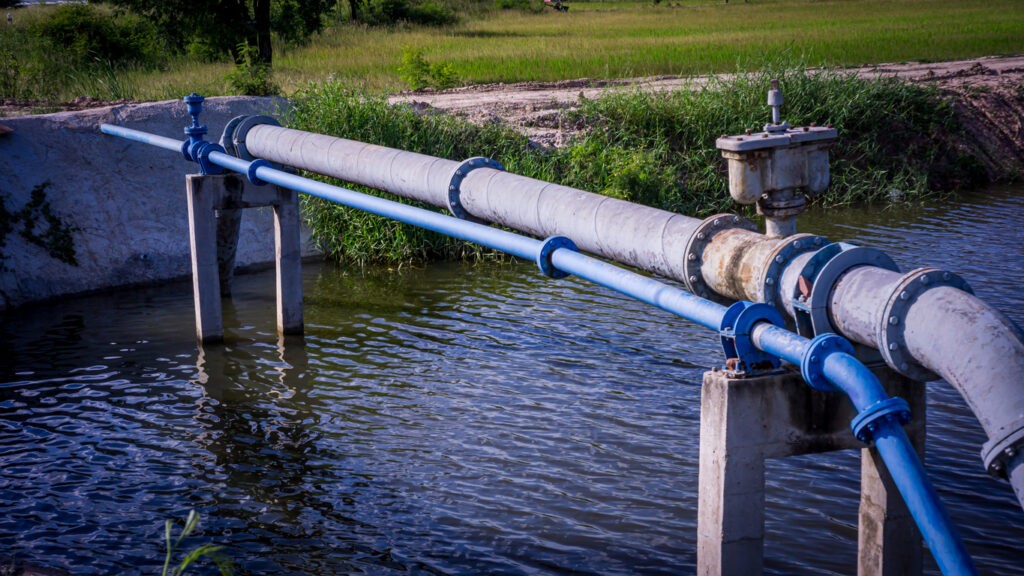
Kazinform has reported that following a  meeting in Astana between Kazakh  Minister of Water Resources and Irrigation, Nurzhan Nurjigitov, and Uzbek Minister of Water Management Shavkat Hamroev, Uzbekistan is to provide Kazakhstan with an additional 500 million cubic meters of water until the end of the irrigation season. Since April 1, Uzbekistan has supplied more than 4 billion cubic meters of water to Kazakhstan through the Syr Darya. It had been previously agreed that Uzbekistan would provide Kazakhstan with 3.7 billion cubic meters of water within six months but the Uzbek side fulfilled its obligation in just 4 months. The report states that the key goal was to fully satisfy the demand for irrigation water from farmers of  Kazakhstan's southern regions and today, the Shardara Reservoir holds 1.5 billion cubic meters of water, almost 500 million more than last year. A total of 4 billion cubic meters of water entered the Shardara reservoir. Commenting on the success of the project, the official representative of the Ministry of Water Resources and Irrigation of Kazakhstan, Moldir Abdualieva stated, “Due to the preliminary agreement with our neighbors on the working order of the Toktogul and Bahri-Tajik reservoirs, water regularly flows to the Kazakh part of the Dostlik interstate canal. Now, 90 cubic meters of water per second comes to the country through this channel. This is enough to fully supply the farmers of the Turkestan region with irrigation water,”

SCO Opens Foreign Exchange Alliance for Yuan, Tenge, and Ruble

The Shanghai Cooperation Organization (SCO) has instigated an Alliance of Currency Transactions to increase the share of settlements in national currencies—the Kazakh tenge, the Russian ruble, and the Chinese yuan—in mutual trade between SCO member states. The main goal of the initiative, launched in Qingdao based on the Demonstration Zone of Regional Trade and Economic Cooperation within the framework of the SCO Capital Park, is to reduce dependence on the US dollar and the euro in international settlements and in turn, strengthen the economic independence of the organization's member countries and increase the stability of their financial systems. In addition, the Alliance will help simplify currency transactions, accelerate cross-border payments, and create a more transparent and efficient financial infrastructure between the SCO member countries. The initiative reflects the general move towards  strengthening economic cooperation within the organization, including China, Russia, Kazakhstan, Tajikistan, Kyrgyzstan, Uzbekistan, India, Pakistan, Iran, and Belarus. As previously reported, the SCO states are increasing the use of national currencies in mutual settlements. The creation of the Alliance was a step in the development of regional financial integration, and its launch underscores the growing interest of SCO countries in using their currencies in foreign economic activity.

EBRD Supports Kazakhstan’s Critical Raw Materials Sector

The European Bank for Reconstruction and Development (EBRD) says it is making its first direct equity investment in the graphite and critical raw materials sector in Central Asia by acquiring a stake in Sarytogan Graphite Limited, an Australian Securities Exchange-listed company involved in the exploration of the Sarytogan graphite deposit in the Karaganda region of central Kazakhstan. The EBRD’s investment of AUD 5 million (€3 million), representing a 17.36% shareholding in the company, and will finance Sarytogan Graphite’s development program, including preparing a feasibility study and meeting its working capital needs. According to the EU's critical raw materials (CRM) classification, graphite is a CRM mineral with a wide range of applications. It is used for producing electric vehicle batteries, the electric power industry, and metallurgy. The Sarytogan graphite deposit is one of the largest known graphite deposits in the world, with the potential to become one of the main suppliers of natural graphite in the region and beyond. The project aligns with the EU-Kazakhstan strategic partnership on raw materials, batteries, and renewable hydrogen. According to the country's Ministry of Industry and Construction, Kazakhstan produces 19 of the 34 critical raw materials listed by the European Union. Kazakhstani manufacturers currently supply the European market with metal and chemical products, including beryllium, tantalum, titanium, phosphorus, and ammonium metavanadate. Kazakhstan is among the world’s ten largest copper producers. It has the potential to produce battery raw materials such as nickel, cobalt, manganese, and lithium, which are essential for producing electric vehicles.

Central Asian Countries and Japan Hold Business Forum

Kazakhstan’s capital, Astana, hosted a business forum on August 9 as part of the "Central Asia + Japan" dialogue. The forum, which brought together more than 450 representatives from Central Asian countries and Japan, focused on strengthening economic ties and expanding cooperation in digitalization, transport and logistics, agriculture, and heavy industry. At the forum, over 30 bilateral documents were signed between companies and organizations from Kazakhstan, Kyrgyzstan, Tajikistan, Turkmenistan, and Japan on joint projects in infrastructure, science, technology, and other key areas. Documents signed between Kazakhstan and Japan include, among others, an agreement between the JSC Development Bank of Kazakhstan and Japan Bank for International Cooperation to finance joint projects in sectors such as energy (including alternative energy), infrastructure (including transportation), machine engineering, and the food industry. The Japanese bank is ready to invest $200 million. The company Kazakh Invest and Japanese company Fitech agreed to cooperate to produce fire-resistant materials in Kazakhstan and export the goods produced to other countries. JSC KazIOR and FUJIFILM signed a memorandum of understanding to develop modern mobile medical complexes for radiology, mammography, and endoscopy. LLP Kazakhmys Corporation, LLP Eurasian Machinery, and Hitachi Construction Machinery signed a memorandum of cooperation to develop a new mining project. Speaking at the business forum, Kazakhstan’s Prime Minister Olzhas Bektenov focused on the interaction of Central Asia and Japan in the transfer of advanced technologies and manufacture of products with high added value, noting the possibility of creating joint innovation clusters, technology parks, and incubators. Bektenov also urged the expansion of partnerships in developing rare earth metal deposits and implementing joint projects in the transport and logistics industry, emphasizing that Central Asia's transit potential opens up great opportunities for Japanese exports and imports.

Is Kazakhstan Preparing to Take on the Oil Consortium “Whales”?

The filed lawsuits and environmental claims totaling $159.6 billion against the consortiums operating the Kashagan and Karachaganak fields reflect the Kazakhstani government’s intention to revise the largest oil & gas contracts.   Kazakhstan, due to drought in Central Asia and a drop in oil production after the expiration of major oil & gas contracts by 2040, will likely look like Arrakis, the fictional desert planet from Dune: Part Two over whose valuable commodity the Great Houses struggle. Meanwhile, the Dune sandworms, which produce the spice needed by all the planets, resemble the consortiums developing the Tengiz, Karachaganak, and Kashagan fields – just as huge and just as rare, with almost no such production sharing agreements (PSAs) with 40-year stabilization contracts left in the world. In Kazakhstan, the three operators are known as the “three whales.”   What’s going on At the beginning of April 2024, Bloomberg published an article about the claims exceeding $16.5 billion brought forward by Kazakhstan, through PSA LLP, against the consortiums North Caspian Operating Company (NCOC), which is developing the offshore Kashagan field, and Karachaganak Petroleum Operating (KPO). The environmental regulator for the Atyrau region has additionally filed a claim for $5.1 billion against NCOC, while another lawsuit for $138 billion of lost revenue has been launched. Consortium Amount of PSA claim Environmental fine Total NCOC $13 billion + $138 billion $5.1 billion $156.1 billion KPO $3.5 billion $3.5 billion   The total amount is possibly the largest in the world for the oil & gas sector. Since 2016, PSA LLP has been the authorized state institution in the production sharing agreements for NCOC, KPO, and the Dunga project (previously owned by Total E&P Dunga GmbH; in November 2023, the state-owned KazMunayGas bought the TotalEnergies stake for an estimated $300 million). Kazakhstan’s Ministry of Energy is currently entrusted to run PSA LLP, while the stakes in Karachaganak and Kashagan are held by KazMunayGas (KMG) and the sovereign wealth fund Samruk-Kazyna (SK). The international arbitration claims followed inspections in 2013-20 that revealed costs not agreed upon with the Kazakhstani government (costs are reimbursed from oil revenues), along with failure to hit planned oil production targets and violations during tenders, etc. The initial amount of the lawsuit against NCOC was raised from $13 billion to $15 billion. The new claim for $138 billion relates to lost revenue “reflecting the calculation of the value of oil production that was promised to the government but not delivered by the field developers,” Bloomberg reported, citing sources familiar with the matter. The $5.1 billion fine levied by regional environmental regulators against NCOC has to do with the storage of excessive amounts of sulfur on site (more than a million tons more than permitted), as well as 10 other Administrative Code violations. Later, however, a court partially satisfied the consortium’s appeal. Deputy General Director of PSA LLP Nurlan Serik has made clear that Kazakhstan intends to challenge the consortium’s costs and failure to fulfil plans only through courts. According to various estimates, about $60...

Olympic Success Nudges Central Asians Closer Together in Paris

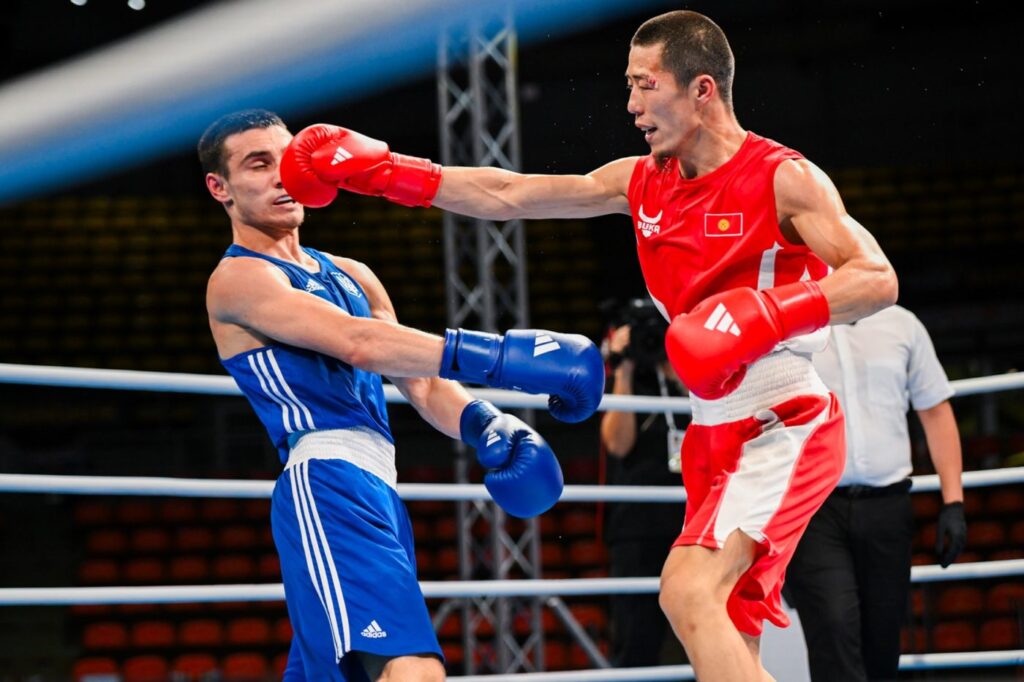
Uzbekistan’s athletes grabbed the most glory for Central Asia at the Olympic Games, delivering eight gold medals, mostly in boxing, and propelling the nation to 13th on the medal table in Paris. But the occasional displays of solidarity among competitors, coaches and fans from Central Asia were just as inspiring for those who want the region’s countries to draw closer together – at a time when the world seems increasingly perilous. One video clip from the games showed ebullient Uzbek fans in the stands with the flags of Uzbekistan, Turkmenistan, Tajikistan, Kyrgyzstan and Kazakhstan held aloft in the background. “This moment reflects the shared bonds of our region, showcasing Central Asia’s presence on the global stage at Paris 2024,” said the International Institute of Central Asia, a state-run center in Tashkent, Uzbekistan, that promotes regional cooperation. Then there was Uzbek coach Akmal Hasanov, who helped out Kyrgyz boxer Munarbek Seyitbek uulu because his personal trainer and head coach were absent. Competing in the 57kg category, Seyitbek uulu lost to Uzbekistan’s Abdumalik Khalokov in the final, but it was the first Olympic medal for a Kyrgyz boxer. “Unprecedented unity of fans from all five countries. Love, mutual cheering. Before it wasn't like this at all. I hope politicians will see a potential and will speed up integrational processes. People want it,” Nikita Makarenko, a journalist and producer from Uzbekistan, said on the X platform. The politicians see that potential, judging by recent meetings. On Thursday, Kazakh President Kassym-Jomart Tokayev and Uzbek counterpart Shavkat Mirziyoyev met in Kazakhstan and the leaders talked about cooperation, especially in trade. There are plans, for example, for an industrial facility on the border between the two countries that will speed up cargo delivery and reduce logistics costs. On Friday, Kazakhstan hosted a meeting with the leaders of Uzbekistan, Kyrgyzstan, Tajikistan and Turkmenistan, all former Soviet republics that today seek to balance their relationships with neighboring powers Russia and China, the United States and Europe, as well as relatively new partners in the Middle East and elsewhere. The goal of Central Asian solidarity – and regional security – is getting more attention as geopolitical tensions simmer, and the war in Ukraine, another former Soviet republic, shows little sign of resolution well into its third year. “Today we notice that the fundamental foundations of the system of international relations have changed. This is a dangerous phenomenon,” Tokayev said at the regional meeting. “It is clear that the current challenges can be overcome only through political dialogue and strengthening measures of mutual trust between our states.” There are moves to translate rhetoric into action. The forces of Kyrgyzstan and Tajikistan clashed as recently as 2022 over a border dispute, but negotiators of the two countries have pushed methodically toward resolution of the dispute. Last month, several Central Asian countries, plus Azerbaijan, held joint military exercises – Russia, the erstwhile security guarantor in the region, was absent. Water scarcity is acute in Central Asia, whose governments acknowledge they need to collaborate...