• KGS/USD = 0.01144 0%
  • KZT/USD = 0.00213 0%
  • TJS/USD = 0.10562 0%
  • UZS/USD = 0.00008 0%
  • TMT/USD = 0.28530 0%
  • KGS/USD = 0.01144 0%
  • KZT/USD = 0.00213 0%
  • TJS/USD = 0.10562 0%
  • UZS/USD = 0.00008 0%
  • TMT/USD = 0.28530 0%
  • KGS/USD = 0.01144 0%
  • KZT/USD = 0.00213 0%
  • TJS/USD = 0.10562 0%
  • UZS/USD = 0.00008 0%
  • TMT/USD = 0.28530 0%
  • KGS/USD = 0.01144 0%
  • KZT/USD = 0.00213 0%
  • TJS/USD = 0.10562 0%
  • UZS/USD = 0.00008 0%
  • TMT/USD = 0.28530 0%
  • KGS/USD = 0.01144 0%
  • KZT/USD = 0.00213 0%
  • TJS/USD = 0.10562 0%
  • UZS/USD = 0.00008 0%
  • TMT/USD = 0.28530 0%
  • KGS/USD = 0.01144 0%
  • KZT/USD = 0.00213 0%
  • TJS/USD = 0.10562 0%
  • UZS/USD = 0.00008 0%
  • TMT/USD = 0.28530 0%
  • KGS/USD = 0.01144 0%
  • KZT/USD = 0.00213 0%
  • TJS/USD = 0.10562 0%
  • UZS/USD = 0.00008 0%
  • TMT/USD = 0.28530 0%
  • KGS/USD = 0.01144 0%
  • KZT/USD = 0.00213 0%
  • TJS/USD = 0.10562 0%
  • UZS/USD = 0.00008 0%
  • TMT/USD = 0.28530 0%

Viewing results 2407 - 2412 of 4890

EU’s Borrell Reaffirms European Commitment to Cooperation with Kazakhstan

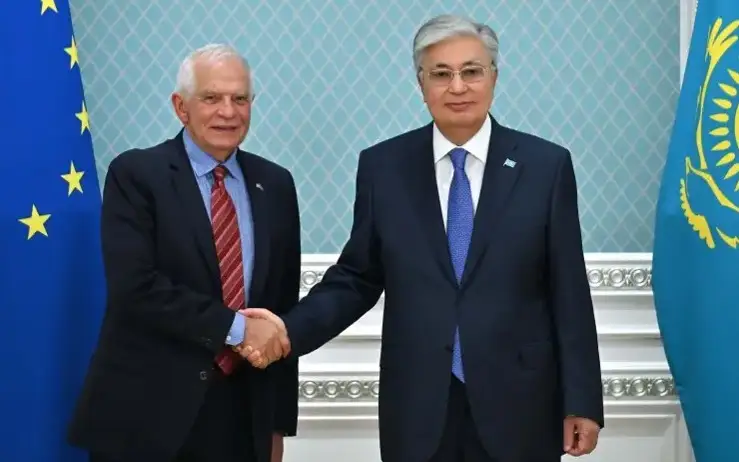
On August 1, the high representative of the European Union for foreign affairs and security policy, Josep Borrell, visited Astana and met with Kazakhstan's President Kassym-Jomart Tokayev, and Foreign Minister Murat Nurtleu. Explaining the purpose of the visit, Borell said “as my mandate as a representative of the European Union ends in three months, it was very important for me to come here to Astana to reaffirm the strong interest and commitment of the European Union to strengthen cooperation with Central Asia in general and with Kazakhstan in particular as the strongest country in the region.” “I used to say that four years ago, when I came to Brussels, Central Asia was a little bit in the middle of nowhere – and now, you are in the middle of everything…Everything that matters between Europe and Asia goes through you”, he added. The EU High Representative also said, “Under the leadership of President Tokayev, Kazakhstan has embarked on the path of the wide range of political and economic reforms that we support”. Stressing Kazakhstan's strategic geographical position as a bridge between Europe and Asia, Borrell noted that the EU is Kazakhstan’s number one trade partner, representing more than one-third of all Kazakh exports, and the biggest investor in the country. Borrell’s meeting with President Tokayev covered progress of the Enhanced Partnership and Cooperation Agreement between Kazakhstan and the EU, a comprehensive accord aimed at enhancing political, economic, and social collaboration between the EU and Kazakhstan. Tokayev commended the high-level dialogue between Kazakhstan and the EU, notably the productive visit of European Council President, Charles Michel, and talks with the President of the European Commission, Ursula von der Leyen. “I think we reached many common views as far as our cooperation is concerned,” Tokayev said. He also lauded a memorandum signed by the Government of Kazakhstan and Ursula von der Leyen on the development of green hydrogen on November 7, 2022, during the COP27 climate conference in Sharm El-Sheikh, calling it “a very concrete step forward in terms of mutual cooperation”. Borrell commented that they had "discussed key political and economic reforms in Kazakhstan and topics of mutual interest in the challenging geopolitical context. We appreciate Kazakhstan’s principled support to the UN Charter and commitment to international law." Borrell also met with the Minister of Foreign Affairs of Kazakhstan Murat Nurtleu. Speaking about the Ukraine war, Borrel stated: "We encourage you to take further steps in order to make this war reach an end, and to use your influence for that." Also on the agenda were cooperation in transport and logistics, digitalization, civil aviation, agriculture, use of critical raw materials, and energy. According to Kazakhstan’s Foreign Ministry, the European Union is Kazakhstan’s leading trading and investment partner, accounting for more than 30% of Kazakhstan’s foreign trade and investments. In 2023, trade between Kazakhstan and the EU amounted to $41.4 billion. In January-May 2024, bilateral trade reached $20.2 billion, showing a 14.1% increase compared to the same period last year ($17.7 billion). The...

China Expands Footprint in Central Asia

In July, Chinese leader Xi Jinping, architect of the Belt and Road economic initiative, traveled to Kazakhstan for a meeting of the Shanghai Cooperation Organization, a security group whose founding members include several Central Asian countries. There, Xi warned against the threat of “external interference” and celebrated Chinese collaboration with President Vladimir Putin of Russia, the region’s other traditional power. Then he visited Tajikistan, a security partner that borders China and Afghanistan. Europe and the United States, which want to counterbalance Chinese and Russian sway in Central Asia, were watching. Last week, several analysts affiliated with Western institutions held a Zoom discussion titled "The China-Central Asia Crossroads." It was hosted by the Center for the National Interest, a non-profit group based in Washington – a few blocks from the White House. Here are excerpts from the analysis:   Balancing China and Russia: Temur Umarov, a fellow at the Berlin-based Carnegie Russia Eurasia Center: There is a misconception that “China is somehow replacing Russia” as the main partner in Central Asia because of unease over Russia´s full-scale invasion of Ukraine in 2022. “The reality is much more nuanced and detailed,” Umarov said. Since the end of the Soviet Union in 1991, he said, Central Asian countries have always looked for “diversified ties with the world” and “Central Asia wants to have China’s presence be enlarged into other spheres and to have a counterbalance in the face of Russia.”   Elizabeth Wishnick, an expert on Sino-Russian relations at the Center for Naval Analyses and the Weatherhead East Asian Institute at Columbia University: “Central Asians wanted to diversify away from Russia to have more choice. China is not necessarily the only partner they want. And they they've been trying, especially recently, to engage with European countries, with India, with Iran, with Turkey, with a broader range of countries.” Wishnick, who traveled recently to Central Asia, said some people described Russia as “toxic” in private conversations. She also said: “You see a lot of caution about the relationship with China in terms of the lack of transparency of some of the projects that China is investing in, the potential environmental consequence of some of these projects.”   Brian Carlson,  a research professor at the Strategic Studies Institute of the U.S. Army War College: There is “a little bit of slippage of Russian influence in the region,” although Putin has worked to maintain it with frequent meetings with Central Asian leaders, Carlson said. He noted that, after Putin visited China in May, he called the leaders of Kazakhstan and Uzbekistan to update them on the trip. Even so, China’s influence is increasing. “And so, this does pose challenges for the Central Asian countries. In the past, they've kind of tried to play Russia and China off against each other. To some extent, that will be more difficult given that China and Russia have a very close partnership. So, it will be difficult for Central Asian countries to navigate great power relations in the coming years....

SCO and Afghanistan on the Cusp of a New Relationship

The hype surrounding the recent summit of the Shanghai Cooperation Organization Council of Heads of State in Astana has died down, and the expert community has offered differing takeaways, with some experts optimistic and others cautious. Few, however, have considered what new this summit delivered on Afghanistan. In general, what is the role of the Shanghai Cooperation Organization (SCO) in resolving the political issues around long-suffering Afghanistan and rebuilding its economy? Despite the SCO’s previous hands-off approach to Afghan affairs, the issue of Taliban-ruled Afghanistan was raised for the first time at the highest level of the SCO in Astana, which gives hope that the organization will expand its role. In their remarks, almost every SCO head of state touched on Afghanistan in essentially the same vein, stating the need for peace, stability and security, while underlining the fact that Afghanistan is an integral part of Central Asia. Indeed, Afghanistan was mentioned in the final declaration of the Astana summit, with Member States “reaffirming their commitment to asserting Afghanistan as an independent, neutral and peaceful state free from terrorism, war, and narcotic drugs [and voicing] their readiness to support the international community’s efforts to facilitate peace and development in that country.” At the same time, there was a clear message to the Taliban that “the establishment of an inclusive government involving multiple representatives of all ethnic and political groups of Afghan society is the only way toward attaining lasting peace and stability in that country.” These statements represent a rather big step, considering that previously the SCO failed to find a consensus on Afghanistan and develop its own mechanisms to interact with Kabul. The creation of the SCO-Afghanistan Contact Group back in 2005 was rather a spontaneous reaction to the US-led coalition's Operation Enduring Freedom in the wake of the 9/11 terrorist attack. The SCO itself says the contact group was created because of the "concerns of the SCO countries about the negative development of the situation in Afghanistan and the intention of the SCO to establish a specific consultative dialogue with Kabul." While the contact group included the members’ permanent representatives to the SCO, only a few events were ever held. Indeed, interest in the contact group was only really apparent from the Afghan side, which was looking for SCO assistance in rebuilding the Afghan economy and SCO participation in implementing various energy and transport infrastructure projects and creating favorable conditions for Afghan goods to access the markets of SCO countries. However, none of this was realized. The SCO states preferred, as they still do, to conduct relations with Afghanistan bilaterally, and did not support the efforts of the SCO Secretariat to intensify the work of the contact group. In 2010, Uzbekistan directly indicated its interest in building relations with Afghanistan exclusively on a bilateral basis and stated that it would no longer take part in the contact group. In June 2012, Afghanistan’s application for SCO observer status was granted. Yet this step was more symbolic and failed to...

Japan to Offer Aid to Central Asia

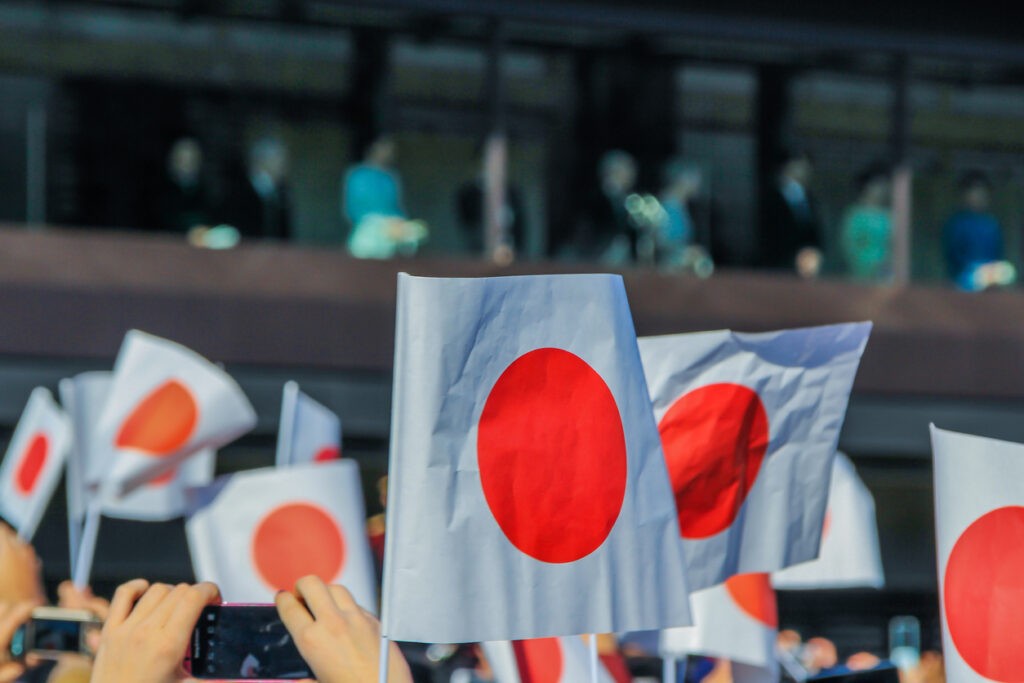
Japanese Prime Minister Fumio Kishida is set to announce an economic aid package for Central Asia. According to The Japan Times, details will be revealed during the Japanese prime minister's meeting with heads of  the five Central Asian states during his visit to Uzbekistan, Kazakhstan, and Mongolia from August 9 to 12. Tokyo is seeking to strengthen ties with the region by helping to create a trade route across the Caspian Sea that would link Central Asia and Europe, bypassing Russia. According to the Japanese government, the initiative will reduce the heavy influence of both Russia and China on the region and afford Central Asia economic independence. Kishida is expected to announce the economic support package in a joint statement following the six-party summit in Kazakhstan on  implementing a new trade route, helping to decarbonize the economy, and promoting people-to-people exchanges. Japanese companies will also help Kazakhstan and other Central Asian countries reduce their dependence on coal by providing technology and loans to develop natural gas production and processing. In exchange, the Central Asian states will send skilled labor to Japan.

Central Asia Picks Up Golds as Olympics Near Second Week

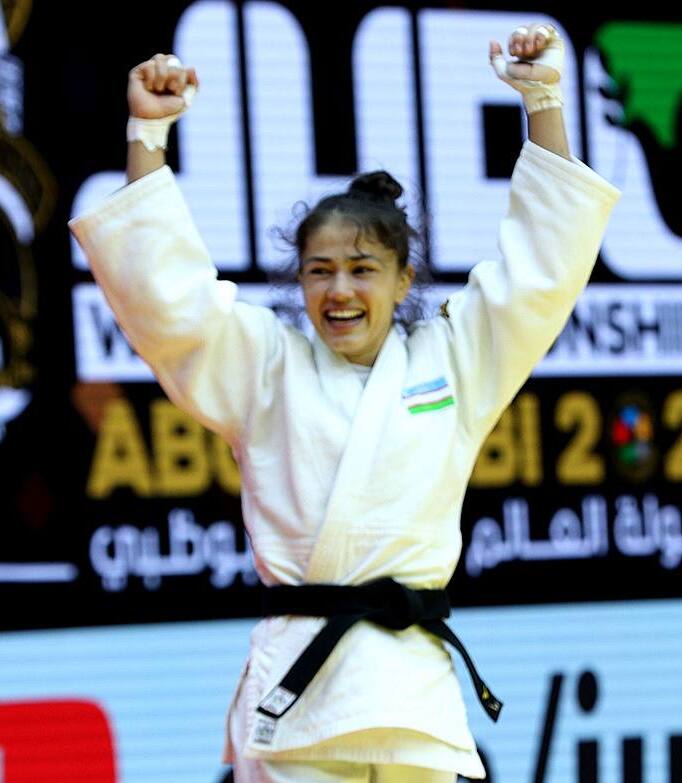
Diyora Keldiyorova, who became Uzbekistan’s first Olympic champion in judo, says she has an even bigger goal. “To change the life of women in Uzbekistan is my mission,” Keldiyorova said, according to the International Judo Federation. The Uzbek sensation spoke after her victory in the 52-kilogram class at the Paris Olympics on July 28. It was an extraordinary achievement for an athlete from a country without much of a tradition in women’s judo. On her way to gold, Keldiyorova defeated Uta Abe, the gold medalist at the last Olympics in Tokyo and a four-time world champion. The Uzbek’s win over Abe “may very well be remembered as one of the biggest upsets of these Olympic Games,” olympics.com reported. Abe was distraught after the defeat. Among those congratulating Keldiyorova was Timothy Smart, Britain’s ambassador to Uzbekistan. He said “it is a medal which shows all girls in Uzbekistan, that they can achieve anything they want!” “Olgʻa, Oʻzbekiston!” Smart said - Let´s go, Uzbekistan. -- Another gold medalist in judo from Central Asia was Kazakhstan’s Yeldos Smetov, who defeated home favorite Luka Mkheidze of France in the 60-kilogram class final. Smetov, 31, won silver at the Olympic Games in Rio de Janeiro in 2016, and Kazakhstan put him on a postage stamp to celebrate. Then he won bronze in 2021 at the Tokyo games, which were delayed from the previous year because of the pandemic. [caption id="attachment_21130" align="aligncenter" width="221"] Yeldos Smetov; image: Post of Kazakhstan[/caption] “Nothing is impossible,” Smetov said after winning gold in Paris, according to Kazakhstan’s Olympic committee. “I achieved this goal on the third attempt.” Smetov, who has been performing at a world-class level for many years, attributed the longevity of his career to family and knowing the limits of his body. “After each competition, I spend all my time with my family, not thinking about sport. I am also careful with the bigger injuries; I never go back to competition until fully recovered. A lot of rest is necessary especially when a career is this long," Smetov, who has five children, told the International Judo Federation. “The first day of this Olympic Games brought my gold for Kazakhstan and the second brought Diyora’s gold for Uzbekistan, so this is already an incredible games for Central Asia," Smetov said. -- The Paris games were a disappointment for one of the world’s top tennis players, Alexander Bublik of Kazakhstan, though. Russia-born Bublik lost 4-6, 4-6 to Taylor Fritz of the United States in the first round of the singles. He and his partner, Aleksandr Nedovyesov, fell by the same score in the first round of the doubles to the Brazilians, Thiago Monteiro and Thiago Seyboth Wild. “It was an honor to represent Kazakhstan at the Olympics once again,” Bublik said on Instagram. He is currently ranked 25th in the world. Another Kazakh tennis star, world No. 4 Elena Rybakina, had said just before the games that she was sick and would not participate. “After the Wimbledon tournament, I fell ill...

Russia’s “Internet Isolation” Strikes Central Asia

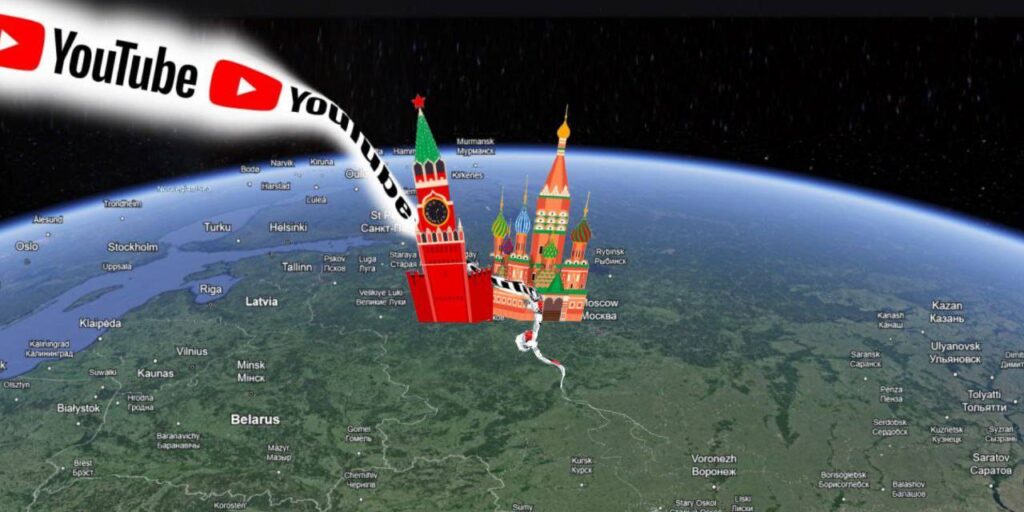
According to numerous reports, including stories from emigre journalists formerly of the radio station, ECHO who now broadcast out of Lithuania, Russia’s purported throttling of YouTube is affecting swathes of the platform’s users across Central Asia. On forums and social media, users have complained that the site is not working properly. This comes as the authorities in Russia are attempting to wean its citizens off of YouTube, one of the sole remaining sources of uncensored news, and onto its replacement, RuNet, as part of a wider drive towards “internet isolation.” In a press release to state-owned news agency, TASS, the Russian Foreign Ministry stated that “YouTube is not a neutral platform, it works out the political directives of Washington. In addition, YouTube ignores Roskomnadzor's demands to remove over 60,000 materials with violations.” Deputy Chairman of the State Duma Committee on Industry, Construction and Science-Intensive Technologies, former journalist Aleksandr Khinshtein has also stated that the “degradation” of YouTube.  is a “forced step aimed not against Russian users, but against the administration of a foreign resource, which still believes that it can violate and oppose our legislation with impunity.” Khinshtein, an architect of legislation targeting the LGBT+ community for being an “element of hybrid warfare” against Russia, is subject to sanctions in the UK for his part in Russia’s war in Ukraine. Despite these open admissions, however, the Kremlin has also sought to lay the blame for the disruption on Google for using "grey and semi-criminal schemes" to manage server payments, which have caused its local subsidiary to go bankrupt. In the meantime, caught in the crosshairs of this wider battle, some users across Central Asia are continuing to have problems accessing the platform, with speeds down by as much as 70%.