• KGS/USD = 0.01144 0%
  • KZT/USD = 0.00212 0%
  • TJS/USD = 0.10456 0.19%
  • UZS/USD = 0.00008 0%
  • TMT/USD = 0.28490 0%
  • KGS/USD = 0.01144 0%
  • KZT/USD = 0.00212 0%
  • TJS/USD = 0.10456 0.19%
  • UZS/USD = 0.00008 0%
  • TMT/USD = 0.28490 0%
  • KGS/USD = 0.01144 0%
  • KZT/USD = 0.00212 0%
  • TJS/USD = 0.10456 0.19%
  • UZS/USD = 0.00008 0%
  • TMT/USD = 0.28490 0%
  • KGS/USD = 0.01144 0%
  • KZT/USD = 0.00212 0%
  • TJS/USD = 0.10456 0.19%
  • UZS/USD = 0.00008 0%
  • TMT/USD = 0.28490 0%
  • KGS/USD = 0.01144 0%
  • KZT/USD = 0.00212 0%
  • TJS/USD = 0.10456 0.19%
  • UZS/USD = 0.00008 0%
  • TMT/USD = 0.28490 0%
  • KGS/USD = 0.01144 0%
  • KZT/USD = 0.00212 0%
  • TJS/USD = 0.10456 0.19%
  • UZS/USD = 0.00008 0%
  • TMT/USD = 0.28490 0%
  • KGS/USD = 0.01144 0%
  • KZT/USD = 0.00212 0%
  • TJS/USD = 0.10456 0.19%
  • UZS/USD = 0.00008 0%
  • TMT/USD = 0.28490 0%
  • KGS/USD = 0.01144 0%
  • KZT/USD = 0.00212 0%
  • TJS/USD = 0.10456 0.19%
  • UZS/USD = 0.00008 0%
  • TMT/USD = 0.28490 0%

Viewing results 2479 - 2484 of 4651

“Photography in Kazakhstan is Characterized by Local Flavor”: Interview with Photographer Veronika Lerner

Veronika Lerner is a successful, self-taught Fine Art photographer from Kazakhstan whose work has received international recognition. Early in her career, an image of her grandmother sitting near-naked in her kitchen, was selected for inclusion in the portrait collection of the prestigious 5th Exposure Award exhibition at the Louvre, Paris. Deemed controversial when it appeared online, it embodied Lerner’s interest and talent in conceptual photography. Her portraits have been placed in the international  ‘Shoot The Face’ competition as well as ‘My Amazing Kazakhstan’, and in 2016 and 2022, her series "Strangers" was featured in exhibitions in St. Petersburg. One of Kazakhstan’s finest contemporary photographers, Veronika continues to make a significant contribution to the development of Kazakh photography.   TCA: What inspired you to take up photography? I turned to photography in 2007, when studying to be an artist-designer at college. I had no formal art school training and though keen to develop my own style in drawing, was disillusioned when criticized for my use of shading. Photography allowed me more freedom and with no one editing what I was doing, I was able to express myself fully. TCA: How has your career evolved and what changes have you noticed in the field along the way? After college, I continued taking photos and a post with a print publication led to a second job in which I was required to photograph just about everything. Parallel to my job, I worked independently on creative shoots and by developing my practice, my career in photography was soon in full swing. During that period, my style became much lighter and more cheerful. I moved away from black and white contrast shots towards color and my images became airier and more dynamic.   TCA: Where do you find inspiration for your work? Are there any photographers in particular whose work you admire? I find inspiration in everyday life, new experiences, and the beauty of the world around me.  Henri Cartier-Bresson (1908-2004), is a brilliant photographer. Working as a photo-journalist for Magnum, he pioneered street photography and was the first Western photographer to work ‘freely’ in the former Soviet Union. Capturing seemingly unimportant moments of ordinary life, there is something elusive and eternal about his work.  I greatly admire photographers whose work resonates with the contemporary culture.  Irina Dmitrovskaya was a journalist prior to attaining a degree from Docdocdoc, St Petersburg School of Modern Photography. Focusing on identity and societal constructs, and issues concerning the LGBT+ community, her work raises questions about the Kazakh perception of beauty and femininity and last year, was lauded in the exhibition ‘Bodily Autonomies’ at the Queer Festival, Heidelberg. https://queer-festival.de/bodily-autonomies/ I am also inspired by black and white images in which by Moscow-based Anisiya Kuznina, https://anisiakuzmina.com  explores the concept of individuality; by Evgeny Mokhorev https://heyboymag.com/evgeny-mokhorev-life-through-the-lens-of-emotion-controversy/ for his raw, black and white evocative studies of St Petersburg’s marginalized youth, and by Didar Kushamanov https://t.me/s/kushamanov for his use of camera obscura. In addition to work by other photographers, my approach to subject matter...
Kazakhstan: Preconceived Notions and Changed Minds

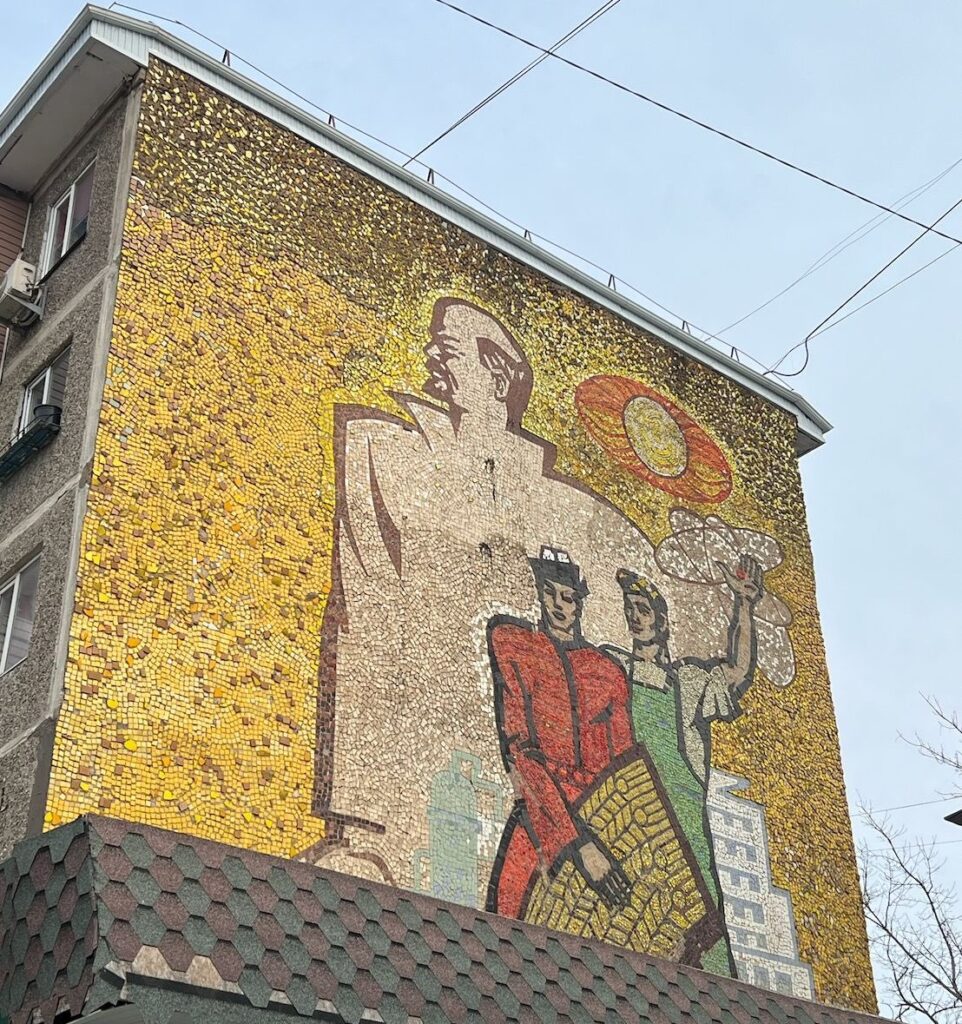
When I received the email stating that I had received a fellowship to move to Almaty, Kazakhstan, to teach English for a year, I nearly fell out of my office chair in Midtown Manhattan. I worked in a market research company fresh out of college but knew I needed to do something more exciting in my early 20s. I began studying Russian when I was 13 years old. I’m unsure what the exact catalyst for my language endeavor was. Still, coupled with my Ukrainian ancestry, Putin’s annexation of Crimea, and the Sochi Olympics, it seemed like a no-brainer to me. At this point in my life, I lived outside of Boston, Massachusetts, and began taking Russian classes on Saturdays in Brookline to satiate my desire to learn. After a year of classes, I enrolled in a Russian language immersion camp in Bemidji, Minnesota, for three summers. Following that, I received a grant from the US State Department to immerse myself in the culture for a summer in Narva, Estonia. I knew where and what I wanted to study after graduating high school. I started my studies at the Elliott School of International Affairs at George Washington University in Washington, DC, declared a major in international affairs with a minor in Russian language and literature, and never looked back. After graduation, my plans were in the air. I had been looking into opportunities to move to Russia or Ukraine, but this was now off the table due to the war. I worked in New York to get sorted, earn money, and start a new chapter of my life. At some point in April 2023, I received an email from a fellowship I had applied for in October 2022. I was initially placed on the waitlist, but I was notified that I had been accepted for the 2023-2024 cohort to relocate to Almaty, Kazakhstan. “Oh my god,” I said at my desk. My coworker asked me what had happened. I said, “I’m moving to Kazakhstan. “Kazakhstan, like Borat’s Kazakhstan?” she asked. [caption id="attachment_19278" align="aligncenter" width="370"] Horses graze along the way to Furmanov Peak – Almaty, KZ[/caption] Preconceived notions After the excitement had settled and my family and friends were informed of my plans, questions began to arise. “Why Kazakhstan?” “Is it safe there?” “Is that next to Serbia?” “Does the Taliban rule Kazakhstan?” It is shocking how little most Americans know about the 9th largest country on the planet. Spanning two continents with nearly 20 million people, most Americans only know Kazakhstan from Sasha Baron Cohen’s 2006 film, Borat, and nothing more. When they hear the word “Kazakhstan,” they picture a backward and socially undeveloped post-communist country in which people commute by donkey carts, are misogynistic, and are openly antisemitic. While the depiction of Kazakh culture is inherently incorrect, the message is stuck, and the film has become synonymous with Kazakhstan in the American mind. However, most Americans probably can’t find it on the map. I explained, “Kazakhstan is in Central Asia,...

Who is Aidos Sadykov?

The tragic shooting of Kazakh journalist, Aidos Sadykov is suspected to be collateral damage in Russia’s war of aggression against Ukraine and the ensuing geopolitical subversions. Aidos Sadykov and his wife Natalya Sadykova host the YouTube channel @base-kazakh, which, according to their description, “covers events in Kazakhstan and the world and does not depend on the authorities, oligarchs and grants”. The couple left Kazakhstan in 2014 following allegations of slander against Sadykova by Kazakh MP Maral Sergazievich Itegulov, a charge no longer considered a criminal offense as of 2020. Since 2014, they have resided in Kyiv, where they have received refugee status. Sadykov has criticized the Kazakh authorities in the regional press since 2000. Also a former chair of the Aktobe NSDP Party Azat branch, Aidos Sadykov was imprisoned for hooliganism in 2010, but was released early under amnesty. He later founded the "Gastat" opposition movement after leaving the NSDP and establishing an independent trade union at CNPS-Aktobemunaigas, a local oil and gas enterprise. He is associated with another outspoken controversial figure, Mukhtar Ablyazov, who has sought political asylum in France. Ablyazov faced murder charges in Kazakhstan following the death of a bank CEO – the same bank that Ablyazov later took over and reportedly defrauded. He now faces judgements against him exceeding $5 billion in UK and U.S. courts related to laundering stolen funds. Sadykova worked for the newspaper Respublika, which was allegedly funded by Ablyazov. The apparent assassination attempt of Sadykov has raised questions about motive. Kazakhstan parliamentary deputy, Ermurat Bapi has suggested that the assassination attempt was due to “third forces” that want to create a “quarrel between Kazakhstan and some countries”. Sadykova has accused President Tokayev of ordering the assassination. The couple’s YouTube channel has been consistently critical of Kazakhstan’s government, starting with President Nazarbayev’s term and continuing under new President Tokayev. Since the war broke out in Ukraine, Sadykov and his wife have claimed that Kazakhstan’s leadership is colluding with the Kremlin. According to The Guardian, Sadykov is a “prominent blogger with more than 1 million subscribers on YouTube.” While the YouTube channel does in fact show 1.01 million followers, Washington University’s public tool demonstrates that at least 88% of these are dead accounts (meaning they show no activity), according to an analysis conducted three days after the attack on Sadykov. On June 20, the Prosecutor General of Kazakhstan announced that they had reached out to the Prosecutor General of Ukraine and offered their full assistance in solving the crime by involving highly-skilled investigators from Kazakhstan.

Alternative Transport Routes in Kazakhstan: Potential and Current Opportunities

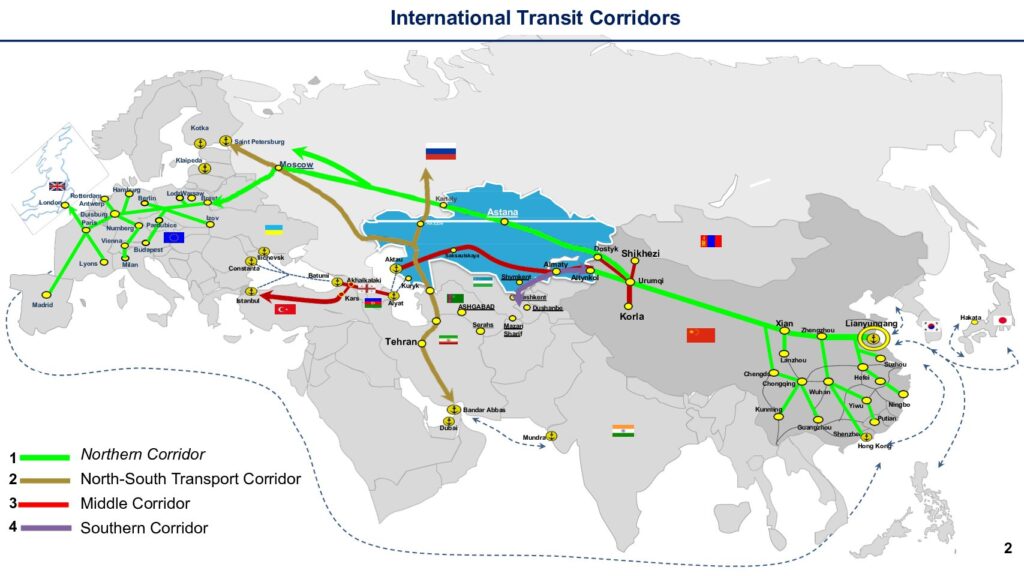
Kazakhstan's President Kassym-Jomart Tokayev has ordered alternative transportation and shipping routes to be drawn up and supply routes to be diversified. Amid ongoing geopolitical shifts, routes passing through Kazakhstan's territory are already seeing relatively high freight flows. Still, to develop them, further measures are needed to enhance international logistics cooperation and increase efficiency along the entire length of the transport corridors. The country's deputy minister for transport Maksat Kaliakparov kindly agreed to answer some questions from The Times of Central Asia. TCA:  Not so long ago, Kazakhstan Temir Zholy (KTZ) announced the launch of a project to create a digital corridor as part of the Trans-Caspian International Transport Route (TITR) with the company Global DTC Pte Ltd. What countries are to be integrated into this project? Can a similar digital trade corridor be considered for the International North-South Transport Corridor (INSTC)? MK: As you know, on August 16, 2022, KZT and the Singaporean company PSA concluded a memorandum according to which one of the identified areas for cooperation is developing a digital trading corridor (DTC). Towards this, a multimodal DTC has been developed. Using this platform, three container trains were sent on the route from Xi'an (China) to Absheron (Azerbaijan) as a test run. Integration with the railway systems of Kazakhstan and Azerbaijan has been carried out. Currently, the process of integration with Georgian systems is underway. Overall, the DTC platform allows for: entering into online contracts with freight forwarding companies; seeing and receiving transportation tariffs from logistics companies; tracking the location of containers along all routes; getting customs status based on transit declarations when crossing borders along the route, etc. This year, it is also planning to launch the commercial operation of a container tracking service in Kazakhstan, Azerbaijan, and Georgia, and it is also planning to be integrated with a Chinese logistics operator. In addition, the Tez Customs platform has been developed. It is part of DTC, created to automate the customs clearance process of railway transit freight on the route China-Kazakhstan-Central Asia/Europe. Tez Customs allows for: automating the process of customs transit clearance at the Kazakhstan-China border; reducing the time of customs procedures (from 4-8 hours to 30 minutes); tracking the status of transit declarations and freight until final departure from the territory of Kazakhstan. Meanwhile, a similar DTC for the INSTC is being considered within the cooperation framework with the UAE company Abu Dhabi Ports. TCA: As part of the development of the INSTC, the railway administrations of Kazakhstan, Russia, and Turkmenistan are planning to create a joint venture (JV). Tell us about the plans for how it is to be formed. How will shares in the JV be allocated between the countries? MK: Yes, indeed, for the further development of the eastern branch of the INSTC, the participating countries are working to create an equal-term JV between KTZ Express, Russian Railways Logistics, and the Transport and Logistics Center of Turkmenistan. Today, the railway administrations of Russia, Kazakhstan, Turkmenistan, and Iran are creating a favorable tariff...

Kazakhstan to Build the Largest Poultry Farm in CIS

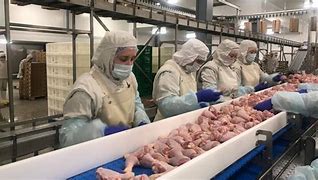
On June 20, Chairman of the Management Board of Kazakh Invest, Yerzhan Yelekeyev, and Vice President of JSC Aitas KZ, Rabiga Tokseitova met to discuss the Kazakh company’s plans for the "Almaty Poultry Farm Zhetysu". As reported by Kazakh Invest, the project costing more than $600 million, will have the capacity to process 240,000 tons of poultry, including 100,000 tons of sausages and delicacies, for distribution to local and foreign markets. To be constructed in the region of Almaty, from 2025-29, the enterprise will become the largest poultry farm in the CIS (the Commonwealth of Independent States, which unites post-Soviet republics) and provide 6,000 new jobs. The Aitas holding company is a leading producer of poultry, covering around 43% of the local market. Its assets include Makinskaya, Central Asia’s largest poultry farm, and Kazakhstan’s oldest poultry farm Ust-Kamenogorsk, with a total capacity of 150,000 tons per year. It also owns Almaty Breeding Poultry Farm Nauryz Agro, which as the largest in the CIS, provides 80 million hatching eggs per year for broiler chickens.  

Sustainable Aviation Fuel Production in Kazakhstan

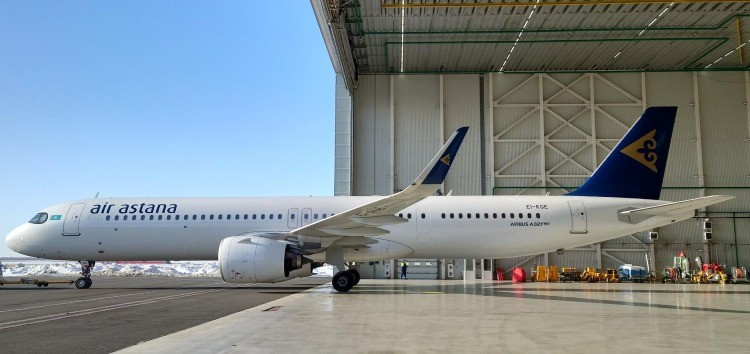
On June 20, Chairman of the Board of Kazakhstan’s national oil and gas company KazMunayGas (KMG) Askhat Khasenov attended a meeting with the management of the American company LanzaJet and the Japanese investment company Mitsui to discuss the production of SAF (Sustainable Aviation Fuel) in Kazakhstan. SAF is an environmentally-friendly version of Jet-1 fuel that reduces carbon emissions by 80%. According to KMG, a preliminary feasibility study for the possible construction of a SAF production facility in Kazakhstan has already been completed by KMG and Air Astana with financial assistance from the European Bank for Reconstruction and Development (EBRD). The next stage is developing a feasibility study for the actual implementation of the project. Air Astana is currently exploring the use of SAF by its air fleet. Regarding the concept of low-carbon development, the share of SAF consumption by the airline company will gradually increase to 5% by 2040, 15% by 2050, and 25% by 2060. Three large oil refineries owned by KazMunayGas are ready to produce Jet A-1 aviation fuel, which could be mixed with SAF in the future. LanzaJet recently opened LanzaJet Freedom Pines Fuels in the US, the world's first SAF production facility, with plans to produce 1 billion gallons of SAF by 2030.