• KGS/USD = 0.01144 0%
  • KZT/USD = 0.00212 0%
  • TJS/USD = 0.10456 0.19%
  • UZS/USD = 0.00008 0%
  • TMT/USD = 0.28490 0%
  • KGS/USD = 0.01144 0%
  • KZT/USD = 0.00212 0%
  • TJS/USD = 0.10456 0.19%
  • UZS/USD = 0.00008 0%
  • TMT/USD = 0.28490 0%
  • KGS/USD = 0.01144 0%
  • KZT/USD = 0.00212 0%
  • TJS/USD = 0.10456 0.19%
  • UZS/USD = 0.00008 0%
  • TMT/USD = 0.28490 0%
  • KGS/USD = 0.01144 0%
  • KZT/USD = 0.00212 0%
  • TJS/USD = 0.10456 0.19%
  • UZS/USD = 0.00008 0%
  • TMT/USD = 0.28490 0%
  • KGS/USD = 0.01144 0%
  • KZT/USD = 0.00212 0%
  • TJS/USD = 0.10456 0.19%
  • UZS/USD = 0.00008 0%
  • TMT/USD = 0.28490 0%
  • KGS/USD = 0.01144 0%
  • KZT/USD = 0.00212 0%
  • TJS/USD = 0.10456 0.19%
  • UZS/USD = 0.00008 0%
  • TMT/USD = 0.28490 0%
  • KGS/USD = 0.01144 0%
  • KZT/USD = 0.00212 0%
  • TJS/USD = 0.10456 0.19%
  • UZS/USD = 0.00008 0%
  • TMT/USD = 0.28490 0%
  • KGS/USD = 0.01144 0%
  • KZT/USD = 0.00212 0%
  • TJS/USD = 0.10456 0.19%
  • UZS/USD = 0.00008 0%
  • TMT/USD = 0.28490 0%

Viewing results 2497 - 2502 of 4651

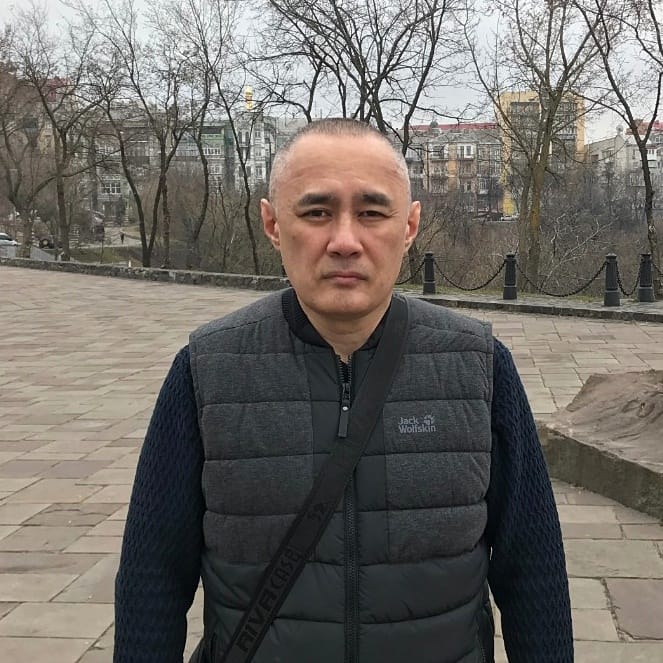
Controversial Kazakh Opposition Figure Aidos Sadykov Shot in Kyiv

An unknown man in Kyiv fired several shots at Kazakh activist and oppositionist Aidos Sadykov, who has been granted official refugee status in Ukraine. It is reported that the incident occurred in the Shevchenkivskiy district of the Ukrainian capital when Sadykov was approaching his car with his wife, Natalia, who previously worked for Mukhtar Ablyazov’s opposition paper, Respublika. The gunman used a silencer on the firearm. Sadykov's condition is currently assessed as serious; his wife was not injured. As this is a case involving a high-profile individual, the head of the regional police, Andriy Nebytov, was called to the crime scene. Sadykov is the author of the Telegram channel 'Base', which has 59,000 subscribers, and has been permanently residing in Kyiv since 2014. Over the years, he has criticized the current Kazakh authorities, including the current president, Kassym-Jomart Tokayev. In 2020 Base, together with the initiative to create the opposition Democratic Party, became the co-organizers of a rally in Almaty demanding a boycott of the upcoming parliamentary election. The Democratic Party of Kazakhstan, an unregistered political party, was founded and led by Zhanbolat Mamai, a former journalist who was convicted for receiving funds from Ablyazov in 2017. Sadykov and Mamai both actively supported the protests in January 2022 in Kazakhstan, widely seen as an attempted coup. He is wanted in Kazakhstan under the articles on the incitement of discord.

Eurasian Connectivity Comes One Step Closer at the 2024 CAMCA Forum in Bishkek

The wider Eurasia region took another step towards cooperation and connectivity last week, as the 10th annual CAMCA Regional Forum was held in Bishkek. CAMCA – standing for Central Asia, Mongolia, the Caucasus and Afghanistan – is an initiative to accelerate dialogue between governments, private enterprises and media figures from these ten nations. Organized by the Washington, D.C.-based Central Asia-Caucasus Institute and the Rumsfeld Foundation, this year’s Forum – the first such event to take place in Kyrgyzstan – featured over 300 delegates across its two days, and presented insights from over 70 speakers. Attendees came from 25 countries in total. Professor Frederick Starr, the Central Asia-Caucasus Institute’s chairman, used his opening address to call on the countries of the region to start preparing for a future within a cohesive international bloc. Dr Starr reasoned that Russia and China, imperial powers that have traditionally had a controlling presence in Central Asia, may see their global influence wane in the coming decade. This would give the countries of Central Asia, and their neighbors, more space to create projects that serve their economies directly. A leading CAMCA regional project is the ‘Middle Corridor’ trade route, which bypasses Russia to transport goods more efficiently between Europe and China. Discussions are also taking place concerning the creation of single business and tourist visas for the whole Central Asia region. The importance of collaboration between countries in the Caucasus and Central Asia to mitigate the impact of climate change has never been so great. Addresses by senior members of the Kyrgyz government highlighted the progress that Kyrgyzstan has made since the administration of president Sadyr Japarov began its work in 2021. The country’s deputy prime minister Edil Baisalov reported that Kyrgyzstan is on track to double its GDP to $30 billion by 2030, while the minister for digital development, Nuria Kutnaeva, spoke about the rapid digitalization of the country’s government services.  In a noticeably warm and collaborative atmosphere, the event nonetheless highlighted the barriers that prevent the ten countries from forming a tangible ‘CAMCA’ space in the present. A key goal is the harmonization of their legislation and policy directions; however, no delegates from Tajikistan could travel to Bishkek for the Forum, as otherwise solid relations between Tajikistan and Kyrgyzstan are still strained by a dispute over their common border. Likewise, Armenian voices were also absent this time, in light of several of the sessions featuring Azerbaijani speakers and talking points. The event featured only one guest from Turkmenistan.  Even in these conflicts, however, Central Asian diplomacy is at work. The conflict on the Kyrgyz-Tajik border, mainly in Tajikistan’s Vorukh district, is being resolved through negotiations between the two countries’ governments, which would have been unthinkable even five years ago. Meanwhile, Kazakhstan is acting as a mediator between Baku and Yerevan in the aftermath of the war in Nagorno-Karabakh. Other topics on the agenda included security priorities for Central Asia, digital innovation in business, cooperation with Afghanistan, transitions in global energy markets, and infrastructure projects...

Petition against ‘LGBT Propaganda’ in Kazakhstan: Opinions and Comments

A recent petition against so-called "LGBT propaganda", which gathered more than 50 thousand signatures, has resonated throughout Kazakhstan. According to legislation, the Ministry of Culture and Information is now obliged to consider this petition. The petition ‘We are Against Open and Concealed LGBT Propaganda’ authored by Kazakhstan’s Parents’ Union, followed the block in January, of a LGBT community website which the Ministry of Culture claimed to contain information “harmful to the health and development of children.” Reporting on the issue, TCA quoted the reactions of various public figures, including Khalida Azhigulova, a human rights activist and lawyer who pronouncing the petition illegal, claimed it transmitted “hatred and intolerance toward an entire social group.” She also asserted that “a ban on so-called LGBT propaganda would be a gross violation of Kazakhstan’s international human rights obligations.” Echoing her sentiment, feminist and activist Aigerim Kusayynkgzy, stated, “In terms of human rights, I hope such inhumane laws will not be passed.” Bagila Baltabaeva, head of the group leading the petition, reiterated its stance that through books, films, TV and social media, “same-sex love is being openly forced on our children,” promoting “unhealthy relationships.” She also warned that “those who work up the courage and speak out against LGBT propaganda are branded as retrogrades and conservatists.” Public reaction has been mixed and whilst many citizens have openly expressed their views, many have chosen to remain quiet for fear of repercussions and prejudice. TCA took to the streets to gauge current response. All contributors expressed a wish to remain anonymous. I was extremely concerned after reading this news. But at the same time, since I am sure that the president sees only democracy and approximation to European values as the way forward for our country’s development, I am not too worried about it. Kostanai advertiser  I think this is a bogus petition, accepted under the guise of a "hearing" state run by a  government that only purports to pay attention to the opinion of its citizens. I am sure that the majority voted on a voluntary-coercive basis, as is often the case. Many of those who voted, I believe, are civil servants, at whose expense such a large number – of signatures - was gained. This petition will be accepted because that's what the government wants. Other petitions which also garner 50 thousand votes, but not in the hands of the government, are for some reason never accepted. Taraz singer I have mixed feelings, but above all, am shocked by the level of response. How can it be that so many people are unhappy enough to willingly sign such a petition? Our country is riddled with problems in more urgent need of petitions. Almaty journalist In my opinion, there is no such thing as ‘LGBT propaganda’. One cannot become subsumed by the LGBT community through its exposure on TV or the Internet: a person is either born that way or not. Such a law will reduce the public presence of "non-traditional" relationships in society, but not...

Kazakhstan Developing Digital System of Flood Forecasting and Modeling

An information system for forecasting and modeling floods in Kazakhstan was discussed with representatives at a Cabinet of Ministers meeting, as reported on the official website of the Government of Kazakhstan. The information system includes four modules: data collection, analysis, forecasting, and modeling. It will use both operational and long-term data from Kazakhstan Ғarysh Sapary, Kazgidromet, and the National Center of Geodesy and Spatial Information. The system will be integrated with the Ministry of Emergency Situations' database on floods, mud-flows, landslides, avalanche-prone areas, and hydraulic structures. The Ministry of Digital Development, Innovation, and Aerospace Industry suggested utilizing the European program for remote Earth sensing in its operations. Deputy Prime Minister, Kanata Bozumbayev directed the ministry to also consider domestic digital solutions. Additionally, to develop a comprehensive data set, it is necessary to increase the number of hydrological and meteorological stations, perform bathymetric surveys of water bodies and rivers, and create a "digital relief" map of areas in the country that frequently experience flooding. In the spring of 2024, Kazakhstan experienced its largest flooding in 80 years. Ten regions of the country declared a state of emergency, and thousands of houses and buildings were flooded. Thousands of people were evacuated from flooded areas and are still in the process of recovering from the damage.

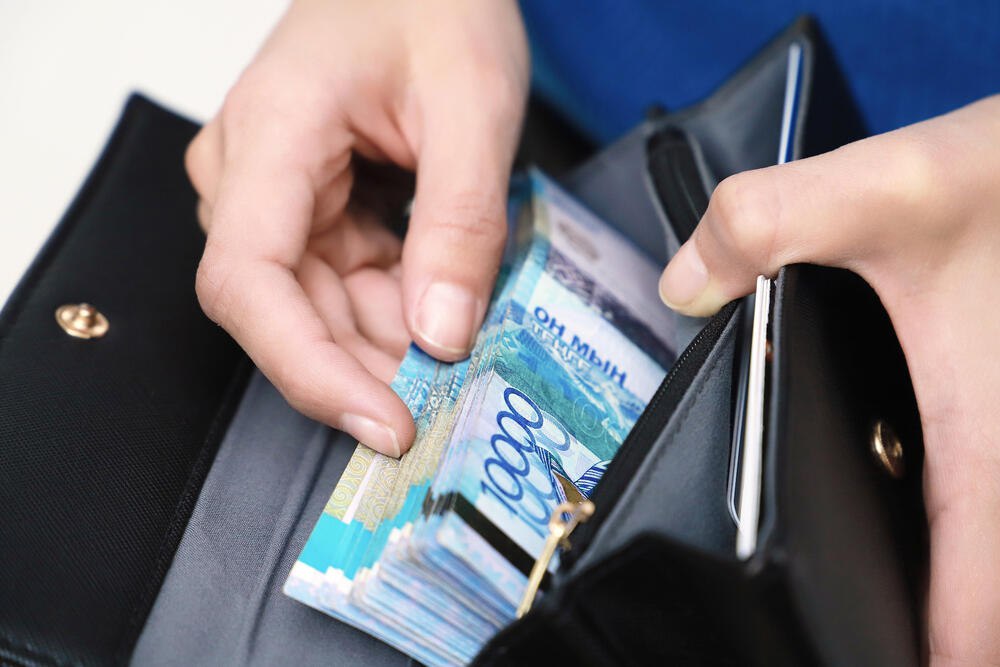
Kazakhstan in 80th Place in New Global Ranking of Average Wages

In a new ranking of the gross average salary in 196 countries recently published by CEO World Magazine, Kazakhstan is in 80th place. The average wage in the country amounts to $673 per month. Salaries are highest in the oil-producing western Atyrau and Mangystau regions, followed by the capital city Astana, and business capital Almaty. Wages are lowest in the southern regions of Zhambyl, Zhetysu and Turkestan, as well as in the North Kazakhstan region. Gross wages are the total sum of wages before taxes and other deductions, such as contributions to pension funds, health insurance, and others. Kazakhstan has the highest average salaries in Central Asia, followed by Turkmenistan ($654 per month), Uzbekistan ($351), Kyrgyzstan ($228) and Tajikistan ($169). The CEO World ranking states that in the first quarter of 2024, the average monthly nominal salary of workers in Kazakhstan amounted to 382,000 tenge ($844), which is 12.2% more in value terms than a year earlier. The index of real wages amounted to 102.7%, which shows an increase in purchasing power of 2.7%.

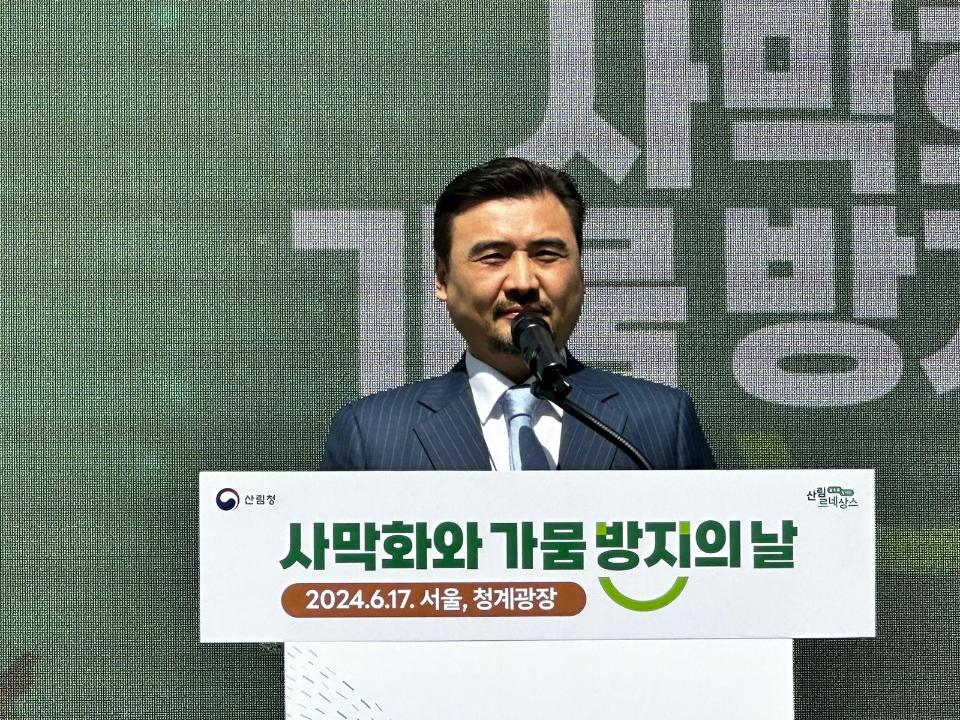
Kazakhstan and South Korea Forward Cooperation in Forestry

On June 17, Kazakhstan’s ambassador to South Korea, Nurgali Arystanov, participated in a celebration of the World Day to Combat Desertification and Drought, established by a UN General Assembly resolution in 1994. Organized in Seoul by the Korea Forest Service, the event was attended by major Korean companies, private and international organizations including the Asian Forest Cooperation Organization (AFoCO), as well as students from ecological clubs promoting anti-desertification activities. In his speech, reported by Kazakhstan’s Foreign Ministry, Arystanov noted the successful cooperation between Kazakhstan and the Republic of Korea in the development of forestry, including a joint project to plant saxaul on the desiccated bed of the Aral Sea. He also hailed Astana’s Kazakhstan-Korea Friendship Garden a “symbol of friendship between the Kazakh and Korean peoples.” The ambassador expressed his appreciation of the signing of a Memorandum of Understanding between the Ministry of Ecology and Natural Resources of Kazakhstan and the Korea Forest Service during Korean President Yoon Suk Yeol’s state visit to Kazakhstan on June 11-13. The document provides for cooperation in combating forest fires and the introduction of advanced technologies for monitoring forests using drones, artificial intelligence, and satellites. Progress on cooperation in the forestry sector was further discussed by Ambassador Arystanov and the Minister of the Korea Forest Service, Nam Sung-Hyun, during the former’s visit to Seoul.