• KGS/USD = 0.01144 0%
  • KZT/USD = 0.00211 0%
  • TJS/USD = 0.10526 0%
  • UZS/USD = 0.00008 0%
  • TMT/USD = 0.28530 0%
  • KGS/USD = 0.01144 0%
  • KZT/USD = 0.00211 0%
  • TJS/USD = 0.10526 0%
  • UZS/USD = 0.00008 0%
  • TMT/USD = 0.28530 0%
  • KGS/USD = 0.01144 0%
  • KZT/USD = 0.00211 0%
  • TJS/USD = 0.10526 0%
  • UZS/USD = 0.00008 0%
  • TMT/USD = 0.28530 0%
  • KGS/USD = 0.01144 0%
  • KZT/USD = 0.00211 0%
  • TJS/USD = 0.10526 0%
  • UZS/USD = 0.00008 0%
  • TMT/USD = 0.28530 0%
  • KGS/USD = 0.01144 0%
  • KZT/USD = 0.00211 0%
  • TJS/USD = 0.10526 0%
  • UZS/USD = 0.00008 0%
  • TMT/USD = 0.28530 0%
  • KGS/USD = 0.01144 0%
  • KZT/USD = 0.00211 0%
  • TJS/USD = 0.10526 0%
  • UZS/USD = 0.00008 0%
  • TMT/USD = 0.28530 0%
  • KGS/USD = 0.01144 0%
  • KZT/USD = 0.00211 0%
  • TJS/USD = 0.10526 0%
  • UZS/USD = 0.00008 0%
  • TMT/USD = 0.28530 0%
  • KGS/USD = 0.01144 0%
  • KZT/USD = 0.00211 0%
  • TJS/USD = 0.10526 0%
  • UZS/USD = 0.00008 0%
  • TMT/USD = 0.28530 0%

Viewing results 2491 - 2496 of 4749

EU-Funded Projects Strengthen Central Asia’s Trade and Economic Ties

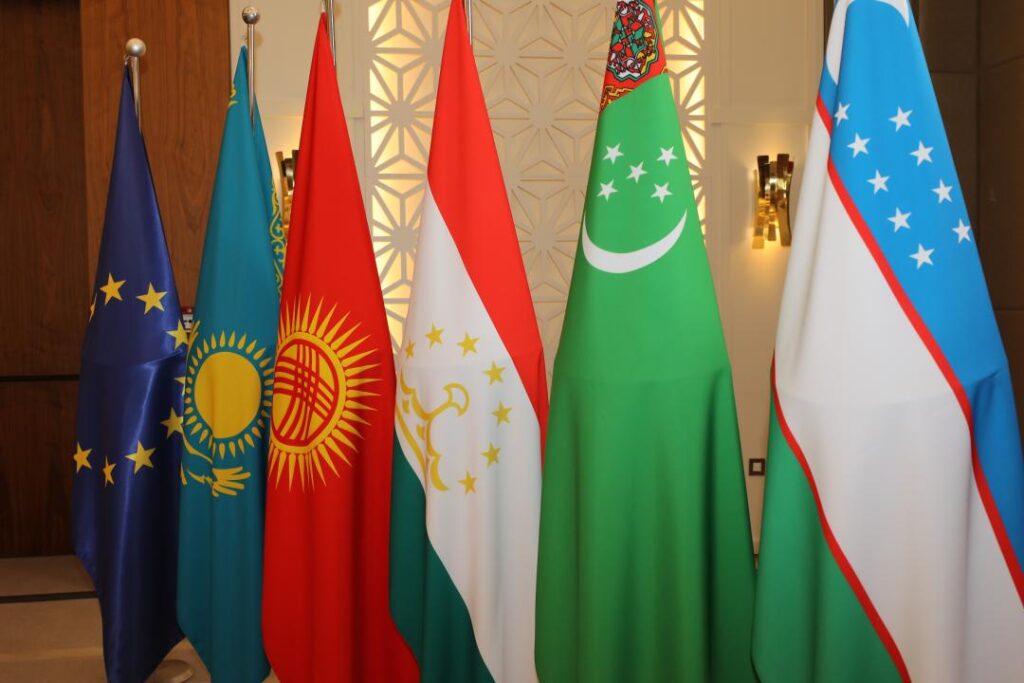
On 26 June, Almaty hosted the closing meeting of two regional projects in Central Asia funded by the European Union: the ITC Ready4Trade Central Asia and the OECD Policy Component of the EU Central Asia Invest Programme. As reported by the Delegation of the European Union to Kazakhstan, both initiatives have done much to support Central Asian countries' efforts to advance trade reforms, enhance competitiveness, foster connectivity and strengthen regional cooperation. The event brought together policymakers and key stakeholders from private and public sectors in Central Asia, as well as representatives of the European Union, the International Trade Centre (ITC), and the Organisation for Economic Co-operation and Development (OECD). "The European Union has long been supporting the governments of Central Asian countries in their business environment and trade and transport connectivity reform efforts together with international partners, including ITC and the OECD,” said Kestutis Jankauskas, Ambassador of the European Union to Kazakhstan. “Going forward, we will endeavour to develop the potential of the Trans-Caspian Transport Corridor together with our Central Asian partners to make it a competitive, multimodal and sustainable corridor that can bring Central Asia and Europe closer together. We look forward to the new EU-funded Prosperity Programme to be implemented by ITC and the OECD to support the implementation of this goal.” The ITC Ready4Trade Central Asia project has made significant progress in enhancing intra-regional and international trade across five Central Asian countries. In close collaboration with the governments, the project tackled obstacles to cross-border trade by simplifying and digitalising trade procedures, ensuring greater transparency and efficiency terms of cost and time. The project also established national SME Trade Academies, providing tailored on-the-job coaching and enhancing the capacity of SMEs to participate in the global market. The OECD has supported reforms in areas including  private sector development, internationalization, digitalisation, trade and transport connectivity, and resilience to shocks. Zhanel Kushukova, Vice-Minister of Trade and Integration of Kazakhstan, commented: “In recent years, significant work has been done in Central Asian countries to simplify and optimize trade procedures, reduce the time for trade operations and automate customs processes. This has allowed us to almost double the volume of trade turnover over the past five years, to $10 billion. In the medium term, Kazakhstan plans to increase trade turnover with Central Asian countries to $15 billion.” Kazakhstan’s QazTrade agency estimates that the implementation of the recommendations proposed by the above projects and the transition to paperless trade will lead to a 30 percent increase in trade turnover in the medium term.  

Kazakhstan’s Attempts to Address Disinformation and Media Freedom

On June 19, President Tokayev signed amendments to the law governing Kazakhstan's mass media. Meanwhile, public debate on foreign and domestic media that allegedly receive financing from abroad continues. While human rights activists focus on the principle of freedom of speech, political analysts are concerned about a string of disinformation campaigns attempting to destabilizing the country. The respective changes to legislative acts affect a wide range of issues. In particular, a new and broader concept of mass media has been introduced which includes internet resources. It is envisaged that a Unified Media Platform will be created to implement the state’s information policy, including grants for non-state media and accreditation of journalists to state bodies and organizations through a simplified accreditation procedure. In addition, the statute of limitations for claims brought against the media to refute information that does not correspond to facts and defames honor, dignity, and business reputation has been reduced to one year. Under the new law, Kazakhstan's Ministry of Foreign Affairs has the right to deny accreditation to foreign journalists "in case of a threat to the national security of the Republic of Kazakhstan." A few months ago, the Ministry did not issue accreditation to 36 correspondents from Azattyk. The publication subsequently filed a lawsuit, and in April, the media outlet and the Ministry reached a mediation agreement. While the new law focuses mainly on foreign funded domestic media, experts cite recent examples of pressures on Kazakhstan’s society and authorities through disinformation campaigns that mostly originated from abroad. For instance, a week ago in Kyiv, Ukrainian authorities claimed an assassination attempt was made on Kazakhstani national Aidos Sadykov, the creator of a YouTube channel called Bәse. Sadykov and his wife Natalya were placed on the wanted list in Kazakhstan in October 2023 for “inciting social, national, clan, racial, class, or religious discord.” Their inclusion on the list is linked to the January 2022 coup attempt and riots, as well as their ties to controversial fugitive billionaire Mukhtar Ablyazov, who currently has judgements against him in U.S. and UK courts exceeding $5 billion. Ablyazov faced murder charges in Kazakhstan following the death of the CEO of a local bank that he later took over and reportedly defrauded. According to government authorities, Sadykov repeated Ablyazov's calls for violence surrounding the January 2022 coup attempt as well as the Mazhilis elections in March 2023, where the channel openly called for organizing riots. Furthermore, on the one-year anniversary of the January 2022 events, his Bәse channel gave instructions to overthrow the government in Kazakhstan, following the example of events in Ukraine. The four-minute video includes information on how to create coordination committees for regime change. Natalya Sadykova has also worked for the Respublika newspaper, allegedly funded by Ablyazov. Aidos Sadykov had previously served two years in Kazakhstan for hooliganism and fled to Kyiv in 2014. The alleged perpetrators of the attack on Sadykov, Meiram Karataev and Altai Zhakanbaev, are Kazakhstani citizens. Shortly after the purported assassination attempt, Natalya Sadykova accused Kazakhstan’s...

Kazakh Poet Bakhyt Kenzheev Dies at 74

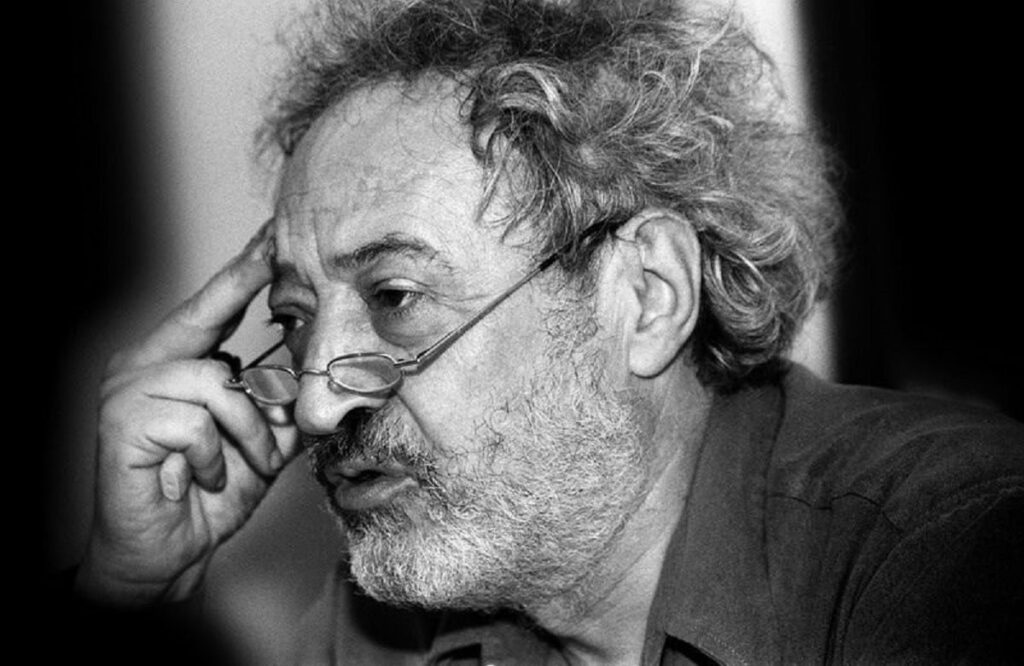
Bakhyt Kenzheev, a famous poet from Kazakhstan, has died at the age of 74 after a long illness. Kenzheev was born in 1950 in Shymkent, Kazakhstan, studied at the Faculty of Chemistry of Moscow State University, and debuted as a poet in 1977. His works were published in the leading publications of the Soviet Union — including Komsomolskaya Pravda, Yunost, Moskovsky Komsomolets. In 1982, Kenzheev emigrated to Canada, and in 2008, to the United States. He is the author of more than 20 books of poetry and prose books, and was honored with the Anti-Booker, Moscow Transit and Russian Prize, and was twice nominated for the Nobel Prize in Literature. Kenzheev himself considered himself a true Kazakh. "I was taken from Kazakhstan as a three-year-old, I grew up in Moscow, I am a Russian poet, my mother is Russian, but I am Kazakh. It never occurred to me to take a pseudonym and become, for example, Boris Karasev. People say to me: 'You don't speak Kazakh.' I don't care, and I feel that way," Kenzheev stated in one of his interviews.

Kazakhstan Stock Exchange Set to Recoup Shares from Moscow Exchange

The Kazakhstan Stock Exchange (KASE) has approached the Moscow Exchange (MOEX) with an offer to buy back its shares. The move was prompted by the US sanctions imposed on MOEX, Russian publication Frank Media reported, citing sources close to the Russian trading floor. Moscow Exchange presently owns 13.1% of KASE shares. It acquired the first part of this stake (3.3%) in early 2020 and increased it to the current level at the end of the same year. The KASE shares were obtained as part of a strategic partnership for the Russian side's technology. The stake has a market value of KZT 12.1 billion, equivalent to RUB 2.2 billion ($25.9 million). In mid-June 2024, the U.S. Treasury Department's Office of Foreign Assets Control (OFAC) included the Moscow Exchange in the SDN list and issued a license to curtail operations with MOEX until August 13. The UK has joined the sanctions against MosBirch. "KASE will consider continuing business relations with MOEX taking into account the sanctions restrictions," stated the Kazakh exchange, the day after sanctions against Mosbirzhya were imposed. Timur Suleimenov, chairman of the National Bank of Kazakhstan, who has repeatedly mentioned the possible buyout of MOEX's stake in KASE, was vague however, when citing various options. "The National Bank has 47% in KASE. We have our funds, so we will buy out [Moscow Exchange's stake if such a decision is made]," he said on June 13, immediately after the sanctions against the Russian exchange were imposed. The head of the republic's regulator also said that KASE is negotiating with MOEX and considering various options, including possibly buying back shares. Some indirect data point to the preparation for the buyout. In the middle of last week, KASE announced the convocation of the extraordinary general meeting of shareholders in a month, at which the only question to be discussed is the methodology change for determining the cost of shares of Kazakhstan exchange at their redemption. According to the FM interlocutor close to the Russian Central Bank, Mosbirzha may agree to sell its stake in the Kazakhstan Stock Exchange under these conditions. In the past, entering the capital and providing technologies to KASE had a strategic goal—to leave it in the zone of Russian influence, he noted. In particular, American Nasdaq could provide technologies for the Kazakhstan stock exchange. South Korea has  likewise expressed interest in KASE .

Chinese Investment in Deep Processing Grain Plant in Kazakhstan

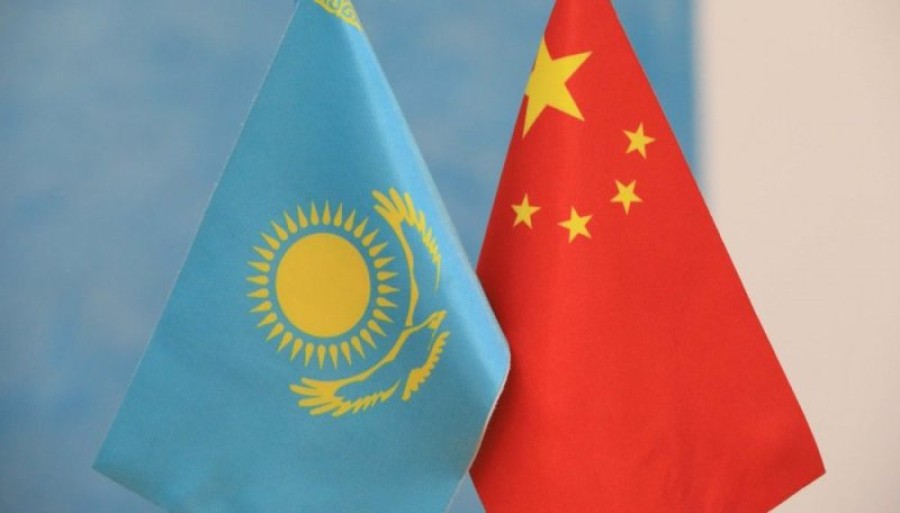
On 25 June, Deputy Prime Minister of Kazakhstan Serik Zhumangarin and Chairman of the Board of National Company Kazakh Invest Yerzhan Yelekeyev met the leadership of CITIC Construction in China, to discuss the construction of a plant for deep processing of grain. As reported by Kazakh Invest, CITIC Construction is one of China's leading construction and engineering companies, with a turnover of $2.5 billion. In 2023, the company implemented a similar project in Belarus. In Kazakhstan, the Chinese company plans to implement the project, primarily located in the Almaty region and with the creation of 2,000 jobs, in several phases. With a total capacity to process up to 1 million tons of wheat per year, the plant will produce fructose syrup, crystalline fructose, allulose, crystalline dextrose, sodium gluconate, gluten, and feed. It is anticipated that the cost of the build will exceed $1 billion. "We are ready to provide comprehensive support for the implementation of the project,” stated Yelekeyev. “Deep processing of grain is one of the priorities and promising areas in the strategic development of the economy of Kazakhstan. Our country is one of the largest wheat producers in the world and is ready to contribute to ensuring food security in the region, as the area of land for crops cultivation and livestock grazing exceeds 200 million hectares.”  

A Million New Jobs on the Horizon in Kazakhstan

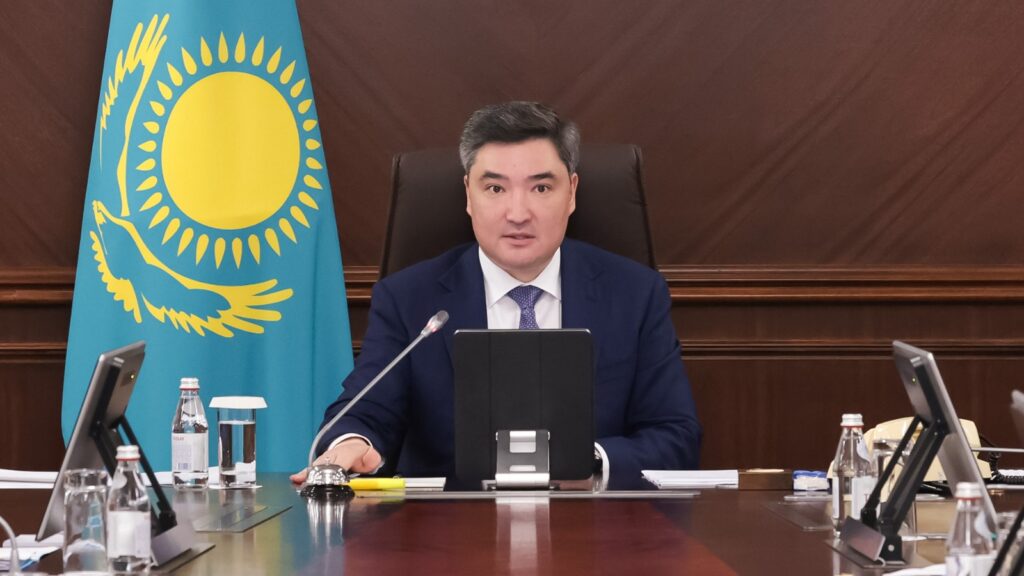
At a meeting on sustainable employment on June 25, Kazakhstan’s Prime Minister Olzhas Bektenov tasked his government to create employment for around a million citizens this year. Referencing the initiative, Minister of Labor and Social Protection of the Population Svetlana Zhakupova reported that in 2024, the government plans to ensure employment for 948 thousand Kazakhstan citizens. To date, about 353 thousand people, including 148 thousand youths, have found work, representing 37% of the target. Since the beginning of the year, 137 thousand people have secured state-subsidized jobs. Over 97 thousand have found employment under the Head of State's initiative "100 new jobs for every 10 thousand people"; over 103 thousand have filled employers' vacancies, and some 16 thousand have been employed by national project programs. Prime Minister Bektenov announced that the concept behind "Development of the Labour Market of the Republic of Kazakhstan for 2024-2029" is to create a maximum number of permanent jobs, including those for young professionals. Today, up to 25 percent of graduates of technical and vocational educational institutions, work outside their professions. To address the issue, Bektenov stressed the importance of establishing interaction with employers through means such as digital monitoring of employment which tracks projects requiring new labour. In theory, the implementation of measures to ensure employment will create 3.8 million quality jobs by 2029. The meeting also addressed issues concerning the employment of Kazakhstan citizens abroad and the protection of their rights. Regarding the above, the Prime Minister warned, "We are aware of situations where their salaries were not paid, medical services were not provided, contracts were grossly violated. Work is therefore underway to conclude relevant intergovernmental agreements -and-  to systematize the work of private agencies that employ our citizens abroad. Kazakh citizens should receive reliable guarantees under the contract."