• KGS/USD = 0.01144 0%
  • KZT/USD = 0.00213 0%
  • TJS/USD = 0.10456 0.19%
  • UZS/USD = 0.00008 0%
  • TMT/USD = 0.28490 0%
  • KGS/USD = 0.01144 0%
  • KZT/USD = 0.00213 0%
  • TJS/USD = 0.10456 0.19%
  • UZS/USD = 0.00008 0%
  • TMT/USD = 0.28490 0%
  • KGS/USD = 0.01144 0%
  • KZT/USD = 0.00213 0%
  • TJS/USD = 0.10456 0.19%
  • UZS/USD = 0.00008 0%
  • TMT/USD = 0.28490 0%
  • KGS/USD = 0.01144 0%
  • KZT/USD = 0.00213 0%
  • TJS/USD = 0.10456 0.19%
  • UZS/USD = 0.00008 0%
  • TMT/USD = 0.28490 0%
  • KGS/USD = 0.01144 0%
  • KZT/USD = 0.00213 0%
  • TJS/USD = 0.10456 0.19%
  • UZS/USD = 0.00008 0%
  • TMT/USD = 0.28490 0%
  • KGS/USD = 0.01144 0%
  • KZT/USD = 0.00213 0%
  • TJS/USD = 0.10456 0.19%
  • UZS/USD = 0.00008 0%
  • TMT/USD = 0.28490 0%
  • KGS/USD = 0.01144 0%
  • KZT/USD = 0.00213 0%
  • TJS/USD = 0.10456 0.19%
  • UZS/USD = 0.00008 0%
  • TMT/USD = 0.28490 0%
  • KGS/USD = 0.01144 0%
  • KZT/USD = 0.00213 0%
  • TJS/USD = 0.10456 0.19%
  • UZS/USD = 0.00008 0%
  • TMT/USD = 0.28490 0%

Viewing results 2569 - 2574 of 4651

Kazakhstan Changing Its Labor Laws to Better Reflect the Country’s Needs

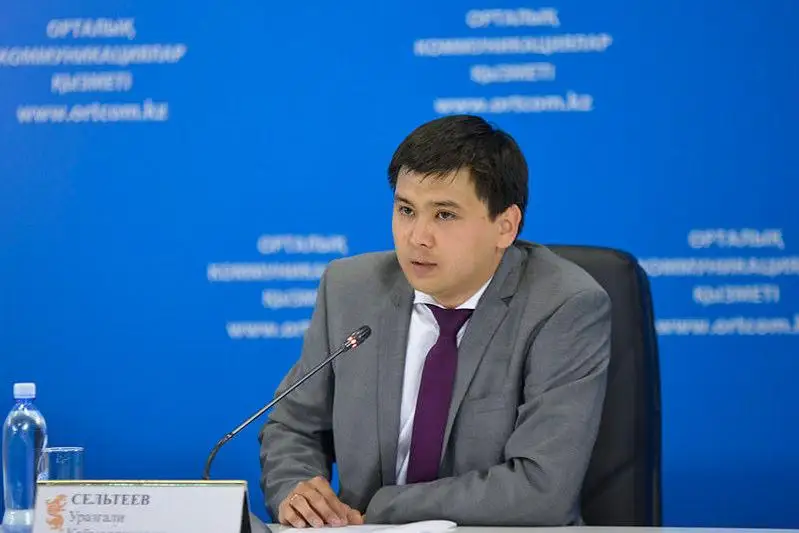
Kazakhstan has recently adopted regulations that make it more difficult for migrants and citizenship-seekers to enter the country. Urazgali Selteyev, a political scientist and director of the Institute for Eurasian Integration, told The Times of Central Asia that the legislation is being streamlined rather than tightened. According to some experts, Kazakhstan is the most attractive country in Central Asia for migrants. For many years, foreign workers have been entering the country, and illegal migration is high, as residents of neighboring countries are hired in the agricultural and construction sectors and are involved in transportation and services. In recent years, cases of detection and deportation of illegal migrants from the farthest regions, including Africa, have become more frequent. In addition, since 1991, more than one million 'kandas' (formerly known as oralmans) have arrived in Kazakhstan -- persons of Kazakh nationality resettling in the country according to established quotas. Often, kandas arrive from Uzbekistan, Kyrgyzstan, Turkmenistan, China, and Russia. Also, after the partial mobilization for Russia's war in Ukraine announced in September 2022 by Russian president Vladimir Putin, an unspecified number of draft evaders and their family members entered Kazakhstan. This situation forces the Kazakh authorities to take a stricter approach to regulating migration flows. Just the other day, the website “Open Normative Legal Acts” (“Open NLA”) posted a document highlighting the discussion that began two years ago. The document states that Kazakhstan will develop rules to determine whether kandas have a right to claim Kazakh nationality. In May this year, Kazakhstan's president Kassym-Jomart Tokayev signed the law “On introducing amendments and additions to some legislative acts of the Republic of Kazakhstan on the improvement of legislation in the field of migration and penal system.” This law provides new grounds for refusal of admission and restoration of Kazakh citizenship, such as ignorance of the state language at the elementary level, the basics of the Constitution of Kazakhstan, and a certain level of national history determined by an authorized body in the field of science and higher education. Simply put, applicants for citizenship will have to pass the exam. As explained by the Minister of Science and Higher Education Sayasat Nurbek, the test will include three components: the first is knowledge of the Kazakh language, the second is the basics of the Constitution, and the third is the basics of the history of Kazakhstan. “These tests will be required to be taken by persons who apply for citizenship. There are reservations on a separate list of honored: on the presidential list, minors and people with disabilities will be exempted,” explained Nurbek. According to the new migration rules, EAEU citizens can stay in the country for no more than 90 days within 180 days; other foreigners can stay for no more than 30 days, and a maximum of 90 days in six months. In the previous version of legislative acts, there were no restrictions concerning the 180 days, thus, foreigners lost the opportunity to repeatedly renew the terms of stay, leaving the country for...

Justice Prevails in Kazakhstan Murder Trial Exposing Rift Between Government and Old Regime

The trial of Kuandyk Bishimbayev, a former Minister of the Economy of Kazakhstan, was a watershed event representing the growing role of civil society in the country, as well as the new political leadership’s success in breaking a decades-old cycle sustained by corrupt elites. In spearheading reforms to align his country with international best practices, President Kassym-Jomart Tokayev has also answered people’s demands. But public worries that Bishimbayev, sentenced to 24 years in prison for killing his wife, may be pardoned as soon as Tokayev leaves office shows how fragile the country’s institutional development remains and how its progress may still be on a ticking clock. Kazakh politician Kuandyk Bishimbayev was convicted of murdering his common-law wife, Saltanat Nukenova, during an altercation between the couple in November 2023 at an Astana restaurant. Throughout the course of his trial, which started in March 2024, it became apparent that the violence caught on a CCTV camera was not a one-off incident, but the latest in a string of abuse. The video, also seen by the jury, includes scenes of a man grabbing a woman by the hair, kicking her, and hitting her in the face. Nukenova is said to have subsequently died from brain trauma. Several factors drew international attention to the case, including the high-profile names involved, broadcasted court proceedings, wide social media engagement, and the commentaries from human rights figures and opinion leaders. The ultimate verdict handed down to Bishimbayev, 24 years imprisonment in a maximum-security institution, is in many ways unprecedented in post-Soviet states, and became a harbinger of changes in both Kazakhstan’s justice system and society. Bishimbayev’s cousin and the director of the restaurant where Nukenova was killed, Bakhytzhan Baizhanov, was also sentenced to four years in prison.   How a tragedy precipitated positive change Saltanat Nukenova’s death, and the events following it, helped bring about new laws and perhaps even opened the way for further reforms. Just as importantly, they also increased legal literacy among Kazakhstan’s civil society. The government’s response, for its part, has garnered international praise. Critically, the public tragedy expedited the implementation of positive steps that President Tokayev had previously wanted to take. Contrary to popular belief, Nukenova’s murder was not the basis of the initiative to re-criminalize domestic violence. This change had already been proposed by Tokayev in 2019, but was opposed by legislators, some of whom reportedly had themselves been previously associated with cases of domestic violence or abuse. The events surrounding Nukenova’s death provided the government with an opportunity to overcome domestic opposition and take steps to correct the country’s course on violence against women and children. On April 15, 2024, Tokayev signed a landmark law criminalizing violence against women and children, reversing a 2017 decriminalization. The need for full-fledged judicial reforms has been advocated for by several international non-governmental organizations (NGOs) and public associations, as well as institutions in the United States and Europe. This is not surprising given that the country’s existing judicial system was largely formed under its first...

Kazakhstan and EU Seek Increase in Trade of Agricultural Products

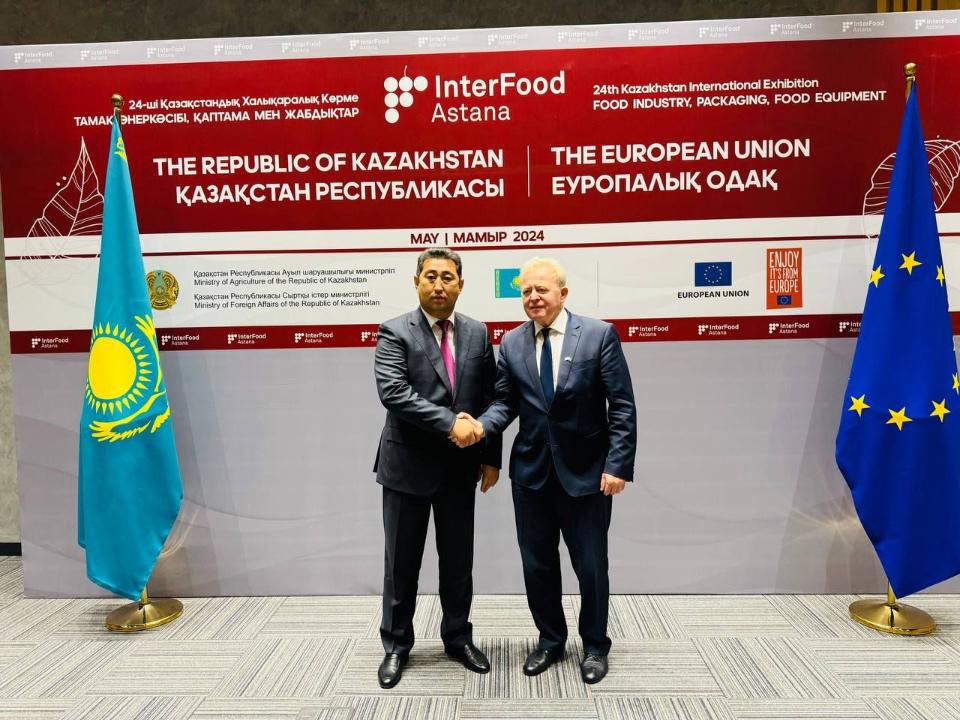
On May 29, Kazakhstan Agriculture Minister Aidarbek Saparov entered discussions with European Commissioner for Agriculture Janusz Wojciechowski for the removal of trade barriers for agricultural products. The conference took place during the European Commissioner’s first High-Level Mission to Kazakhstan, attended by a delegation of 40 agri-food businesses and organizations from across the European Union. Saparov and Wojciechowski agreed to continue discussions on the technicalities of opening the EU market for Kazakh honey, meat, and dairy products, as well as the export of pig and poultry products from EU countries to Kazakhstan. In 2023, Kazakhstan exported 650 thousand tons of wheat to EU countries, alongside flax seeds, rapeseed, and processed grain crops. Although Kazakh producers are not yet licensed to export livestock products to the EU, Kazakh fish is in high demand by European buyers. Of Kazakhstan’s 70 fish processing enterprises, 18 have been granted the right to export their products to the European Union countries. In 2023, Kazakhstan’s exports of fish products amounted to around 25 thousand tons, worth $85 million. About 11 thousand tons were exported to EU countries including Germany, the Netherlands, Denmark, and Lithuania for a total of $60 million. With a long tradition of livestock farming, Kazakhstan is naturally eager to export its meat, particularly horsemeat. Minister Saparov therefore proposed intensifying efforts to export such produce in tandem with securing approval to export  Kazakh honey to the EU. In a press statement ahead of his visit, Commissioner Wojciechowski announced, “This High-Level Mission is a strong signal of our intention to further strengthen our partnership and our bilateral trade in agri-food products with Kazakhstan.” Kazakhstan remains a key gateway for EU food and beverage producers seeking entrance to the Central Asian market, and Kazakhstan itself, is an important destination for EU agricultural exports, which in 2023, amounted to €702 million.    

Netherlands to Help Develop Kazakhstan’s Water Sector

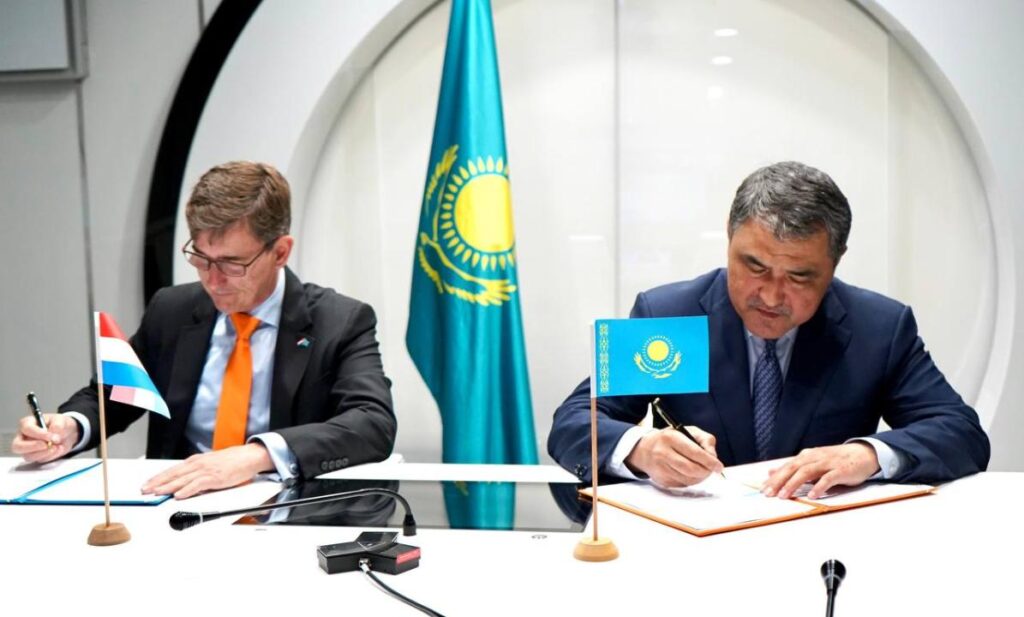
On May 29, the Ministry of Water Resources and Irrigation of Kazakhstan and the Ministry of Foreign Affairs of the Netherlands signed a Memorandum of Understanding on cooperation in the construction and use of water facilities, flood forecasting and flood control planning. The agreement will draw on an exchange of experience in the regulation and use of flood waters, as well as a study of Dutch river flow management. A further memorandum was signed with the IHE Delft Institute for Water Education to provide training of specialists and interaction with science and innovative technologies in the water industry. Minister of Water Resources and Irrigation of Kazakhstan Nurzhan Nurzhigitov welcomed the two countries’ formal agreement to further cooperation and expressed confidence that it would help implement large-scale projects, and through the exchange of experience and technology, unlock the potential of the domestic water sector.    

China and Central Asian Countries to Jointly Respond to Emergencies

China and the five Central Asian countries plan to sign a memorandum of understanding to establish a mechanism of cooperation in the field of emergency management, Wang Manda, head of the International Cooperation Department of China's Ministry of Emergency Management, said at a press conference in Beijing, Xinhua reports. Manda specified that the signing of the memorandum is expected to take place during a ministerial meeting between China and the Central Asian countries on emergency management to be held on May 30 in Urumqi, the administrative center of Xinjiang Uyghur Autonomous Region. “Both China and the five Central Asian countries, namely Kazakhstan, Kyrgyzstan, Tajikistan, Turkmenistan, and Uzbekistan, are at high risk of natural disasters, including earthquakes, floods, forest, and steppe fires. The upcoming meeting will review cooperation between the two sides in areas such as disaster prevention, damage mitigation, disaster management, industrial safety supervision, and comprehensive rescue work, and put forward new proposals to deepen practical cooperation,” Wang said. The two sides will also hold drills on emergency responses to accidents at oil and gas pipelines. Following the first China-Central Asia summit in May 2023, the emergency management agencies of China and the Central Asian states pledged to establish a new platform for regional cooperation and deepen cross-border cooperation in rescue operations. Over the past year, the Chinese side has held several events within the framework of cooperation on emergency management in the “China-Central Asia” format. Among them are forums of high-level think tanks on emergency management, seminars on improving industrial safety, and the exchange of experience in safety risks.

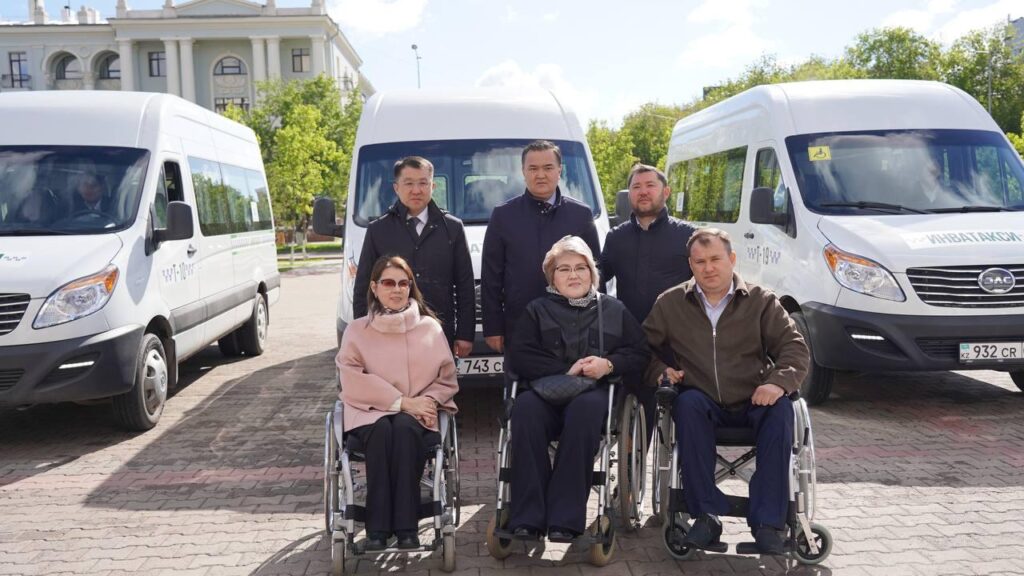
A Welcome Expansion of Kazakhstan’s Invataxi Fleet

On 28 May, Kazakhstan Transport Minister Marat Karabaev and Astana’s Mayor Zhenis Kasymbek attended a demonstration of advantages afforded to citizens with special physical needs and impaired mobility by vehicles adapted to serve their needs. Back in 2008, the Saby Charitable Foundation provided 16 Kazakh cities with a fleet of 62 Invataxis. Equipped with wheelchair-friendly hydraulic lifts, the specially adapted minivans have long facilitated travel for adults and children, opened up opportunities for work and study,  and contributed towards their social integration. Since then, the Ministry of Transport in collaboration with local executive bodies,  has continued to expand the fleet across Kazakhstan and this year alone, the number of Invataxis operating in the capital has risen by 26 to 145. A total of 119 Invataxi services with the combined fleet of 760 vehicles currently operate in the country’s regions.