• KGS/USD = 0.01144 0%
  • KZT/USD = 0.00212 0%
  • TJS/USD = 0.10456 0.19%
  • UZS/USD = 0.00008 0%
  • TMT/USD = 0.28490 0%
  • KGS/USD = 0.01144 0%
  • KZT/USD = 0.00212 0%
  • TJS/USD = 0.10456 0.19%
  • UZS/USD = 0.00008 0%
  • TMT/USD = 0.28490 0%
  • KGS/USD = 0.01144 0%
  • KZT/USD = 0.00212 0%
  • TJS/USD = 0.10456 0.19%
  • UZS/USD = 0.00008 0%
  • TMT/USD = 0.28490 0%
  • KGS/USD = 0.01144 0%
  • KZT/USD = 0.00212 0%
  • TJS/USD = 0.10456 0.19%
  • UZS/USD = 0.00008 0%
  • TMT/USD = 0.28490 0%
  • KGS/USD = 0.01144 0%
  • KZT/USD = 0.00212 0%
  • TJS/USD = 0.10456 0.19%
  • UZS/USD = 0.00008 0%
  • TMT/USD = 0.28490 0%
  • KGS/USD = 0.01144 0%
  • KZT/USD = 0.00212 0%
  • TJS/USD = 0.10456 0.19%
  • UZS/USD = 0.00008 0%
  • TMT/USD = 0.28490 0%
  • KGS/USD = 0.01144 0%
  • KZT/USD = 0.00212 0%
  • TJS/USD = 0.10456 0.19%
  • UZS/USD = 0.00008 0%
  • TMT/USD = 0.28490 0%
  • KGS/USD = 0.01144 0%
  • KZT/USD = 0.00212 0%
  • TJS/USD = 0.10456 0.19%
  • UZS/USD = 0.00008 0%
  • TMT/USD = 0.28490 0%

Viewing results 2575 - 2580 of 4651

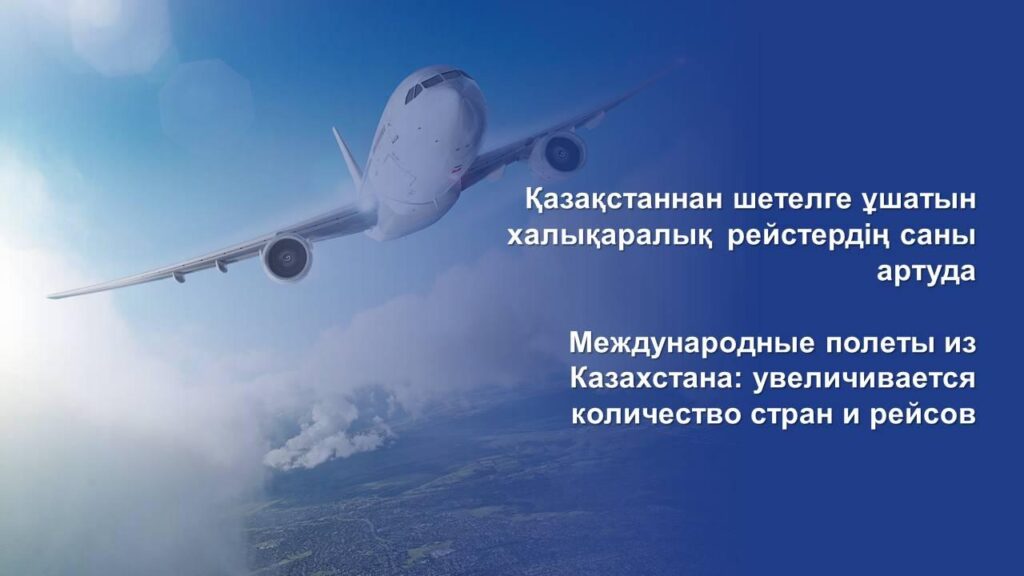
International Flights from Kazakhstan on the Rise

As reported by Kazakhstan’s Ministry of Transport, the country currently operates 567 international flights per week to 28 countries. The greatest number of flights are destined for Russia with 139 taking off each week to Moscow, St. Petersburg, Yekaterinburg, Mineralnye Vody, Kazan, Sochi, Krasnoyarsk, Novosibirsk, Makhachkala, and Grozny. Turkey is also a popular destination, with 125 flights per week to Istanbul, Ankara, and Antalya. The United Arab Emirates receives 58 flights per week in Dubai, Abu Dhabi, and Sharjah. China has 43 flights per week to Beijing, Urumqi, Xi'an, Hangzhou, and Sanya. Kazakhstan plans to significantly increase the number of flights to Vietnam, Thailand, Egypt, and Georgia this year.    

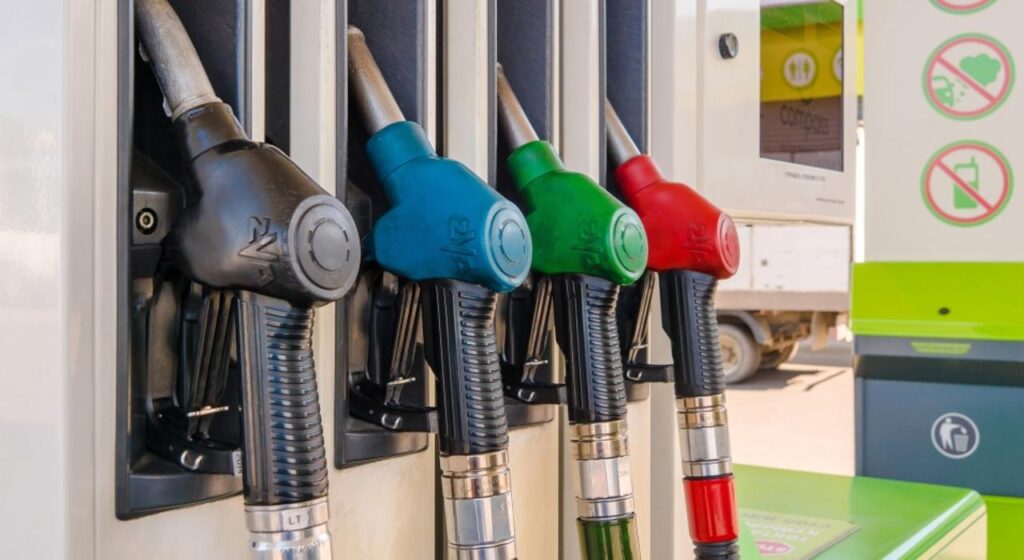
Kazakhstan Motoring Towards to Fuel Self-Sufficiency

Speaking at a government meeting on May 28, Kazakhstan Energy Minister Almasadam Satkaliev announced a significant rise in the country’s supplies of fuel, raising the potential for its future export. During the first quarter of the year, oil refined in Kazakhstan amounted to 5.9 million tons; an increase of 5.4% compared to spring 2023. Production of fuel amounted to 4.28 million tons. To date, reserves of diesel fuel at refineries and oil depots have increased to 612 thousand tons, 38 days’ worth; AI-92 gasoline, to 352 thousand tons, 30 days’ worth, and AI-95 gasoline, to 86 thousand tons, 30 days’ worth. The depth of oil refining and consequently, the production of light oil products (gasoline) has increased from 85% to 87%. Kazakhstan plans to increase the production of motor fuel by expanding production at the Shymkent oil refinery from 6 to 12 million tons by 2030, at the Atyrau Oil Refinery from 5.5 to 6.7 million tons by 2027, and at the Pavlodar Petrochemical Plant from 5.5 to 8 million tons by 2030. According to the minister, the implementation of the above will not only satisfy the domestic market’s growing demands for fuel but also, allow its export to neighbouring countries.  

Kazakhstan’s Reservoirs Brimming with 12 billion Cubic Meters of Water

As a result of unprecedented high levels of rainfall this spring, over 12 billion cubic meters of water has collected in Kazakhstan’s reservoirs, 2.5-fold more than last year. In an announcement on 28 May, Minister of Water Resources, and Irrigation Nurzhan Nurzhigitov said that water accumulated through channelling flood water to estuaries, lakes and reservoirs which have experienced water shortages in previous years, will greatly benefit irrigation, and in turn, the economy. Looking ahead, Nurzhigitov stated that the ministry is to develop a long-term strategy for flood water management and reducing the consequences of droughts. Plans include the development of an electronic map of the movement of flood waters to indicate populated areas most at risk, and a unified system for accounting, monitoring, and forecasting water resources. The announcement follows a previous report that since the beginning of the year, the water level in Kazakhstan’s largest lake, Balkhash, fed by the transboundary Ili River that originates in China, has risen by 23 cm.  

The Geography of Labor: Where Do Central Asian Migrants Travel To?

Since February 2022, international observers have been predicting changes in labor migration in Central Asia. It is no secret that for 30 years Russia was the main attraction for labor resources in the region, and in the "noughties," Kazakhstan joined as a viable alternative. Over the past two years, the geography of labor migration from Central Asia has expanded somewhat, but still not to the extent that one could say that the region is slipping away from Moscow's economic influence. In Russia itself, despite growing anti-migrant sentiment after the terrorist attack at the Crocus City concert hall, the country's leadership has no intention of refusing to accept migrants from Central Asia. The current phase of Russia's economic development requires a constant inflow of labor resources, so Moscow is even talking about expanding the geography of sources of labor on an industrial scale, particularly to African countries. However, the movement of labor resources from Central Asia to the outside world is a process that benefits both the countries of origin of migrants and those who receive them. The region's countries shed their excess population, thus avoiding possible social explosions, while the receiving countries get workers willing to do low-paid and low-skilled labor. This is true for three of the five Central Asian countries. We do not consider Turkmenistan -- a republic closed to the outside world -- but labor migration from Kazakhstan is more like a "brain drain," which puts it on a par with Russia, which is experiencing similar problems. In the Central Asian republics, the topic of labor migration is still victimized, and the pejorative term "gastarbeiters" remains in common use. Thus, research on these processes is not permanent, which makes it difficult to work with statistical data. And since the largest receiving country is Russia, where chaos reigns regarding labor migration, we can only operate with approximate data. Uzbekistan Let us start with Uzbekistan, the most populous republic in Central Asia. Uzbekistan does not have the same opportunities as Kazakhstan with mineral resources, primarily oil. In Uzbekistan, the rate of labor migration abroad remains the fastest; only the pandemic has been able to affect it. Before the pandemic, in 2019, according to official data, more than 2.5 million Uzbek citizens were listed as labor migrants. In 2021, this number dropped to 1.67 million people, but now, the number of those who left for work has recovered. The main labor migration flows come from Russia - 71%, Kazakhstan - 12%, South Korea - 4% and Turkey - 3%. In the first quarter of 2024, cross-border remittances to Uzbekistan increased from $2.3 billion to $2.5 billion. Russia's share dropped to 68% (78-87% in previous years). Kyrgyzstan Russia, Turkey, and Kazakhstan are also the main destinations for migrants from Kyrgyzstan. South Korea and the UK have been added to the list recently. According to open-source data, in 2022, 1.2 million labor migrants from Kyrgyzstan were registered in Russia, with about 30,000 in Turkey and Kazakhstan. In Kyrgyzstan, labor migration has become important...

Kazakhstan to Increase Production of High Added-Value Products

The government of Kazakhstan has identified a list of key projects concerning the manufacture of non-resource products with high added value. The list numbers 17 projects in the metallurgical and chemical industries, oil and gas chemistry, and automobile manufacturing. Each involves advanced processing of raw materials and will contribute to the development of related industries and the economy. At a government meeting on May 28, Kazakhstan's prime minister Olzhas Bektenov commented that "We must produce non-resource goods of high processing, whereby most of the profits will remain in the country and the level of economic diversification will increase.” Commenting on preferences afforded to producers under the proposed new Tax Code, Bektenov stated: “In the draft of the new Tax Code, tax rates will be determined by the complexity of production. If an enterprise produces high value-added products, the tax rates will be lower, and if they produce raw materials, the tax rate will be higher.” This year, as part of the Industrialization Map, Kazakhstan plans to launch 180 projects at a cost of 1.5 trillion tenge, and to create over 18,000 new jobs. The total volume of production will amount to 1.6 trillion tenge, including 600 billion tenge of exports and 1 trillion tenge of import substitution.  

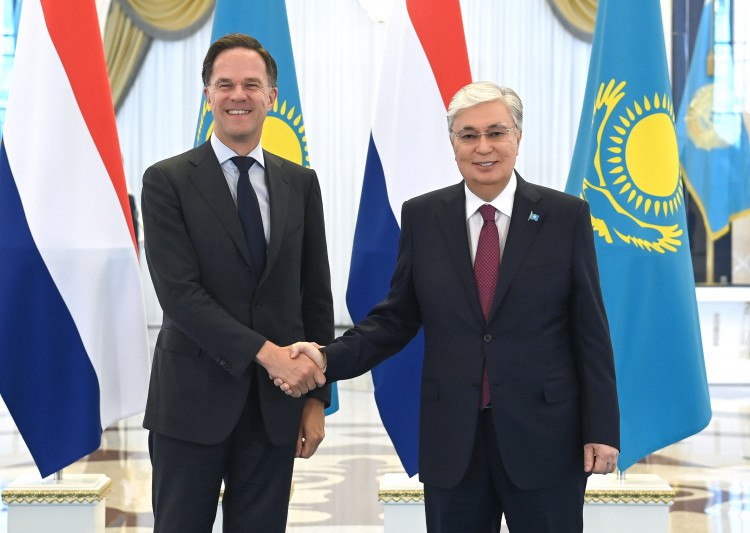
Kazakhstan and the Netherlands to Further Bilateral Cooperation

During a working visit to Astana , Prime Minister of the Netherlands Mark Rutte engaged in talks with Kazakhstan President Kassym-Jomart Tokayev. Rutte had visited Astana back in 2010 during his first trip outside the EU as Prime Minister, and had not been back since his second visit in 2015. According to reports  issued by press service of the President of the Republic of Kazakhstan, the leaders' discussions focused on strengthening cooperation in various sectors including trade and economics, energy, and investment, and cultural-humanitarian spheres. Information was also exchanged on their respective countries' practices regarding  transport, innovation, nuclear energy, agriculture, health, climate, and water management. Welcoming the opportunity to expand dialogue on the above issues, Tokayev emphasized, "I would like to note the dynamic development of our bilateral cooperation. The Netherlands is the largest investor in our economy. The volume of direct investments has exceeded 120 billion dollars. Our countries are implementing large-scale joint projects." Furthermore, the President stated that the Prime Minister of the Netherlands's visit would provide additional impetus to the development of trade and economic relations between Astana and Amsterdam.  Mark Rutte expressed his appreciation of the level of bilateral partnership enjoyed by their countries and spoke in favor of intensifying practical cooperation between Kazakhstan and the Netherlands.  Turning to environmental issues, he confirmed, " We will be happy to share ideas and developments that we have in the field of agriculture, green energy, water management." Views were also exchanged on current issues on the international and regional agenda and both leaders stressed the  importance of continued dialogue within the framework of interaction with the European Union.