• KGS/USD = 0.01144 0%
  • KZT/USD = 0.00213 0%
  • TJS/USD = 0.10456 0.19%
  • UZS/USD = 0.00008 0%
  • TMT/USD = 0.28490 0%
  • KGS/USD = 0.01144 0%
  • KZT/USD = 0.00213 0%
  • TJS/USD = 0.10456 0.19%
  • UZS/USD = 0.00008 0%
  • TMT/USD = 0.28490 0%
  • KGS/USD = 0.01144 0%
  • KZT/USD = 0.00213 0%
  • TJS/USD = 0.10456 0.19%
  • UZS/USD = 0.00008 0%
  • TMT/USD = 0.28490 0%
  • KGS/USD = 0.01144 0%
  • KZT/USD = 0.00213 0%
  • TJS/USD = 0.10456 0.19%
  • UZS/USD = 0.00008 0%
  • TMT/USD = 0.28490 0%
  • KGS/USD = 0.01144 0%
  • KZT/USD = 0.00213 0%
  • TJS/USD = 0.10456 0.19%
  • UZS/USD = 0.00008 0%
  • TMT/USD = 0.28490 0%
  • KGS/USD = 0.01144 0%
  • KZT/USD = 0.00213 0%
  • TJS/USD = 0.10456 0.19%
  • UZS/USD = 0.00008 0%
  • TMT/USD = 0.28490 0%
  • KGS/USD = 0.01144 0%
  • KZT/USD = 0.00213 0%
  • TJS/USD = 0.10456 0.19%
  • UZS/USD = 0.00008 0%
  • TMT/USD = 0.28490 0%
  • KGS/USD = 0.01144 0%
  • KZT/USD = 0.00213 0%
  • TJS/USD = 0.10456 0.19%
  • UZS/USD = 0.00008 0%
  • TMT/USD = 0.28490 0%

Viewing results 2599 - 2604 of 4651

Higher Education in Central Asia: Leaders and Outsiders

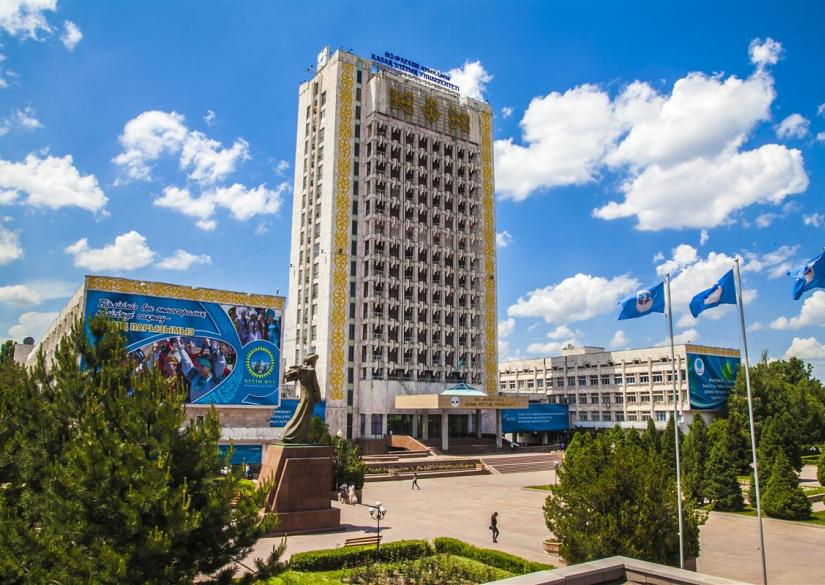
In June, it will be three years since the signing of a declaration at a forum held in the city of Turkestan between the heads of the Ministries of Education of Kazakhstan, Uzbekistan, Tajikistan, Turkmenistan, and Kyrgyzstan. According to the document, the Central Asian states agreed to expand cooperation and unite the scientific, intellectual, and creative potential of higher education institutions throughout the region. However, only Kazakhstan and Uzbekistan have made progress in terms of synergy during this time. The reason for this is the serious gaps between the Central Asian states in the level of provision of higher education for their citizens.   The pace of reform In the 1990s, the reform of education in Central Asia occurred at different rates. Although the Central Asian republics had similar problems at the time of the collapse of the Soviet Union, they began to address them depending on the degree of influence of global trends. For example, Kazakhstan signed the Bologna Declaration and joined the European Higher Education Area in 2010, while Turkmenistan switched to two-stage higher education under the "Bachelor's - Master's" system only in 2013. Some started organizing English-language curricula at their universities as soon as the early 1990s, such as Kazakhstan's KIMEP University or the University of Central Asia in Kyrgyzstan. Uzbekistan, on the other hand, only came around to the idea of the need for English-language education in the noughties. In the 2000s, universities established jointly with foreign partners, such as the Kyrgyz-Russian Slavic University and the Kazakh-British Technical University, began to open in the region. Uzbekistan was again somewhat late to the trend, first opening the International Westminster University (a branch of the University of London) and a branch of Turin Polytechnic University. In 2014, the first university established jointly with foreign partners from South Korea - Inha University, specializing in the training of IT specialists - appeared. Kazakhstan, Kyrgyzstan, and Uzbekistan are currently implementing reforms in the recognition of diplomas and attracting foreign employees and students, while Tajikistan and Turkmenistan are experiencing problems of a different nature related to low levels of enrollment in higher education.   Kazakhstan Kazakhstan has been the most successful nation in reforming higher education. Degrees have been reduced to four years, and the Unified National Testing (UNT) and credit system of education appeared, creating favorable conditions for accession to the Bologna Process in 2010. By 2016, almost every second Kazakhstani was studying at a higher education institution. Now, Kazakhstan has more than 120 universities. There are more than 600,000 students, and about 40% of Kazakhstanis are certified specialists. Kazakhstan's supremacy in this arena is confirmed by international rankings. For example, the international organization, Times Higher Education included four Kazakhstani universities in its rating for 2024: the Eurasian National University named after L.N. Gumilev; Satpayev University; the Kazakh National University named after Al-Farabi; Nazarbayev University (NU). Participating in these rankings for the first time, the latter was recognized as the best in Central Asia. NU is the first university of its...
The Outlook for Kazakhstan’s Rail Network

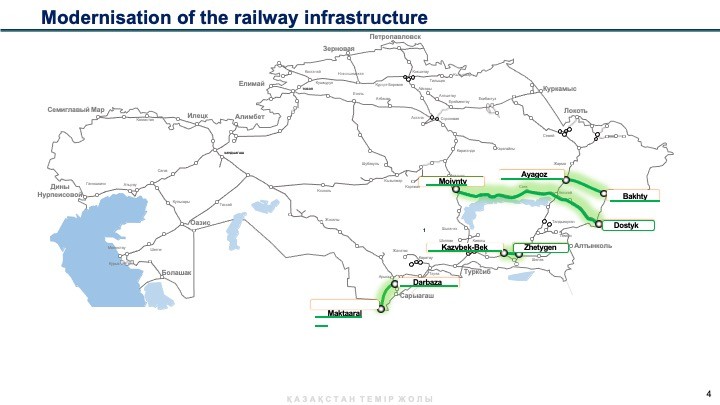
As a core infrastructure industry, railways play a strategic role in Kazakhstan’s economy. Today, over 50% of freight in the country is transported by rail, while the figure for passengers is 15%. Kazakhstan’s favorable geographical position between the largest producer of goods in the world, Asia, and the largest consumer, Europe, is spurring the development of transit freight transport and related income. However, government regulations and imperfect reforms have failed to reverse a degradation of Kazakhstan’s rail infrastructure and solve its capacity shortage problems. The robust rail network created during the Soviet period for a single national economy turned out to be ineffective under the new conditions of market dynamics. The country’s railway infrastructure, while reaching almost every region in Kazakhstan, meets neither current nor possible future needs of freight owners and has already nearly reached its limit in terms of throughput and processing capacity. The national railway carrier of both passengers and freight, Kazakhstan Temir Zholy (KTZ), cannot provide by itself the financial resources and investments at the scale needed to meet current and future challenges. The national budget is also unlikely to allocate such funding. A lack of prompt, large-scale modernization of key areas of rail transport, however, may hurt the country's economy.   Tentative sources of funding for improvements According to the Ministry of Transport’s plan for the modernization of rail infrastructure, 1,300 km of railway track is to be added by 2030, while 4,800 km of second track is to be constructed. The expected price tag for these additions is over $11 million. It is currently unclear where these funds will come from. There have been mentions of borrowing around $400,000 from the national pension fund. According to the Ministry of Transport’s modernization plan, private investments will also be a key source through public-private partnership projects (PPP). In recent years, state participation in financing the construction and reconstruction of sections of the rail network has been limited and paled in comparison to those involving road projects. As part of the Nurly Zhol (“Bright Path”) infrastructure initiative, $9.2 billion has been allocated for just two programs to develop roads versus only $16.1 million allocated for railways. Added to this is the involvement of KTZ in implementing major transport infrastructure projects – the Khorgos dry port, the Kuryk port ferry complex and more than 1,000 km of railway track built in recent years, among others – using borrowed funds. Thus, the company bears a considerable burden in terms of servicing and repaying loans already raised for these projects, which represent its long-term assets. Given this debt burden, it is clear that the rail industry remains underfunded.   Tariffs present a further dilemma Across the world, funding for the development of main rail networks is typically allocated from the national budget. In many European countries, for example, government funding covers up to 97% of operating and capital costs of rail infrastructure. Besides direct subsidies from the state, other sources of funds for modernizing and renewing rail infrastructure include bond...

Turkic Investment Fund Begins Operations

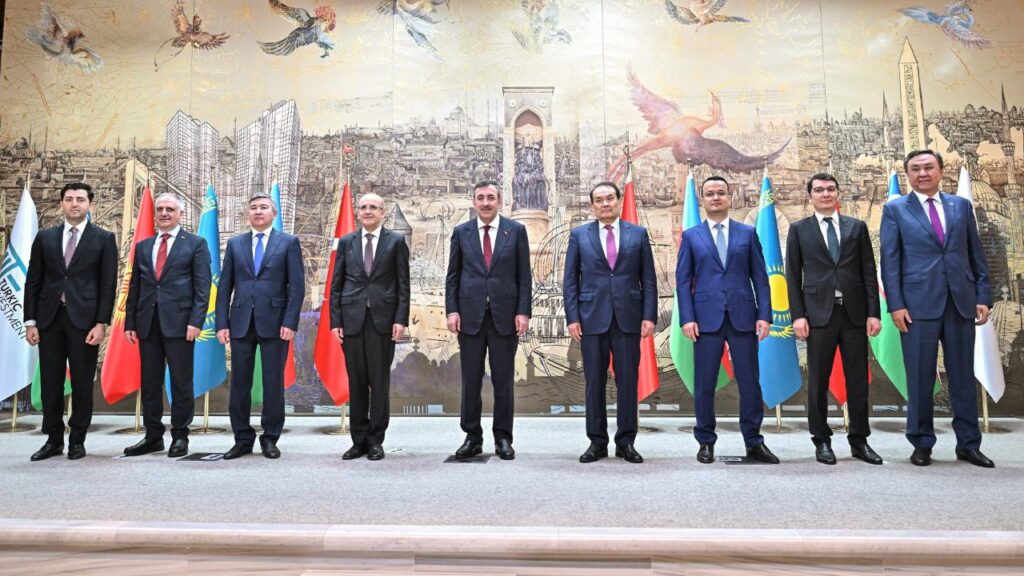
The inaugural meeting of the Board of Governors of the Turkic Investment Fund (TIF) was hosted by Istanbul on 21 May. The Turkic Investment Fund, the first financial institution for economic integration of the countries of the Turkic world was officially established by Azerbaijan, Kazakhstan, Kyrgyzstan, Uzbekistan, and Turkey on 16 March 2023   at the summit of the Organization of Turkic States in Ankara. With an initial capital of $500 million, TIF’s main objective is the development of economic and commercial relations between the Turkic countries. According to estimates by the Turkish Ministry of Finance, by the end of 2024, the Turkic states will occupy an important place in the global economy, reaching an economic volume of $1.9 trillion to the benefit of a population of  178 million. Commenting on the importance of Turkic integration for his country, Deputy Prime Minister - Minister of National Economy Nurlan Baybazarov and Kazakhstan’s representative on the TIF Board of Governors, said: “The Government of Kazakhstan fully supports the start of the Fund’s operation. I am confident that it will become a catalyst for economic growth and development of the participating countries, contribute to the deepening of investment cooperation and effective interaction in the implementation of joint projects.” The key sectors to receive funding include infrastructure, renewable energy, agriculture, tourism, and IT.  

Kazakhstan Aims to Increase Non-Resource Exports

Kazakhstan aims to increase non-resource exports to $37.7 billion in 2024 and by 2025, to $41 billion. Announcing the government’s plans on 21 May, Prime Minister Olzhas Bektenov, Bektenov emphasized the importance of strengthening support for export-oriented enterprises through the provision of consulting services, information support and assistance in entering new markets and explained: "We need to increase the production and export of high value-added goods. We must actively support domestic producers and exporters." At the meeting, Minister of Trade and Integration Arman Shakkaliyev also reported on measures taken to increase non-resource exports. In 2023, the country’s non-resource exports increased by 3%, with 278 new products added to the list. The expansion of non-resource exports encompassed 135 countries. Exports to China rose by 8%, South Korea by 26%, and Vietnam by 46%. Kazakhstan also increased its export of processed agricultural products: flour by 1.1%, sunflower oil by over 55.5%, and beverages by 42.8%. The Ministry of Trade plans to expand the exports of finished products to China 2.5-fold, to $12.5 billion, and increase supplies of high-margin goods - chilled lamb, poultry meat and by-products - to Middle Eastern countries. Priority will also be given to expanding exports of Kazakh food and organic products to highly competitive EU markets.  

More Irrigation Water Pledged for Southern Kazakhstan

A revision of interstate water flow limits for Kazakhstan, through the operation of transboundary rivers and canals, has been approved by the country’s upstream neighbors. The agreement made on 20 May, which will increase the supply of irrigation water during this year’s growing season, aims to benefit farmers in the country’s driest southern regions of Turkestan, Kyzylorda, and Zhambyl. An additional 300 million cubic meters of water has been channelled from Uzbekistan into the Shardara reservoir located on the Syrdarya River in the Turkestan region of Kazakhstan. To date, the reservoir holds 4.8 cubic kilometers of water. In April and May alone, 1.4 cubic km of water entered the Shardara reservoir, doubling the volume received in the same period last year. Kazakhstan, Tajikistan, and Uzbekistan have now confirmed plans for the Bahri Tojik reservoir in Tajikistan, scheduled for July-August, which will guarantee water flow to Kazakhstan through Uzbekistan. Based on hydrological forecasts and the current water levels in Kyrgyzstan’s Kirov and Orto-Tokoi reservoirs, totalling 380 million cubic meters, approval has been granted for Kazakhstan to receive 44 million cubic meters more than last year. Kazakhstan will also be supplied with 180 million cubic meters of water from the Shu River in Kyrgyzstan; an increase of 26 million cubic meters compared to 2023. Most of the 1.5 million hectares of land currently irrigated in Kazakhstan are in the south; these regions are forecast to be especially hot and dry this summer. Due to spring floods, reservoirs are now 70- 90% full in the northern, central, western and some eastern regions.    

Prospective Kazakh Citizens Must Know Country’s Language and History

Under a new law, people applying for Kazakh citizenship will be refused if they do not show at least basic knowledge of the country's language, history and constitution, reports Kursiv. Ministry of Internal Affairs representative Shyngys Alekeshev commented on the law: "The elementary level will be determined by the Ministry of Science and Higher Education. The purpose of the amendments is rapid adaptation and integration into society. Knowledge of the language, first of all, is necessary for the citizens themselves, wishing to obtain our citizenship, to more quickly integrate into society and participate in the life of the state". The ministry added that the legislative amendments are in line with global practice. Earlier it was reported that the authorities intend to teach the Kazakh language to Russian-speaking children and toddlers who have arrived from other countries. For this purpose, the Ministry of Education will create a program of "early immersion in the Kazakh language" in kindergartens and schools. Officials emphasize that this will help to form "Kazakh identity in young citizens".