• KGS/USD = 0.01144 0%
  • KZT/USD = 0.00209 0%
  • TJS/USD = 0.10617 1.05%
  • UZS/USD = 0.00008 0%
  • TMT/USD = 0.28490 0%
  • KGS/USD = 0.01144 0%
  • KZT/USD = 0.00209 0%
  • TJS/USD = 0.10617 1.05%
  • UZS/USD = 0.00008 0%
  • TMT/USD = 0.28490 0%
  • KGS/USD = 0.01144 0%
  • KZT/USD = 0.00209 0%
  • TJS/USD = 0.10617 1.05%
  • UZS/USD = 0.00008 0%
  • TMT/USD = 0.28490 0%
  • KGS/USD = 0.01144 0%
  • KZT/USD = 0.00209 0%
  • TJS/USD = 0.10617 1.05%
  • UZS/USD = 0.00008 0%
  • TMT/USD = 0.28490 0%
  • KGS/USD = 0.01144 0%
  • KZT/USD = 0.00209 0%
  • TJS/USD = 0.10617 1.05%
  • UZS/USD = 0.00008 0%
  • TMT/USD = 0.28490 0%
  • KGS/USD = 0.01144 0%
  • KZT/USD = 0.00209 0%
  • TJS/USD = 0.10617 1.05%
  • UZS/USD = 0.00008 0%
  • TMT/USD = 0.28490 0%
  • KGS/USD = 0.01144 0%
  • KZT/USD = 0.00209 0%
  • TJS/USD = 0.10617 1.05%
  • UZS/USD = 0.00008 0%
  • TMT/USD = 0.28490 0%
  • KGS/USD = 0.01144 0%
  • KZT/USD = 0.00209 0%
  • TJS/USD = 0.10617 1.05%
  • UZS/USD = 0.00008 0%
  • TMT/USD = 0.28490 0%

Viewing results 2611 - 2616 of 4698

Alatau IT Hub Opens in Kazakhstan’s Almaty Region

The Alatau Hub, Kazakhstan's most recent regional  IT hub has now opened in Konaev in the Almaty region. Supported by the Ministry of Digital Development, Innovation and Aerospace Industry of Kazakhstan, the Alatau Hub is the 14th regional IT hub launched under the management of Astana Hub. Kazakhstan is now on course to establish similar hubs in all of its regions by the end of this year. During the launch, Ersultan Ermanov, director of the Information Technology Development Department at the Ministry of Digital Development, commented: “The opening of a hub in the Almaty region is a very significant event for IT specialists in the region. Our regional hubs play a key role in creating and developing an ecosystem that stimulates the emergence of new innovative projects, expansion of business activity and technological progress. In the future, Alatau Hub will become a center of attraction for young ambitious talents. It will also contribute to the emergence of new jobs, economic growth, and increased competitiveness of the country in the international arena.” The IT hubs currently in operation across 14 of Kazakstan's regions include: Abai IT Valley, Kyzylorda Hub, Digital Jetisu, Zhambyl Hub, Oskemen IT Hub, Jaiq Hub, Turkistan IT Hub, Qostanai IT Hub, Aqtobe IT Hub, Aqmola IT Hub, Pavlodar IT Hub, Terrikon Valley, Mangystau Hub, and Alatau Hub. By the end of 2024, further hubs will open in the cities of Atyrau, Shymkent, Zhezkazgan, Petropavlovsk, and Zhanaozen.      

Amid Russian Sanctions, Kazakhstan Can Benefit From Shanghai Cooperation Organisation

After Astana hosted the latest meeting of the Council of Foreign Ministers of the Shanghai Cooperation Organisation (SCO) member states, Almaty-based financial analyst and expert in cross border business and asset value recovery, Rassul Rysmambetov believes that Kazakhstan still has huge potential in the organization that is yet to be utilized. The SCO was founded in 2001 by the leaders of China, Russia, Kazakhstan, Tajikistan, Kyrgyzstan and Uzbekistan. In 2017 India and Pakistan joined, followed by Iran in 2022. Belarus is expected to join the SCO this summer. The association's main objectives are to strengthen stability in the region, fight terrorism and drug trafficking, as well as develop economic cooperation, energy, scientific, and cultural partnerships. At the Astana meeting 22 decisions were adopted. The SCO's secretary general Zhang Ming praised Kazakhstan's work as the organization's chair, saying: "Since July 2023, within the framework of Kazakhstan's chairmanship in the SCO, the Kazakh side has organized more than 180 events in various fields. Kazakh partners have put a special emphasis on economic, investment, transportation, cultural and humanitarian issues." Sources report that Kazakh president Kassym-Jomart Tokayev met with the foreign ministers of the other SCO member states. He mentioned that more than 100 large-scale events have been held recently, including the SCO digital, tourism, and energy forums. "Work on the SCO project 'Spiritual Sanctuaries' is being completed. On our initiative, 2024 has been declared the SCO Year of Ecology. The government of Kazakhstan continues to prepare for several additional significant events in the spheres of energy, transportation, and culture. Of course, we pay great attention to the upcoming Astana SCO summit," Tokayev said. Financial analyst Rasul Rysmambetov, in a conversation with The Times of Central Asia, spoke about the SCO's significance on a global scale. "Its member states have a combined population of over three billion people," he said. "The SCO has not undergone any serious changes in its 22-year existence. Of course some countries try to promote a political agenda, but the organization is focused on economic and security interests." "Of course, the SCO benefits Kazakhstan in the context of western sanctions against Russia, because we have China, Pakistan, and Russia, all of which are large countries that are markets for our goods. Of course, we must open markets for them, but we are open to the goods of many countries within the WTO. Concerning Kazakhstan, sanctions are not an obstacle to the work of the SCO. We do not trade in weapons, so there are no problems. Members of the organization see sanctions restrictions in terms of re-exports, and everything works fine in terms of ordinary, non-sanctioned goods," Rysmambetov added. Regarding Belarus's imminent accession to the SCO, he said: "It's beneficial for us. We can't produce and sell much yet, but at least we'll earn on transit. This is an opportunity to develop our logistics, improving our export prospects when more production facilities are launched in Kazakhstan."

U.S. and Kazakhstan Discuss Shared Values at High-Level Dialogue on Human Rights and Democratic Reforms

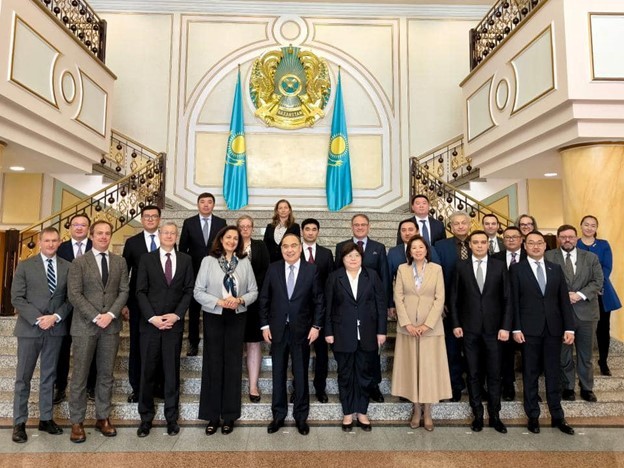
The United States and the Republic of Kazakhstan held their third annual High-Level Dialogue on Human Rights and Democratic Reforms on May 20, 2024, in Astana, Kazakhstan. The U.S. delegation was headed by Under Secretary of State for Civilian Security, Democracy, and Human Rights Uzra Zeya, while the Kazakh delegation was led by Ambassador Erzhan Kazykhan, Assistant to the President of Kazakhstan for External Affairs. As in prior Dialogues, the United States and the Republic of Kazakhstan discussed their shared commitment to advancing human rights, rule of law, freedom of expression, and the protection of members of vulnerable and marginalized populations. In this context, The United States “reaffirmed its strong support for the full implementation of President Tokayev’s reform agenda and commended the Republic of Kazakhstan for progress made in the advancement of human rights including the passage of the April 2024 law recriminalizing domestic violence, a very important step in protecting survivors” while encouraging “advancement of Kazakhstan’s reform efforts with the full participation of, and in consultation with, civil society partners for transparency and accountability”. The United States stated that “Respect for human rights and fundamental freedoms are integral to a prosperous, vibrant “New Kazakhstan,” where independent media, civil society groups, and political parties can operate freely, without undue restrictions”. Multilateral cooperations, including with the United Nations High Commissioner for Refugees and C5+1 Platform were also discussed. The full press release of the US Department of State can be found here.

Higher Education in Central Asia: Leaders and Outsiders

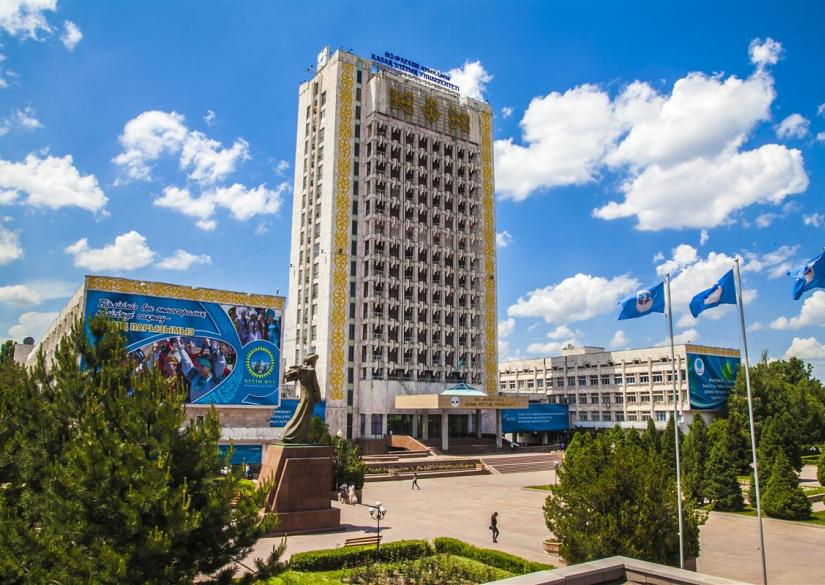
In June, it will be three years since the signing of a declaration at a forum held in the city of Turkestan between the heads of the Ministries of Education of Kazakhstan, Uzbekistan, Tajikistan, Turkmenistan, and Kyrgyzstan. According to the document, the Central Asian states agreed to expand cooperation and unite the scientific, intellectual, and creative potential of higher education institutions throughout the region. However, only Kazakhstan and Uzbekistan have made progress in terms of synergy during this time. The reason for this is the serious gaps between the Central Asian states in the level of provision of higher education for their citizens.   The pace of reform In the 1990s, the reform of education in Central Asia occurred at different rates. Although the Central Asian republics had similar problems at the time of the collapse of the Soviet Union, they began to address them depending on the degree of influence of global trends. For example, Kazakhstan signed the Bologna Declaration and joined the European Higher Education Area in 2010, while Turkmenistan switched to two-stage higher education under the "Bachelor's - Master's" system only in 2013. Some started organizing English-language curricula at their universities as soon as the early 1990s, such as Kazakhstan's KIMEP University or the University of Central Asia in Kyrgyzstan. Uzbekistan, on the other hand, only came around to the idea of the need for English-language education in the noughties. In the 2000s, universities established jointly with foreign partners, such as the Kyrgyz-Russian Slavic University and the Kazakh-British Technical University, began to open in the region. Uzbekistan was again somewhat late to the trend, first opening the International Westminster University (a branch of the University of London) and a branch of Turin Polytechnic University. In 2014, the first university established jointly with foreign partners from South Korea - Inha University, specializing in the training of IT specialists - appeared. Kazakhstan, Kyrgyzstan, and Uzbekistan are currently implementing reforms in the recognition of diplomas and attracting foreign employees and students, while Tajikistan and Turkmenistan are experiencing problems of a different nature related to low levels of enrollment in higher education.   Kazakhstan Kazakhstan has been the most successful nation in reforming higher education. Degrees have been reduced to four years, and the Unified National Testing (UNT) and credit system of education appeared, creating favorable conditions for accession to the Bologna Process in 2010. By 2016, almost every second Kazakhstani was studying at a higher education institution. Now, Kazakhstan has more than 120 universities. There are more than 600,000 students, and about 40% of Kazakhstanis are certified specialists. Kazakhstan's supremacy in this arena is confirmed by international rankings. For example, the international organization, Times Higher Education included four Kazakhstani universities in its rating for 2024: the Eurasian National University named after L.N. Gumilev; Satpayev University; the Kazakh National University named after Al-Farabi; Nazarbayev University (NU). Participating in these rankings for the first time, the latter was recognized as the best in Central Asia. NU is the first university of its...

The Outlook for Kazakhstan’s Rail Network

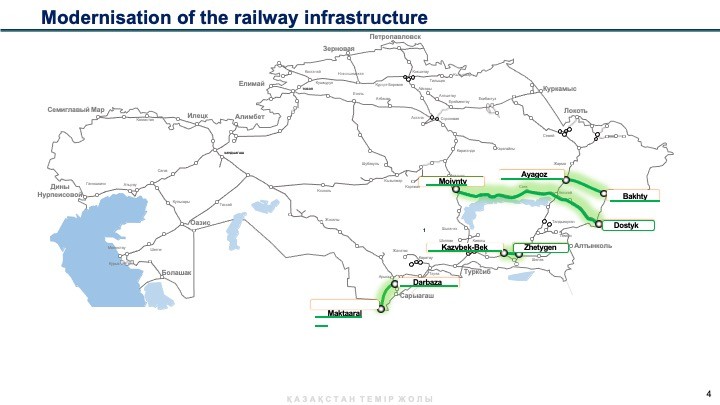
As a core infrastructure industry, railways play a strategic role in Kazakhstan’s economy. Today, over 50% of freight in the country is transported by rail, while the figure for passengers is 15%. Kazakhstan’s favorable geographical position between the largest producer of goods in the world, Asia, and the largest consumer, Europe, is spurring the development of transit freight transport and related income. However, government regulations and imperfect reforms have failed to reverse a degradation of Kazakhstan’s rail infrastructure and solve its capacity shortage problems. The robust rail network created during the Soviet period for a single national economy turned out to be ineffective under the new conditions of market dynamics. The country’s railway infrastructure, while reaching almost every region in Kazakhstan, meets neither current nor possible future needs of freight owners and has already nearly reached its limit in terms of throughput and processing capacity. The national railway carrier of both passengers and freight, Kazakhstan Temir Zholy (KTZ), cannot provide by itself the financial resources and investments at the scale needed to meet current and future challenges. The national budget is also unlikely to allocate such funding. A lack of prompt, large-scale modernization of key areas of rail transport, however, may hurt the country's economy.   Tentative sources of funding for improvements According to the Ministry of Transport’s plan for the modernization of rail infrastructure, 1,300 km of railway track is to be added by 2030, while 4,800 km of second track is to be constructed. The expected price tag for these additions is over $11 million. It is currently unclear where these funds will come from. There have been mentions of borrowing around $400,000 from the national pension fund. According to the Ministry of Transport’s modernization plan, private investments will also be a key source through public-private partnership projects (PPP). In recent years, state participation in financing the construction and reconstruction of sections of the rail network has been limited and paled in comparison to those involving road projects. As part of the Nurly Zhol (“Bright Path”) infrastructure initiative, $9.2 billion has been allocated for just two programs to develop roads versus only $16.1 million allocated for railways. Added to this is the involvement of KTZ in implementing major transport infrastructure projects – the Khorgos dry port, the Kuryk port ferry complex and more than 1,000 km of railway track built in recent years, among others – using borrowed funds. Thus, the company bears a considerable burden in terms of servicing and repaying loans already raised for these projects, which represent its long-term assets. Given this debt burden, it is clear that the rail industry remains underfunded.   Tariffs present a further dilemma Across the world, funding for the development of main rail networks is typically allocated from the national budget. In many European countries, for example, government funding covers up to 97% of operating and capital costs of rail infrastructure. Besides direct subsidies from the state, other sources of funds for modernizing and renewing rail infrastructure include bond...

Turkic Investment Fund Begins Operations

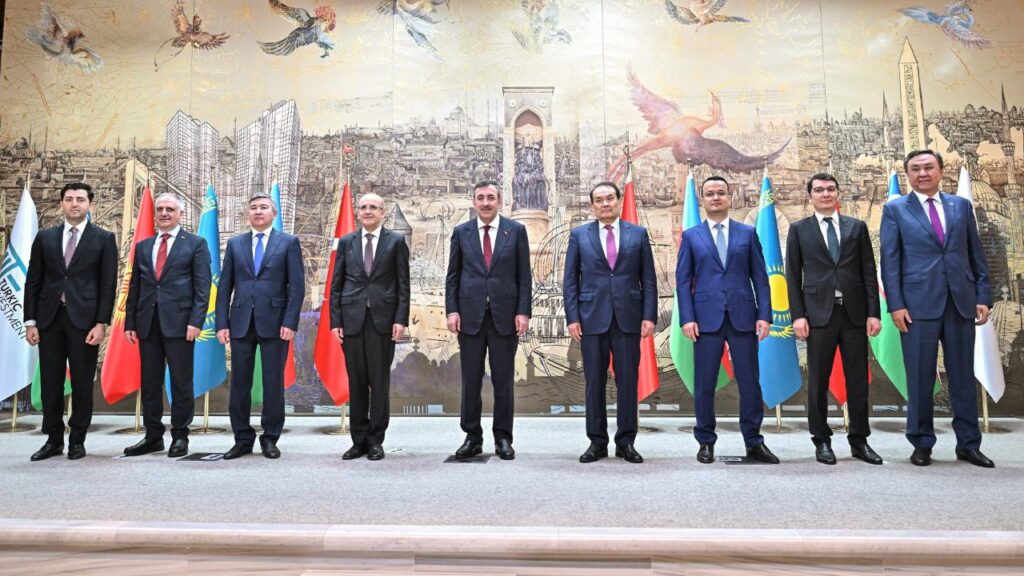
The inaugural meeting of the Board of Governors of the Turkic Investment Fund (TIF) was hosted by Istanbul on 21 May. The Turkic Investment Fund, the first financial institution for economic integration of the countries of the Turkic world was officially established by Azerbaijan, Kazakhstan, Kyrgyzstan, Uzbekistan, and Turkey on 16 March 2023   at the summit of the Organization of Turkic States in Ankara. With an initial capital of $500 million, TIF’s main objective is the development of economic and commercial relations between the Turkic countries. According to estimates by the Turkish Ministry of Finance, by the end of 2024, the Turkic states will occupy an important place in the global economy, reaching an economic volume of $1.9 trillion to the benefit of a population of  178 million. Commenting on the importance of Turkic integration for his country, Deputy Prime Minister - Minister of National Economy Nurlan Baybazarov and Kazakhstan’s representative on the TIF Board of Governors, said: “The Government of Kazakhstan fully supports the start of the Fund’s operation. I am confident that it will become a catalyst for economic growth and development of the participating countries, contribute to the deepening of investment cooperation and effective interaction in the implementation of joint projects.” The key sectors to receive funding include infrastructure, renewable energy, agriculture, tourism, and IT.