• KGS/USD = 0.01144 0%
  • KZT/USD = 0.00212 0%
  • TJS/USD = 0.10456 0.19%
  • UZS/USD = 0.00008 0%
  • TMT/USD = 0.28490 0%
  • KGS/USD = 0.01144 0%
  • KZT/USD = 0.00212 0%
  • TJS/USD = 0.10456 0.19%
  • UZS/USD = 0.00008 0%
  • TMT/USD = 0.28490 0%
  • KGS/USD = 0.01144 0%
  • KZT/USD = 0.00212 0%
  • TJS/USD = 0.10456 0.19%
  • UZS/USD = 0.00008 0%
  • TMT/USD = 0.28490 0%
  • KGS/USD = 0.01144 0%
  • KZT/USD = 0.00212 0%
  • TJS/USD = 0.10456 0.19%
  • UZS/USD = 0.00008 0%
  • TMT/USD = 0.28490 0%
  • KGS/USD = 0.01144 0%
  • KZT/USD = 0.00212 0%
  • TJS/USD = 0.10456 0.19%
  • UZS/USD = 0.00008 0%
  • TMT/USD = 0.28490 0%
  • KGS/USD = 0.01144 0%
  • KZT/USD = 0.00212 0%
  • TJS/USD = 0.10456 0.19%
  • UZS/USD = 0.00008 0%
  • TMT/USD = 0.28490 0%
  • KGS/USD = 0.01144 0%
  • KZT/USD = 0.00212 0%
  • TJS/USD = 0.10456 0.19%
  • UZS/USD = 0.00008 0%
  • TMT/USD = 0.28490 0%
  • KGS/USD = 0.01144 0%
  • KZT/USD = 0.00212 0%
  • TJS/USD = 0.10456 0.19%
  • UZS/USD = 0.00008 0%
  • TMT/USD = 0.28490 0%

Viewing results 2617 - 2622 of 4651

Liberalizing Kazakhstan’s Economy Must Not Become Uncontrolled Privatization, Expert Warns

Last week, President Kassym-Jomart Tokayev signed a decree on reducing the state’s participation in the economy, aiming to help develop competition and private business. This could be a significant boost to the economy, financial analyst Rassul Rysmambetov, an Almaty-based expert in distressed assets and Director of the Financial Freedom Public Foundation, told The Times of Central Asia, though everything will depend on how the decree is implemented. Firstly, the decree envisages creating a National Office for Privatization under the Agency for the Protection and Promotion of Competition. This office is to develop criteria for state assets subject to privatization and create a list of them. In addition, measures are provided to increase the autonomy, quality, and independence of corporate governance at Samruk-Kazyna, the National Welfare Fund, and its subsidiaries. “The government must establish a specific list of large entities that will offer major stakes in the next two years in IPOs,” President Tokayev explained. According to Tokayev, the quasi-public sector – bloated and often ridden with debt – needs serious reform. “We need to put an end to the question of where state participation should continue and where competition can be developed. The largest share of the state in the economy is represented by the group of companies held by the Samruk-Kazyna fund, so that is where this work must start. New, systemic measures are required to fundamentally rehabilitate the fund,” the president stated. A separate section of the decree presents measures aimed at protecting the rights and legitimate interests of business, including decriminalizing offenses related to economic activity and coordinating with prosecutors on prohibitive and restrictive measures initiated by government agencies. This is not the first time Kazakhstan has tried to liberalize its economy – it has even privatized social institutions, such as hospitals, schools, and creative centers for children before – but previous attempts yielded no tangible successes. “We need to continue to work to improve the quality of services, consistently reduce state participation and eliminate excessive regulation and restrictions. This applies to all sectors of the economy,” Tokayev stressed. “Uncontrolled monopolies, unequal access to resources and unfair trade practices must be eliminated at the root. A pillar of economic liberalization will be effective privatization. There have been so many privatization plans, but every time we make the same mistakes.” Rysmambetov believes that professionals should take the lead. “Liberalizing the economy is a process. By no means can it be limited to a single decree – it is a strategic course. I see here dozens, if not hundreds of by-laws, industry reference documents and possibly new laws and codes. I'm afraid that parliament will prove unable to keep up with the pace at which these reforms should be carried out,” he stated. According to Rysmambetov, Samruk-Kazyna could be dissolved tomorrow, but the holding has taken on a lot of debt for its subsidiaries, meaning that in the near term its assets can only be partially privatized. In general, each Samruk-Kazyna company has a related supervising ministry, so, to...
Kazakhstan Still Repatriating Its Citizens From War Zones

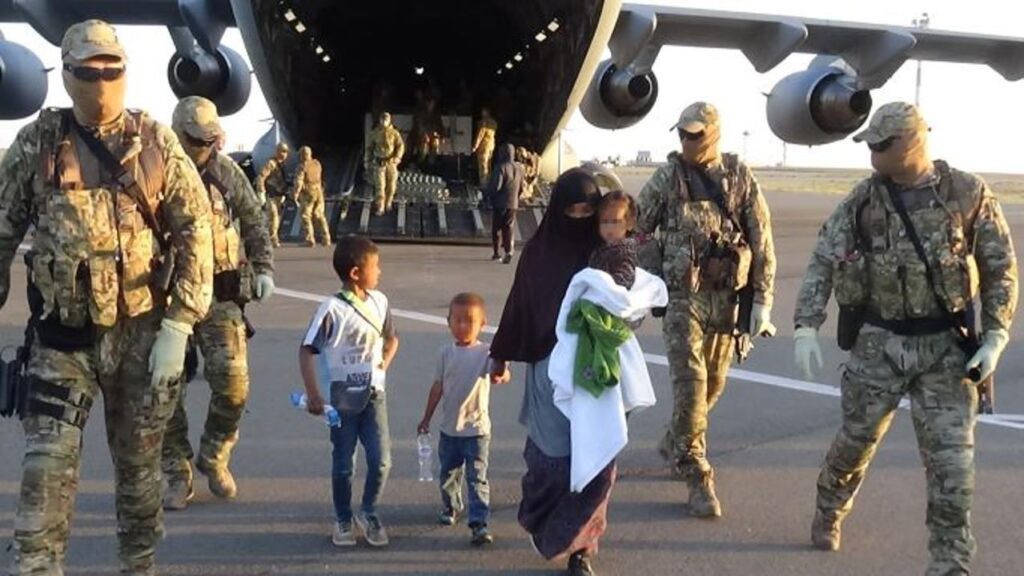
Kazakhstan is still repatriating its citizens from war zones, 24KZ reports. Since 2019, more than 750 Kazakhs have been successfully repatriated to the republic as part of a humanitarian operation. Similar efforts are underway in other Central Asian countries. For example, Uzbek authorities have evacuated more than 500 citizens from conflict zones, compared to 511 in Kyrgyzstan and 381 in Tajikistan. These figures were presented in Tashkent at the first meeting of the Regional Expert Council on Rehabilitation and Reintegration in Central Asia. "The results of our rehabilitation programs are very high. Repatriated women and children do not pose a danger to society and the state. All orphaned children have been taken under the guardianship of their grandparents. Now they are studying at school," psychologist Gulnaz Razdykova said. However, the UN's under-secretary-general Vladimir Voronkov has commented: "Unfortunately, there are still a huge number of people still in camps and detention centers in northeastern Syria and Iraq. First, women and children. We estimate that this is about 55,000 to 60,000 people as of today. So, there is still a lot of work to be done to unload these camps and bring back those who deserve a normal life." Thanks to the active efforts of the Kazakhstani authorities, 180 women, more than 500 children and 37 men have already returned home. In addition, another 34 children left without parents have been successfully reunited with their grandparents. In 2018, Kazakhstan approved a state program to counter religious extremism and terrorism. The special operation to return Kazakh citizens from Syria and Iraq was called "Zhusan", which is Kazakh for wormwood, found on the country's steppe and which symbolizes home for many Kazakhs.

Nationwide Survey on Domestic Violence in Kazakhstan Publishes Results

A large-scale statistical analysis on domestic violence in Kazakhstan was conducted by three professors from Karaganda Medical University: Saule Musabekova, Ksenia Mkhitaryan and Hamida Abdukadirova. The study, conducted between 2019 and 2022, covered 14,342 women between the ages of 18 and 75 from 14 regions of Kazakhstan. The questionnaire included questions about health, children, partners, violence and its consequences, financial independence, and cases of sexual abuse in childhood. The study showed that the main victims of domestic violence in Kazakhstan are women (more than 77.9%). Next on the list are children (17.52%), elderly people (3.5%) and men (less than 1.1%). It is important to note that not all victims seek help from the police or hospitals. Therefore, there may be many more victims. According to the results of the study, the most vulnerable age group is women from 40 to 49 years (41.46%) and from 30 to 39 years (37.80%). Victims of domestic violence were most often unemployed women or those with low levels of education, with two or more children, and economically dependent on their husbands. Most of the victims of violence were from urban areas (63%). It was also found that violence against women is committed by strangers in only 12.2% of cases. In 87.8% it is committed by men with whom the victims are in a close relationship. Almost all of them are intimate partners of the victims (in 95-98% of cases). Half of the women interviewed stated that their intimate partners had attacked them while they were pregnant or raising young children. The forms of systematic violence varied. The most common were physical violence, experienced by 78% of respondents; psychological violence, experienced by 21% of respondents; sexual and physical violence, 16%; economic violence, 7%; and regular sexual violence, 6% of respondents. More than half of the respondents (57%) also stated that over the past year they have faced one of the above forms of abusive behavior more than once (from 2 to 8 times). Almost all cases of violence against women (98.2%) occurred when the abuser was intoxicated. Other factors cited by female researchers were economic problems and male unemployment. Incidents of violence most often occurred at home in the evening and at night (91%). Two-thirds of women (66%) said they had suffered at least one injury after partner violence. The study also took into account physical and sexual abuse of women by men with whom they were not in an intimate relationship. In 92%, the abusers were family members, friends and coworkers, and only 8% were unknown men. The researchers noted that Kazakhstan only formally supports the main international commitments to gender equality. Domestic violence and general tolerance to it persist in the country. "Gender roles and cultural norms are clearly expressed in some regions of Kazakhstan: in the south of the country, educated women often do not look for work outside the home because of the priority of domestic duties, and attempts to restrict women in their choice of occupation are quite common. Thus,...

Kazakhstan Becomes First CIS country to Join ICAO Program on Environmentally-Friendly Aviation Fuel

Kazakhstan has become the first CIS nation to sign an agreement with the International Civil Aviation Organization (ICAO) and join the program in the field of environmentally-friendly aviation fuel (ACT-SAF). "ICAO has set a goal of achieving net zero emissions from international flights by 2050. To achieve this goal, during the visit to Kazakhstan of the Regional Director of the European/North Atlantic Bureau of ICAO, Nicolas Rallo, an agreement was signed between Kazakhstan and ICAO on the accession of the Republic of Kazakhstan to the Program for Capacity Building Support and Training in the Field of Sustainable Aviation Fuels (ACT-SAF)," reported the press service of the Ministry of Transport of the Republic of Kazakhstan. According to this document, ICAO will assist Kazakhstan in developing and participating in ACT-SAF program activities, including the exchange of best practices and relevant information, participation in training seminars and workshops, technical assistance in issues related to SAF in national action plans, and the implementation of specific projects on SAF. As previously reported, the use of SAF reduces CO2 emissions by 80% compared to the use of conventional fuel. However, in 2024, the availability of clean jet fuel is expected to account for no more than 1% of total global demand. As a transit state between Europe and Asia, Kazakhstan could play a greater role in expanding the use of SAF in international flights. As a raw materials base for SAF production, bio-ethanol, municipal solid waste, and in the future, blast furnace and coke gases are being considered in Kazakhstan. The project for the creation of the Regional Hub of Clean Aviation Fuel (SAF) in Almaty will be presented by the European Bank for Reconstruction and Development on June 21 in Astana during the forum, Central Asia - Silk Road in the Sky, by ISF, an international consulting company which won the EBRD tender to become the project consultant.

Kazakhstan and Vietnam Look to Expand Economic Cooperation

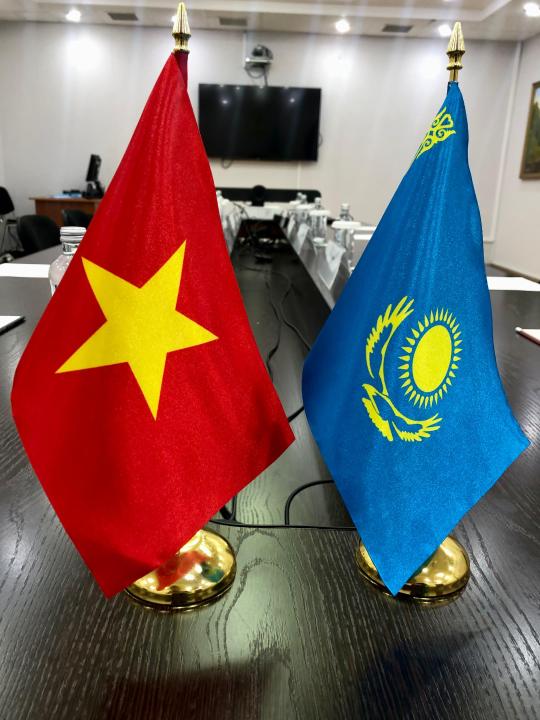
Potential areas for increasing trade between Kazakhstan and Vietnam were discussed on May 15 by the Minister of Industry and Construction of Kazakhstan, Kanat Sharlapaev and the Minister of Industry and Trade of Vietnam, Nguyen Hong Dien. The parties noted that trade turnover between the two countries amounted to US $979 million in 2023, including $958 million in the trade of industrial products. From January-March 2024, bilateral trade reached $229 million. The Vietnamese side expressed interest in developing mineral deposits in Kazakhstan, as well as engaging in cooperation in the chemical industry. In turn, the Kazakh minister echoed the high potential for industrial cooperation between the two countries. Other sectors earmarked for cooperative development included the production of equipment for light industry, mechanical engineering, energy, agriculture, and food production.    

Major Mineral Fertilizer Production Plant Planned for Kazakhstan

EuroChem, a global fertilizer leader and China National Chemical Engineering Co. (CNCEC), a global provider of industrial engineering technologies are to collaborate on the design, construction, and commission of a large-scale chemical complex to produce mineral fertilizers in Zhanatas located in Kazakhstan’s Zhambyl region. The agreement was officially signed on 14 May in Astana. Scheduled to open in 2027, the construction of  the chemical complex is part of the Integrated Kazakhstan Industrialization Roadmap and represents the third and final stage of a project in which EuroChem has invested over US$1 billion. EuroChem Group President Oleg Shiryaev said that once in operation, the plant will have an annual output of over one million tons of mineral fertilizers, in high demand by Kazakhstan, other Central Asian countries, China, Russia and Europe. According to a report by the Kazakh Ministry of Industry and Construction, the new enterprise will create 2,400 new jobs. During the signing of the agreement, Minister of Industry and Construction of Kazakhstan Kanat Sharlapaev, welcomed the input of  world leaders in mineral fertilizer production as an important step in developing the country's chemical industry and emphasized: “To be truly food secure, fertilizers are a must. This is therefore a landmark project for us. Its joint implementation with EuroChem and Chinese partners is a great example of large Eurasian cooperation at its best and a significant event for regional food security.”