• KGS/USD = 0.01144 0%
  • KZT/USD = 0.00209 0%
  • TJS/USD = 0.10528 0.19%
  • UZS/USD = 0.00008 0%
  • TMT/USD = 0.28490 0%
  • KGS/USD = 0.01144 0%
  • KZT/USD = 0.00209 0%
  • TJS/USD = 0.10528 0.19%
  • UZS/USD = 0.00008 0%
  • TMT/USD = 0.28490 0%
  • KGS/USD = 0.01144 0%
  • KZT/USD = 0.00209 0%
  • TJS/USD = 0.10528 0.19%
  • UZS/USD = 0.00008 0%
  • TMT/USD = 0.28490 0%
  • KGS/USD = 0.01144 0%
  • KZT/USD = 0.00209 0%
  • TJS/USD = 0.10528 0.19%
  • UZS/USD = 0.00008 0%
  • TMT/USD = 0.28490 0%
  • KGS/USD = 0.01144 0%
  • KZT/USD = 0.00209 0%
  • TJS/USD = 0.10528 0.19%
  • UZS/USD = 0.00008 0%
  • TMT/USD = 0.28490 0%
  • KGS/USD = 0.01144 0%
  • KZT/USD = 0.00209 0%
  • TJS/USD = 0.10528 0.19%
  • UZS/USD = 0.00008 0%
  • TMT/USD = 0.28490 0%
  • KGS/USD = 0.01144 0%
  • KZT/USD = 0.00209 0%
  • TJS/USD = 0.10528 0.19%
  • UZS/USD = 0.00008 0%
  • TMT/USD = 0.28490 0%
  • KGS/USD = 0.01144 0%
  • KZT/USD = 0.00209 0%
  • TJS/USD = 0.10528 0.19%
  • UZS/USD = 0.00008 0%
  • TMT/USD = 0.28490 0%

Viewing results 2629 - 2634 of 4698

Kazakhstan and Malaysia Set to Expand Cooperation

On May 16, Malaysian Prime Minister Anwar Ibrahim made an official visit to Kazakhstan to engage in talks with President Kassym-Jomart Tokayev. The meeting focused on expanding cooperation in political, trade, economic, investment, and humanitarian spheres. In his opening speech, Tokayev hailed Malaysia one of Kazakhstan's most important and reliable partners in Southeast Asia, and continued:  “Kazakhstan and Malaysia have a history of long-standing ties of friendship and cooperation - so I believe your visit will provide a very strong impetus to the further development of ties between our countries. We are ready to make additional efforts to advance our interaction and cooperation in many important areas.” The Kazakh president welcomed the participation of Malaysian companies in the implementation of new projects and promised necessary support from the Government of Kazakhstan. In addition, he commended the 30-day visa-free regime which benefits citizens and in particular, business men and women, travelling and working between the two countries, and noted the convenience of direct flights. Regarding cooperation in education, attention was drawn to the fact that more than 500 Kazakh students are currently studying at Malaysian universities. In turn, Anwar Ibrahim stressed the importance of strengthening Malaysia’s trade and economic cooperation with Kazakhstan, and stated: “We can make the most of growing economic relations. We have created a huge commodity market in Malaysia. Our country has now become a regional hub for the production of computer chips with significant investments from the USA, Europe, especially Germany, and China. I think we can share this experience and at the same time, learn from your successful transformations of various fields.”    

First Kazakh Woman Reaches the Summit of Everest

Anar Burasheva, the first woman from Kazakhstan to climb Mount Everest, did a little dance on her descent. “My heart is on this mountain,” Burasheva said on Instagram after reaching the peak. She and two other Kazakh climbers, along with a support team of four Sherpas, made it to the top on Sunday after a five-day trip from base camp in Nepal. The other Kazakh mountaineers are Maksut Zhumayev, a mountain training instructor in the Kazakh military who was making his third Everest ascent, and Almir Kymbatbaiuly. “Congratulations to Anar Burasheva, the first Kazakh woman to conquer the highest mountain peak in the world. Scaling 8,848 meters above sea level, Mount Everest - an incredible achievement,” Erzhan Kazykhan, a Kazakh presidential adviser on foreign affairs, said on X. Kazakhstan’s defense ministry also congratulated the Kazakh climbers, whose ascent was organized by Seven Summit Treks, a Nepali expedition company that specializes in Himalayan climbs. Burasheva has climbed peaks in Kazakhstan and abroad, and is also a long-distance runner. Lucia Janičová also summited Everest on Sunday, becoming the first Slovakian woman to do so. Seven Summit Treks assisted her, as well. The company’s senior guide for the ascent was Kami Rita Sherpa, who logged his 29th trip to the summit.

Kazakhstan’s President Commends Growing Cooperation Between Central Asian States

On May 16, Kazakhstan's President Kassym-Jomart Tokayev hosted the first meeting in Astana of Security Council secretaries from Kazakhstan, Kyrgyzstan, Tajikistan and Uzbekistan, and the military attaché of the Embassy of Turkmenistan in Kazakhstan. In his opening address, Tokayev announced that the aim of the meeting was to provide an effective platform for the collaborative prevention of external and internal challenges and threats, and to develop necessary response measures. The Kazakh leader began by noting the steady growth of trade and economic cooperation between the Central Asian countries and stated that over the past five years, intraregional trade  had risen by 80 percent to exceed $10 billion.  He explained that large regional projects not only bring tangible mutual benefits, but also change the entire configuration of the Central Asian economy. The development of transport and logistics potential is becoming a new reference point for the rapid development of the region. Cultural and humanitarian ties have also intensified, contributing to the further rapprochement of the Central Asian states. Returning to the pressing issue of the need to join forces in countering transboundary challenges and threats, he announced: “First of all, we are talking about the fight against international extremism and terrorism, drug trafficking, and arms trafficking. In this regard, Afghanistan must be the focus of our common attention. Complex multidirectional processes are now evident in this country. Whilst signs point to a stabilization and revival of the economic situation, there remain high risks associated with the activity of international terrorist organizations, as evidenced by the bloody terrorist attack in the Moscow region [in March]. In our opinion, one of the strategic tasks at present is the active involvement of Afghanistan in regional ties. And for this, much depends on the coordinated position of our countries. We consider it urgent to create a UN Regional Center for Sustainable Development Goals for Central Asia and Afghanistan in our country.” Tokayev expressed his satisfaction with the growing regional cooperation and mutual trust and concluded:  “Some 10 years ago, there was no such situation in the Central Asian region. Now heads of state, heads of government, secretaries of the Security Councils, heads of law enforcement agencies, not to mention heads of economic departments, closely interact with each other. And this is a very good sign that the situation in the Central Asian region is moving towards sustainable development.”    

Liberalizing Kazakhstan’s Economy Must Not Become Uncontrolled Privatization, Expert Warns

Last week, President Kassym-Jomart Tokayev signed a decree on reducing the state’s participation in the economy, aiming to help develop competition and private business. This could be a significant boost to the economy, financial analyst Rassul Rysmambetov, an Almaty-based expert in distressed assets and Director of the Financial Freedom Public Foundation, told The Times of Central Asia, though everything will depend on how the decree is implemented. Firstly, the decree envisages creating a National Office for Privatization under the Agency for the Protection and Promotion of Competition. This office is to develop criteria for state assets subject to privatization and create a list of them. In addition, measures are provided to increase the autonomy, quality, and independence of corporate governance at Samruk-Kazyna, the National Welfare Fund, and its subsidiaries. “The government must establish a specific list of large entities that will offer major stakes in the next two years in IPOs,” President Tokayev explained. According to Tokayev, the quasi-public sector – bloated and often ridden with debt – needs serious reform. “We need to put an end to the question of where state participation should continue and where competition can be developed. The largest share of the state in the economy is represented by the group of companies held by the Samruk-Kazyna fund, so that is where this work must start. New, systemic measures are required to fundamentally rehabilitate the fund,” the president stated. A separate section of the decree presents measures aimed at protecting the rights and legitimate interests of business, including decriminalizing offenses related to economic activity and coordinating with prosecutors on prohibitive and restrictive measures initiated by government agencies. This is not the first time Kazakhstan has tried to liberalize its economy – it has even privatized social institutions, such as hospitals, schools, and creative centers for children before – but previous attempts yielded no tangible successes. “We need to continue to work to improve the quality of services, consistently reduce state participation and eliminate excessive regulation and restrictions. This applies to all sectors of the economy,” Tokayev stressed. “Uncontrolled monopolies, unequal access to resources and unfair trade practices must be eliminated at the root. A pillar of economic liberalization will be effective privatization. There have been so many privatization plans, but every time we make the same mistakes.” Rysmambetov believes that professionals should take the lead. “Liberalizing the economy is a process. By no means can it be limited to a single decree – it is a strategic course. I see here dozens, if not hundreds of by-laws, industry reference documents and possibly new laws and codes. I'm afraid that parliament will prove unable to keep up with the pace at which these reforms should be carried out,” he stated. According to Rysmambetov, Samruk-Kazyna could be dissolved tomorrow, but the holding has taken on a lot of debt for its subsidiaries, meaning that in the near term its assets can only be partially privatized. In general, each Samruk-Kazyna company has a related supervising ministry, so, to...

Kazakhstan Still Repatriating Its Citizens From War Zones

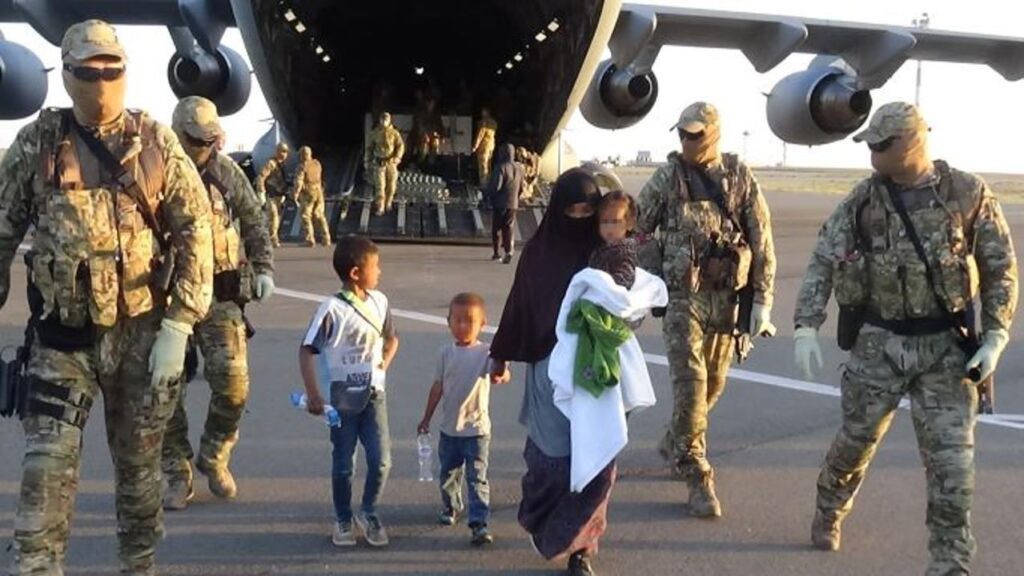
Kazakhstan is still repatriating its citizens from war zones, 24KZ reports. Since 2019, more than 750 Kazakhs have been successfully repatriated to the republic as part of a humanitarian operation. Similar efforts are underway in other Central Asian countries. For example, Uzbek authorities have evacuated more than 500 citizens from conflict zones, compared to 511 in Kyrgyzstan and 381 in Tajikistan. These figures were presented in Tashkent at the first meeting of the Regional Expert Council on Rehabilitation and Reintegration in Central Asia. "The results of our rehabilitation programs are very high. Repatriated women and children do not pose a danger to society and the state. All orphaned children have been taken under the guardianship of their grandparents. Now they are studying at school," psychologist Gulnaz Razdykova said. However, the UN's under-secretary-general Vladimir Voronkov has commented: "Unfortunately, there are still a huge number of people still in camps and detention centers in northeastern Syria and Iraq. First, women and children. We estimate that this is about 55,000 to 60,000 people as of today. So, there is still a lot of work to be done to unload these camps and bring back those who deserve a normal life." Thanks to the active efforts of the Kazakhstani authorities, 180 women, more than 500 children and 37 men have already returned home. In addition, another 34 children left without parents have been successfully reunited with their grandparents. In 2018, Kazakhstan approved a state program to counter religious extremism and terrorism. The special operation to return Kazakh citizens from Syria and Iraq was called "Zhusan", which is Kazakh for wormwood, found on the country's steppe and which symbolizes home for many Kazakhs.

Nationwide Survey on Domestic Violence in Kazakhstan Publishes Results

A large-scale statistical analysis on domestic violence in Kazakhstan was conducted by three professors from Karaganda Medical University: Saule Musabekova, Ksenia Mkhitaryan and Hamida Abdukadirova. The study, conducted between 2019 and 2022, covered 14,342 women between the ages of 18 and 75 from 14 regions of Kazakhstan. The questionnaire included questions about health, children, partners, violence and its consequences, financial independence, and cases of sexual abuse in childhood. The study showed that the main victims of domestic violence in Kazakhstan are women (more than 77.9%). Next on the list are children (17.52%), elderly people (3.5%) and men (less than 1.1%). It is important to note that not all victims seek help from the police or hospitals. Therefore, there may be many more victims. According to the results of the study, the most vulnerable age group is women from 40 to 49 years (41.46%) and from 30 to 39 years (37.80%). Victims of domestic violence were most often unemployed women or those with low levels of education, with two or more children, and economically dependent on their husbands. Most of the victims of violence were from urban areas (63%). It was also found that violence against women is committed by strangers in only 12.2% of cases. In 87.8% it is committed by men with whom the victims are in a close relationship. Almost all of them are intimate partners of the victims (in 95-98% of cases). Half of the women interviewed stated that their intimate partners had attacked them while they were pregnant or raising young children. The forms of systematic violence varied. The most common were physical violence, experienced by 78% of respondents; psychological violence, experienced by 21% of respondents; sexual and physical violence, 16%; economic violence, 7%; and regular sexual violence, 6% of respondents. More than half of the respondents (57%) also stated that over the past year they have faced one of the above forms of abusive behavior more than once (from 2 to 8 times). Almost all cases of violence against women (98.2%) occurred when the abuser was intoxicated. Other factors cited by female researchers were economic problems and male unemployment. Incidents of violence most often occurred at home in the evening and at night (91%). Two-thirds of women (66%) said they had suffered at least one injury after partner violence. The study also took into account physical and sexual abuse of women by men with whom they were not in an intimate relationship. In 92%, the abusers were family members, friends and coworkers, and only 8% were unknown men. The researchers noted that Kazakhstan only formally supports the main international commitments to gender equality. Domestic violence and general tolerance to it persist in the country. "Gender roles and cultural norms are clearly expressed in some regions of Kazakhstan: in the south of the country, educated women often do not look for work outside the home because of the priority of domestic duties, and attempts to restrict women in their choice of occupation are quite common. Thus,...