• KGS/USD = 0.01144 0%
  • KZT/USD = 0.00211 0%
  • TJS/USD = 0.10460 0.19%
  • UZS/USD = 0.00008 0%
  • TMT/USD = 0.28490 0%
  • KGS/USD = 0.01144 0%
  • KZT/USD = 0.00211 0%
  • TJS/USD = 0.10460 0.19%
  • UZS/USD = 0.00008 0%
  • TMT/USD = 0.28490 0%
  • KGS/USD = 0.01144 0%
  • KZT/USD = 0.00211 0%
  • TJS/USD = 0.10460 0.19%
  • UZS/USD = 0.00008 0%
  • TMT/USD = 0.28490 0%
  • KGS/USD = 0.01144 0%
  • KZT/USD = 0.00211 0%
  • TJS/USD = 0.10460 0.19%
  • UZS/USD = 0.00008 0%
  • TMT/USD = 0.28490 0%
  • KGS/USD = 0.01144 0%
  • KZT/USD = 0.00211 0%
  • TJS/USD = 0.10460 0.19%
  • UZS/USD = 0.00008 0%
  • TMT/USD = 0.28490 0%
  • KGS/USD = 0.01144 0%
  • KZT/USD = 0.00211 0%
  • TJS/USD = 0.10460 0.19%
  • UZS/USD = 0.00008 0%
  • TMT/USD = 0.28490 0%
  • KGS/USD = 0.01144 0%
  • KZT/USD = 0.00211 0%
  • TJS/USD = 0.10460 0.19%
  • UZS/USD = 0.00008 0%
  • TMT/USD = 0.28490 0%
  • KGS/USD = 0.01144 0%
  • KZT/USD = 0.00211 0%
  • TJS/USD = 0.10460 0.19%
  • UZS/USD = 0.00008 0%
  • TMT/USD = 0.28490 0%

Viewing results 2635 - 2640 of 4609

American Travels to Kazakhstan to Seek Information on Father’s Fate in 1940s

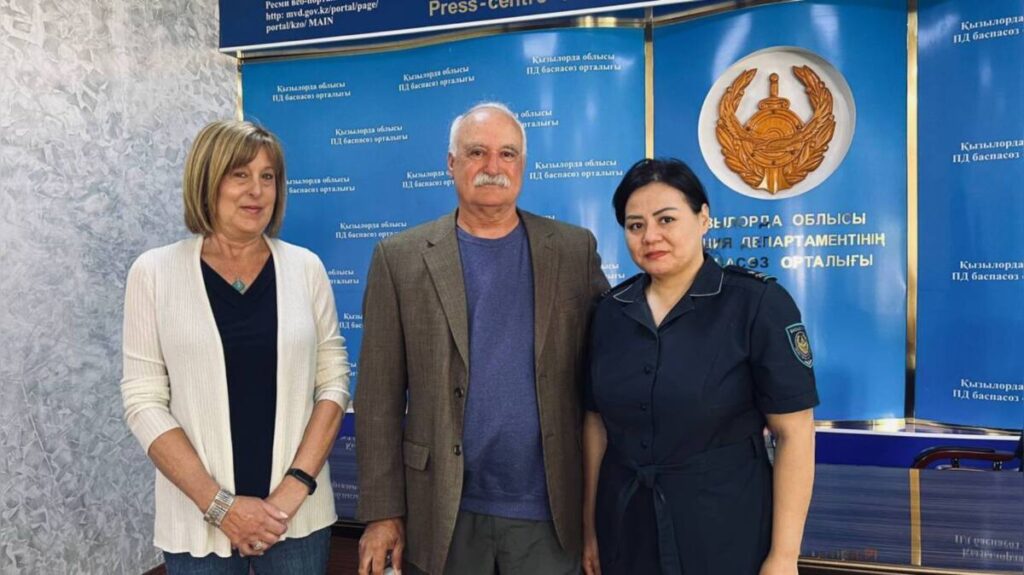
Since 2022, U.S. citizen Jeff Scheingold has been looking for any information about his close relatives who fled to Kazakhstan to escape the Nazis. Kazakhstani police officers helped him find out about the fate of his father, mother and brother. Scheingold asked the Kyzylorda Region Police Department to find information about his family. His parents and brother were Polish Jews who lived in the Terenozek district of the Kazakh Soviet Socialist Republic (KazSSR) after feeling into the Soviet Union from Poland to escape the Nazis. In 1943, during Stalinist repressions that were particularly acute for war refugees who had come from abroad, his father was arrested. "In 2022, I found out that my parents lived in Kazakhstan during the Great Patriotic War. They escaped from the Nazis from Poland. We didn't have any more information, except for the protocol of the court. As a result of our searches, we found documents that had been kept in the archive for almost 80 years. They concerned my parents and my brother  who are buried in aul (village) Number 6," said Scheingold. According to the Scheingold, he has now reconstructed the details of his blood relatives' lives from 1942 to 1946, with members of the Scheingold family traveling to Kyzylorda to visit the burial site of his brother. According to the Kazakh Ministry of Internal Affairs, more than 30,000 documents have been kept in the archive of the regional police. These documents are very important for thousands of people looking for information about the fate of relatives - as well as for scientists, journalists, and historians - to fully reconstruct and understand historical events using first-hand information.

Kazakh Embassy Counselor in UAE Recalled After Domestic Violence Allegations

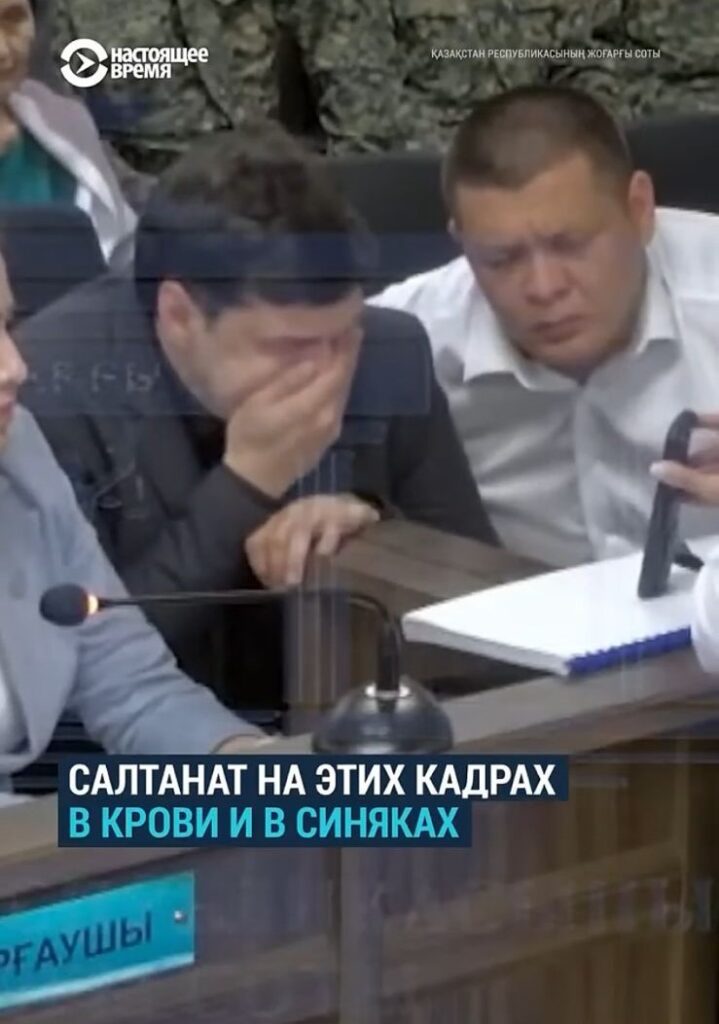
The Ministry of Foreign Affairs of Kazakhstan has recalled an Embassy Counselor from the United Arab Emirates (UAE), Saken Mamash, after the publication of a video message by his wife, Karina Mamash, who alleged ongoing domestic violence, according to a report in Kursiv.kz. "We urgently recalled this employee to Kazakhstan. Further, his case will be dealt with by law enforcement agencies," said an official representative of the ministry. Karina Mamash's appeal was published on an Instagram page run the public foundation, "NeMolchi" (Don't Remain Silent"). In the video, Mamash accuses her husband of years of violence, and expresses fear for her own safety and the safety of their children. "My name is Karina Mamash Gosmanovna. My husband, counselor to the Ambassador of the Republic of Kazakhstan to the UAE, yesterday beat me and my sister, who came to visit me on the 3rd [of May]. I demand help from our state. I am tired of being silent. I am tired of tolerating. For ten years he has been raping me, beating me. I am in danger, and my children are in danger around him. I demand help from our state. Help me," she said, attaching photos of herself and her sister with bruises on their faces to the post. Karina Mamash also insisted that her husband be "stripped of his status as a diplomat and put in jail for all the abuse." Domestic violence has become a key topic of discussion in Kazakhstan amid the high-profile case of Kuandyk Bishimbayev for allegedly killing his common-law wife, Saltanat Nukenova. On April 15, President Tokayev signed into law amendments and additions passed by Kazakhstan’s parliament ensuring the rights of women and the safety of children. The initiative represents a first in the CIS in terms of how far it goes to provide protection for women and children in the country.

Bishimbayev Trial: Will the “Show” Shift Reality?

The trial of Kuandyk Bishimbayev, accused of murdering his common-law wife, Saltanat Nukenova, is coming to an end with the verdict now in the hands of the jury. The trial has resonated widely in Kazakhstani society, but according to Gulmira Ileuova, a sociologist and head of the public foundation, Strategy: Center for Social and Political Research, Kazakhstan still has a long way to go to successfully fight abusive relationships. Ileuva commented on the case in an interview with the Times of Central Asia.   TCA: In Kazakhstan, Bishimbayev's trial has received a huge amount of attention, and Nukenova's death is being discussed at home and abroad, with rallies being held in her memory. Moreover, a law toughening penalties for domestic violence has recently been passed. Will that help to radically change the situation with violence to which thousands of Kazakhstani women are subjected every year? Ileuova: It seems to me that Bishimbayev's trial has influenced some categories of people - those who are ready to listen and draw conclusions. But society in a broader sense will not be overtly affected by this situation. Specialists are watching the trial, examining the behavior of lawyers, prosecutors, and other participants. Conclusions are also being drawn that the arguments used by the defense remain childish, infantile. Public opinion attributes to Bishimbayev's lawyers, let's say, the moral image of Bishimbayev himself. Psychologists will also draw conclusions: about problems with upbringing, family relations, etc. But in general, the feeling is that of a show having been created, captivating the audience, and making [the audience] terrified or delighted. Emotional swings are created, adrenaline is produced, and accordingly, people watch and get involved. But I doubt that there has been a profound shift in society against the backdrop of the trial. There needs to be a lot of additional activities, outreach, to tie the new law on domestic violence, in particular, to direct practice. Just the other day, the wife of a Kazakhstani diplomat appealed to the authorities for protection, saying that her husband had been torturing her for years and had beaten her again. This particular man did not draw any conclusions from Bishimbayev's story, including concerning his own actions. This official should have realized that the president was one of the most active initiators of the law on domestic violence. Of course, further public reaction will also be influenced by the expected decision of the court in the Bishimbayev case. If the principle of the inevitability of punishment and changes in the judicial system are demonstrated, there will be a certain shift. However, for now it is perceived mainly as a show. There is still an educational effect [only] in a small segment of society.   TCA: Why doesn't society perceive such clear signals? Why isn't there a shift to zero tolerance for domestic violence? Ileuova: We want change too fast, which is hardly possible because the inertia within society is huge. If women are sold for kalym (bride price or dowry), then they are still...

Kazakhstan Suspends Sugar Exports Until August

To ensure an uninterrupted supply of sugar to residents during the summer season, Kazakhstan’s government has announced a temporary ban on its export of sugar to third countries until 31 August. The decision made on 6 May, will affect fellow members of the Eurasian Economic Union - Armenia, Belarus, Kyrgyzstan, and Russia - but will not impact international transit. Kazakhstan’s warehouses can store about 256 thousand tons of its own reserves and imported sugar, which is enough to meet half of the country’s annual requirement of 500-550 thousand tons. According to Deputy Minister of Agriculture Erbol Taszhurekov, current stocks of sugar and raw cane amount to 136 thousand tons. Combined with the quota of 120 thousand tons of imported Russian sugar, reserves will reach 256 thousand tons by 31 August. In addition, Kazakhstan has a duty-free import quota of 300 thousand tons of raw cane for processing until the end of 2024. The average monthly sugar consumption is 46 thousand tons, and in summer, reaches 60 thousand tons.  Thus, explained the deputy minister, “the existing sugar reserves are more than enough to meet demand until the new harvest.” Kazakhstan also plans to negotiate with Russia to increase the quota of its supply of sugar by 100 thousand tons until the end of the year.  

Kazakhstan to Host Armenia-Azerbaijan Talks on May 10

The foreign ministers of Armenia and Azerbaijan will hold talks in Almaty on May 10 as they seek to end their long-running conflict, Kazakhstan said on Monday. The negotiations will happen in line with “previously reached agreements,” said Aibek Smadiyarov, spokesman for Kazakhstan’s Ministry of Foreign Affairs. Jeyhun Bayramov, Azerbaijan’s top diplomat, and his Armenian counterpart, Ararat Mirzoyan, will attend, according to the Kazakh official. Armenia and Azerbaijan have been locked in tension and conflict over territory since the 1990s, though the two sides have been working to delineate their borders following Azerbaijan’s retaking of control of the disputed Nagorno-Karabakh region last year. As reported by TCA last week, in a statement President Tokayev “welcome[d] the agreement between the Republic of Azerbaijan and the Republic of Armenia to hold talks at the Foreign Ministers’ level on the preparation of a peace treaty between the two states, at the suggestion of the Kazakh side.” Tokayev went on to express his hope the upcoming meeting would help with the “practical implementation” of agreements between the two sides.

Citizens of Kazakhstan Aren’t Being Detained at Borders with Russia, Ministry Claims

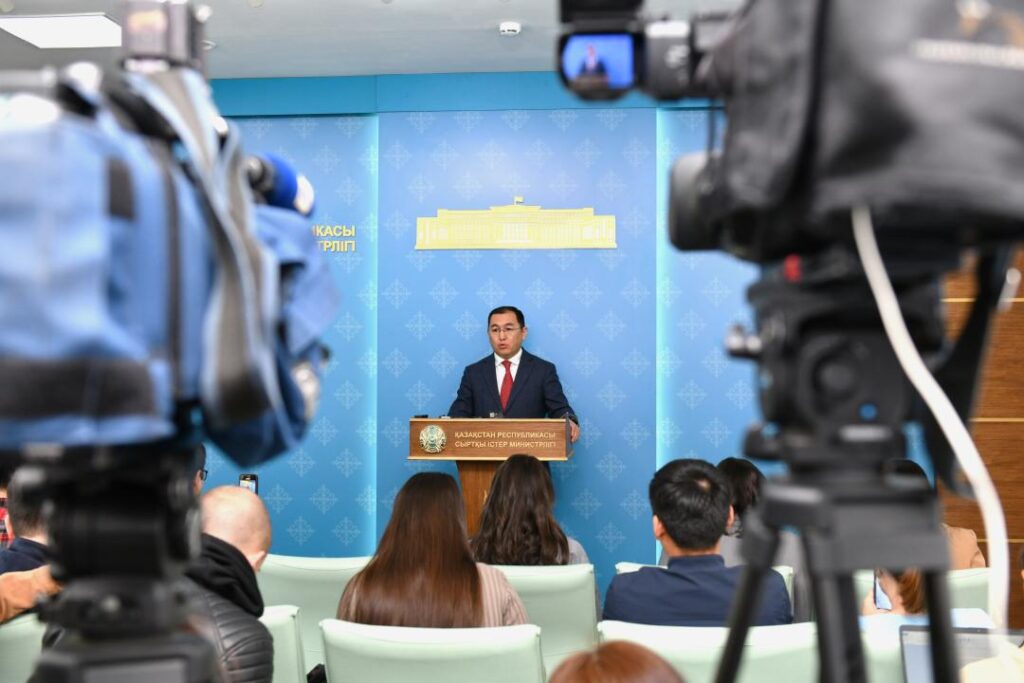
The Ministry of Foreign Affairs of Kazakhstan, Aibek Smadiyarov, is reassuring its citizens that they can safely visit Russia, stating that the relationship between the two nations is based on the principles of friendship, alliance, and strategic partnership, and are a model of multifaceted interstate cooperation. "We do not observe any problems on the Kazakh-Russian border. Our diplomats in Russia are constantly in contact with local authorities, the Ministry of Foreign Affairs, and the border service. Our citizens do not observe any mass detentions or document checks. If they have been stopped or had their documents checked, it is for security purposes," said Smadiyarov at the briefing. He also advised Kazakhstani citizens to observe Russian laws while in the country. Earlier, the foreign ministries of Tajikistan and Kyrgyzstan recommended that their citizens shouldn't visit Russia without good reason. These statements were made against the backdrop of a tightening on migration controls by the Russian authorities following the March 22 terrorist attack on the Crocus City Hall near Moscow. Since then, xenophobic attacks on migrants from Central Asia have been on the rise. According to currenttime.tv, 75% of cafes and restaurants run by Central Asian migrants in Moscow alone have shut since the incident due to police harassment.