• KGS/USD = 0.01144 0%
  • KZT/USD = 0.00214 0%
  • TJS/USD = 0.10569 0.09%
  • UZS/USD = 0.00008 0%
  • TMT/USD = 0.28530 0%
  • KGS/USD = 0.01144 0%
  • KZT/USD = 0.00214 0%
  • TJS/USD = 0.10569 0.09%
  • UZS/USD = 0.00008 0%
  • TMT/USD = 0.28530 0%
  • KGS/USD = 0.01144 0%
  • KZT/USD = 0.00214 0%
  • TJS/USD = 0.10569 0.09%
  • UZS/USD = 0.00008 0%
  • TMT/USD = 0.28530 0%
  • KGS/USD = 0.01144 0%
  • KZT/USD = 0.00214 0%
  • TJS/USD = 0.10569 0.09%
  • UZS/USD = 0.00008 0%
  • TMT/USD = 0.28530 0%
  • KGS/USD = 0.01144 0%
  • KZT/USD = 0.00214 0%
  • TJS/USD = 0.10569 0.09%
  • UZS/USD = 0.00008 0%
  • TMT/USD = 0.28530 0%
  • KGS/USD = 0.01144 0%
  • KZT/USD = 0.00214 0%
  • TJS/USD = 0.10569 0.09%
  • UZS/USD = 0.00008 0%
  • TMT/USD = 0.28530 0%
  • KGS/USD = 0.01144 0%
  • KZT/USD = 0.00214 0%
  • TJS/USD = 0.10569 0.09%
  • UZS/USD = 0.00008 0%
  • TMT/USD = 0.28530 0%
  • KGS/USD = 0.01144 0%
  • KZT/USD = 0.00214 0%
  • TJS/USD = 0.10569 0.09%
  • UZS/USD = 0.00008 0%
  • TMT/USD = 0.28530 0%

Viewing results 3025 - 3030 of 4863

Uzbekistan Ranks First in Central Asia in Number of Marriages and Last in Divorces

The Commonwealth of Independent States (CIS) Interstate Statistical Committee has published its compendium for 2022 on its website. Getting acquainted with the statistics of marriages and divorces of the collection, one sees that in 2022, there were 8.4 marriages and 1.4 divorces for every 1,000 people in Uzbekistan. The marriage indicator is 6.5 in Kazakhstan, and there were 2.3 divorces per 1,000; in Kyrgyzstan the data indicates 7.0 marriages and 1.8 divorces. Also of note was data on the intensity of internal migration, with Kazakhstan leading in this category with 41.3 per 1,000 people moving internally in 2022. In Kyrgyzstan and Uzbekistan, the indicator was 6.0, respectively. Tajikistan's data for 2021-2022 is not provided; the country showed 3.7 results per 1,000 people for 2020. At the same time, the State Statistics Committee of Uzbekistan reports that in 2023, there were 283,800 marriages and 49,200 divorces in the nation. In Kazakhstan, 90,300 marriages were registered between January and September of 2023, an 8.1% decrease from the same period in 2022. Based on the data that was submitted, there were 12,400 divorces in the first nine months of last year, and also an 8.1% decrease in divorces year-on-year. In Kyrgyzstan, 12,552 couples filed for divorce in 2023, while 45,495 marriages were registered before the law. Statistics for Tajikistan in 2021 (data for 2022 isn't yet available) showed that there were 7.6 marriages and 1.4 divorces per thousand. In 2023, 76,444 marriages and 10,298 divorces were officially registered. The statistical collection also includes data on these nations' populations, rates of illness and disability, educational attainment and cultural practices, economic activity, the material and housing circumstances of the populace, the environment, and crime.

EBRD and Shinhan Bank Upgrade Almaty’s Atakent Conference Hub

The European Bank for Reconstruction and Development (EBRD) and Shinhan Bank Kazakhstan are financing an ambitious upgrade of the Atakent Business Cooperation Centre in Almaty, to help Central Asia’s leading conference hub build world-class sports facilities.  The EBRD on February 19th announced it will share half of the risk of a KZT 3bn ($6.6m) loan provided by SBK, a fully owned subsidiary of Shinhan Bank Korea, to Atakent under the risk-sharing agreement between the two banks. The first risk-sharing transaction between the EBRD and SBK will finance the construction of a new sports and health facility, which will allow the Atakent hub to host national and international sports events.  The new sports complex will have a modern gym, various indoor and outdoor training facilities, two 25-metre swimming pools, and world-class arenas for a broad range of sport activities. The new facility will be open to professional athletes and the general public. The building – the construction of which is being supported by a $172,200 grant under the EBRD’s Resource Efficiency Transformation Program, funded by the Global Environment Facility Special Fund – will meet class A international energy efficiency standards. The grant will help introduce energy-efficient solutions, including LED lighting, insulation, and modern heating and cooling equipment.

Central Asians Continue Working in South Korea Despite Legal Issues

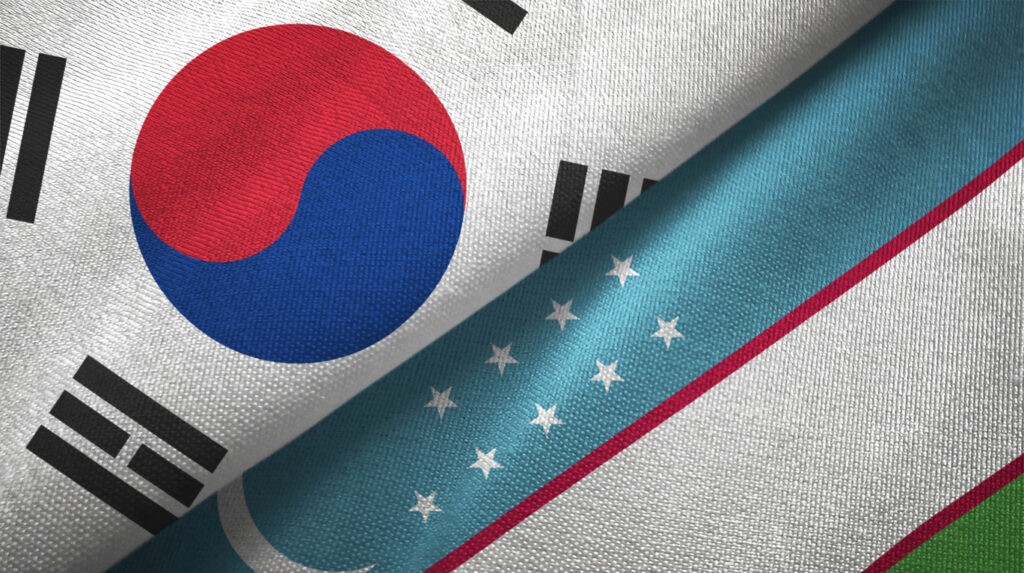
The authorities in the Republic of Korea have offered an option to citizens of Uzbekistan who are in the country illegally to return home without facing legal repercussions. To do this, they must voluntarily leave South Korea by February 29th to avoid being subject to deportation rules and be able to return legally in the future. According to the Agency for External Labor Migration of Uzbekistan, illegal migrants can apply for voluntary departure with the immigration service of Korea up until three working days before the expected date of departure. Applicants need to present their passport and an airline ticket. The service will then issue the migrant an identity card, with which Uzbekistani nationals will be able to return to their home country without hindrance. South Korea is one of the most popular destinations for Uzbeks, both for work and studies, with Uzbeks occupy fifth place by size of foreign diaspora in the country and numbering more than 69,000. Among them are a large number who are in Korea illegally; according to this indicator, Uzbekistan ranks third. The most popular scheme involves obtaining a D-4 visa, which is granted to foreign citizens who study the Korean language. Having received this and reached the Korean peninsula, citizens of Uzbekistan then start working and stay in the country illegally. In recent years, the Government of Uzbekistan has established regulations for legal and safe labor migration to South Korea, and at the start of 2024, the republic announced its intention to attract 100,000 Uzbeks to work in the country. Workers are required in sectors such as manufacturing, agriculture, services, and construction. To enter the South Korean workforce legally, Uzbeks need to pass language qualification exams and interviews. Labor migration to South Korea is also well established in neighboring Kyrgyzstan. Over the past 16 years, 5,000 Kyrgyz have been employed. Citizens of Kyrgyzstan can work there under a contract for four years and nine months, and receive more $2,000 per month. This year, Korea has allocated a quota for labor migrants in the amount of 3,300 people - an increase of 18% on 2023. By contrast, the issue of labor migration to South Korea from Kazakhstan is still at the negotiation stage. If the parties reach an agreement, Kazakhs will be able to work in Korea for three years - provided they successfully pass the language and professional tests. However, the lack of an agreement does not stop those who wish to earn money in Korea: according to the immigration service of Korea, since the beginning of 2023 about 7,000 Kazakh citizens have been staying in the country without labor visas. The number of companies interested in hiring illegal migrants in South Korea is constantly expanding for one simple reason: it's profitable. Migrants are not protected in any way in case of labor disputes, and they earn much lower wages than legal workers. Accordingly, the number of migrants who die working in dangerous industries is also increasing. From 2019 to 2022 alone, 61 Kazakh...

Kazakhstan Mulls Alternative Freight Routes

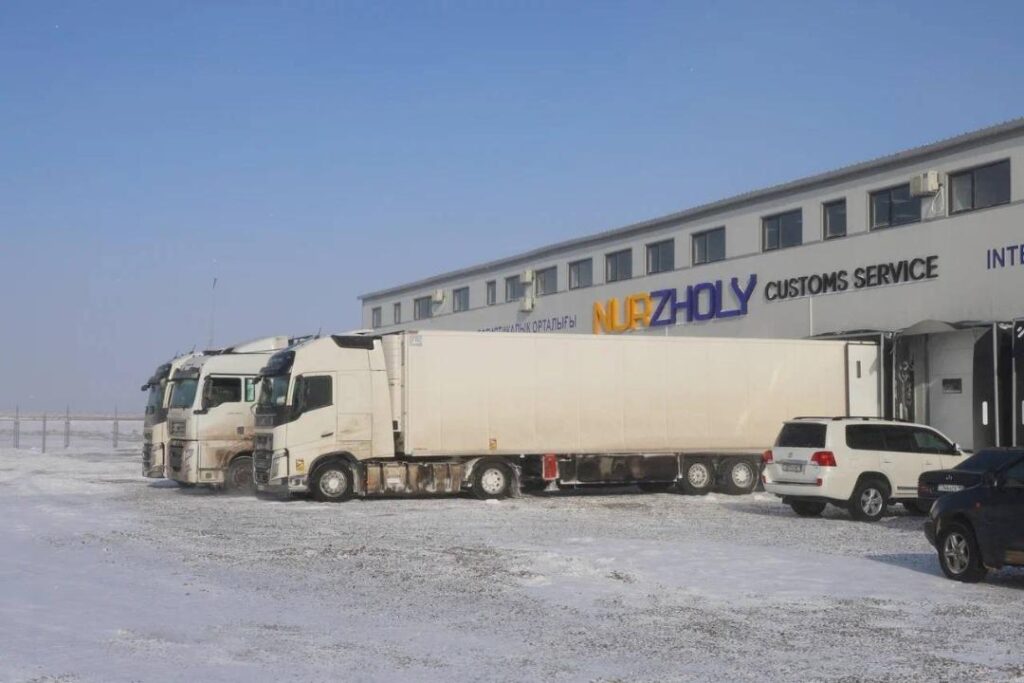
On February 19th Kazakhstan’s deputy prime minister Serik Zhumangarin held a government meeting on the subject of road freight routes to and from Kazakhstan.  According to the Ministry of Transport, last year 7.6m tons of goods were transported through the country by automobile transport, comprising 2.8m tons of exports and 4.8m tons of imports. Kazakhstan’s freight forwarders accounted for 50.2% of the total volume (Uzbekistan – 10.6%, Turkey – 5.5%, Russia – 3%, and Tajikistan – 2.5%.) As an alternative to existing international routes, Kazakh officials proposed a route through Turkmenistan to Turkey. For this to happen, Kazakhstan’s visa procedures with Turkmenistan would need to be simplified. In addition, a route through Latvia was proposed as an alternative for the supply of goods to EU countries. European countries accounted for 1.6m tons of the goods transported to and from Kazakhstan by road in 2023, with Kazakh companies carrying 50% of the total volume. However, the closure of all checkpoints for international road transport in Poland, and the availability of only one checkpoint on the border of Russia and Belarus, became serious obstacles to international trade.

Germany and Kazakhstan Expand Their Partnership

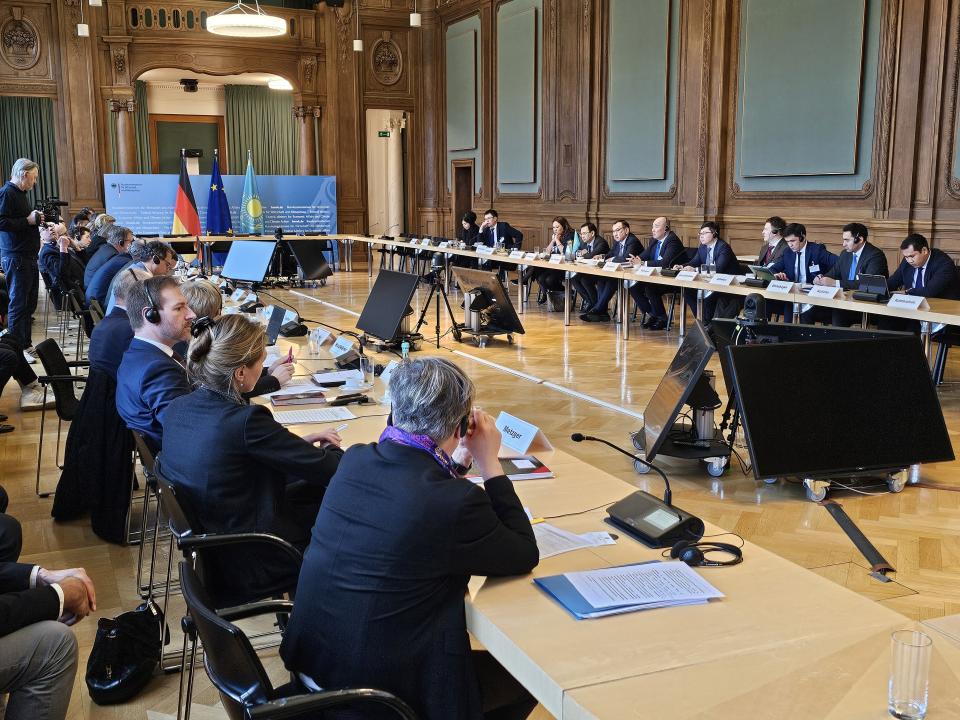
A meeting of the Kazakh-German Intergovernmental Working Group on Trade and Economic Cooperation was held in Berlin on February 16th. It was co-chaired by Kanat Sharlapaev, Kazakhstan’s minister for industry and construction, and Dominik Schnichels, the director for foreign trade policy of Germany’s Federal Ministry of Economic Affairs and Climate Protection.  The meeting discussed bilateral trade and economic relations, cooperation in energy, environment, agriculture and water management, transport, logistics and infrastructure, as well as cooperation in raw materials, industrial and technological spheres, the Kazakh Embassy in Germany reported.  Mr Schnichels commented: "To confirm once again the level of Strategic Partnership between Kazakhstan and Germany, constructive and fruitful talks were held at today's meeting of the Intergovernmental Working Group, which made it possible to identify specific projects in priority areas.”  “The agreements reached today demonstrate that this bilateral platform contributes to improving the framework conditions for further rapprochement of government and business circles, as well as practical promotion of mutual trade and investment. Kazakhstan is a resource-rich country with unique opportunities. Germany is interested in further deepening trade and economic cooperation in the way of the ongoing economic and social reforms in the country.”  In his speech, Mr Sharlapaev stressed that the strategic synergy between Kazakhstan and Germany, together with a convenient geographical location at the crossroads of intercontinental transport routes, including energy supply routes, strengthens Kazakhstan’s position as a regional investment hub and one of the key players in the global energy arena. "The development of the Trans-Caspian International Transport Route (Middle Corridor) is of great importance for Kazakhstan as a reliable supplier of energy resources and strategic goods to Europe,” he said. “Strengthening Kazakhstan's industrial potential is also among the strategic areas of cooperation with Germany." 

EDB Reports Economic Growth in Three Central Asian Countries

The Eurasian Development Bank (EDB) has released the latest Macroeconomic Review for its six member states — Armenia, Belarus, Kazakhstan, Kyrgyzstan, Russia, and Tajikistan. In the face of a challenging external economic environment, the EDB region saw a strong recovery in 2023, with the aggregate GDP of the six nations increasing by almost 4%. According to EDB analysts, this growth was propelled by internal drivers such as robust consumer and investment demand, as well as effective adjustments in production to accommodate changing operating conditions. In Central Asia, Kazakhstan’s economy showed particularly robust growth, surpassing 5% by the end of 2023, largely due to government programs aimed at unlocking the country’s investment potential. Investment and trade increased by 13.7% and 11.3% respectively over the year. Inflation in Kazakhstan continued to decline, with the year-on-year inflation rate dropping from 9.8% in 2023 to 9.5% in January 2024, laying the groundwork for further monetary policy easing. Kyrgyzstan's GDP grew by 6.2% in 2023, supported by stronger consumer demand and increased investment activity. Inflation in the country halved to 7.3% year-on-year in 2023, but the National Bank kept its discount rate unchanged at 13% per annum due to persistent pro-inflationary risks. Furthermore, abnormally cold weather in December-January 2022-23 contributed to an increase in production from the energy sector. However, there are factors that still hinder the pace of growth for businesses in the country. Against a backdrop of persistent, pro-inflationary risks, the National Bank of the Kyrgyz Republic is maintaining its base lending rate at 13 percent per annum to help control price growth. "We believe that domestic demand will weaken against the backdrop of constraining monetary policy conditions and the projected state budget surplus. According to our estimates, GDP will grow by 4.5 percent in 2024," EDB analysts report. For its part, the Ministry of Economy and Commerce of Kyrgyzstan said that the greatest contribution to GDP growth was made by industrial production. According to the department, the economy received an additional boost due to an increase in the output of basic metals. As has been reported previously, Kyrgyz gold miners have exported a record amount of gold in recent years. In Tajikistan, strong domestic demand and increased exports drove an 8.3% GDP growth in 2023. Inflation declined to 3.8% year-on-year at the end of 2023, close to the lower bound of the National Bank’s target range. Uzbekistan and Turkmenistan were not included in the report as they aren't EDB member countries. However, according to local media reports, they also showed strong growth at the end of 2023. The Uzbek economy grew by 6 percent, mainly due to growth in industry and increased agricultural  output in agriculture. Turkmenistan's GDP in 2023 showed growth of 6.3 percent -- mainly due to growth in the economic spheres of trade, industrial production and agriculture. According to international organizations, Turkmenistan's GDP has almost doubled in the last five years to $82 billion from $46.5 billion. Turkmen authorities are actively investing in the oil & gas sector, which...