• KGS/USD = 0.01144 0%
  • KZT/USD = 0.00214 0%
  • TJS/USD = 0.10617 1.05%
  • UZS/USD = 0.00008 0%
  • TMT/USD = 0.28490 0%
  • KGS/USD = 0.01144 0%
  • KZT/USD = 0.00214 0%
  • TJS/USD = 0.10617 1.05%
  • UZS/USD = 0.00008 0%
  • TMT/USD = 0.28490 0%
  • KGS/USD = 0.01144 0%
  • KZT/USD = 0.00214 0%
  • TJS/USD = 0.10617 1.05%
  • UZS/USD = 0.00008 0%
  • TMT/USD = 0.28490 0%
  • KGS/USD = 0.01144 0%
  • KZT/USD = 0.00214 0%
  • TJS/USD = 0.10617 1.05%
  • UZS/USD = 0.00008 0%
  • TMT/USD = 0.28490 0%
  • KGS/USD = 0.01144 0%
  • KZT/USD = 0.00214 0%
  • TJS/USD = 0.10617 1.05%
  • UZS/USD = 0.00008 0%
  • TMT/USD = 0.28490 0%
  • KGS/USD = 0.01144 0%
  • KZT/USD = 0.00214 0%
  • TJS/USD = 0.10617 1.05%
  • UZS/USD = 0.00008 0%
  • TMT/USD = 0.28490 0%
  • KGS/USD = 0.01144 0%
  • KZT/USD = 0.00214 0%
  • TJS/USD = 0.10617 1.05%
  • UZS/USD = 0.00008 0%
  • TMT/USD = 0.28490 0%
  • KGS/USD = 0.01144 0%
  • KZT/USD = 0.00214 0%
  • TJS/USD = 0.10617 1.05%
  • UZS/USD = 0.00008 0%
  • TMT/USD = 0.28490 0%

Viewing results 637 - 642 of 940

Kyrgyzstan’s President Declares Own Multi-Million Dollar Property as Part of Asset Legalization

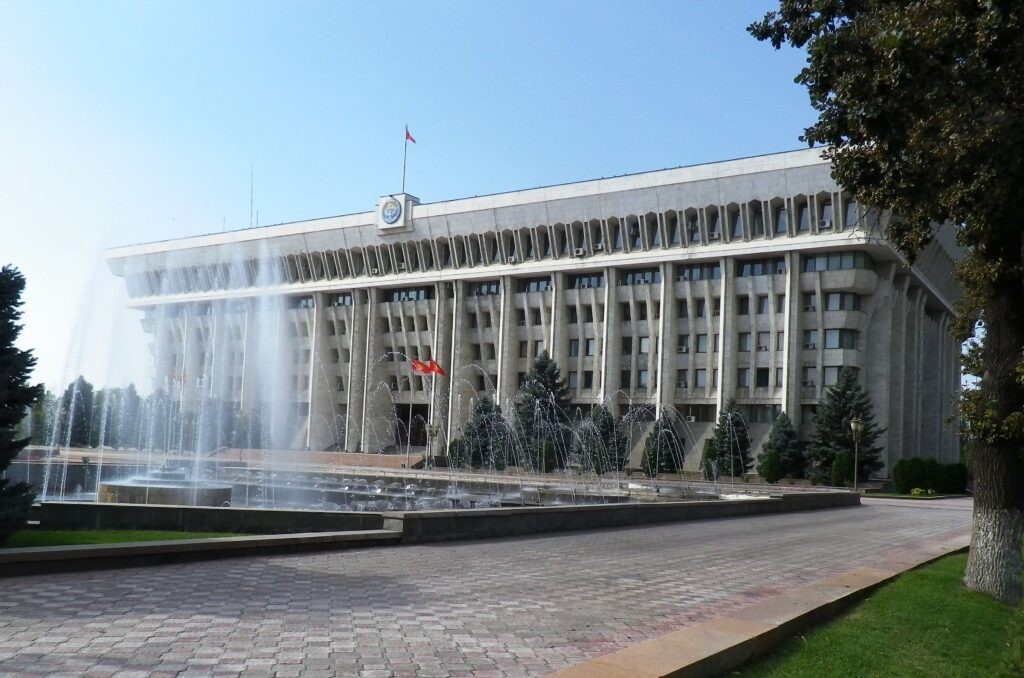
The President of the Kyrgyz Republic, Sadyr Japarov has said that he wants top business people and wealthy citizens to repatriate their assets to Kyrgyzstan instead of storing it abroad - which is why he has decided to start with himself. Last summer, Kyrgyzstan adopted a law on legalization - or declaring assets to the government - of property. According to official statements, its main goal is to transition the property and income of individuals from the shadow economy into legal economic activity through voluntary declaration of assets. The law stands until July 1st, 2024. "Voluntary legalization of and amnesty [for] assets will allow [the nation] to bring some shadow assets into legal turnover, which, as a consequence, will contribute to an increase in legal economic activity. According to the National Statistical Committee of Kyrgyzstan, the shadow economy accounts for 21% of the republic's GDP, and according to unofficial data, the shadow economy accounts for 40% of the republic's GDP. In this regard, the voluntary legalization and amnesty of assets of individuals is part of the preparatory stage of the transition to universal declaration," reads the law's background note. Image: Japarov Facebook post The president noted that all large and medium-sized business people used to register their property in someone else's name to avoid paying taxes to the state, and he was among them because he entered into politics from business. He lamented the fact that the richest citizens still keep their billions in foreign banks. Under the law, authorities guarantee that of all tax declarations previously submitted to state agencies will not be subject to prosecution. This is to give assurance to anyone seeking amnesty that the state will honor current assessments of income and property that have been legalized. The document states that if the amount a person legalizes exceeds 100 million som ($1,100,000), the submitting citizen must pay a so-called declaration payment of one million som ($11,000) to the state. "The value of my property is about 20 million dollars. I paid one million som to the state for the purpose of legalization. This is required by law. I have no savings abroad, and if I had, I would have invested them in our banks," the president wrote. Japarov said he constructed a building in the center of the capital back in 2010, but because of political persecution by the previous authorities, he had to hide the fact the multi-story building belonged to him. Now, he has registered the building under his own name. The head of state stressed that based on the law, the authorities guarantee all citizens the safety of legalized capital: "There is no other goal. There will be no questions [put] to you." The president noted that he's the first to legalize his property, despite the fact that the law came into force more than six months ago. At the end of last year, Japarov also urged owners of markets and large retail outlets to transition their assets out of the shadow economy....
Kyrgyzstan-Turkey Business Forum Held in Ankara

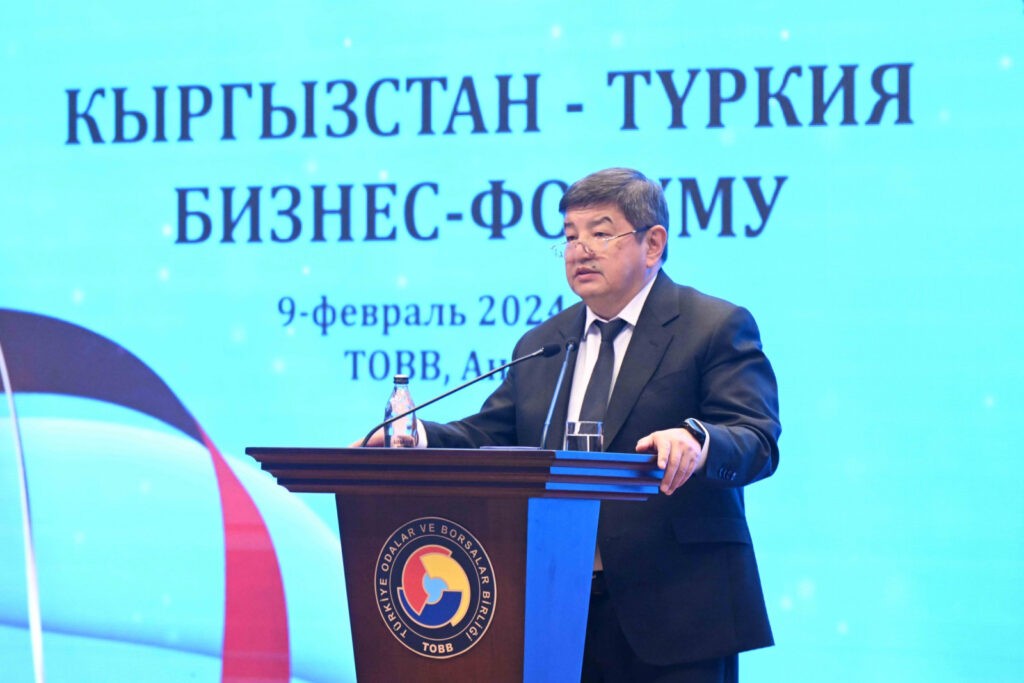
Relations between Kyrgyzstan and Turkey have reached a new level in all areas, the chairman of the Cabinet of Ministers of the Kyrgyz Republic, Akylbek Japarov said at the Kyrgyz-Turkish business forum in the Turkish capital, Ankara on February 9th. According to the Prime Minister, Turkey was the largest foreign investor in Kyrgyzstan’s economy in 2022, with investments totaling $341.6m. Between January and November 2023, trade turnover between the two countries increased again, amounting to $560.5m. Japarov added that the governments of the two countries are now working to create a Kyrgyz-Turkish Investment Fund to finance large infrastructure projects. At the forum, Kyrgyzstan’s Minister of Economy and Commerce, Daniyar Amangeldiev informed Turkish entrepreneurs about opportunities in Kyrgyzstan, highlighting tax breaks and support for investors. The forum culminated in the signing of eight cooperation documents on joint projects, among them a contract for the supply of walnuts from Kyrgyzstan to Turkey. On the same day, Japarov and Turkish Vice President, Cevdet Yilmaz co-chaired the 11th meeting of the Kyrgyz-Turkish Intergovernmental Commission on Trade and Economic Cooperation. The meeting focused on the fields of economy, investment, energy, industry, agriculture, transport, tourism, healthcare, culture, and education. At the meeting Japarov stated that the establishment of a trade mission of Kyrgyzstan in Turkey will help deepen economic ties between the two states and ensure the sustainable development of cooperation in trade and investment.

Kyrgyzstan To Pay Over $1.2bn Of Foreign Debt Before 2026

Kyrgyzstan is increasing the volume of payments on its external debt. In 2023 the country paid $344m of its foreign debt, and this year it is due to settle $400m. In 2025 the figure will be $430m, declining to $390m in 2026, the chairman of the Cabinet of Ministers Akylbek Japarov announced on February 7th.  According to the most recent data from the Ministry of Finance, as of November 2023 public debt amounted to $6.1bn, including $4.5bn of external debt and $1.6bn of internal debt. Over half (52.8%, or $2.4bn) of the external debt consists of multilateral loans. The country owes $2.1bn as part of bilateral concessional loans. Of these, 37.6% ($1.7bn) is owed to the Export-Import Bank of China.

World Bank’s Kyrgyzstan Head Discusses Energy Sector Needs

Worn-out energy infrastructure, power shortages and dependence on imports: authorities in the Kyrgyz Republic will have difficult tasks to address in order to ensure the republic's energy security over the next decades, said the head of the World Bank's Kyrgyzstan office, Naveed Hassan Naqvi, in an interview  with the state news agency, Kabar. Hassan Naqvi noted that energy issues are very serious and affect not only Kyrgyzstan, but the entire region, and the development of this sector directly affects the lives of people throughout Central Asia. The recent accident at Bishkek's thermal power plant showed how vulnerable the energy sector can be, and how much people rely upon it. "As you know, the installed capacity in the Kyrgyz Republic is about 3,900 megawatts, about 800 megawatts of which comes from the coal-fired Bishkek combined heat power (CHP) plant. The rest of the capacity is provided mainly by hydropower. It is important to note here that more than half, maybe even 60% of electricity transmission and distribution networks are used beyond their (service) life and need to be replaced. If we talk about hydroelectric power plants and their equipment, we see a similar situation - more than half of the facilities need replacement or repair," the head of the World Bank office emphasized. The World Bank office has long been following the situation in Kyrgyzstan, and helped develop a strategy to put the sector on the path to modernization. One of the key factors for solving problems, according to the international financial organization, is not only modernizing and replacing old equipment, but the need to increase tariffs paid by the population. Existing tariffs in the republic are the fifth cheapest in the world, meaning the authorities spend 2-3% of the country's GDP subsidizing them. In May 2023, the authorities raised electricity tariffs for government organizations, businesses, and household consumers. "As a result of dialog and close cooperation with the government, we started working in several areas, including tariff reform and calculating the installed capacity the country will need by 2050. Our assessment showed that the existing installed capacity in the country is 3,900 megawatts, but the country will need 10,000 megawatts by 2050," said Hassan Naqvi. In 2022, the World Bank allocated $50 million to the republic to modernize the energy infrastructure for household consumers: upgrading transformers, transmission lines, and installing smart meters to improve the efficiency of the energy grid. A year later, the World Bank provided another $80 million in the form of a subsidized loan to improve power grids and support small-scale energy - namely the construction of micro hydropower plants (HPPs) on Kyrgyzstan's numerous rivers. Lastly, in the fall of 2023, the bank allocated $5 million to the republic for a feasibility study of a new large HPP, Kambarata-1. The World Bank is slated to provide another $150-$200 million of the $500 million needed for its construction. Kyrgyzstan is also working with local partners on the construction of the first large joint Kyrgyz-Kazakh solar power plant in...

Kyrgyzstan To Breed Belgian Blue Cows

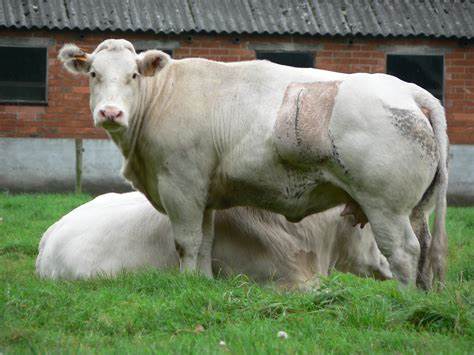
Kyrgyzstan’s Ministry of Economy and Commerce has signed an agreement with the Belgian agricultural company Ecodynamics to work together on agriculture and livestock farming, and the production, import and export of agricultural products. The agreement was signed during a January visit to Belgium by the minister of economy and commerce Sanzhar Bolotov. During his trip Mr Bolotov visited Ecodynamics and was shown technologies for raising Belgian Blue cows.  Mr Bolotov met with the head of Ecodynamics, and the parties agreed to work on breeding the Belgian Blue in Kyrgyzstan.  Since the second half of the 19th century this unique breed has been Belgium’s national pride. Belgian Blue cows have a remarkably developed muscle mass and contain a huge amount of meat.

Kyrgyz Gold Mines Produce Over 20 Tons Annually, But Local Jewelers Pay Above Global Price

Jewelers in Kyrgyzstan produced goods worth $1.6 million in 2023, five times more than in 2022, the Ministry of Economy and Commerce of Kyrgyzstan has stated. The ministry said the jewelry industry is important for the republic, not only because of its income, but also because of its importance in the country's culture, history, and tourism, and the government will support it in every way possible. "As part of the state support to date, jewelry manufacturers pay VAT with an 80% reduction. The leadership of the ministry highly appreciates the contribution of manufacturers to the preservation and development of this beautiful art," Deputy Minister of the Economy and Commerce, Ainura Usenbekova said at a meeting with jewelers. Meanwhile, the jewelers noted that despite the fact that more than 20 tons of gold is mined annually in Kyrgyzstan, the main problem for their industry is the supply of this precious metal. "The situation in this area has not changed for many years. We do not have physical access to metal, and if we do, it is at an inflated price. Gold bars sold to us by the National Bank between 5 and 20% more expensive than the global gold price. Plus, another 5% is added by Kyrgyzaltyn," said Stalbek Akmatov, president of the Kyrgyz Jewellers Union. Kyrgyzaltyn a Kyrgyz state company which controls gold circulation in the country Jewelers believe that until issues with the price of gold are settled so it's sold on the domestic market at prices comparable to those on the London Mercantile Exchange, serious development of the industry is out of the question. The Ministry of the Economy stated that they are aware of the problem, and the authorities are ready to discuss and work on creating competitive conditions for the continued development of the industry.