• KGS/USD = 0.01144 0%
  • KZT/USD = 0.00212 0%
  • TJS/USD = 0.10456 0.19%
  • UZS/USD = 0.00008 0%
  • TMT/USD = 0.28490 0%
  • KGS/USD = 0.01144 0%
  • KZT/USD = 0.00212 0%
  • TJS/USD = 0.10456 0.19%
  • UZS/USD = 0.00008 0%
  • TMT/USD = 0.28490 0%
  • KGS/USD = 0.01144 0%
  • KZT/USD = 0.00212 0%
  • TJS/USD = 0.10456 0.19%
  • UZS/USD = 0.00008 0%
  • TMT/USD = 0.28490 0%
  • KGS/USD = 0.01144 0%
  • KZT/USD = 0.00212 0%
  • TJS/USD = 0.10456 0.19%
  • UZS/USD = 0.00008 0%
  • TMT/USD = 0.28490 0%
  • KGS/USD = 0.01144 0%
  • KZT/USD = 0.00212 0%
  • TJS/USD = 0.10456 0.19%
  • UZS/USD = 0.00008 0%
  • TMT/USD = 0.28490 0%
  • KGS/USD = 0.01144 0%
  • KZT/USD = 0.00212 0%
  • TJS/USD = 0.10456 0.19%
  • UZS/USD = 0.00008 0%
  • TMT/USD = 0.28490 0%
  • KGS/USD = 0.01144 0%
  • KZT/USD = 0.00212 0%
  • TJS/USD = 0.10456 0.19%
  • UZS/USD = 0.00008 0%
  • TMT/USD = 0.28490 0%
  • KGS/USD = 0.01144 0%
  • KZT/USD = 0.00212 0%
  • TJS/USD = 0.10456 0.19%
  • UZS/USD = 0.00008 0%
  • TMT/USD = 0.28490 0%

Viewing results 415 - 420 of 955

Kyrgyzstan Cracks Down on Major Religious Extremist Organization

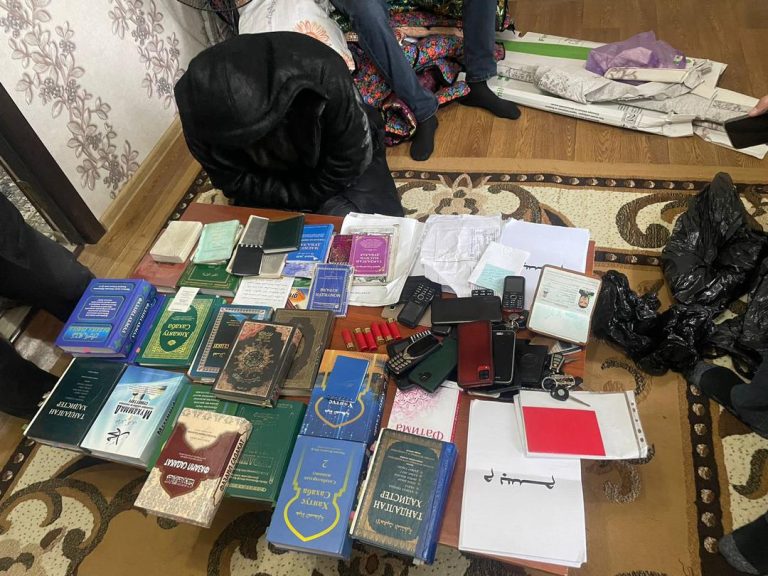
In Jalal-Abad, officers of Kyrgyzstan's State Committee for National Security (SCNS) neutralized one of the largest structural networks of the banned religious extremist organization Hizb ut-Tahrir. According to the SCNS press service, 22 active members of the organization were detained, including the leader (“masul”), five spiritual leaders (“nakibs”), and eight teachers (“mushrifs”) who taught extremist ideology to small groups of 3-5 students in clandestine settings. The SCNS reported that the detainees had been actively spreading destructive ideas, recruiting supporters, and distributing extremist materials for several years. During the operation, authorities discovered an underground printing house where extremist materials were being produced. A large cache of literature, as well as computers and copying equipment, was seized. The SCNS also noted that members of the network used drones to ensure the security of their meetings by detecting possible surveillance by law enforcement agencies. The detainees are currently being held in the SCNS detention center, and investigations are ongoing to identify additional members of the network and their activities. Hizb ut-Tahrir is an international religious extremist organization banned in Kyrgyzstan since 2003. Its goal is to establish a global Islamic caliphate by overthrowing secular governments. The organization is particularly active in Kyrgyzstan's southern regions, where it promotes extremist ideology and recruits new members. Kyrgyz authorities have been proactive in combating Hizb ut-Tahrir, regularly detaining its members and working to suppress its activities.
Kyrgyzstan Unveils Ambitious Growth Plans at People’s Kurultai

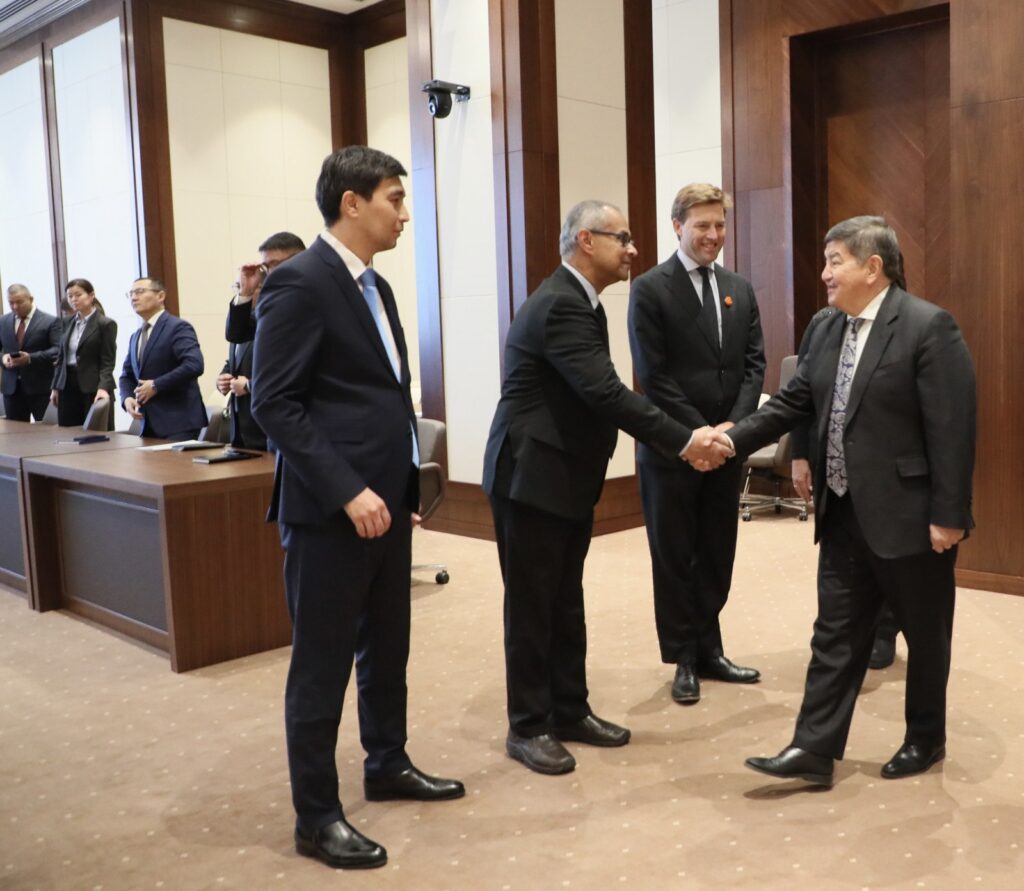
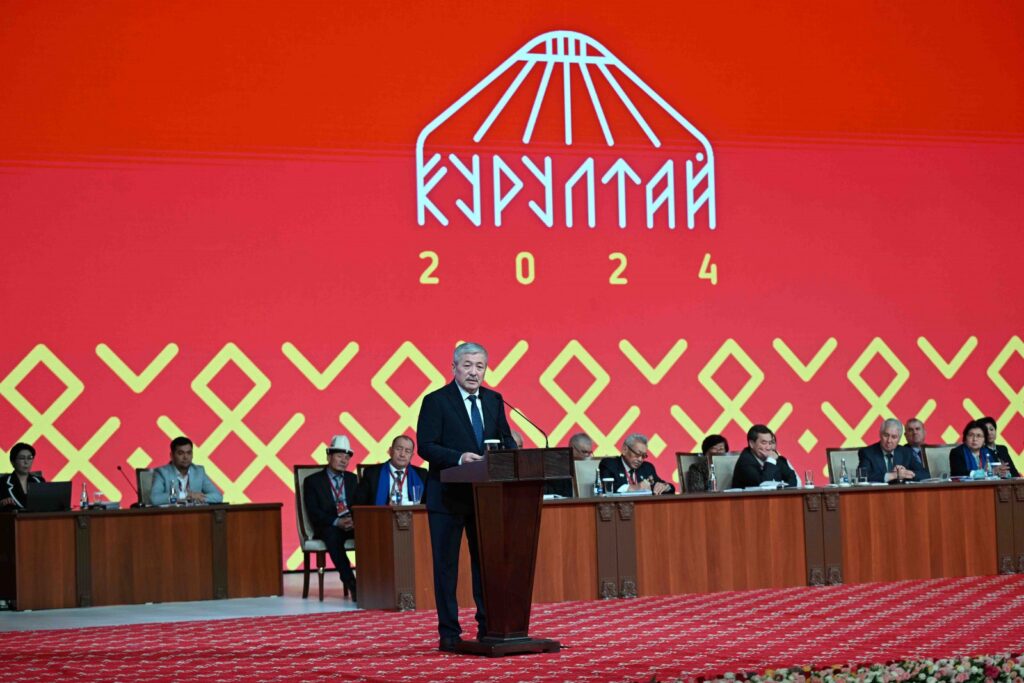
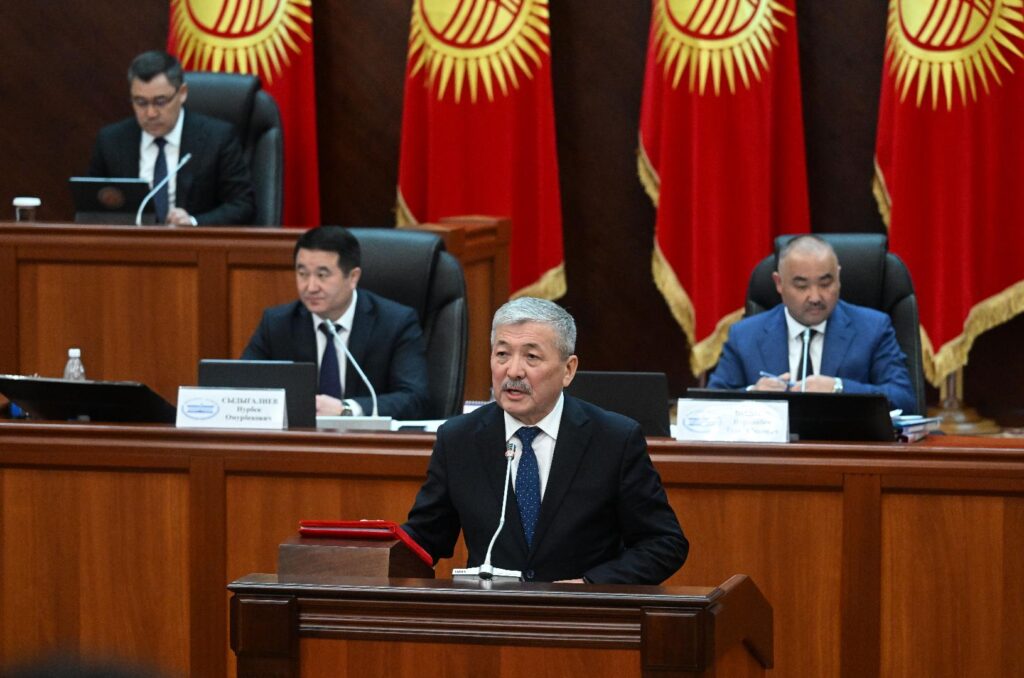
On December 20, Bishkek hosted the third People’s Kurultai (Congress), a platform for direct dialogue between representatives of local communities from across Kyrgyzstan and the country’s top leadership. The event featured opening remarks by President Sadyr Japarov and a detailed address by newly appointed Chairman of the Cabinet of Ministers, Adylbek Kasymaliyev, who outlined the government’s economic priorities and strategic plans for the future. Japarov set the tone for the event by sharing his vision for Kyrgyzstan’s development priorities. He announced that construction of the long-anticipated China-Kyrgyzstan-Uzbekistan railway will commence on December 27. Kasymaliev, in his address, emphasized Kyrgyzstan’s ability to sustain economic momentum, citing the country’s 9% annual GDP growth rate over the past three years. He highlighted key initiatives aimed at transforming Kyrgyzstan’s economic landscape, including: Strategic Infrastructure Projects: Kasymaliyev underscored the significance of the China-Kyrgyzstan-Uzbekistan railway, which is expected to create new economic centers and logistics hubs, effectively positioning Kyrgyzstan as a "land port" in the region. Hydropower and Renewable Energy: As a reliable partner in Central Asia’s hydropower sector, Kyrgyzstan will continue collaborating with Kazakhstan and Uzbekistan on the flagship Kambarata-1 hydroelectric power plant. Kasymaliyev also announced plans to expand solar and wind energy, eliminate state monopolies in the energy sector, and create conditions to attract private investment. Agriculture and Food Security: The government will prioritize agricultural processing to add value to raw products, ensuring food security and bolstering rural economic development. Construction as an Economic Driver: With construction contributing 7.4% of Kyrgyzstan’s GDP - a tenfold increase since 2013 - Kasymaliyev called the industry a vital indicator of economic growth. He noted that construction has significantly improved citizens' well-being over the past three years. Government’s Strategic Goals Kasymaliyev laid out an ambitious roadmap for the Cabinet of Ministers, aiming for the following by 2030: Economic Growth: Maintaining a GDP growth rate of 9% and achieving a GDP of $30 billion. Income Growth: Raising GDP per capita from $2,500 to $4,000. Economic Transition: Shifting from a services-oriented economy to an industrial-agrarian model. Support for Small and Medium Businesses: Increasing their share in GDP from the current 40.5% to 50%. Poverty Reduction: Lowering the poverty rate to 17%. Education Expansion: Ensuring 80% of preschool-age children have access to kindergarten. Kasymaliyev’s address underscored the government’s commitment to comprehensive economic reforms and regional cooperation. His plans reflected an optimistic vision for Kyrgyzstan’s development while addressing key challenges in energy, infrastructure, and social services.

Tax Troubles Trigger Shake-Up: Kyrgyzstan Names New Prime Minister

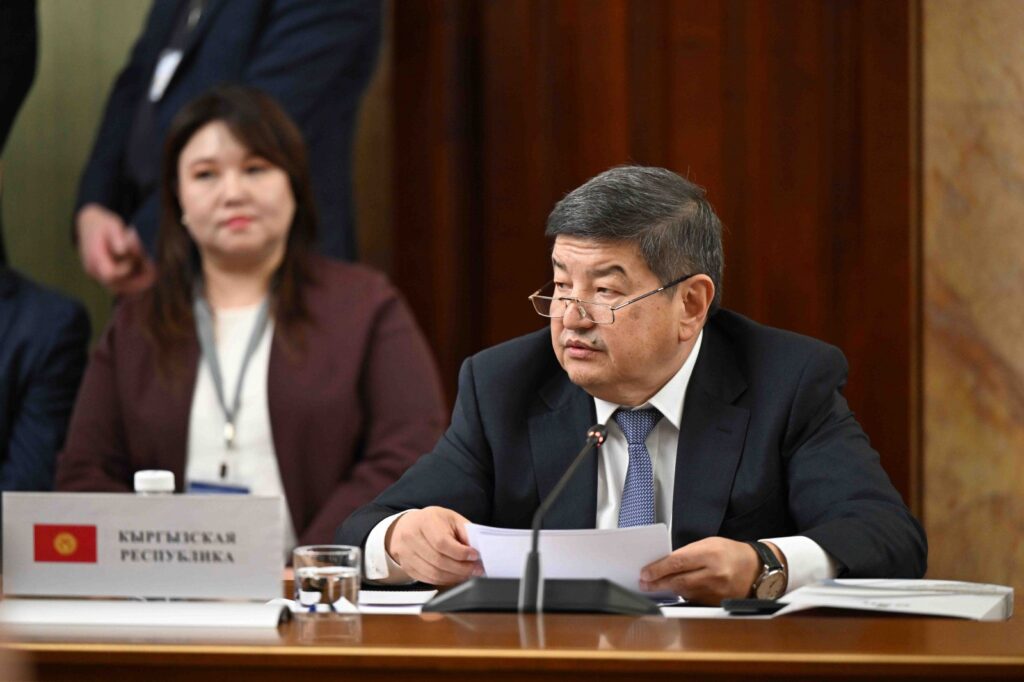
In Kyrgyzstan, Adylbek Kasymaliev, the head of the Cabinet of Ministers, has replaced Akylbek Japarov and became the new Prime Minister of the country. The departure of the previous head came as a surprise to most citizens. However, the president of the Kyrgyz Republic explained that the dismissal was due to unfavorable developments in the sphere of taxes. New Prime Minister Adylbek Kasymaliev was born on December 1, 1960, in the village of Dolon, in the Tyup district of the Issyk-Kul region. Over his long career, he has held the positions of Minister of Finance of Kyrgyzstan, Chairman of the State Tax Service, and Deputy Head of the Presidential Administration. According to the Kyrgyz president, Kasymaliev’s predecessor, Akylbek Japarov, who served for more than three years in the government, made a number of mistakes in the area of taxes. “His departure from office, I think, should not be politicized," stated President Sadyr Japarov. "Unfavorable events in the tax sphere, which provides the funds for the budget, have impacted this decision. There have also been machinations with excise duties. This sphere was under Akylbek Usenbekovich's personal control, and he could have taken earlier measures to stop illegal activity. Because of illegal manifestations in this area, as well as an investigation into the leadership of the tax service, there is a need to eliminate a conflict of interests. Thus, I decided to remove him from his post,” the president told Parliament. Earlier, the State Tax Service of Kyrgyzstan underwent massive inspections, resulting in a number of high-ranking officials losing their posts, including the head of the State Tax Service and some of his deputies. Kyrgyz analyst Nasirdin Shamshiev told Times of Central Asia that the departure was unexpected, as Akylbek Japarov had established himself as a strong and progressive economist. “Akylbek Japarov has done a lot to increase tax collections and bring business out of the shadows. Today's appointments in the government speak of the previous course of the Cabinet of Ministers,” Shamshiev said. In addition, Bakyt Sydykov has been officially appointed as Kyrgyzstan's new Minister of Economy. Previously, Sydykov worked on attracting investments and coordinating donor aid to the country.  "Sydykov's appointment was likely a preliminary measure," Shamshiev also told TCA. "He has performed well in his previous posts, but we have yet to assess his work, because the Ministry of Economy is not only about investment, it has to deal with a very wide range of issues. These include taxes, as well as standardization and customs policy. There are also many unresolved problems related to the Eurasian Economic Union. There is still a lot of work to be done on all of this.” Personnel rotations in the government of Kyrgyzstan are associated with a revitalization of the system of government management, Edil Baisalov, deputy chairman of the Cabinet of Ministers, wrote on his Facebook page. According to Baisalov, the president's decision is dictated by the desire to give new momentum to the country's growth. Baisalov also noted that Akylbek Japarov...

Akylbek Japarov Dismissed as Kyrgyzstan’s Cabinet Chief

On December 16, Kyrgyzstan’s head of the Cabinet of Ministers and Presidential Administration, Akylbek Japarov was dismissed from his position. Sources within the presidential administration confirmed the news to The Times of Central Asia. According to reports, President Sadyr Japarov has signed a decree formalizing the resignation. Akylbek Japarov is expected to be appointed as an advisor to the president. In the interim, Adylbek Kasymaliev, the first deputy head of the Cabinet of Ministers, will serve as acting prime minister. The appointment of a permanent successor has yet to be announced. After a long political career including, holding posts under former president's Akayev an Bakiev, Akylbek Japarov’s return to the forefront of Kyrgyz politics under President Japarov began in 2021, when he was appointed as an advisor on financial and economic issues. He later served as Minister of the Economy and Commerce, and as Deputy Chairman of the Cabinet of Ministers. On October 13, 2021, he assumed the dual role of head of the Cabinet of Ministers and head of the Presidential Administration, a position he held until his dismissal. Akylbek Japarov’s tenure as head of government stands out for its longevity. Since Kyrgyzstan gained independence in 1991, the country has seen 33 prime ministers, many of whom served for less than a year, whilst some held office for only a few days. In this context, Akylbek Japarov’s relatively long tenure of more than three years marks a significant achievement in Kyrgyz political history. From 2000 to 2005, Akylbek Japarov served as a deputy in the Jogorku Kenesh (parliament). Over the years, he held various key positions, including first deputy prime minister, deputy, and chair of the Committee on Budget and Finance. Akylbek Japarov gained particular recognition during his tenure as Minister of Economy and Finance for championing the controversial idea of passports for livestock. This initiative aimed to help farms export meat by providing identification for livestock, thereby improving traceability and quality standards.

West Monitors Syria for Plans of Jihadis, Some From Central Asia

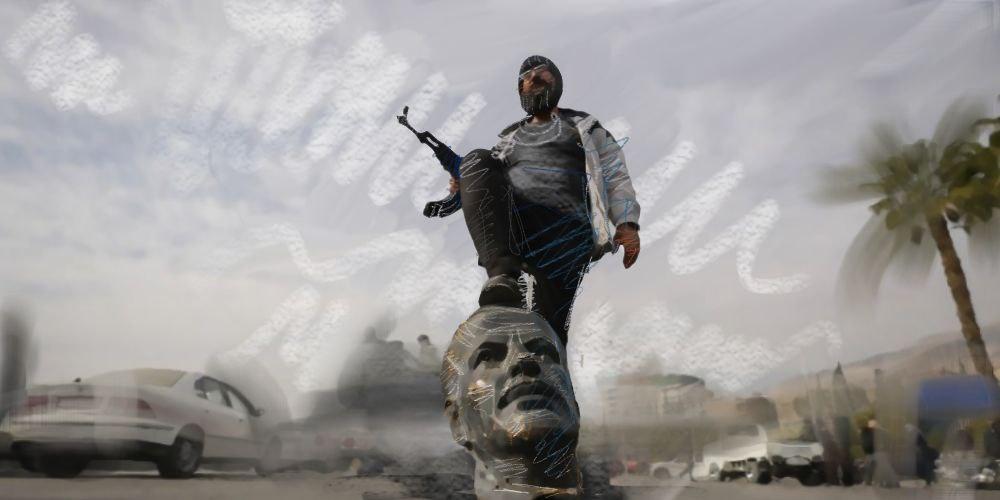
Some counterterrorism experts in the West are assessing whether the ouster of Bashar Assad´s regime in Syria will lead to a recalibration of the Islamic militant groups that opposed him, some of which include especially hardline recruits from Central Asia. Hayat Tahrir al-Sham (HTS), the Syrian group that led an offensive into Aleppo and Damascus and forced Assad to flee in a span of two weeks, is trying to turn to governance with a relatively moderate image even though it was associated with Al-Qaeda earlier in the Syrian civil war and is labeled a terrorist organization on some Western lists. It’s too early to say whether HTS leader Abu Mohammed al-Golani will stick to a message of tolerance or can make it work in a fractured country with gutted institutions, but there are signs that some jihadis object to his message of inclusiveness. “Many of them are Central Asians and they may look to go somewhere else. I think we’re inevitably going to see a certain amount of splintering from what happens in Syria,” said Colin Clarke, a terrorism researcher and author of After the Caliphate. At an Atlantic Council event in Washington on Wednesday, Clarke said there is an “interplay” between religious extremism in Afghanistan and Syria, and that a number of groups with Central Asian members have those connections. Clarke said he will be watching to see whether the connections grow following Assad’s abrupt exit after more than two decades in power. Some estimates put the number of Islamic militants who have traveled from Central Asia to Syria and Iraq over the years at around several thousand, though the figures vary and are difficult to confirm. Many joined the Islamic State group, which was defeated in Iraq and is much diminished in Syria although the U.S. recently carried out air strikes to prevent any resurgence by the group amid Syria’s current upheaval. One jihadist group with Central Asia links that collaborated with HTS in the successful campaign against Assad is Katibat al Tawhid wal Jihad, designated a terror group by the U.S. State Department in 2022. The group carried out a Saint Petersburg, Russia metro attack in 2017 that killed 14 passengers and injured 50 others, as well as a suicide car bombing of the Chinese embassy in Bishkek, Kyrgyzstan in 2016 that injured three people, according to the U.S. Katibat al Tawhid wal Jihad is comprised mainly of Uzbek, Tajik and Kyrgyz combatants, according to Daniele Garofalo Monitoring, which traces jihadist propaganda and military activity. There are an estimated 400-500 fighters in the group. Another HTS ally is Katibat Mujaheddin Ghuroba Division, which has between 200 and 400 fighters, according to the Garofalo site. Many are Uzbeks, Tajiks and Uyghurs, though the group also has Arab militants. There is also Jaysh al-Muhajireen wal-Ansar, which dates to the early stages of the Syrian civil war that began in 2011. The jihadist group is believed to have 400-500 fighters, mostly Chechens, Tajiks, Dagestanis, Azerbaijanis, Kazakhs and Ukrainians, as well as...

World Bank Chief Economist Owes a Bottle of Wine to Kyrgyzstan’s Cabinet Chief

During a conversation with Hugh Riddell, head of the World Bank’s office in Kyrgyzstan, Akylbek Japarov, Chairman of the Cabinet of Ministers, shared an anecdote about a wager made with the World Bank’s chief economist. “In 2022, at a World Bank session in Washington, your chief economist and I bet that Kyrgyzstan’s economic growth over the next 3-4 years would remain stable and exceed 7%. He doubted this was possible and was ready to wager a bottle of fine wine,” Japarov recounted at a recent event focused on Kyrgyzstan’s development. Japarov highlighted the latest economic figures to underscore his point: GDP growth for the first 11 months of 2024 stands at an impressive 9%. Confident in his position, Japarov announced his intention to claim his winnings. The anecdote reflects broader optimism about Kyrgyzstan’s trajectory. According to data presented by World Bank experts during discussions with the presidential administration, 89% of Kyrgyz citizens believe the country is moving in the right direction regarding political, social, and economic reforms​. The World Bank is actively monitoring socio-economic trends in Kyrgyzstan through its “Listening to the Kyrgyz Republic” project. This initiative conducts monthly panel surveys of 1,500 households across all regions, using telephone interviews to track citizens’ well-being and gather insights into national development trends.