• KGS/USD = 0.01144 0%
  • KZT/USD = 0.00211 0%
  • TJS/USD = 0.10454 -0.1%
  • UZS/USD = 0.00008 0%
  • TMT/USD = 0.28571 0.28%
  • KGS/USD = 0.01144 0%
  • KZT/USD = 0.00211 0%
  • TJS/USD = 0.10454 -0.1%
  • UZS/USD = 0.00008 0%
  • TMT/USD = 0.28571 0.28%
  • KGS/USD = 0.01144 0%
  • KZT/USD = 0.00211 0%
  • TJS/USD = 0.10454 -0.1%
  • UZS/USD = 0.00008 0%
  • TMT/USD = 0.28571 0.28%
  • KGS/USD = 0.01144 0%
  • KZT/USD = 0.00211 0%
  • TJS/USD = 0.10454 -0.1%
  • UZS/USD = 0.00008 0%
  • TMT/USD = 0.28571 0.28%
  • KGS/USD = 0.01144 0%
  • KZT/USD = 0.00211 0%
  • TJS/USD = 0.10454 -0.1%
  • UZS/USD = 0.00008 0%
  • TMT/USD = 0.28571 0.28%
  • KGS/USD = 0.01144 0%
  • KZT/USD = 0.00211 0%
  • TJS/USD = 0.10454 -0.1%
  • UZS/USD = 0.00008 0%
  • TMT/USD = 0.28571 0.28%
  • KGS/USD = 0.01144 0%
  • KZT/USD = 0.00211 0%
  • TJS/USD = 0.10454 -0.1%
  • UZS/USD = 0.00008 0%
  • TMT/USD = 0.28571 0.28%
  • KGS/USD = 0.01144 0%
  • KZT/USD = 0.00211 0%
  • TJS/USD = 0.10454 -0.1%
  • UZS/USD = 0.00008 0%
  • TMT/USD = 0.28571 0.28%

Viewing results 469 - 474 of 949

Kyrgyzstan Adds First Three Organizations to List of Foreign Agents

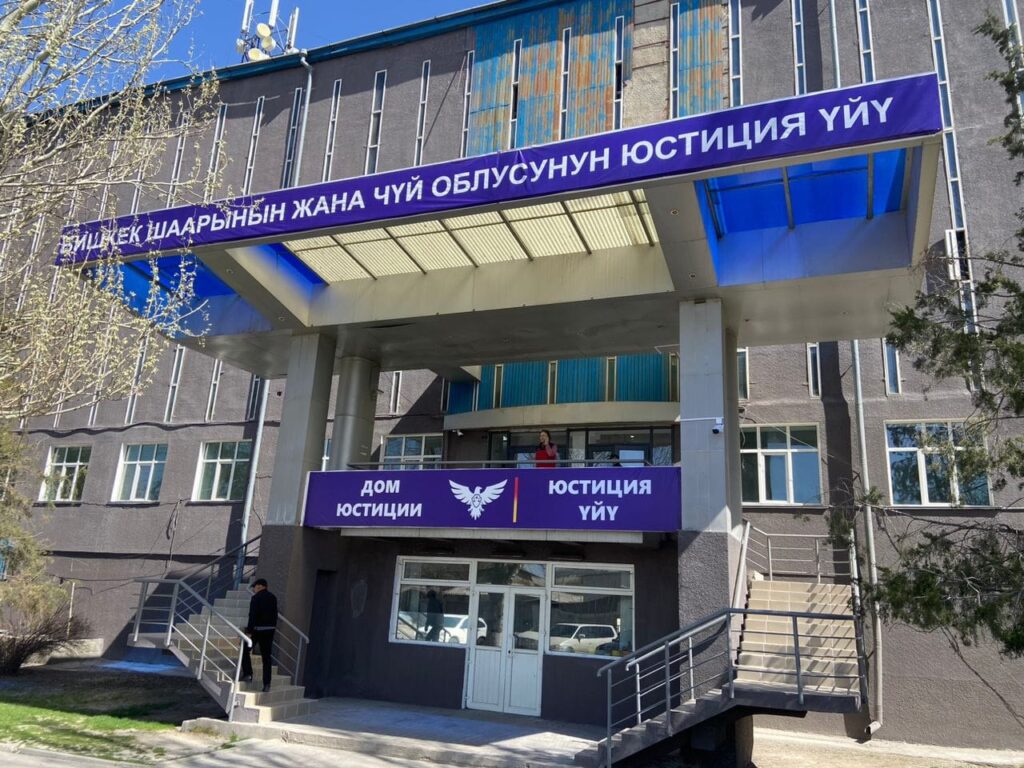
The Kyrgyz Ministry of Justice has posted a list of non-profit organizations that have been given the status of “foreign agent”. On August 27 the Cabinet of Ministers of Kyrgyzstan adopted a decree “On non-profit organizations”. The new law came into force on September 9, since when any NPO engaged in political activities and receiving funding from abroad must apply for inclusion as a foreign agent. The first three organizations to declare themselves as "foreign agents" are the Eurasian Club association of entrepreneurs, the business association JIA, and a branch of the environmental organization Fauna and Flora International. “Applications shall be submitted to the authorized body to maintain the register of NPOs within two months from the date of entry into force of this decree,” the Ministry of Justice explained to The Times of Central Asia. After receiving an application, the ministry has 60 days to verify the information provided. The law stipulates that foreign agent status can be removed if an organization has not received funds or property from foreign sources in the past 12 calendar months, or if it has not been engaged in political activity in the past 12 months. Kyrgyzstan's president Sadyr Japarov has promised the public that the authorities would not prosecute foreign agents and their representatives. “I, as head of state, guarantee that there will be no persecution. We are not a nuclear country. We are not going to fly into space yet. Our state has no secrets to hide from you and your donors,” Japarov said earlier this year.
Latvia Coaches Central Asia on Borders While Hardening Russia Frontier

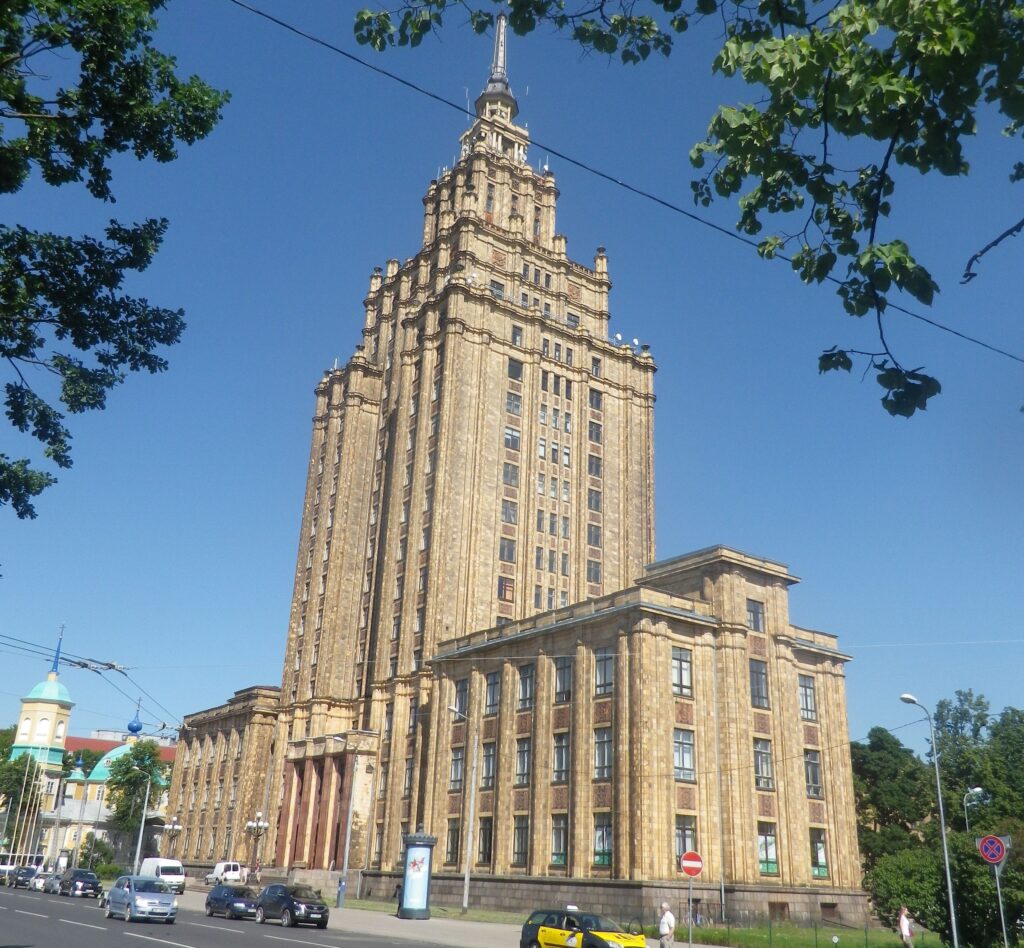
Last month, Central Asian border and law enforcement authorities on a training visit to Latvia got a look at the Baltic state’s border with Russia, which the Latvian government is fortifying because of tension over the Ukraine war.  Officials from Kazakhstan, Kyrgyzstan, Tajikistan and Turkmenistan met in the Latvian capital of Riga on August 27-29 to talk about how to secure their own borders and work together on trade corridors. The trip ended with a visit to Latvia’s 330-kilometer border to the east with Russia, where “conference participants got acquainted with the infrastructure, equipment and specifics of the border surveillance,” said an EU-backed agency that promotes Central Asian border security and is known by the acronym BOMCA. Unlike the Central Asian countries, Latvia is a NATO member that has provided military aid to Ukraine and considers Russia and Russian ally Belarus, with which it also shares a border (160 kilometers), to be adversaries. Latvia is preparing strongholds, anti-tank ditches and ammunition depots along its border with both countries.  The border buildup of Latvia, which was invaded by both Soviet and German forces during World War II before eventual Soviet occupation, differs from the experience of Central Asia’s former Soviet republics, which were formed in the 1920s and 1930s. Of those Central Asian countries, only Kazakhstan shares a border (at about 7,600 kilometers) to the north with Russia, which has longstanding security and trade relations with the region despite the often harsh legacy of Soviet rule.  Still, Latvia’s role as a leader of the 20-year-old European Union program to help Central Asia develop and integrate its border management systems comes at a fraught time for the Baltic country as it hardens its borders with Russia and Belarus. The Central Asian officials who inspected Latvia’s border with Russia last month also toured the Border Guard College of Latvia in the eastern town of Rēzekne, whose landmarks include an arch of the ruins of a castle that was mostly destroyed during fighting centuries ago.  A Russian military drone entered Latvian airspace from Belarus and fell in the Rēzekne region on Saturday, according to Latvian defense officials. Defense Minister Andris Sprūds said that air defense and electronic warfare development will “allow us to limit the operation of drones of various uses." Latvia has also grappled with illegal crossings by migrants coming from Belarus, which has denied Western accusations that it facilitated border breaches in order to put pressure on the European Union.  The EU-backed border training for Central Asia started long before Russia’s full-scale invasion of Ukraine in February 2022 and is designed to help Central Asian countries with their own challenges, which include drug smuggling and human trafficking. There are historical border disputes in Central Asia, but some have been moving toward resolution.  Currently, Latvia and neighboring Lithuania are hosting several months of training for Central Asian handlers of K9s, dogs that search for illegal drugs and explosives. Latvia, in turn, is getting its own help from allies. Earlier this year, the United...

World Nomad Games Opening Ceremony: A Fusion of the Ancient and the Modern

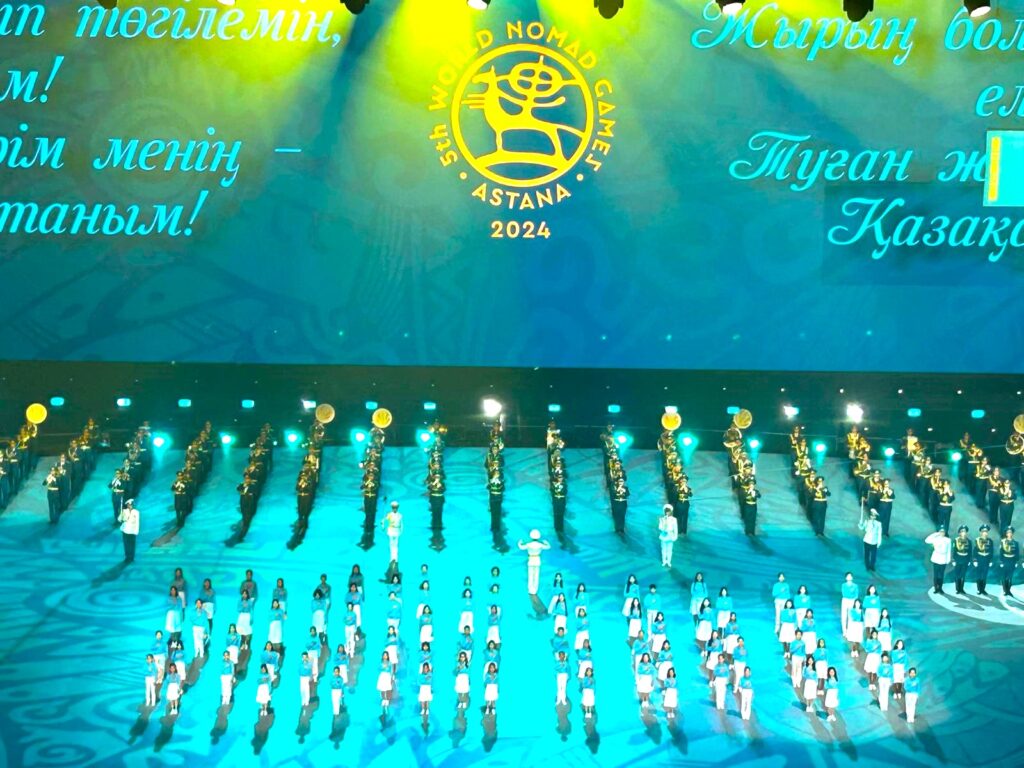
With much pageantry, September 8 saw Astana host the opening ceremony of the 5th World Nomad Games, themed as the "Gathering of the Great Steppe." A procession of singers and dancers in tall white telpek hats and flowing red and gold robes opened proceedings, marrying modern beats to traditional music. This fusion of the ancient and the present was a key theme running through the entire event. With the melodies building to crescendo, the flag-waving crowd lifted their torches aloft, chanting “Kazakhstan,” before the national anthem peeled out from the stage. With 89 countries participating in this edition, the parade of athletes followed, each nation led forth by a white steed and a woman in a traditional, sparkling costume. From the hundreds representing the Kyrgyz Republic – a perennial champion at the World Nomad Games – to far smaller contingents, such as the three representatives from Benin, each nation was afforded their moment in the spotlight. Last, but far from least, the athletes from Kazakhstan emerged to a huge roar of appreciation. Taking to the podium with the keynote address, President Tokayev told the crowd Kazakhstan is “known to everyone as a land of peace and coexistence. The games, he stated, are a “great event on a global scale… Nomadic civilization has left a deep mark on world history. The new technologies they developed provided the impetus for global progress. Five thousand years ago, nomads domesticated the horse and shaped a horseback riding culture that spread across the world… Serving as a bridge between East and West, nomads played a crucial role in the rapprochement of various cultures. “The great nomadic life will never cease to exist,” Tokayev concluded. “Even amid globalization, the nomadic lifestyle that existed for a thousand years is reviving and taking a new shape. Modern nomads are making efforts to reclaim a central place in history. We are moving and traveling easily all over the world in search of education and job opportunities.” First Deputy Prime Minister, Roman Sklyar took the opportunity to emphasize that in the wake of unprecedented floods, the nation had grasped this moment to show “resilience in our commitment to our traditions.” Respect and solidarity were at the core of his address, whilst without naming specific conflicts which continue to cast a long shadow over the region, Skylar stated that there can be “no peace without unity.” Specifically mentioning the conflict in Gaza, the son of Turkey’s President, Bilal Erdogan, President of the World Ethnosport Confederation echoed these sentiments, remarking that the games represent the “bonds of unity that the world needs today more than ever.” [video width="848" height="480" mp4="https://timesca.com/wp-content/uploads/2024/09/WhatsApp-Video-2024-09-08-at-23.10.59.mp4"][/video] Also in attendance at the event hosted by President Tokayev were the President Mirziyoyev of Uzbekistan, President Japarov of the Kyrgyz Republic, Gurbanguly Berdimuhamedov, the Chairman of the People's Council of Turkmenistan, the Rais (Head) of Tatarstan, Rustam Minnikhanov, the Head of the Republic of Sakha (Yakutia), Aisen Nikolayev, and the former president of Mongolia, Nambaryn Enkhbayar. Dazzling visuals marked the end...

The Onset of “Friend-Shoring” in Central Asia

As Central Asia’s significance for global supply chains grows, the world’s major economic powers are seeking closer economic ties with the region’s countries. China, Russia, and the West all curry favor through investments and initiatives to bolster the region’s exports and secure their supply chains. Bordering China and Russia, Central Asia spans a land surface area corresponding to 87% the size of the entire European Union (EU). The region has a combined market of 76 million people and gross domestic product of 450 billion U.S. dollars. It is critical to global energy supply chains as it possesses 20% of the world's uranium reserves, as well as 17.2% of total oil and 7% of natural gas deposits. Kazakhstan produces over half of the EU’s critical raw materials,  i.e. substances used in technology which are subject to supply risks and are hard to replace with substitutes. In the first seven months of 2024, rail cargo across the Middle Corridor, a trans-Caspian trade route linking China to Europe, has increased 14-fold compared to the same period last year. As the region opens up and undergoes significant economic transformation, supply chains are increasingly directed there, sparking competition for control over its vast natural resources and production capabilities. Major economic powers are stepping in to strengthen bilateral ties to ensure reliable trade partnerships. These strategies, known as “friend-shoring,” aim to reduce geopolitical risks, enhance supply chain stability, and transform Central Asian countries into trusted allies by fostering strong bilateral relationships and deeper economic ties. China and Russia remain at the helm of regional activity China has been actively engaging with Central Asian countries through strengthening economic ties and building strategic partnerships. Through the Belt and Road Initiative (BRI), which aims to enhance infrastructure and trade connectivity across the region, China has helped strengthen the region’s rail network. China supplies equipment and invests in Uzbekistan’s electric vehicles, scooters, and leather production. Uzbekistan, in partnership with PowerChina and Saudi company ACWA Power, is also constructing the country’s first green hydrogen plant. Kyrgyzstan’s bilateral trade with China was up 30% in 2023 compared to 2022. This year, Turkmenistan has surpassed Russia in gas exports to China. In 2023, Kazakhstan's agricultural exports to China doubled to $1 billion compared to 2022, making China the largest importer of agricultural products from the country. Historically, Russia has been a major trading partner for Central Asian countries due to the Soviet legacy of a command economy, which established strong economic interdependencies that persisted in post-USSR period. While the region is aggressively diversifying its trade relationships, Russia is increasing gas supplies and energy infrastructure investments, specifically in renewables and nuclear facilities. Kazakhstan delivers most of its oil to Europe through Russia. Russian-led organizations, including the Eurasian Economic Union (EAEU) and the Commonwealth of Independent States (CIS), promote cooperation and economic integration with free movement of goods, services, and capital among member states. Russia's war against Ukraine has disrupted supply chains, but it has also opened up new trade opportunities, especially for Kazakhstan, as...

A Model of Cooperation: Kyrgyzstan Selecting Dam Type for Kambarata-1 Hydropower Plant

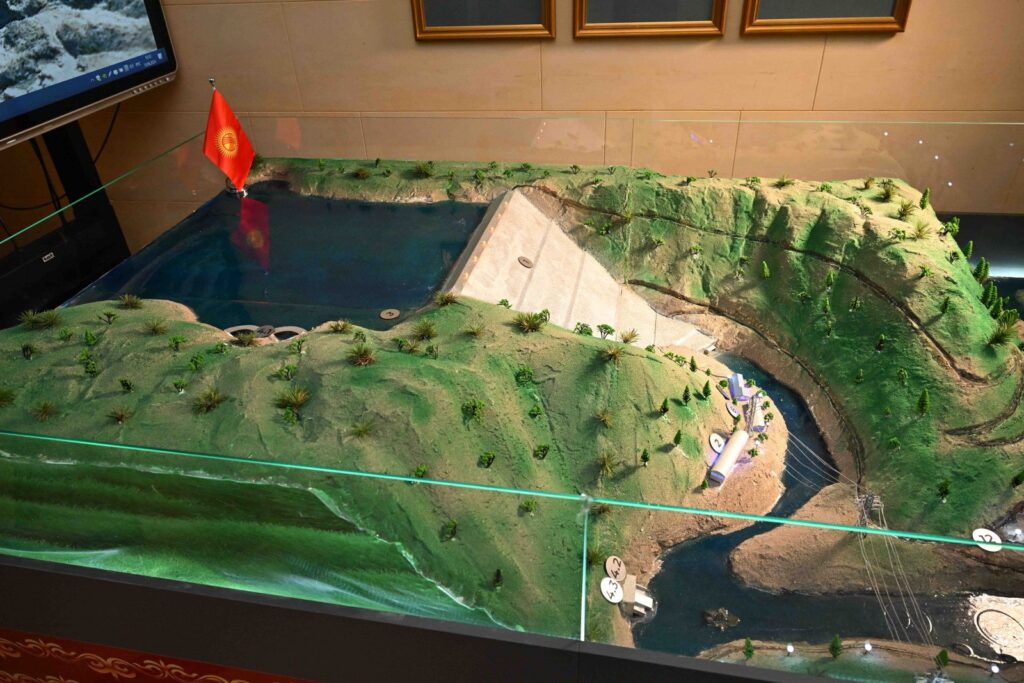
On September 4, in Bishkek, Kyrgyzstan’s Cabinet of Ministers and the World Bank organized a roundtable on dam type selection for the country’s flagship Kambarata-1 Hydropower Plant (HPP). As the Kyrgyz Ministry of Energy reported, Swiss engineering company AFRY presented possible dam types for the flagship energy project at the meeting. A feasibility study will be prepared by May 2025 based on the type of dam chosen. According to Maksudjon Safarov, Senior Energy Specialist with the World Bank, the institution is financing comprehensive preparations for the Kambarata-1 HPP's construction. “The Swiss company AFRY is preparing the project’s feasibility study, with world-class experts involved in the work to ensure that the project is efficient, environmentally friendly, and sustainable," Safarov stated. The Kambarata-1 HPP will be situated in the upper reaches of the Naryn River in Kyrgyzstan. Its installed capacity will be 1,860 megawatts, with an average annual generation of 5.6 billion kilowatt-hours of electricity. The preliminary construction cost for the project is more than $4 billion. At the roundtable, Deputy Chairman of the Kyrgyz Cabinet of Ministers, Bakyt Torobayev, emphasized that time is critical in developing the Kambarata-1 HPP. “As part of the construction, trilateral agreements were signed between the Ministries of Energy of the Kyrgyz Republic, the Republic of Kazakhstan, and the Republic of Uzbekistan. This is a unique case when three countries in the region come to a common understanding and support for the project. We are confident that joint work will create a high-quality project to provide Central Asia with clean and renewable energy, improve water and energy resources, and strengthen regional cooperation." Kyrgyz Energy Minister Taalaibek Ibrayev noted significant progress in the ongoing preparations. “To date, several important works have already been completed. On August 30, the construction of a 1,388-meter transport tunnel was completed. Work is underway to build 15 km of concrete roads. We are working to provide electricity [for the future construction site], with 80% of overhead transmission lines now complete. Completion of a 110 kv power transmission line and a substation is scheduled for the end of 2024. Construction of a bridge across the Naryn River is underway, and at the same time, a workers' camp is being built. All work is going according to plan, and we are confident that all preparatory stages will be completed by next May,” the Minister stated. To support the project, a Donor Coordination Committee for constructing Kambarata-1 HPP was established at the Kyrgyz Republic International Energy Investment Forum, held in Vienna on June 10, 2024. The Committee comprises major international financial institutions and development partners, including the World Bank, the OPEC Fund, the Asian Development Bank, the Asian Infrastructure Investment Bank, the Islamic Development Bank, and the European Bank for Reconstruction and Development.

Kyrgyzstan Wants to Extend Prison Terms for “Calls to Seize Power”

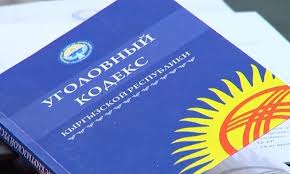
Kyrgyzstan's Interior Ministry has proposed toughening the criminal penalties for inciting violent seizures of power. The ministry has tabled an amendment whereby those found to have breached Article 327 of Kyrgyzstan's Criminal Code (“Public calls for violent seizure of power”) could face between three and five years in prison. The Criminal Code currently only sets out a fine of 20,000 to 50,000 som ($236 to $590), or imprisonment of up to three years. The draft law has been submitted for public discussion. In Kyrgyzstan, it is not uncommon for civic activists and those who criticize the current government to be arrested on charges of "public calls for violent seizure of power". Among Kyrgyz citizens to have been convicted of this charge are Zarina Torokulova and Kanykei Aranova, who are both currently in prison after posting messages on social media. Their sentences are harsher than the law currently calls for: Torokulova was sentenced to five years in prison in 2023, while this year Aranova was sentenced to three and a half years. In June 2024, 20 Kyrgyz citizens who peacefully protested against a land swap with Uzbekistan involving the Kempir-Abad reservoir were acquitted by the court, but the prosecutor's office appealed the court's decision, demanding that they be found guilty. Furthermore, the Interior Ministry proposes increasing the prison term to five to seven years if the offense is committed by a group of individuals, or by using the internet or mass media. The current punishment is a fine of 50,000 to 100,000 som ($590 to $1,185) or imprisonment for three to five years. The draft bill also proposes to criminalize public calls for extremist activity and possession of extremist materials if a person has previously received a warning. For this purpose, new articles will be added to the Criminal Code: “Possession of extremist materials” and “Public calls for extremist activities.”