• KGS/USD = 0.01144 0%
  • KZT/USD = 0.00204 0%
  • TJS/USD = 0.10439 0%
  • UZS/USD = 0.00008 0%
  • TMT/USD = 0.28490 0%
  • KGS/USD = 0.01144 0%
  • KZT/USD = 0.00204 0%
  • TJS/USD = 0.10439 0%
  • UZS/USD = 0.00008 0%
  • TMT/USD = 0.28490 0%
  • KGS/USD = 0.01144 0%
  • KZT/USD = 0.00204 0%
  • TJS/USD = 0.10439 0%
  • UZS/USD = 0.00008 0%
  • TMT/USD = 0.28490 0%
  • KGS/USD = 0.01144 0%
  • KZT/USD = 0.00204 0%
  • TJS/USD = 0.10439 0%
  • UZS/USD = 0.00008 0%
  • TMT/USD = 0.28490 0%
  • KGS/USD = 0.01144 0%
  • KZT/USD = 0.00204 0%
  • TJS/USD = 0.10439 0%
  • UZS/USD = 0.00008 0%
  • TMT/USD = 0.28490 0%
  • KGS/USD = 0.01144 0%
  • KZT/USD = 0.00204 0%
  • TJS/USD = 0.10439 0%
  • UZS/USD = 0.00008 0%
  • TMT/USD = 0.28490 0%
  • KGS/USD = 0.01144 0%
  • KZT/USD = 0.00204 0%
  • TJS/USD = 0.10439 0%
  • UZS/USD = 0.00008 0%
  • TMT/USD = 0.28490 0%
  • KGS/USD = 0.01144 0%
  • KZT/USD = 0.00204 0%
  • TJS/USD = 0.10439 0%
  • UZS/USD = 0.00008 0%
  • TMT/USD = 0.28490 0%

Viewing results 511 - 516 of 902

Signs of Racism in Central Asia

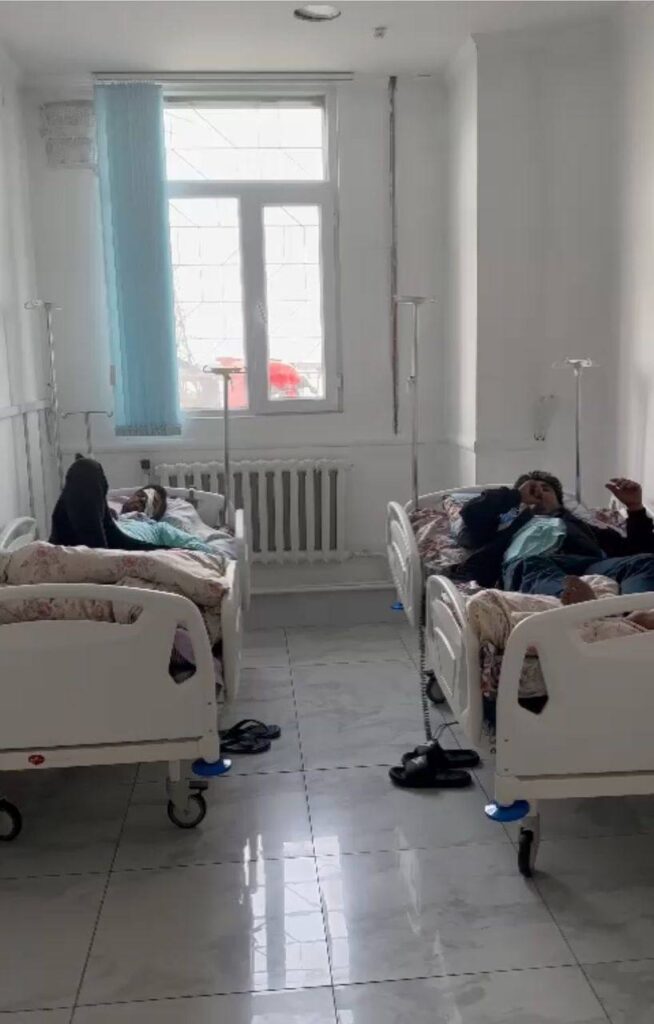
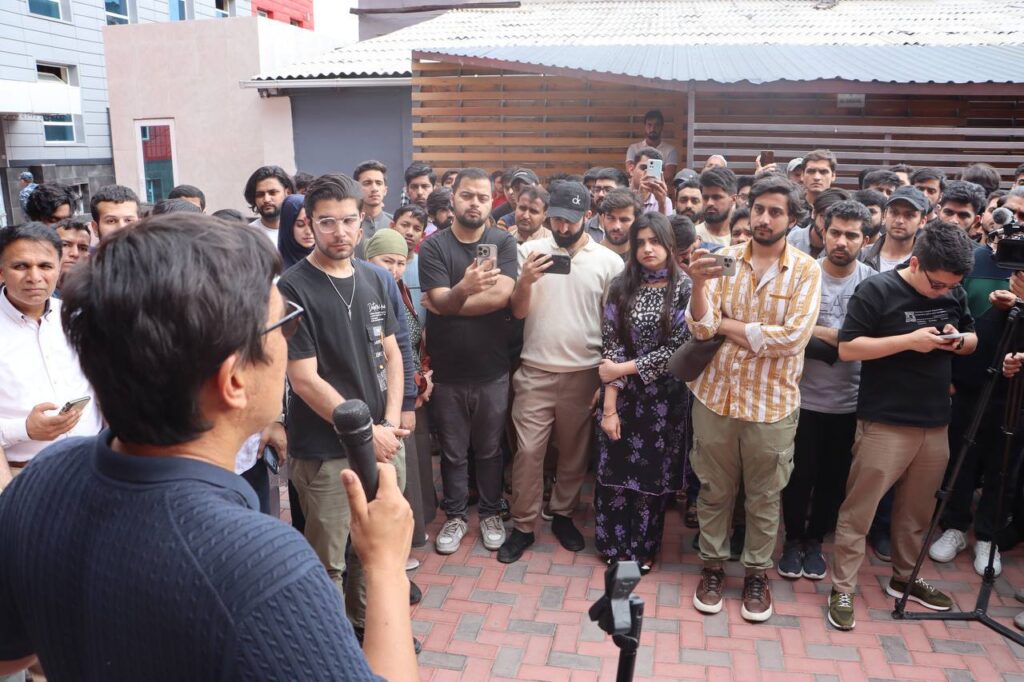
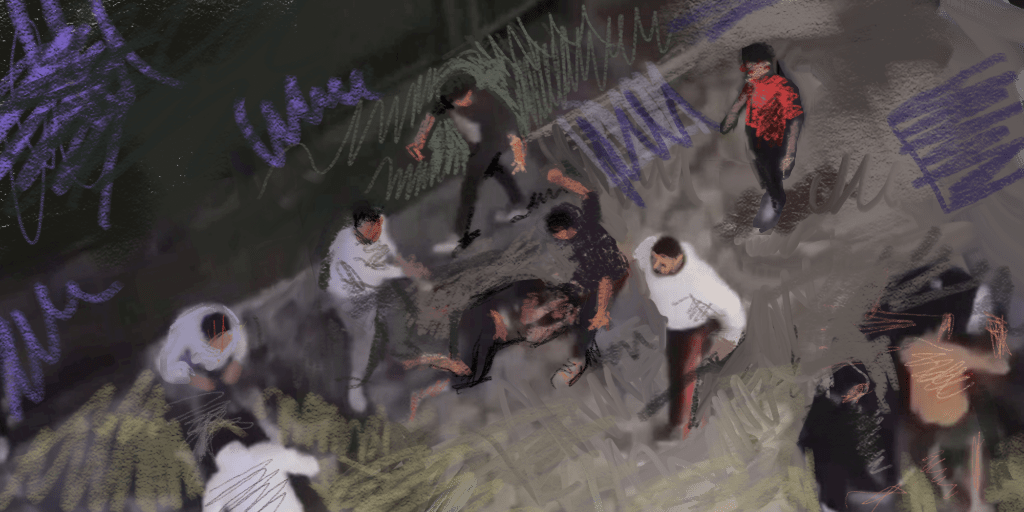
By Bruce Pannier Incidents in May showed two Central Asian countries – Kyrgyzstan and Turkmenistan – are afflicted by racism that is tacitly or explicitly supported by their governments. Overnight on May 17-18, hundreds of young Kyrgyz men gathered in eastern Bishkek near a dormitory used by foreign students. The Kyrgyz men were angered by a video posted on popular Kyrgyz social media sites on the morning of May 17 that showed a fight in Bishkek on May 13 between a small group of Kyrgyz and foreigners. The foreigners in the fight on May 13 turned out to all be Egyptians, and they were all detained. However, some social media posts claimed at least some of the foreigners involved in the fight were Pakistanis. Many people from Bangladesh, India, and Pakistan come to Kyrgyzstan to study at universities, particularly at medical colleges. More than 90% of foreign students at Kyrgyz universities are from India and Pakistan. A smaller number, in the low thousands, are working there illegally. In March, Kyrgyz authorities launched a campaign to find and deport illegal migrant laborers some 1,500 Pakistanis and 1,000 Bangladeshis have been caught. There have been isolated incidents when Kyrgyz were involved in physical altercations with South Asians in recent years, but nothing on scale of what happened in May 17-18. Besides bursting into the dormitory and assaulting foreign students, a group of some 60-70 Kyrgyz men broke into a sewing factory in Bishkek early morning May 18 and attacked foreign workers, who mostly from Bangladesh, India, and Pakistan. At least 41 people were injured, most of them South Asians. Pakistan in particular reacted, summoning the Kyrgyz Charge d'Affaires in Islamabad while a group of Pakistanis protested outside the Kyrgyz Embassy. Pakistani authorities also sent charter flights to Kyrgyzstan that brought back more than 1,000 Pakistani citizens. Kyrgyz authorities criticized the police for failing to calm the situation before it went out of control and later 10 policemen were sacked. Deputy Cabinet Chairman Edil Baisalov went to the dormitory to meet with some of the foreign students and apologize for the harm done to them “by a bunch of hooligans.” The top two people in the government – President Sadyr Japarov and head of security service Kamchybek Tashiyev – were more equivocal in their comments on the violence. Since coming to power in late 2020, Japarov and his longtime friend Tashiyev have promoted nationalist policies. Their emphasis on respecting Kyrgyz traditions and customs has gained them significant popularity in Kyrgyzstan. They need such support in a country that has had three revolutions since 2005, including the October 2020 revolution that resulted in them occupying their current positions. Young Kyrgyz men, like the hundreds who gathered on the evening of May 17, are an important pillar of support for Japarov and Tashiyev. President Japarov vaguely blamed “forces interested in aggravating the situation,” and added, “The demands of our patriotic youth to stop the illegal migration of foreign citizens and take tough measures against those...
Higher Education in Central Asia: Leaders and Outsiders

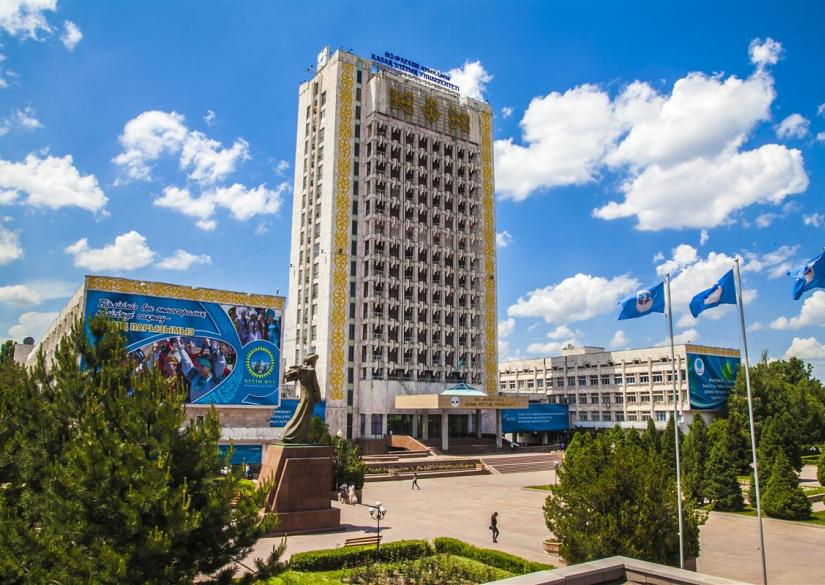
In June, it will be three years since the signing of a declaration at a forum held in the city of Turkestan between the heads of the Ministries of Education of Kazakhstan, Uzbekistan, Tajikistan, Turkmenistan, and Kyrgyzstan. According to the document, the Central Asian states agreed to expand cooperation and unite the scientific, intellectual, and creative potential of higher education institutions throughout the region. However, only Kazakhstan and Uzbekistan have made progress in terms of synergy during this time. The reason for this is the serious gaps between the Central Asian states in the level of provision of higher education for their citizens.   The pace of reform In the 1990s, the reform of education in Central Asia occurred at different rates. Although the Central Asian republics had similar problems at the time of the collapse of the Soviet Union, they began to address them depending on the degree of influence of global trends. For example, Kazakhstan signed the Bologna Declaration and joined the European Higher Education Area in 2010, while Turkmenistan switched to two-stage higher education under the "Bachelor's - Master's" system only in 2013. Some started organizing English-language curricula at their universities as soon as the early 1990s, such as Kazakhstan's KIMEP University or the University of Central Asia in Kyrgyzstan. Uzbekistan, on the other hand, only came around to the idea of the need for English-language education in the noughties. In the 2000s, universities established jointly with foreign partners, such as the Kyrgyz-Russian Slavic University and the Kazakh-British Technical University, began to open in the region. Uzbekistan was again somewhat late to the trend, first opening the International Westminster University (a branch of the University of London) and a branch of Turin Polytechnic University. In 2014, the first university established jointly with foreign partners from South Korea - Inha University, specializing in the training of IT specialists - appeared. Kazakhstan, Kyrgyzstan, and Uzbekistan are currently implementing reforms in the recognition of diplomas and attracting foreign employees and students, while Tajikistan and Turkmenistan are experiencing problems of a different nature related to low levels of enrollment in higher education.   Kazakhstan Kazakhstan has been the most successful nation in reforming higher education. Degrees have been reduced to four years, and the Unified National Testing (UNT) and credit system of education appeared, creating favorable conditions for accession to the Bologna Process in 2010. By 2016, almost every second Kazakhstani was studying at a higher education institution. Now, Kazakhstan has more than 120 universities. There are more than 600,000 students, and about 40% of Kazakhstanis are certified specialists. Kazakhstan's supremacy in this arena is confirmed by international rankings. For example, the international organization, Times Higher Education included four Kazakhstani universities in its rating for 2024: the Eurasian National University named after L.N. Gumilev; Satpayev University; the Kazakh National University named after Al-Farabi; Nazarbayev University (NU). Participating in these rankings for the first time, the latter was recognized as the best in Central Asia. NU is the first university of its...

Arrest Made in Connection with Bishkek Unrest

The Ministry of Internal Affairs of Kyrgyzstan has announced the detention and opening of a criminal case against a man suspected of beating foreigners during unrest which occurred on the night of May 18, leaving 41 people hospitalized. The suspect also allegedly transported people to places where foreigners lived during the events which transpired in the Kyrgyz capital. On May 18, 2024, a video showing the beating of foreign citizens began circulating on social media. The footage revealed an unidentified man of Asian descent, approximately 20-25 years old, wearing a beige hooded sweater, striking victims with his hands and feet on their faces and other body parts. The incident took place after four individuals broke into a house near the Dordoi Market. The accused assailant was identified on surveillance cameras located in the vicinity. “Four attackers arrived in a dark-colored Mercedes-Benz Sprinter on May 18 at 04:00 am.,” the Ministry’s statement reads. Investigations revealed that it is “registered to a resident of the Issyk-Kul region. The driver of the said car was Zhekshenbekov Azat, born in 1999, a native of the Issyk-Kul region, living in Bishkek, and an employee of a furniture workshop. The detainee was placed in the temporary detention center of the Bishkek City Internal Affairs Directorate.” The investigation is ongoing, with the authorities seeking to identify and apprehend the others involved. On Monday, President Japarov promised swift action should the events be repeated, stating that “Anyone, whether he is our citizen or a foreign citizen, who threatens the integrity of our state, organizes chaos, will be punished mercilessly.”

Kyrgyzstan’s President Warns of Swift Crackdown If Unrest Flares Again

President Sadyr Japarov of Kyrgyzstan on Monday has addressed the nation about recent unrest and anti-foreigner sentiment, saying “our hot-blooded youth” were led astray by inflammatory internet posts and warning of a crackdown if it happens again. Japarov spoke after a week of tension in Bishkek that began with a fight between local and foreign people at a hostel on May 13 and culminated with large crowds of angry Kyrgyz youths roaming intersections on the night of May 17-18. There were scattered attacks on foreigners, whose population includes students and workers from Egypt, Pakistan and other countries. Some people were hospitalized. Riot police were on standby as officials negotiated with the crowds and persuaded them to disperse peacefully. “Now, if such an event happens again, then the law enforcement agencies will switch to the method of dispersal by force from the first minutes. Thank God, now the power structures are not as weak as they used to be,” Japarov said. “Anyone, whether he is our citizen or a foreign citizen, who threatens the integrity of our state, organizes chaos, will be punished mercilessly.” Japarov said the demands of Kyrgyz youth for tough action against illegal migration were “certainly correct” and that the government had taken steps to address the problem. But he chastised those who were “led by the temptations of provocateurs” seeking to spread chaos. The president referred to “bloggers” trying to foment a “large-scale uprising in the crowd,” though he did not offer more details on the alleged agitators. Kyrgyzstan has experienced periodic unrest on a much bigger scale over the years, and three presidents have been ousted by uprisings since 2005. Japarov, who had been in exile and in prison, came to power in 2021 after being freed by supporters whose protests against a disputed election toppled the previous government. The Central Asian country had been known for a lively media scene and other relative freedoms in a region with authoritarian traditions. Japarov has rolled back some of those rights, tightening control over foreign funded non-governmental organizations despite international concerns and increasing pressure on some media critical of the government. Japarov said law enforcement officials arrested “the perpetrators” of the May 13 brawl and appealed to the country to consider the damage that the unrest of the last week can do to tourism and the economy, as well as the nation’s interaction with the world. He noted that more than one million Kyrgyz citizens live abroad (the total population is about seven million), and that the number of working migrants in Kyrgyzstan is 5,322 people and foreign students number 42,620. “We should be happy about that,” he said.

An Uneasy Calm After Unrest in Bishkek

On the night of May 18, riots took place in Bishkek. The reason - a fight between foreign medical students and local youth. The trigger was a video of a scuffle, which occurred on May 13, when Egyptian citizens beat several locals. This video was then widely circulated on social networks. Local politicians have stated that they believe the situation was fueled from the outside.   What happened? On the night of May 18, protesters blocked several streets in the center of Bishkek. According to the Interior Ministry, the number of people continued to grow, and there was a threat of mass disorder, so all personnel from the capital's police were placed on alert. All hostels and dormitories in the city where foreign citizens live were put under guard. The protesters expressed dissatisfaction with the large number of migrants coming into the country from Egypt, Pakistan, India, and Bangladesh. The head of Kyrgyzstan's National Security Committee said law enforcement agencies detained several provocateurs who were calling for the overthrow of the government. By morning, the participants in the unauthorized rally had been dispersed. In total, about 1,000 people took part in the unrest, according to the capital's police. Law enforcement urged citizens not to give in to provocations and show a high-level of civil responsibility. The Ministry of Health of the Kyrgyz Republic reported that following the incident, 41 people sought medical assistance in Bishkek. Four Egyptians were detained - local media claim they were participants in the conflict that took place on May 13. Later, it became known that some Kyrgyz citizens had also been detained. The confrontation between local residents and foreigners has acquired an international dimension, with a number of government agencies in neighboring countries expressing their concern. For example, Kazakhstan introduced a special regime on the border with Kyrgyzstan. The authorities in Pakistan, meanwhile, have organized emergency flights, and a number of their students and workers are leaving Kyrgyzstan. Several thousand students from India, Pakistan, Egypt, Bangladesh and Nepal study at Bishkek's medical institutes. There are also migrant workers from these countries living in the country, who are mainly employed in the production of garments.   Who benefits from the unrest? According to deputy Dastan Bekeshev of the Jokorku Kenesh, the unrest is an attempt to find the authorities' vulnerabilities. "One of the indicators of economic growth is when citizens of the country hire foreign citizens as workers. And there is no way for us to avoid conflicts with foreign citizens. Conflicts are also arranged by our own citizens abroad. Of course, guests should not forget that they are guests and must coexist peacefully with the citizens of the country they are in. But we should also learn tolerance and wisdom when various conflicts occur. There are law enforcement agencies and they have every opportunity to punish a foreigner and expel him from Kyrgyzstan for a long time. Our laws on external migration are very strict," the parliamentarian wrote on his Telegram channel. The MP said...

Tension Spills Into Streets of Bishkek After Fight Involving Foreigners

Police in riot gear deployed in part of Kyrgyzstan’s capital overnight as large crowds gathered in anger over an alleged fight between local and foreign people which was widely circulated on social media. The Kyrgyz government later reported that 28 people, including three foreigners had been injured in the incident, whilst four foreign citizens were arrested for incitement. The crowds milled around some intersections of Bishkek for hours before dispersing early Saturday, and the Ministry of Internal Affairs said the situation was stable. Riot police cordoned off areas where the mobs had gathered and negotiated with the protesters in order to head off any further confrontations. The incident appeared to reflect tension over the presence in Kyrgyzstan of migrants. Kyrgyzstan’s Ministry of Internal Affairs is taking steps to tighten monitoring and penalties for foreigners who violate immigration laws, Kaktus Media reported. The fight which led to the wider conflagration happened at a hostel on May 13. Rumors spread on social media, and a video showing Kyrgyz students fighting with medical students from Egypt went viral. People started gathering on Friday night to show their dissatisfaction with what they said was the lax treatment of foreigners involved in the fight. However, police said three foreigners were detained on suspicion of hooliganism, the AKIpress news outlet reported. It said the suspects appeared in a video, apologizing for the fight and saying they would accept their punishment. “All measures were taken in a timely manner, they were detained, legal measures will be taken against them,” said Azamat Toktonaliev, head of Bishkek´s Internal Affairs Directorate. He told AKIpress that Kyrgyz citizens were invited to testify as witnesses and were not detained. Kyrgyzstan has expressed concern about the plight of some of its own citizens who travel to Russia in search of employment and have faced official scrutiny and sporadic harassment there. In the wake of the violence, diplomatic delegations from Pakistan and India have advised their students in Bishkek to stay indoors.