• KGS/USD = 0.01144 0%
  • KZT/USD = 0.00210 0%
  • TJS/USD = 0.10528 0%
  • UZS/USD = 0.00008 0%
  • TMT/USD = 0.28571 0%
  • KGS/USD = 0.01144 0%
  • KZT/USD = 0.00210 0%
  • TJS/USD = 0.10528 0%
  • UZS/USD = 0.00008 0%
  • TMT/USD = 0.28571 0%
  • KGS/USD = 0.01144 0%
  • KZT/USD = 0.00210 0%
  • TJS/USD = 0.10528 0%
  • UZS/USD = 0.00008 0%
  • TMT/USD = 0.28571 0%
  • KGS/USD = 0.01144 0%
  • KZT/USD = 0.00210 0%
  • TJS/USD = 0.10528 0%
  • UZS/USD = 0.00008 0%
  • TMT/USD = 0.28571 0%
  • KGS/USD = 0.01144 0%
  • KZT/USD = 0.00210 0%
  • TJS/USD = 0.10528 0%
  • UZS/USD = 0.00008 0%
  • TMT/USD = 0.28571 0%
  • KGS/USD = 0.01144 0%
  • KZT/USD = 0.00210 0%
  • TJS/USD = 0.10528 0%
  • UZS/USD = 0.00008 0%
  • TMT/USD = 0.28571 0%
  • KGS/USD = 0.01144 0%
  • KZT/USD = 0.00210 0%
  • TJS/USD = 0.10528 0%
  • UZS/USD = 0.00008 0%
  • TMT/USD = 0.28571 0%
  • KGS/USD = 0.01144 0%
  • KZT/USD = 0.00210 0%
  • TJS/USD = 0.10528 0%
  • UZS/USD = 0.00008 0%
  • TMT/USD = 0.28571 0%

Viewing results 61 - 66 of 715

Where Motherhood Meets Innovation: The Kyrgyz Startup Mama Space

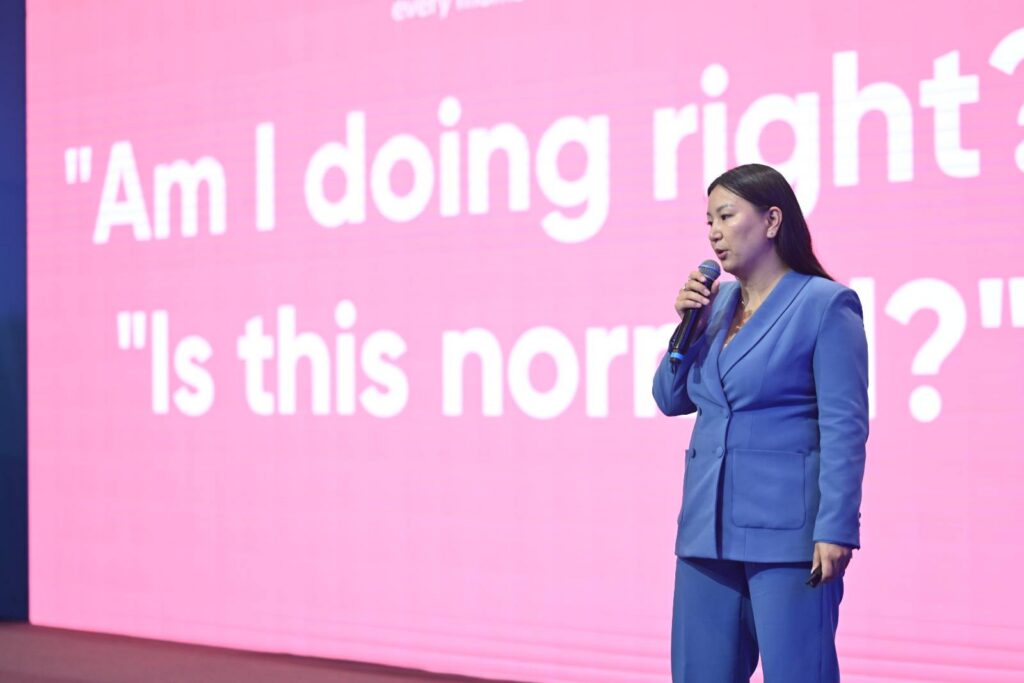
Female tech founders face a lot more challenges globally, and Kyrgyzstan's startup ecosystem is unfortunately no exception. Being a nascent stage ecosystem makes things even worse: according to IFC, in emerging markets, only 11% of seed funding goes to startups with women on their founding team. Despite such significant barriers, there is a generation of female founders with global ambitions. One of them is Gulnaza Khalmanbetova, who is using technology to make pregnancy and motherhood more peaceful. Mama Space provides an ecosystem for pregnancy and motherhood. Its pregnancy tracker covers every stage, providing an entire library of up-to-date, medically approved articles and educational videos. An AI chatbot can answer questions about pregnancy with evidence-based knowledge. And there is a loyal online community where every mother can find support and understanding. “It was my second experience of pregnancy that prompted me to create the app. My second pregnancy was complicated and could have ended in tragedy. During one of the surgeries, in the fifth month of pregnancy, I promised myself that if everything went well for me and my unborn son, I would do everything possible to ensure that every mother could find support and not be left alone with her problems. This is how the idea of Mama Space was born — a platform designed so that every woman can go through the stages of motherhood with reliable informational support,” recalled Gulnaza Khalmanbetova, CEO and Founder of Mama Space. [caption id="attachment_43418" align="aligncenter" width="1600"] All images provided by Mama Space[/caption] In December 2025, during the Digital Startup Awards in Tashkent, Mama Space was named “Best Women-Founded Startup” -- one of the many awards Mama Space has collected so far. Khalmanbetova had previously had a successful career in the international development sector. Those organising, optimizing, and networking skills came in handy when entering the unpredictable path of a startup founder, with an aim to help women who are planning a pregnancy, are currently pregnant, or have recently given birth. One of the sources of ideas for startup founders is trying to solve problems they face themselves. This was exactly the case with Mama Space. During her first pregnancy, which brought anxiety and difficulties with finding proper information, Khalmanbetova was inspired to organise a community of mothers with an event to celebrate pregnancy and motherhood. She named the event Mama Fest, which now brings together hundreds of women to celebrate motherhood.  Mama Space is a textbook example of a successful launch. The MVP -- the minimal viable product -- was ready in three months, despite the fact that Khalmanbetova and her team still had their full-time jobs. And Khalmanbetova, traditionally for startup founders, has to wear a number of hats and utilise all her skills, from programming and business development to graphic design and running social media. Given that the product is directly related to health, the startup relies on science and professional doctors. Mama Space partners with the Kyrgyz Association of Obstetricians, Gynecologists, and Neonatologists. In June 2024, Mama Space won the 'Unicorn...

Man Imprisoned in Kyrgyzstan for Evading Child Support

In Kyrgyzstan’s southern Batken region, a man who had evaded court-ordered child support payments since 2017 has been sentenced to two years in prison, according to the Bailiff Service under the Prosecutor General's Office of the Kyrgyz Republic. This is reportedly the first known prison sentence for such an offense in Kyrgyzstan, signaling a shift as authorities move to strengthen penalties against non-compliant parents following divorce. Under a July 3, 2017 ruling by the Batken District Court, the man was ordered to pay one-quarter of his income in child support until his child reached the age of 18. However, he failed to comply with the court’s decision. As of September 1, 2025, his arrears totaled 501,000 Kyrgyz som (approximately $5,700). On February 2, the Batken Regional Court sentenced him to two years in prison for non-payment. Klara Masalbekova, Head of the Department for Enforcement of Court Decisions at the Prosecutor General's Office, noted that failure to fulfill child-support obligations falls under Article 178 of Kyrgyzstan’s Criminal Code. This article has been progressively tightened in recent years. Under current law, evading child support can result in a prison sentence of up to three years. According to the Prosecutor General’s Office, 1,205 individuals in Kyrgyzstan are currently wanted for child-support evasion. The Family Code of the Kyrgyz Republic stipulates the following alimony contributions for children under 18: One child - 1/4 of the parent’s income Two children - 1/3 of the income Three or more children - 1/2 of the income In a related development, the Kyrgyz parliament has approved in the first reading a bill introducing stricter penalties for non-compliance with alimony agreements or court orders, 24.kg reported. The proposed measures include: Three days’ arrest for a three-month overdue payment Community service of 100-200 hours or up to one year of imprisonment for a 12-month overdue payment A fine of 100,000 som (approx. $1,140) or up to three years in prison for concealing income, understating wages, or refusing employment mandated by a court order The bill aims to reduce the number of delinquent child-support cases and improve compliance with family law rulings across the country.

The “Central Asia 2030” Roundtable in Astana: From External Interest to Regional Choice

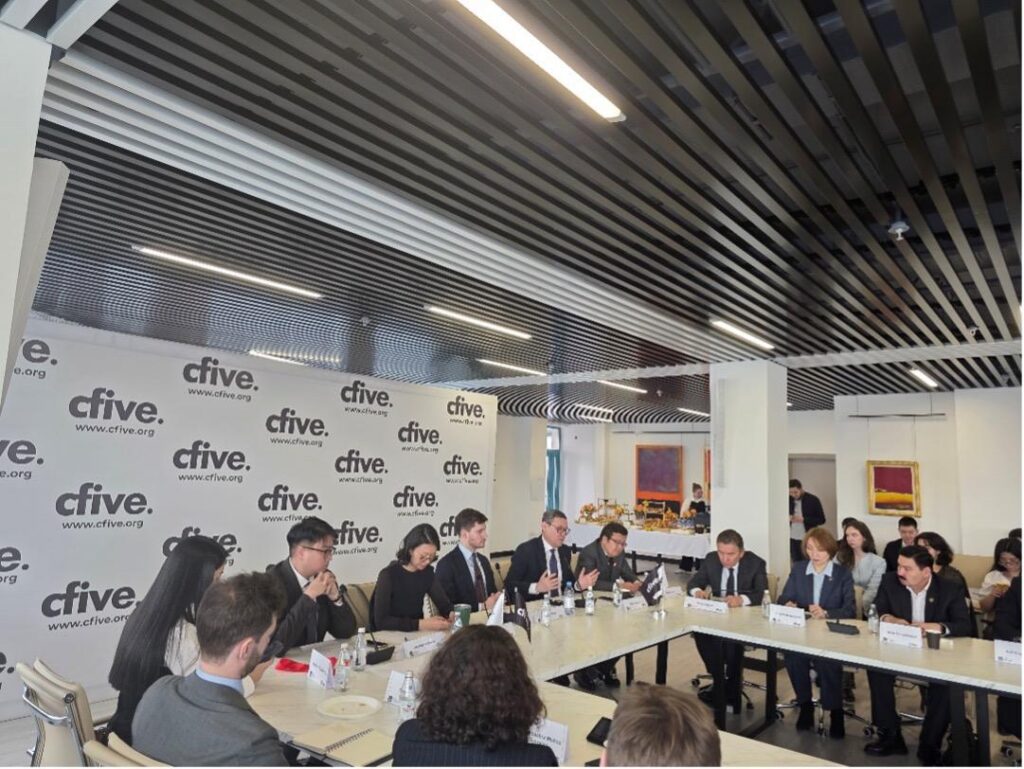
Discussions about Central Asia’s long-term strategic future are increasingly shifting from a focus on external attention to one of growing regional agency. On Monday, Astana International University hosted the first roundtable in the series Central Asia 2030: Strategic Horizons and Regional Choices. Speakers included Andrew D’Anieri, Deputy Director of the Atlantic Council’s Eurasia Center; Yerkin Tukumov, Special Representative of the President of Kazakhstan; Ambassador-at-Large Zulfiya Suleimenova; and Dauren Aben, Deputy Director of the Kazakhstan Institute for Strategic Studies under the President of Kazakhstan. Pragmatism, Regional Choice, and the Logic of the “Grand Bargain” In his remarks, Andrew D’Anieri emphasized that Central Asia is increasingly viewed in the U.S. not as a peripheral zone but as an independent strategic partner. He noted that “environmental, water, and climate issues considered within a regional framework are fully supported by the U.S.” However, he added that “long-term commercial and investment projects are impossible without long-term stability, which in turn requires coordination between neighbors, engagement on sensitive issues, and pragmatic regional cooperation.” D’Anieri also pointed to Afghanistan as “an integral part of regional logic,” and described formats such as C5+1 as evidence of Central Asia’s growing subjectivity. He highlighted the first-ever C5+1 summit at the presidential level in Washington as a landmark event, especially under the administration of Donald Trump, known for its preference for bilateral over multilateral formats. Trump and the Possibility of a Visit: Only with a “Big Deal” When asked whether a visit by President Trump to Central Asia is realistic, D’Anieri offered a candid assessment: “Such a visit is only possible if there is a large, symbolically and economically significant deal.” Whether in aviation, technology, or infrastructure, these high-visibility projects are typically what draw Trump’s engagement. He added that “the region has work to do in developing a package of initiatives that could interest the U.S. president and justify a high-level visit.” Potential areas include mining, transport, and logistics. Reframing Afghanistan’s Role in the Region Special Representative Yerkin Tukumov focused on the importance of reframing the region’s relationship with Afghanistan. For too long, he said, Afghanistan has been viewed primarily “through the prism of security threats,” resulting in a narrow and often misleading approach. Tukumov argued for a broader, more pragmatic view that considers economic, humanitarian, and cross-border dimensions. He described the C5+1 format not as a replacement for bilateral diplomacy, but as “an additional level of coordination where Central Asia can speak with a more consolidated voice without losing national autonomy in foreign policy.” He stressed the need to move beyond “ideological and declarative approaches,” toward practical, interest-based mechanisms of cooperation. Ecology, Water, and the Case for a Global Water Agency Ambassador-at-Large Zulfiya Suleimenova addressed the strategic urgency of regional coordination on water and climate. She emphasized that “water issues are transboundary in nature,” and that efforts to resolve them solely within national frameworks are bound to fall short. “Regional coordination in Central Asia is not a political slogan, but a functional necessity,” she said. Suleimenova argued that jointly promoting...

Small but Always Present: Kyrgyzstan at the Winter Olympics

Since independence in 1991, Kyrgyzstan has sent just one or two athletes to every edition of the Winter Olympics, a reflection of its modest stature in winter sports as well as its persistence in being represented among the world’s best every four years.  This year is no different. Alpine skier Timur Shakirov and cross-country skier Artur Saparbekov, both 19 years old, will compete for Kyrgyzstan at the games that run from February 6 to February 22 in Milan, Cortina d’Ampezzo in the Dolomites and other locations in northern Italy. Shakirov will participate in the giant slalom and slalom at the Bormio resort, while Saparbekov will also compete in two disciplines - the classic sprint and the 10-kilometer freestyle - at Val di Fiemme. The athletes recently showed off their national uniforms for the games – a dark blue one for training and a white one with a white kalpak, the traditional Kyrgyz headgear, for ceremonial events.  Kyrgyzstan’s National Olympic Committee said it had provided the athletes with Olympic scholarships worth $21,000, starting in November 2023.  “A coaching workshop on skiing was also held in 2025, and in 2026, a biathlon workshop aimed at upgrading specialists and developing winter sports in the country is planned,” the committee said.  Kyrgyzstan’s mountainous terrain offers potential for the development of winter sports, but limited funding and a lack of top-level training facilities has held back progress.  After the collapse of the Soviet Union, Kyrgyzstan first participated in the Winter Olympics at the 1994 games in Lillehammer, Norway, with Yevgeniya Roppel competing in the biathlon, a sport that involves cross-country skiing and rifle shooting. The country of about seven million people has sent a delegation to the games every four years since then, a notable feat because athletes have to get through qualifying rounds. The first Winter Olympics were held in 1924.  With a delegation of three-dozen athletes, Kazakhstan is sending the biggest team from Central Asia to the Games in Italy. Uzbekistan planned to send four athletes, but a figure-skating pair is unable to compete because of an injury. Tajikistan and Turkmenistan are not participating. 

Bishkek’s Air Pollution Crisis Comes Under Parliamentary Scrutiny

On February 2, Kyrgyzstan’s parliamentary committee on ecology and environmental protection convened to hear reports from senior officials on the worsening air pollution and winter smog in the capital. Air pollution remains a chronic challenge in Bishkek, a city of over one million residents. Conditions worsen sharply in winter, when widespread coal burning for heating and emissions from an aging vehicle fleet accumulate in the city’s basin-like topography. Bishkek consistently ranks among the world’s 10 most polluted cities on IQAir’s global air quality index. In January 2026 alone, the city appeared in the top five on at least eight separate days. Minister of Natural Resources, Ecology, and Technical Supervision Meder Mashiev told lawmakers that the primary sources of pollution are household coal burning (40%), vehicle emissions (30%), the city’s coal-fired thermal power plant (15%), wind-blown dust (13.5%), and industrial activity (1.5%). Mashiev underscored that vehicle emissions are a particularly significant contributor to the city’s smog. According to Mashiev, Kyrgyzstan has more than 1.9 million vehicles, a 13% increase compared to 2024. Of these, 972,000 run on gasoline, 339,000 on diesel, 56,900 on gas, and 37,000 are hybrids. Electric vehicles make up just 0.8% of the total, numbering around 15,200. An estimated 600,000-700,000 vehicles, more than 30% of the national total, are located in Bishkek. More than half are over 15 years old, contributing significantly to harmful emissions. Jarkynbek Kasymbekov, Director of the National Institute of Public Health, outlined the health implications. He reported a 2.5-fold increase in allergic rhinitis cases nationwide, particularly among young people, a trend he linked directly to poor air quality. While long-term studies are lacking, the rise in respiratory illnesses is well documented. Mashiev highlighted several measures taken in 2025 to address the crisis. Fifty-four residential areas in Bishkek were connected to natural gas, enabling more than 51,000 households to switch from coal heating. This transition is estimated to have reduced coal consumption in the capital by 100,000 tons. He also reported the long-awaited extinguishing of Bishkek’s decades-old smoldering landfill. A new waste-to-energy facility has been launched at the site, now generating electricity by incinerating solid waste. Additional efforts are underway to modernize urban transport and expand green spaces. “Work is currently underway to transition to environmentally friendly transport. A total of 1,447 gas-powered eco-buses and 120 electric buses now operate in Bishkek. There are already more than 100 electric charging stations in the city, and over 2,000 applications for new stations are under review,” Mashiev said. Bishkek Mayor Aibek Junushaliev added that 18,000 trees were planted in the capital last year, with plans to plant another 50,000 in 2026. Parliamentary committee chairman Bakyt Tentishev raised concerns about vehicles operating without catalytic converters. Kyrgyzstan is preparing to tighten environmental regulations on motor vehicles. A draft law currently under public discussion would mandate the presence and functionality of catalytic converters in vehicles originally manufactured with them. The absence of these devices significantly increases toxic emissions and fuel consumption, posing direct risks to public health.

Italian Firm Explores Waste Recycling Projects in Kyrgyzstan

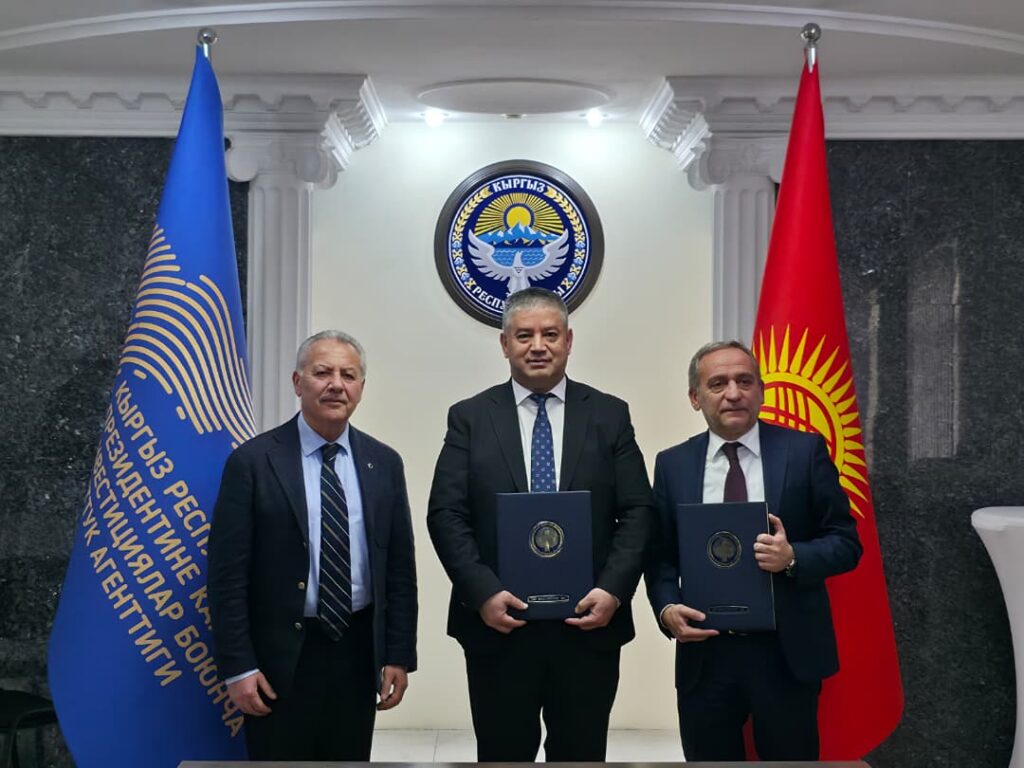
On February 2, the National Investment Agency under the President of the Kyrgyz Republic hosted representatives from Italian company TRITOR S.R.L., a firm known for its environmentally friendly waste recycling technologies, to discuss potential pilot projects in Kyrgyzstan. The meeting brought together officials from Kyrgyz municipal governments and the Ministry of Health to explore investment opportunities focused on processing municipal solid waste and medical waste. Participants also discussed candidate locations for future recycling facilities. Following the talks, the parties signed a memorandum of cooperation outlining several pilot initiatives. These include the processing of up to 200 tons of unsorted household waste per day, the supply of alternative environmentally friendly fuels to local cement plants, the introduction of modern technologies for landfill reclamation and cleanup, and the development of medical waste recycling systems in public healthcare institutions. Ravshanbek Sabirov, head of the National Investment Agency, underscored the importance of such initiatives for the country. “The problem of waste recycling is particularly acute today, and Kyrgyzstan is interested in implementing modern, environmentally friendly technologies. We value not just ideas but working solutions that can be adapted to local conditions. We are open to cooperation and ready to support such projects at all stages of implementation,” he said. The initiative reflects Kyrgyzstan’s broader push to tackle growing volumes of household and industrial waste through the adoption of advanced, sustainable recycling technologies.