• KGS/USD = 0.01144 0%
  • KZT/USD = 0.00203 0%
  • TJS/USD = 0.10650 -0.09%
  • UZS/USD = 0.00008 0%
  • TMT/USD = 0.28490 0%
  • KGS/USD = 0.01144 0%
  • KZT/USD = 0.00203 0%
  • TJS/USD = 0.10650 -0.09%
  • UZS/USD = 0.00008 0%
  • TMT/USD = 0.28490 0%
  • KGS/USD = 0.01144 0%
  • KZT/USD = 0.00203 0%
  • TJS/USD = 0.10650 -0.09%
  • UZS/USD = 0.00008 0%
  • TMT/USD = 0.28490 0%
  • KGS/USD = 0.01144 0%
  • KZT/USD = 0.00203 0%
  • TJS/USD = 0.10650 -0.09%
  • UZS/USD = 0.00008 0%
  • TMT/USD = 0.28490 0%
  • KGS/USD = 0.01144 0%
  • KZT/USD = 0.00203 0%
  • TJS/USD = 0.10650 -0.09%
  • UZS/USD = 0.00008 0%
  • TMT/USD = 0.28490 0%
  • KGS/USD = 0.01144 0%
  • KZT/USD = 0.00203 0%
  • TJS/USD = 0.10650 -0.09%
  • UZS/USD = 0.00008 0%
  • TMT/USD = 0.28490 0%
  • KGS/USD = 0.01144 0%
  • KZT/USD = 0.00203 0%
  • TJS/USD = 0.10650 -0.09%
  • UZS/USD = 0.00008 0%
  • TMT/USD = 0.28490 0%
  • KGS/USD = 0.01144 0%
  • KZT/USD = 0.00203 0%
  • TJS/USD = 0.10650 -0.09%
  • UZS/USD = 0.00008 0%
  • TMT/USD = 0.28490 0%
11 February 2026

Viewing results 1 - 6 of 19

Parents of Olympic Gold Medalist Ilia Malinin Skated for Uzbekistan

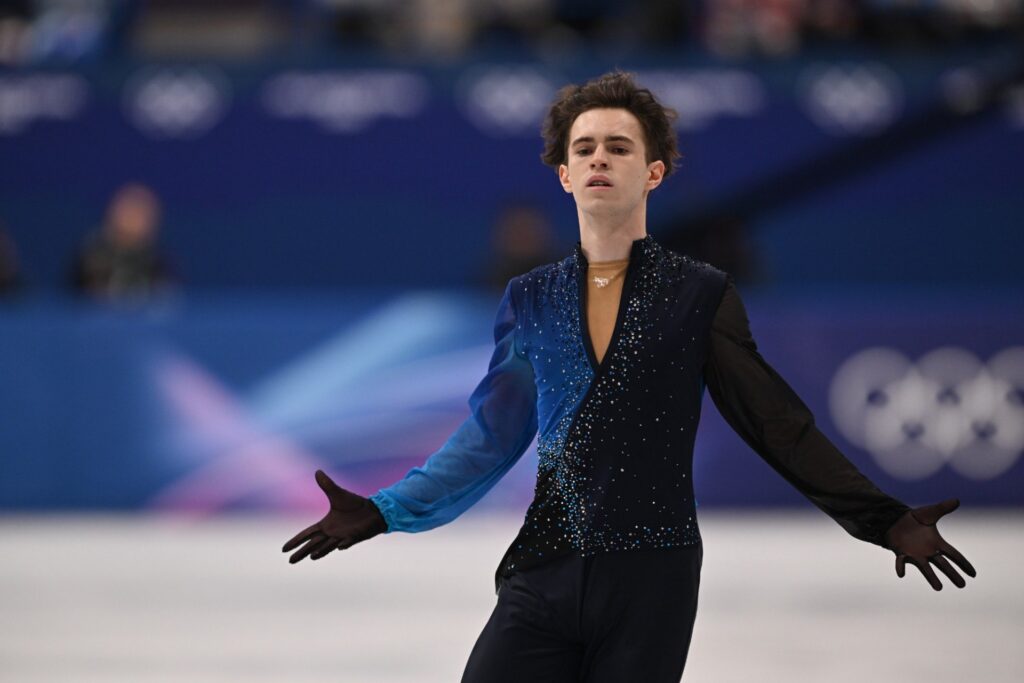
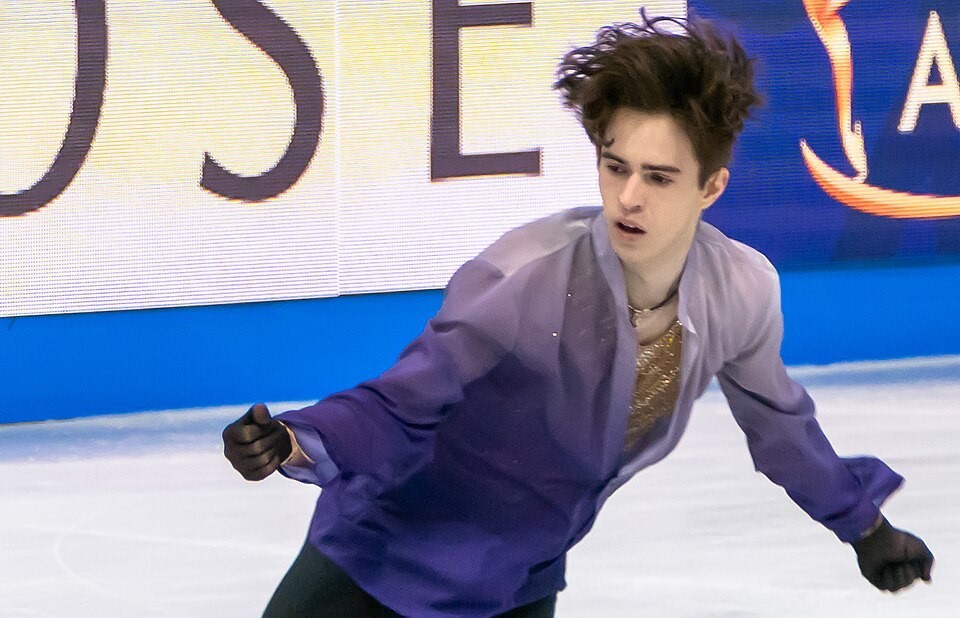
Known as the “Quad God,” American figure skater Ilia Malinin helped the United States win a team gold medal at the Winter Olympics with a performance that included a rare backflip. The young star is building on a family legacy: his Russia-born parents, Tatiana Malinina and Roman Skorniakov, skated at the elite level for Uzbekistan for many years.   “It runs in the family,” the Olympic Games organization said on social media.  Malinina, 53, and Skorniakov, 49, decided to compete in figure skating for Uzbekistan after its independence from the Soviet Union, which collapsed in 1991. They represented the country at the Winter Olympics at Nagano, Japan in 1998 and Salt Lake City in the United States in 2002. Both were national champions in Uzbekistan and the couple coached each other at one point. They moved to the United States and got jobs as skating coaches in Virginia. Their pupils included son Ilia, who was born in the U.S. in 2004 and took up skating when he was a young boy.   Malinin, 21, got the “Quad God” nickname because of his ability to perform the extremely difficult quadruple axel jump. But it was his team event backflip, a move that was once banned partly because it was considered too dangerous, that really fired up the crowd in Milan on Sunday. He stuck the landing on one skate. Tennis champion Novak Djokovic was in the audience and put his hands on his head in awe after Malinin’s daring maneuver on the ice.  Malinin’s grandfather on his mother’s side was also a figure skater.  His younger sister has also competed in the sport.  His mother Tatiana Malinina said that she and her husband initially didn’t want their son to get serious about figure skating. After all, they were well aware of the time, sacrifice and dedication that is required to succeed at the highest level. “When our son was born, we were thinking, ‘Oh no, we’re not going to do this anymore,´” Malinina said in an International Skating Union interview.  But young Ilia would show up at the skating rink, making his own programs to music. His parents taught him a few things but didn’t push him. Over time, the young boy’s talent, discipline and focus on excellence became apparent.  Now Malinin is the two-time defending world champion. At a news conference last week, ahead of the Winter Olympics, he said he had been learning how to handle expectations and use them to channel his motivation and deliver on the ice.   “I’m honestly thankful for all the pressure and the attention,” Malinin said.

Almaty to Host 2029 Asian Winter Games

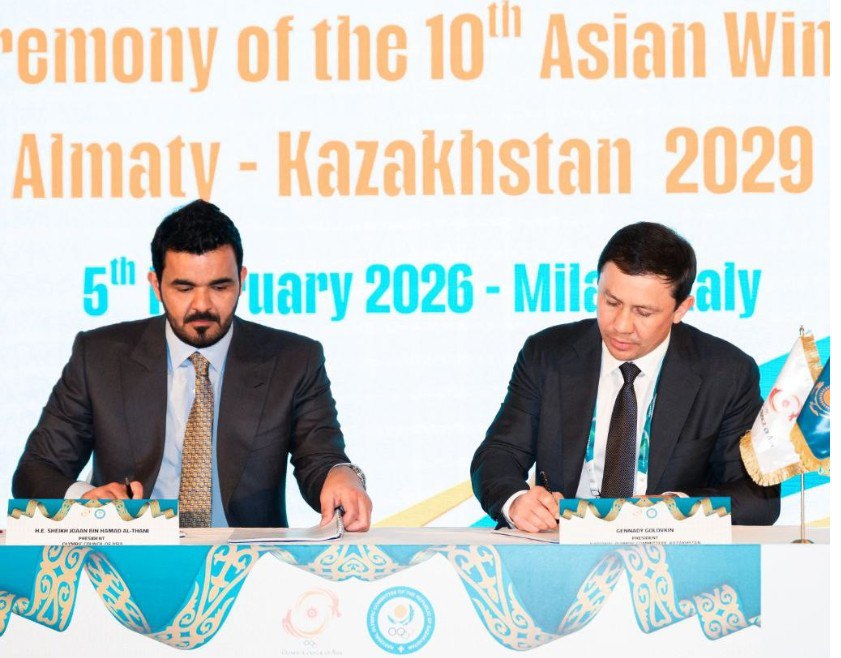
Almaty, Kazakhstan’s largest city nestled in the foothills of the Alatau Mountains, has been selected to host the 2029 Asian Winter Games, the country’s National Olympic Committee (NOC) has announced. The agreement was signed on February 6 in Milan, coinciding with the opening of the Winter Olympics. Almaty’s selection is credited largely to its robust existing sports infrastructure, much of which was developed for the 2011 Asian Winter Games, co-hosted by Almaty and Astana. Almaty also hosted the 2017 Winter Universiade, further demonstrating its capacity to stage major international sporting events. Kazakhstan’s Ministry of Tourism and Sports emphasized that the 2029 Games will rely on current facilities, avoiding the need for large-scale new construction. “The existing sports complexes allow competitions to be held in all sports included in the program of the Winter Asian Games,” the ministry said. The NOC of Kazakhstan noted that leveraging existing infrastructure and prior experience will ensure a cost-effective and efficient approach to hosting. Organizing a second edition of the Winter Asian Games is viewed as a strategic move to further develop Olympic sports in the country. “Hosting major international competitions, including the Asian Games, is of strategic importance for the country. It reflects the high level of trust placed in us by the international sports community and recognizes Kazakhstan’s potential,” said Gennady Golovkin, the head of the National Olympic Committee. He added that Almaty possesses all the necessary sports and urban infrastructure, eliminating the need for additional construction. Saudi Arabia had previously been awarded hosting rights for the 2029 Asian Winter Games but later postponed the event due to large-scale infrastructure developments and extended preparation timelines. As previously reported by The Times of Central Asia, Kazakhstan placed fourth among 34 countries in the medal tally at the 2025 Asian Winter Games, securing 20 medals.

Facing Restrictions, Russian Skater Joins Uzbekistan´s Winter Olympics Team

Short track speed skater Daniil Eybog competed for Russia at the 2022 Winter Olympics in Beijing, just before Russia’s full-scale invasion of Ukraine. This year, Eybog will represent Uzbekistan at the games in Italy, switching countries because of international restrictions that were placed on Russian athletes because of the war. Eybog will race the 500-meter distance for the Central Asian country at the games in Milan and other locations in northern Italy. Medet Nazarov, an alpine skier from Chimgan in Uzbekistan, will compete in the slalom and giant slalom events. Uzbekistan planned to send pair figure skaters, Dmitry Chigirev and Ekaterina Geynish, to Italy as well, but Chigirev suffered an injury that forced their withdrawal. “Good night or good morning, whichever you prefer. I'm off to the Olympic Games!” 28-year-old Eybog said this week on social media. “The route is a bit crazy. I'm flying via Tashkent. First stop. Then to Istanbul and from there to Milan. Let's go.” Eybog came seventh in the 500 meters while competing for Uzbekistan at the Asian Winter Games in Harbin, China, last year. Before switching his sporting nationality, he was part of the winning team in the 5,000-meter relay at the 2020 European Championships in Hungary. The executive board of the International Olympic Committee can approve a change in the country that an athlete represents, under certain conditions, and has done so for a number of competitors in this year’s winter games. In an interview last year with Russian outlet Tverisport.ru, Eybog described his experience at the Beijing Olympics as “chaotic,” saying he had been an alternate and then made the Russian team virtually at the last minute. “Since then, given my experience, I've developed a strong desire to compete in the Olympics again and this time try to fight for a medal,” Eybog said. “But, as you know, due to the political situation, the eligibility of Russian speed skaters and short track speed skaters for the 2026 Games in Italy is in question. Without serious motivation, maintaining high-level athletic fitness is quite difficult. Currently, the only way to qualify for international competitions, including the Olympic Games, is to compete for another country.” He said there were several countries that might have accepted him into their teams, but “the historical and geographical proximity of the countries played a role, including the familiarity of the Uzbek people with the Russian language." Eybog said short track speed skating is just starting to develop in Uzbekistan, whose Olympic committee has funded his training in Russia. Another Russian skater, Denis Ayrapetyan, also transferred to Uzbekistan at the same time, though he is not competing at the Winter Olympics. Some Russians, as well as competitors from Belarus, a close ally of Russia, are participating in the games under the designation of Individual Neutral Athletes. They must meet requirements to take part, including, for example, not actively supporting the war in Ukraine. The flags of Russia and Belarus won’t be displayed at the games, and their anthems won’t be...

Small but Always Present: Kyrgyzstan at the Winter Olympics

Since independence in 1991, Kyrgyzstan has sent just one or two athletes to every edition of the Winter Olympics, a reflection of its modest stature in winter sports as well as its persistence in being represented among the world’s best every four years.  This year is no different. Alpine skier Timur Shakirov and cross-country skier Artur Saparbekov, both 19 years old, will compete for Kyrgyzstan at the games that run from February 6 to February 22 in Milan, Cortina d’Ampezzo in the Dolomites and other locations in northern Italy. Shakirov will participate in the giant slalom and slalom at the Bormio resort, while Saparbekov will also compete in two disciplines - the classic sprint and the 10-kilometer freestyle - at Val di Fiemme. The athletes recently showed off their national uniforms for the games – a dark blue one for training and a white one with a white kalpak, the traditional Kyrgyz headgear, for ceremonial events.  Kyrgyzstan’s National Olympic Committee said it had provided the athletes with Olympic scholarships worth $21,000, starting in November 2023.  “A coaching workshop on skiing was also held in 2025, and in 2026, a biathlon workshop aimed at upgrading specialists and developing winter sports in the country is planned,” the committee said.  Kyrgyzstan’s mountainous terrain offers potential for the development of winter sports, but limited funding and a lack of top-level training facilities has held back progress.  After the collapse of the Soviet Union, Kyrgyzstan first participated in the Winter Olympics at the 1994 games in Lillehammer, Norway, with Yevgeniya Roppel competing in the biathlon, a sport that involves cross-country skiing and rifle shooting. The country of about seven million people has sent a delegation to the games every four years since then, a notable feat because athletes have to get through qualifying rounds. The first Winter Olympics were held in 1924.  With a delegation of three-dozen athletes, Kazakhstan is sending the biggest team from Central Asia to the Games in Italy. Uzbekistan planned to send four athletes, but a figure-skating pair is unable to compete because of an injury. Tajikistan and Turkmenistan are not participating. 

Inspired by Golovkin, Young Kazakhstani Skier Heads to Winter Olympics

A 16-year-old Kazakhstani freestyle skier who won silver in the mixed team aerials event at the 2025 Asian Games is among athletes from Central Asia who will compete at the Olympic Games in Italy this month. With a 36-member team, Kazakhstan is sending the largest contingent from the region to the games, which run from February 6 to February 22 in Milan, Cortina d'Ampezzo in the Dolomites and other locations in northern Italy. The youngest member of the team is Asylkhan Assan, who also took tenth place for Kazakhstan at a World Cup event in China a year ago and has competed in other international competitions. “The most important thing is to perform well. To fully demonstrate my potential and not make mistakes during the jump,” Assan said in an interview posted on the the Olympic.kz website. The teen athlete said he got into sports when he was five years old and, with the encouragement of his grandmother, followed his sister into freestyle skiiing. The acrobatic sport features flips, twists and somersaults after skiiing off a steep jump and concludes with a hopefully clean landing on a downhill slope. “I had injuries during my career, but my family always supported me,” he said. “I did not break down physically or psychologically.” Assan said his role model is Gennady Golovkin, the former middleweight world champion from Kazakhstan, and that he used to wake up early to watch the boxer’s fights. Golovkin, head of Kazakhstan’s National Olympic Committee, was named president of World Boxing at the federation’s inaugural congress in Rome in November. Freestyle skiing emerged in the 1960s at a time of social change and a push for “more more freedom of expression, even in sports,” the Olympics organization said. It was “initially called ‘hotdogging’ because it involved a mix of acrobatic moves, aerials, and adrenaline,” it said. The International Ski Federation recognised freestyle as a discipline in 1979, introduced guidelines to make it safer and held the first events in the following year. It made its Olympic debut as a demonstration sport at the games in Calgary, Canada in 1988. The town of Livigno will host the freestyle skiiing and snowboarding events at this year’s Winter Olympics.

Kazakhstan to Send More Athletes Than Expected to Winter Olympics

At least 36 Kazakh athletes have secured spots at the upcoming Winter Olympics in Italy this February, exceeding initial expectations. The number could still increase if the International Olympic Committee (IOC) allocates additional quota places. The XXV Winter Olympic Games will take place in Milan and Cortina d'Ampezzo from February 6 to 22. More than 3,500 athletes from 93 countries will compete for 116 sets of medals across 16 sports. Qualification for all disciplines concluded on January 20. Kazakhstan had originally aimed to secure 35 Olympic licenses for the Games. However, according to the Ministry of Tourism and Sports, the final count has reached 36. “The Kazakh national team will include 36 athletes at the Olympics,” the ministry’s press service stated. Half of these licenses are named, meaning they are tied to specific athletes. The remaining half are open slots, with final athlete selection to be determined by the coaching staff of the respective national teams. Kazakh athletes currently hold 18 named licenses across five sports. Named license holders include figure skaters Mikhail Shaydorov and Sofya Samodelkina (men’s and women’s singles), alpine skiers Rostislav Khokhlov and Alexandra Skorokhodova, and short track speed skaters Abzal Azhgaliyev, Denis Nikisha, Olga Tikhonova, and Yana Khan. Freestyle aerialists Dinmukhammed Raimkulov, Sherzod Khashirbaev, Roman Ivanov, Asan Asylkhan, and Ayana Zholdas have also secured confirmed slots. Kazakhstan’s speed skating team has been finalized and will feature Evgeny Koshkin, Kristina Silaeva, Elizaveta Golubeva, Nadezhda Morozova, and Arina Ilyashchenko. As for the remaining, non-named spots, Kazakh athletes will also compete in freestyle moguls (four athletes), biathlon (two men and two women), Nordic combined (one athlete), ski jumping (two athletes), and cross-country skiing (three men and four women). “These figures reflect the results of the licensing stages from the 2025-2026 season. Additional quotas may still be allocated by the IOC. Final information on Olympic licenses will be available at the end of January,” the sports ministry noted. As previously reported by The Times of Central Asia, Kazakhstani athletes achieved a strong showing at the 2025 Asian Winter Games, placing fourth overall in the medal standings among 34 participating countries.