
• KGS/USD = 0.01144 0%
  • KZT/USD = 0.00210 0%
  • TJS/USD = 0.10528 0.19%
  • UZS/USD = 0.00008 0%
  • TMT/USD = 0.28571 0.28%
  • KGS/USD = 0.01144 0%
  • KZT/USD = 0.00210 0%
  • TJS/USD = 0.10528 0.19%
  • UZS/USD = 0.00008 0%
  • TMT/USD = 0.28571 0.28%
  • KGS/USD = 0.01144 0%
  • KZT/USD = 0.00210 0%
  • TJS/USD = 0.10528 0.19%
  • UZS/USD = 0.00008 0%
  • TMT/USD = 0.28571 0.28%
  • KGS/USD = 0.01144 0%
  • KZT/USD = 0.00210 0%
  • TJS/USD = 0.10528 0.19%
  • UZS/USD = 0.00008 0%
  • TMT/USD = 0.28571 0.28%
  • KGS/USD = 0.01144 0%
  • KZT/USD = 0.00210 0%
  • TJS/USD = 0.10528 0.19%
  • UZS/USD = 0.00008 0%
  • TMT/USD = 0.28571 0.28%
  • KGS/USD = 0.01144 0%
  • KZT/USD = 0.00210 0%
  • TJS/USD = 0.10528 0.19%
  • UZS/USD = 0.00008 0%
  • TMT/USD = 0.28571 0.28%
  • KGS/USD = 0.01144 0%
  • KZT/USD = 0.00210 0%
  • TJS/USD = 0.10528 0.19%
  • UZS/USD = 0.00008 0%
  • TMT/USD = 0.28571 0.28%
  • KGS/USD = 0.01144 0%
  • KZT/USD = 0.00210 0%
  • TJS/USD = 0.10528 0.19%
  • UZS/USD = 0.00008 0%
  • TMT/USD = 0.28571 0.28%

Viewing results 67 - 72 of 715

Kyrgyzstan Intends to Reduce the Storage Period for Negative Credit Information

Kyrgyz authorities are moving to ease regulations surrounding credit history retention in an effort to stimulate the banking sector and provide indirect support to small and medium-sized enterprises. A draft law from the Ministry of Economy and Commerce has been submitted for public discussion. The proposed changes would reduce the retention period for negative credit information from five years to three, and for positive information from seven years to five. According to estimates by local economists, the credit portfolio of Kyrgyzstan’s commercial banks reached approximately $5.27 billion last year. The share of overdue loans stood at around $151 million, or about 2% of the total. The ministry believes that easing access to credit will help stimulate entrepreneurial activity. Broader borrowing opportunities could support business development, increase employment, and generate additional tax revenue. As of now, approximately 1.5 million Kyrgyz citizens have a credit history, of whom 302,000 have negative records, including nearly 200,000 individuals blacklisted by financial institutions. If the law is enacted, a substantial number of these citizens may regain access to formal banking services. Authorities also expect the reform to reduce reliance on shadow lending and curb dependence on microloans outside the official financial sector. Under the internal policies of most commercial banks, a loan delinquency of more than 90 days typically qualifies as negative credit history, severely diminishing a borrower's chances of securing new financing. The bill has already passed its first reading in parliament. Given that it has been approved by the relevant ministries and agencies, its eventual adoption appears likely.

Kyrgyzstan and China to Launch Direct Flight Between Osh and Kashgar

A new air route connecting Osh, Kyrgyzstan’s second-largest city, with Kashgar in China’s Xinjiang Uyghur Autonomous Region is expected to launch in April, according to a statement from Airports of Kyrgyzstan JSC. The announcement follows a meeting held on January 30 with the Commercial Aircraft Corporation of China (COMAC). The new flight is intended to enhance transport connectivity between the two neighboring countries, deepen bilateral trade and economic ties, and promote tourism and cultural exchange. The route is expected to be operated by Chengdu Airlines, a COMAC-affiliated carrier, using COMAC’s C919 aircraft, China’s first domestically developed short-to-medium-range turbofan jet, which can accommodate up to 97 passengers. Osh already has an existing air link to Xinjiang. In November 2025, China Southern Airlines resumed flights between Osh and Urumqi, the region's capital. Xinjiang serves as a strategic gateway to China for Kyrgyzstan, and Kashgar is the departure point for the China-Kyrgyzstan-Uzbekistan (CKU) railway, an ambitious regional infrastructure project aimed at connecting China with Central Asia, the Middle East, and Europe. The 523-kilometer railway will run from Kashgar to Andijan, Uzbekistan, passing through Kyrgyzstan via Torugart, Makmal, and Jalal-Abad. Construction on the CKU railway officially began on December 27, 2024, in Kyrgyzstan’s Jalal-Abad region. New transport links by air and rail are expected to further boost trade between Kyrgyzstan and China. According to Chinese Ambassador to Kyrgyzstan Liu Jiangping, bilateral trade reached a record $27.2 billion in 2025, up 20% from the previous year.

Kyrgyzstan Suspends Private Driving Schools in Bid to Improve Road Safety

Kyrgyzstan has temporarily suspended the operations of all private driving schools as part of a sweeping reform aimed at improving driver education and road safety. On January 29, President Sadyr Japarov signed a decree introducing a trial period, effective until August 30, 2026, during which driver training will be conducted exclusively through state-run driving schools.  The reform also mandates a significant extension of the training period from the current 2.5 months to 10 months. Authorities say the new measures are designed to reduce traffic accidents and eliminate corruption in the issuance of driver's licenses. As of 2025, Kyrgyzstan had 340 driving schools, including 74 state-run institutions and 266 privately operated ones. Officials cite systemic issues in the private sector, including substandard instruction, widespread corruption, and the illegal sale of licenses. Daiyrbek Orunbekov, Head of the Information Policy Service under the Presidential Administration, addressed public concerns over the extended training period in a Facebook post on January 29.  He emphasized that the 10-month program is intended solely to improve driver competence and reduce accidents. “A driver who has acquired sufficient knowledge poses no danger to themselves, passengers, or other road users,” Orunbekov wrote. Under the new model, instruction will include both theoretical and practical training held two to three times per week, with each session lasting two to three hours. Some classes may be offered online. The curriculum will also cover psychological preparation and road ethics. In response to critics who argue that the current 2.5-month course is adequate, Orunbekov said that meaningful learning cannot occur in such a short timeframe. He cited international practices, noting that in many developed countries, driver training takes significantly longer. In Finland, the process can last up to a year and includes a probationary license period; in Germany, it ranges from six to twelve months; in Sweden and Norway, up to a year; and in the United Kingdom, Canada, the U.S., Australia, and New Zealand, it can take up to two years. The reform follows concerning national road safety data. In 2025 alone, Kyrgyzstan recorded 8,456 traffic accidents, resulting in 900 deaths and 12,169 injuries. Over the past decade, more than 75,000 accidents have claimed over 9,000 lives. According to Orunbekov, many current drivers lack even basic knowledge of traffic regulations and, in some cases, cannot recall where they were trained. He described this as a lingering consequence of a flawed and often corrupt driver education system.

Kyrgyzstan Seeks End to Extra Transit Fees for Its Citizens Crossing Uzbekistan

Kyrgyzstan has formally requested that Uzbekistan eliminate additional fees imposed on Kyrgyz citizens transiting through Uzbek territory, including charges for vehicle insurance and window tinting. The matter was raised during a session of the Jogorku Kenesh (parliament), where Deputy Foreign Minister Almaz Imangaziev confirmed that negotiations with Uzbek authorities are ongoing. According to Imangaziev, the request is currently under internal review in Uzbekistan. “When Kyrgyz citizens transit through Uzbekistan, mainly en route to the southern regions of our country, they are required to purchase car insurance and pay additional fees if their windows are tinted. On our side, no such requirement exists,” said lawmaker Dastan Bekeshev, who called on the Foreign Ministry to advocate for the removal of these rules. Imangaziev affirmed that Bishkek has already submitted a formal request to Tashkent. He added that if Uzbekistan fails to eliminate the fees, Kyrgyzstan may consider imposing reciprocal measures on Uzbek citizens transiting through Kyrgyz territory. The development comes amid broader regional concerns over trade and transit barriers. On January 17, Uzbek Deputy Prime Minister Jamshid Khodjaev addressed similar frustrations during a meeting in Tashkent with entrepreneurs, ambassadors, and government officials. He pointed to challenges faced by Uzbek exporters to Tajikistan, citing excessive procedures and additional customs fees that reportedly raise the price of Uzbek goods by approximately 15%, undermining their competitiveness. Khodjaev warned that unless such restrictions are lifted, Uzbekistan may introduce symmetrical measures in response.

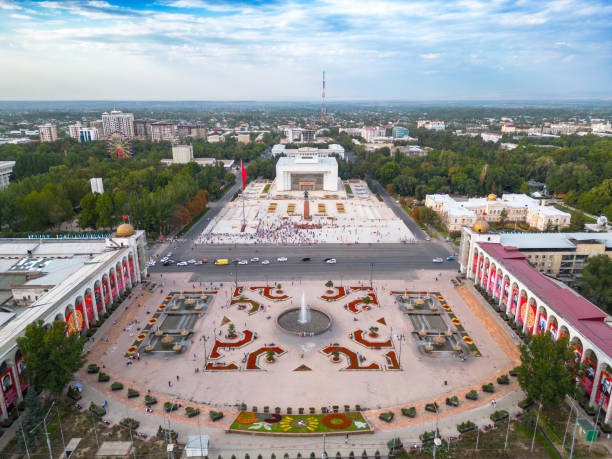
Bishkek Unveils New Master Plan for 2050

Kyrgyz authorities have submitted a draft law outlining a new master plan for the development of Bishkek through 2050, now open for public discussion. The document defines long-term priorities for the capital's growth across several sectors, including transport infrastructure, environmental management, economic development, and spatial expansion. Once adopted, the plan will become the principal framework for territorial planning and will be legally binding for decisions related to construction and land use. According to the draft, Bishkek's official population is expected to rise from 1.3 million to 1.9 million by 2050. However, the city is already believed to house approximately 2 million people, with urban development having long exceeded administrative boundaries. As a result, Bishkek is currently facing critical shortages of housing, employment, and transport infrastructure. The plan's authors stress that continued development of the city center alone is no longer viable, as it is already overburdened in terms of both transport and utilities. To address this, the master plan proposes moving away from the current "center-bedroom" model. Instead, employment opportunities should be created within districts and suburbs, supported by improved transport accessibility across all parts of the city. This approach aims to reduce commuting to the center, alleviate traffic congestion, and lessen pressure on the road network. Key infrastructure upgrades include the introduction of an intra-city railway and a high-speed bus system operating along dedicated corridors. A network of transport hubs will also be established, with the goal of reducing residents’ reliance on private vehicles. Developed in 2025 by the Bishkek City Hall in cooperation with the Scientific Research Institute of Prospective Urban Development in St. Petersburg, the plan is now being updated based on public feedback. The most contentious element of the proposal is the renovation program, which calls for the demolition of a substantial number of two, three, and four-storey buildings in central areas and along major roads. Many residents are concerned that state compensation for demolished properties may fall short of market value, a topic that has become one of the most debated during public consultations. Environmental improvements are also a core component. Bishkek frequently ranks among the most polluted cities in the Eurasia region. To address this, the plan includes a “green framework” for the city: expanding river and canal beds, creating green corridors, and enhancing recreational zones.

Kyrgyzstan Bans Animal Imports from India to Prevent Nipah Virus Spread

On January 28, Kyrgyzstan’s Veterinary Service imposed temporary restrictions on the import of live animals and animal products from India in response to confirmed cases of Nipah virus infections. According to the World Health Organization (WHO), Nipah virus is a severe zoonotic disease transmitted to humans through contact with infected animals, such as fruit bats or pigs, or through consumption of food contaminated by bat secretions. Human-to-human transmission is also possible through close contact. The virus has an estimated case-fatality rate of 40% to 75%. Two confirmed cases of Nipah virus were reported in late December in India’s eastern state of West Bengal. Both infected individuals were healthcare workers. Following these reports, authorities in Thailand, Singapore, Hong Kong, and Malaysia intensified airport screenings to contain the risk of cross-border transmission. Kyrgyzstan’s Ministry of Health has issued a statement urging the public to remain calm, noting that no cases of Nipah virus have been registered in the country. The ministry assured that the healthcare system is prepared to respond swiftly to potential epidemiological threats. As a preventive measure, sanitary and quarantine controls have been tightened at Kyrgyzstan’s border crossings. The ministry continues to collaborate with the WHO and other international partners to monitor developments and coordinate containment efforts. In neighboring Kazakhstan, the Ministry of Health issued a similar statement confirming that no cases of Nipah virus infection have been detected and that the epidemiological situation remains under control. As a precaution, Kazakhstan has also enhanced screening procedures at all border checkpoints, with special attention to travelers arriving from India and Southeast Asia.
