• KGS/USD = 0.01144 0%
  • KZT/USD = 0.00208 0%
  • TJS/USD = 0.10431 0.1%
  • UZS/USD = 0.00008 0%
  • TMT/USD = 0.28571 0%
  • KGS/USD = 0.01144 0%
  • KZT/USD = 0.00208 0%
  • TJS/USD = 0.10431 0.1%
  • UZS/USD = 0.00008 0%
  • TMT/USD = 0.28571 0%
  • KGS/USD = 0.01144 0%
  • KZT/USD = 0.00208 0%
  • TJS/USD = 0.10431 0.1%
  • UZS/USD = 0.00008 0%
  • TMT/USD = 0.28571 0%
  • KGS/USD = 0.01144 0%
  • KZT/USD = 0.00208 0%
  • TJS/USD = 0.10431 0.1%
  • UZS/USD = 0.00008 0%
  • TMT/USD = 0.28571 0%
  • KGS/USD = 0.01144 0%
  • KZT/USD = 0.00208 0%
  • TJS/USD = 0.10431 0.1%
  • UZS/USD = 0.00008 0%
  • TMT/USD = 0.28571 0%
  • KGS/USD = 0.01144 0%
  • KZT/USD = 0.00208 0%
  • TJS/USD = 0.10431 0.1%
  • UZS/USD = 0.00008 0%
  • TMT/USD = 0.28571 0%
  • KGS/USD = 0.01144 0%
  • KZT/USD = 0.00208 0%
  • TJS/USD = 0.10431 0.1%
  • UZS/USD = 0.00008 0%
  • TMT/USD = 0.28571 0%
  • KGS/USD = 0.01144 0%
  • KZT/USD = 0.00208 0%
  • TJS/USD = 0.10431 0.1%
  • UZS/USD = 0.00008 0%
  • TMT/USD = 0.28571 0%

Viewing results 187 - 192 of 694

Kazakh Businessman Almaz Zaripov Detained in Bishkek

The State Committee for National Security of Kyrgyzstan (SCNS) has confirmed the detention of Kazakh citizen Almaz Zaripov, president of the Agrarian and Industrial Union of Kazakhstan, in Bishkek. The arrest, which occurred at the end of August, followed a public appeal by Zaripov’s wife to President Kassym-Jomart Tokayev, which garnered widespread attention on social media. According to Kyrgyz authorities, the case stems from a March 2025 complaint by two Bishkek residents. The complainants allege that a 51-year-old man offered them a “lucrative business” opportunity involving grain imports from Kazakhstan. After transferring $2.5 million, the alleged supplier ceased communication and disappeared. Zaripov's wife claims the charges are fabricated and alleges the real motive is to seize the company’s assets and extort a large sum of money. The SCNS rejected these accusations, stating that a criminal case was opened based on a Kyrgyz citizen’s complaint of embezzlement. “During the investigation, this fact was confirmed. The citizen of the Republic of Kazakhstan was detained, charged, and the court imposed a preventive measure in the form of detention for the duration of the investigation. The investigation is being conducted in full compliance with the legislation of the Kyrgyz Republic,” the agency said in a statement. The committee added that Zaripov has pleaded guilty and has begun compensating the victims. Authorities are considering whether to revise the conditions of his detention. This is not the first time a Kazakh national has faced legal trouble in Kyrgyzstan. Earlier, businessman Kamalutin Khalikov was placed on a wanted list on charges of financing the criminal group led by Kamchybek Asanbek, also known as Kamchy Kolbayev, who was killed during a police operation on October 4, 2023.

Kyrgyzstan Announces Dates For World Nomad Games 2026

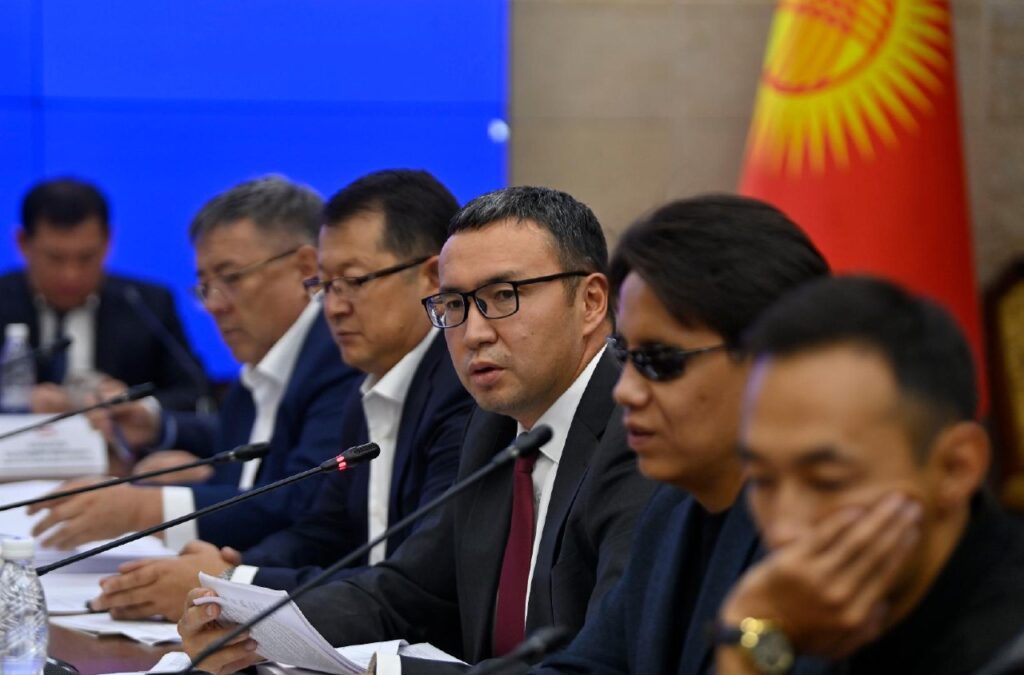
Kyrgyzstan, host of the 2026 edition of the World Nomad Games, says the opening ceremony will be held in Bishkek on August 31 and the games will end on the shores of the scenic Lake Issyk-Kul on September 6. The dates of the games were announced on Tuesday by the organizing committee, which expects participants and guests from more than 89 countries. Aside from the opener in the Kyrgyz capital, the main schedule of the games will be held at Issyk-Kul, a northeastern resort area near the border with Kazakhstan. [caption id="attachment_36223" align="aligncenter" width="1600"] Image: TCA, Stephen M. Bland[/caption] Kyrgyzstan hosted the first three World Nomad Games in the same area in 2014, 2016, and 2018. The 2022 games were held in Turkey, and the last edition in 2024 occurred in Kazakhstan. The games have expanded over the years, providing a showcase for the cultural heritage of Central Asian and regional societies through sports involving birds of prey, dogs, horses, wrestling, archery, as well as displays of agility and other physical feats. [video width="1920" height="1080" mp4="https://timesca.com/wp-content/uploads/2024/09/Nomad_2-day.mp4"][/video] The games will demonstrate Kyrgyzstan’s role as “an international platform for cultural dialogue,” organizers said. Earlier this month, Kyrgyz President Sadyr Japarov invited cultural and sports delegations from member countries of the Shanghai Cooperation Organization to participate in the games next year. He spoke during a meeting of SCO leaders in Tianjin, China. The Eurasian group’s members include Belarus, India, Iran, Kazakhstan, China, Kyrgyzstan, Pakistan, Russia, Tajikistan, and Uzbekistan. .

Kyrgyz Parliament Reveals Real Reasons for Its Possible Dissolution

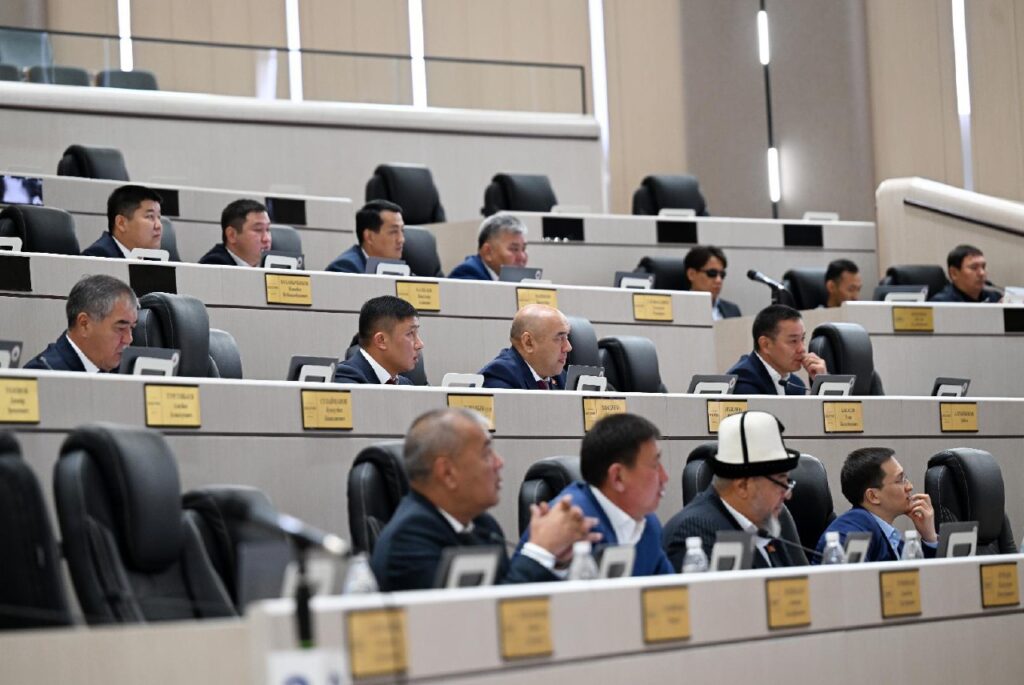
A group of deputies from Kyrgyzstan's parliament, the Jogorku Kenesh, have announced that they are close to finalizing a decision on the parliament’s self-dissolution. According to the Constitution, if dissolution proceeds, early elections must be held within two months, meaning the vote could take place as early as November. Deputy Dastan Bekeshev stated that although he did not sign the dissolution initiative himself, he estimates the likelihood at 99.7 percent. Sixty signatures, two-thirds of all members of parliament, are required for self-dissolution, and 30 signatures have already been collected. Despite the uncertainty, political headquarters are actively preparing: sociologists are conducting phone surveys, consultants are drafting programs and PR strategies, and Bekeshev has called on his supporters to volunteer as campaigners or election observers. “This time, the election campaign will be shortened: 20 days of campaigning, and candidate registration will also be expedited. The parliamentary committee is already planning to discuss the procedure for donations to candidates’ election funds,” Bekeshev said. He has also introduced a new bill addressing election finance. Under current rules, donations can only be made through accounts in a limited number of banks, which he argues creates obstacles for candidates. His proposal would expand banking options and allow campaign funds to be supplemented through the sale of political merchandise. Some lawmakers suggest that the push for early elections reflects the interests of certain groups that want to bring in loyal candidates aligned with the speaker and the authorities. Bekeshev indirectly acknowledged this view, noting that restrictions on candidates’ access to additional resources, combined with the doubling of the maximum campaign fund from 10 to 20 million KGS, could turn parliament into what he called a “parliament for the rich,” limiting access for ordinary citizens. The Central Election Commission has confirmed it is prepared to organize the vote and has urged deputies to inform citizens about new election rules. Under the revised system, three deputies will be elected from each constituency, but voters will only be able to cast a ballot for one candidate.

Kyrgyz Deputies Launch Initiative to Dissolve Parliament

A group of deputies in Kyrgyzstan’s parliament, the Jogorku Kenesh, have launched an initiative to dissolve parliament. The MPs have begun collecting signatures in support of the measure and plan to revisit the issue at the end of September, when a vote could be held. Under Kyrgyzstan’s Constitution, such an initiative can be formally submitted with the backing of at least 30 deputies. For it to pass, however, a two-thirds majority, 60 votes, is required. If successful, parliament would be dissolved and new elections scheduled within two months. Political analysts in Bishkek note that there are currently no signs of a parliamentary crisis that would warrant early elections. They argue that self-dissolution could instead burden the state budget and fuel political instability, potentially discouraging investors. Supporters of the initiative, however, insist their motives are pragmatic. According to the Constitution, the next parliamentary elections are scheduled for November 2026, followed by presidential elections in January 2027. The short interval between the two campaigns, deputies say, could create logistical challenges and additional costs, making an earlier parliamentary vote preferable. Any future elections will be held under Kyrgyzstan’s updated electoral system. Single-member constituencies have been abolished, replaced by 30 multi-member districts that will each elect three deputies, making up the Jogorku Kenesh’s 90 seats in total. The last parliamentary elections, held in November 2021, came after widespread protests in October 2020 over disputed results. Those demonstrations forced a rerun and triggered major political upheaval, including the resignation of then-President Sooronbay Jeenbekov. Since independence, the Jogorku Kenesh has voted to dissolve itself three times, each instance occurring amid political crises and disputes with the presidential administration. So far, officials have not commented on the latest initiative, and the public remains uncertain about the real motivations driving it.

Kyrgyz Parliament Considers Tighter Climbing Rules After Mountain Deaths

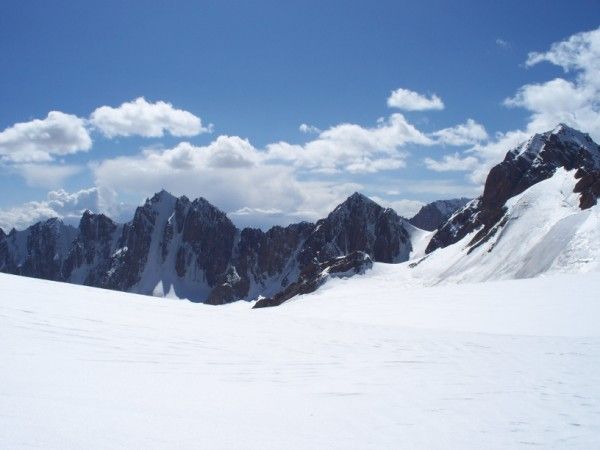
Kyrgyzstan’s parliament is looking at ways to make mountaineering safer after the deaths and presumed deaths of several climbers this year, including a Russian woman who was stranded for days on the highest mountain in the country. The debate comes as authorities promote Kyrgyzstan’s spectacular mountain landscapes in an effort to attract more tourists.  A draft law that was introduced on September 4 in the country's parliament, the Jogorku Kenesh, would require mountaineers who plan to climb above 6,000 meters to get a permit and have insurance that covers medical assistance and evacuation. The bill, put forward by lawmaker Emil Toktoshev, also proposes the development of more infrastructure for mountaineering routes and bases and better communication about emergencies.  “In recent years, active development of mountaineering and mountain tourism has been observed in Kyrgyzstan, which requires legal regulation of this sphere,” says a note posted with the draft law on the parliament’s website. “Despite the growing number of ascents to mountain peaks, legislation in the field of mountaineering remains insufficient, creating legal gaps in matters of safety, environmental responsibility, and the issuance of permits,” the note says.  While high-altitude mountain climbing can be inherently risky, the drama surrounding the plight of Russian Natalya Nagovitsyna on Pobeda Peak, which is 7,439 meters above sea level, attracted international attention and prompted a push for more regulation to help to prevent such disasters. Nagovitsyna, whose husband, Sergey Nagovitsyn, died while climbing in Kyrgyzstan in 2021, broke a leg on Pobeda on August 12. Following risky attempts to rescue her, searchers conducted a high-altitude drone inspection of the mountain ridge where she had been left in early September and said there was no sign of life. There is widespread consensus that Nagovitsyna did not survive on the upper reaches of Pobeda, with minimal supplies and shelter in the brutal climate. Her body has not been recovered.  An Italian friend who had tried to help Nagovitsyna died, and another Russian climber died after climbing Pobeda and falling ill in a separate incident in August. Additionally, two Iranian climbers on Pobeda were reported missing and are presumed dead.   Anna Piunova, editor of Mountain.RU, a Russian website that covers climbing news, said that Nagovitsyna possibly should have climbed Pobeda with an experienced guide and that climbers in general should be aware of their limitations.  “And maybe, when you go into the mountains without a guide, without proper insurance covering PSR (search and rescue operations), in the company of strangers, with only a minimal kit, you need to clearly understand that you’ll have to rely only on yourself,” Piunova said on Instagram. “And choose routes according to your abilities, not your ambitions.” Rescue services and mountaineering infrastructure in Kyrgyzstan are less developed than in the Alps and parts of the Himalayas in Nepal.  The draft bill submitted by lawmaker Toktoshev says a permit system for mountaineers would allow state agencies to monitor climbing routes and react more quickly to emergencies such as avalanche risks and oxygen deficiency, using funds from...

Experts Call for Seismic Study Ahead of Kambarata-1 Hydropower Construction

At a recent parliamentary session, Kanatbek Abdrakhmatov, director of the Institute of Seismology and president of Kyrgyzstan’s National Academy of Sciences, warned that seismic microzonation has not been conducted at the site of the planned Kambarata-1 hydropower plant (HPP), a critical prerequisite for infrastructure projects of this magnitude. Located in western Kyrgyzstan, the Kambarata-1 HPP is a joint venture between Kyrgyzstan, Uzbekistan, and Kazakhstan, with financial support from the World Bank. The facility is expected to have a capacity of 1,860 MW, with a reservoir volume of 4.5 billion cubic meters. The dam is projected to stand 256 meters tall and house four turbines capable of generating over 5.5 billion kWh annually. The total estimated cost of the project is $5-6 billion. The statement has raised alarms over the country’s most ambitious hydroelectric initiative since independence. Abdrakhmatov said scientists had twice appealed to the Ministry of Energy requesting the study, but received no response. He cautioned that the ministry is underestimating the potential seismic risks. “We are about to launch the Kambarata-1 project. It is crucial to understand that seismic microzonation must be carried out before projects of this magnitude begin. Unfortunately, this has not been done,” Abdrakhmatov said. “This raises serious concerns, because if an earthquake occurs, the dam could collapse, which in turn could destroy Kambarata-2 and other hydropower plants downstream on the Naryn River.” He further noted that the dam is planned between two mountain ridges, one significantly higher than the other. Since seismic waves interact differently with varying topographies, a powerful earthquake could cause destabilization and structural damage. Conducting a microzonation study would help mitigate such risks. The Ministry of Energy has dismissed the concerns raised by domestic seismologists, maintaining that the design of the curved gravity dam is safe. According to the ministry, AFRY Switzerland Ltd, the company preparing the project’s feasibility study, engaged international experts to assess the seismic profile of the region. The ministry stated that the expert team conducted an analysis of seismic sources, earthquake history, and regional tectonics using data from the National Institute of Seismology and the Central Asian earthquake catalog. Based on their findings, a curved gravity dam design was proposed to enhance both hydraulic performance and structural resilience. “Following comprehensive studies and numerous expert-level discussions, a seismic hazard assessment of the construction area was provided. The curved gravity dam design proposed for Kambarata-1 is expected to improve both efficiency and resilience,” the ministry reported. Nevertheless, the ministry added that it remains open to further in-depth seismic studies and may still conduct a microzonation survey as recommended by local scientists. “To date, enormous preparatory work has been carried out for Kambarata-1. We are moving toward the start of major construction. However, speculation by some of our seismology experts, who are unfamiliar with the latest reports, is deeply regrettable, it is nothing but slander and sabotage,” the ministry added in a strongly worded statement.