• KGS/USD = 0.01144 0%
  • KZT/USD = 0.00208 0%
  • TJS/USD = 0.10440 -0.19%
  • UZS/USD = 0.00008 0%
  • TMT/USD = 0.28571 0.28%
  • KGS/USD = 0.01144 0%
  • KZT/USD = 0.00208 0%
  • TJS/USD = 0.10440 -0.19%
  • UZS/USD = 0.00008 0%
  • TMT/USD = 0.28571 0.28%
  • KGS/USD = 0.01144 0%
  • KZT/USD = 0.00208 0%
  • TJS/USD = 0.10440 -0.19%
  • UZS/USD = 0.00008 0%
  • TMT/USD = 0.28571 0.28%
  • KGS/USD = 0.01144 0%
  • KZT/USD = 0.00208 0%
  • TJS/USD = 0.10440 -0.19%
  • UZS/USD = 0.00008 0%
  • TMT/USD = 0.28571 0.28%
  • KGS/USD = 0.01144 0%
  • KZT/USD = 0.00208 0%
  • TJS/USD = 0.10440 -0.19%
  • UZS/USD = 0.00008 0%
  • TMT/USD = 0.28571 0.28%
  • KGS/USD = 0.01144 0%
  • KZT/USD = 0.00208 0%
  • TJS/USD = 0.10440 -0.19%
  • UZS/USD = 0.00008 0%
  • TMT/USD = 0.28571 0.28%
  • KGS/USD = 0.01144 0%
  • KZT/USD = 0.00208 0%
  • TJS/USD = 0.10440 -0.19%
  • UZS/USD = 0.00008 0%
  • TMT/USD = 0.28571 0.28%
  • KGS/USD = 0.01144 0%
  • KZT/USD = 0.00208 0%
  • TJS/USD = 0.10440 -0.19%
  • UZS/USD = 0.00008 0%
  • TMT/USD = 0.28571 0.28%

Viewing results 319 - 324 of 664

Bishkek in Top Ten Cities with Highest Level of Air Pollution

On January 3rd at 18:00, Bishkek entered the top ten cities globally with the highest levels of air pollution, clocking in at number seven according data compiled by AirNow, which reports air quality using the official U.S. Air Quality Index (AQI). According to the website, at this time the city was marked as "unhealthy", with an aAQI of 158. An air quality monitoring station has been installed on the territory of the U.S. Embassy in Kyrgyzstan, which updates information every hour. The Air Quality Index is divided into six categories reflecting the level of health hazards. An AQI value above 300 is considered dangerous, whilst a value below 50 is considered good.

President Speaks about Fighting Corruption, New Trade Routes in Eurasia

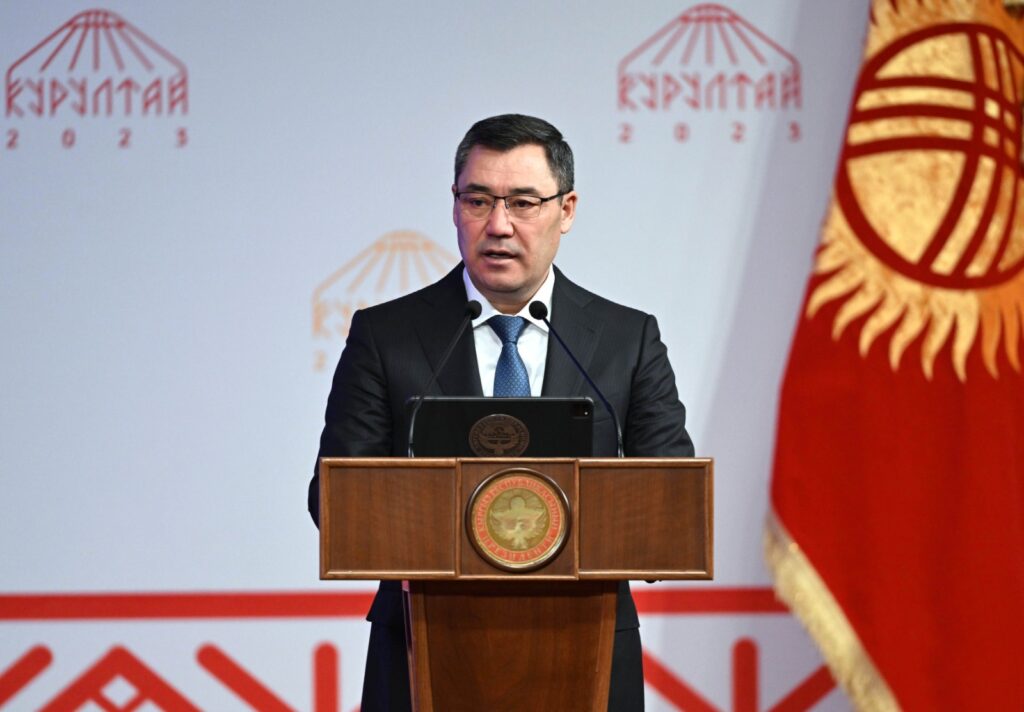
On December 15th, President Sadyr Japarov addressed the second People’s Kurultai, a national assembly of representatives of the public, to discuss current issues of national importance and develop joint proposals to promote reforms. In his speech, the President laid particular emphasis on the fight against corruption. “Corruption is a social evil not only of our people, but of all countries of the world. Because of corruption, our country did not develop for almost 30 years, only a few people became rich, and the common people lived in poverty. Currently, anti-corruption measures are in full swing. Billions of dollars are being returned to state coffers,” Japarov said, adding that a war is also being waged against organized criminal groups. “No investor will invest money in a country with criminal elements. In addition, some officials continue to obstruct investors and engage in bribery and lobbying. All these phenomena harm the image of the country. In this regard, the merciless fight against corruption will continue and intensify,” the President promised. President Japarov also touched upon the topic of new trade routes for Kyrgyzstan. “Kyrgyzstan is located on a unique trade route — the Great Silk Road between Europe and Asia. Occupying a convenient geographical location on trade routes, our country can become a bridge between East and West. For this purpose, a new multimodal transport route, the ‘Southern Corridor’ is being developed. In addition, work is underway to open a southern air corridor, which will strengthen air traffic between Kyrgyzstan and China, and connect the airports of Osh and Kashgar. “At the same time, construction of the China–Kyrgyzstan–Uzbekistan railway will begin in the near future. The pilot project for transporting cargo containers in transit by rail from China to Afghanistan via Kyrgyzstan and Uzbekistan will continue. The issue of launching a pilot container train linking Iran–Turkmenistan–Uzbekistan-Kyrgyzstan is also being considered. I am confident that these initiatives and ongoing projects will allow Kyrgyzstan to reach a new level of transport and logistics communication with the outside world,” President Japarov concluded.

World Bank to Help Kyrgyzstan Reduce Air Pollution

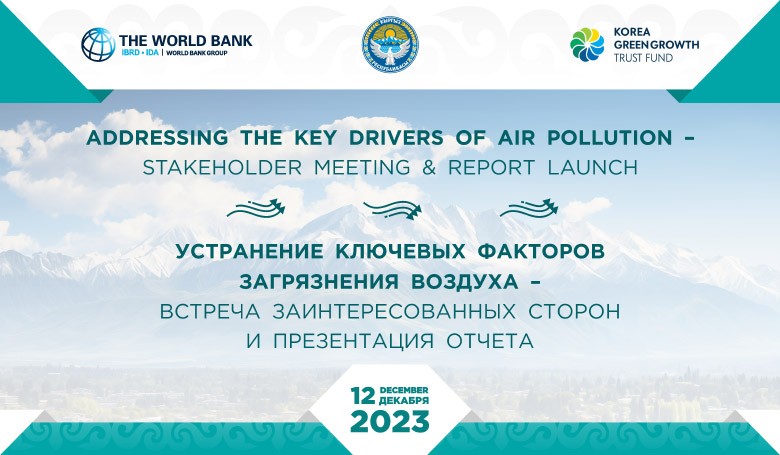
The World Bank and the Ministry of Natural Resources, Ecology and Technical Supervision (MNRETS) of the Kyrgyz Republic on December 12th hosted a stakeholder meeting to launch the World Bank's new report, Air Quality Analysis for Bishkek: PM2.5 Source Apportionment and Emission Reduction Measures, according to a statement on the World Bank website. The World Bank conducted this study in close coordination with MNRETS Hydrometeorological Service (Kyrgyzhydromet) under the Ministry of Emergency Situations and Bishkek Municipality to evaluate the air quality in Bishkek, focusing on PM2.5 pollution. Exposure to fine inhalable particles (PM2.5 with a diameter of 2.5 micro-meters or less) poses serious health risks, including respiratory infections, cancer, cardiovascular diseases, and premature deaths. In Bishkek, the average annual PM2.5 concentrations in 2022 surpassed the WHO guideline value of 5 µg/m3 by nearly sevenfold. During the last several winters, average daily concentrations of PM2.5 were often above 200 µg/m3, surpassing the WHO guideline of 15 µg/m3 by more than 13 times and placing Bishkek among the world’s most polluted cities. The losses caused by air pollution in Bishkek are estimated to be equivalent to 1.2% of the Kyrgyz Republic’s GDP, while air pollution at country level is estimated cost 5.1% of the GDP. In line with priorities and recommendations identified in the study, the World Bank jointly with MNRETS, KyrgyzHydromet and Bishkek Municipality has prepared a $50 million Kyrgyz Republic Air Quality Improvement Project to help the country reduce air pollution and the adverse effects it has on public health and the economy. This project is expected to not only directly benefit residents of Bishkek by improving the city’s air quality, but will also support the establishment of a sound Air Quality Management System that will drive policy actions for air quality improvement, aiming to mitigate the impact of air pollution on public health and economic development across the country.

Civil Liberties Worsening in Kyrgyzstan Says Civicus Monitor

This year, Kyrgyzstan became one of the seven countries whose annual ranking in terms of civil liberties worsened. This is according to the report, "People's Power under Attack - 2023" published by global civil society alliance, Civicus Monitor. The methodology applied by Civicus Monitor sees countries divided into five categories depending on the points scored: countries with open (free) civil space, narrowed (freedoms are partially limited), partially closed (oppressive civil liberties), suppressed and closed. Kyrgyzstan scored 40 out of 100 points, and was therefore classified as a State with a suppressed (repressed) civil space. Since 2018, the republic has been included in the category of countries with a partially closed civil space. The reasons for this downgrade were the promotion of draft laws restricting the activities of NGOs and the media, increased pressure on independent media, criminal prosecution of civil society activists, journalists and other critics of the government, and long-term ban on peaceful assemblies in the central districts of Bishkek. Neighbors in the region also received relatively low ratings, with Turkmenistan (8 points), Tajikistan (12 points) and Uzbekistan (18 points) classified as countries with a closed civil space, whilst Kazakhstan (27 points) was classified as a state with a suppressed civil space. According to the authors, almost a third of humanity now lives in countries with a closed civil space. This is the highest percentage (30.6%) living in the most restrictive environment since the first Civicus Monitor report in 2018. Only 2.1% of people live in open states where civil space is both free and protected. This is half as much as six years ago, the report says.

Korea Helps Build Firefighting Station in Cholpon-Ata, Kyrgyzstan

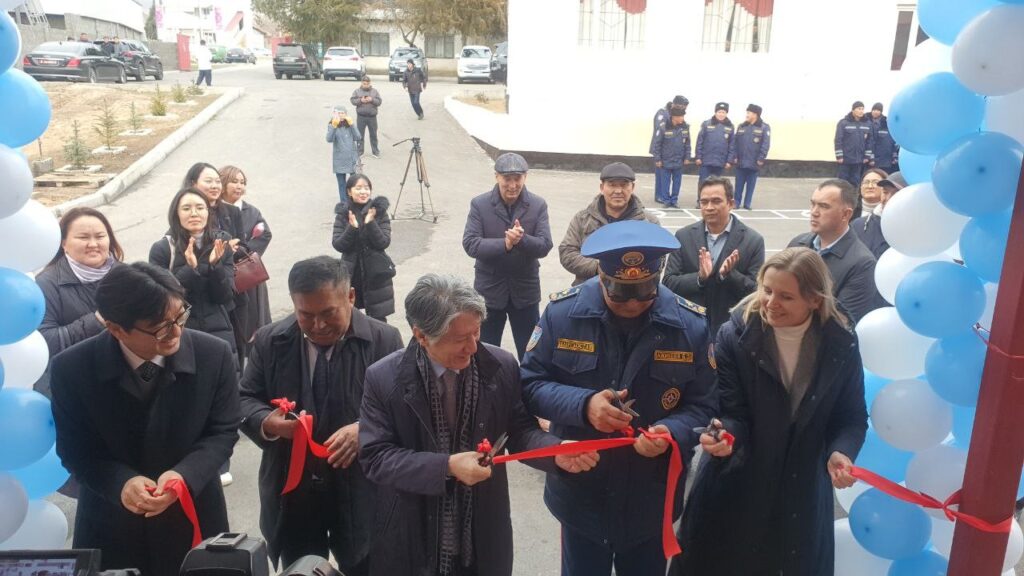
On December 8th, a landmark ceremony was held in the city of Cholpon-Ata to mark the successful completion of the construction of a fire and rescue station built by cooperation between the Ministry of Emergency Situations of the Kyrgyz Republic, the Government of the Republic of Korea, the Korean International Cooperation Agency (KOICA), and the United Nations Development Programme (UNDP), the UNDP website stated. The Plenipotentiary Representative of the Kyrgyz President in the Issyk-Kul region, the Minister of Emergency Situations of the Kyrgyz Republic, the Ambassador Extraordinary and Plenipotentiary of the Republic of Korea to the Kyrgyz Republic, KOICA Country Director, and the UNDP Resident Representative attended the ceremony. This construction is part of a broader initiative to construct four fire and rescue stations across Kyrgyzstan, with the other three to be in Bishkek, Osh, and Suzak (Jalal-Abad region). The collaboration aims not only to bolster the Kyrgyz Republic's disaster management capabilities with the supply of modern firefighting equipment and machinery, and to enhance the overall quality of firefighting services. Along with technical assistance, the UNDP improved the working conditions of firefighters, mainstreamed gender equality, expanded universal access to fire services, and ensured adherence to sustainable development principles. Boobek Azhikeev, the Minister of Emergency Situations of the Kyrgyz Republic, noted the project's timeliness, given the annual increase in the number of fires. “Major fires around the world, which have claimed many lives and turned mountain forests into ash, are once again calling for firefighters and rescuer services in Kyrgyzstan to strengthen their efforts,” he said. “As part of our cooperation, we have successfully implemented the initial stages of a grant project to increase the capacity of the fire and rescue service with a total amount of $8 million.” The Ambassador of the Republic of Korea to the Kyrgyz Republic, Mr. Lee Won-jae stated that “since establishing diplomatic relations in 1992, Korea and Kyrgyzstan have expanded cooperation in various fields, and we hope that exchanges and cooperation between the two countries will expand and deepen in the future. The Korean government plans to continue to strengthen development cooperation to assist Kyrgyzstan's socioeconomic development and improve the quality of life of its people.” Ms. Alexandra Solovieva, the UNDP Resident Representative, emphasized the importance of disaster risk reduction and climate emergency response. “We joined hands to expand access to more than 400,000 people to receive timely assistance in case of emergencies,” she stated. “We worked to reduce incident response times by providing modern equipment and technology that play a key role in saving the lives of people in the Issyk-Kul region.” While the Cholpon-Ata fire and rescue station is now operational, construction in Bishkek, Osh, and Suzak is progressing and is expected to be completed by next year.

Green Pitching Event at COP28 Focuses on Central Asia’s Sustainable Future

As reported on the United Nations Development Programme (UNDP) website, the UNDP in Kazakhstan organized a Green Projects Pitching Event for the countries of Central Asia, which aimed to spotlight innovative and sustainable initiatives across the region, showcasing a collaborative commitment to green growth and climate resilience. The 28th United Nations Climate Change Conference, or COP28, kicked off on November 30th and continues through to December 12th in Dubai, United Arab Emirates, with a growing urgency to increase action for meaningful change. The countries of Central Asia are presenting a common regional position on the most pressing climate issues at global scale, adopting the cooperative approach: Five countries – one region – one vote. As part of a region particularly vulnerable to the effects of climate change, the Central Asian nations are actively participating in the COP28 climate policy negotiations, advocating for commitments to reduce emissions, achieve carbon neutrality, and secure access to climate finance for the region. “The climate crisis knows no borders; it is a challenge that transcends individual nations,” said Nuri Ozbagdatli, UNDP Climate Change Specialist for Europe and Central Asia. “Success in addressing this global issue requires collective action. Together, the global community must pool our expertise, resources, and innovation to tackle climate change comprehensively, ensuring a sustainable future for all. In the countries of Central Asia, we strongly believe in the vast potential offered by the region's nature, population, and especially its youth. These factors form crucial elements in our joint endeavors to confront and overcome the challenges posed by climate change." The event was opened by the Ministers of Ecology from three Central Asian countries: Kazakhstan, Kyrgyzstan, and Uzbekistan. "Achieving a substantial reduction in greenhouse gases requires significant financial investment,” said Yerlan Nyssanbayev, Minister of Ecology and Natural Resources of Kazakhstan, in his welcoming speech. “The strategy of low-carbon development adopted by Kazakhstan this year estimates a net investment of US$610 billion in low-carbon technologies. At the same time, the importance of climate financing, which helps societies and economies build resilience and adapt to the impacts of climate change, cannot be overstated."