• KGS/USD = 0.01144 0%
  • KZT/USD = 0.00193 -0%
  • TJS/USD = 0.10851 0%
  • UZS/USD = 0.00008 0%
  • TMT/USD = 0.28571 0%
  • KGS/USD = 0.01144 0%
  • KZT/USD = 0.00193 -0%
  • TJS/USD = 0.10851 0%
  • UZS/USD = 0.00008 0%
  • TMT/USD = 0.28571 0%
  • KGS/USD = 0.01144 0%
  • KZT/USD = 0.00193 -0%
  • TJS/USD = 0.10851 0%
  • UZS/USD = 0.00008 0%
  • TMT/USD = 0.28571 0%
  • KGS/USD = 0.01144 0%
  • KZT/USD = 0.00193 -0%
  • TJS/USD = 0.10851 0%
  • UZS/USD = 0.00008 0%
  • TMT/USD = 0.28571 0%
  • KGS/USD = 0.01144 0%
  • KZT/USD = 0.00193 -0%
  • TJS/USD = 0.10851 0%
  • UZS/USD = 0.00008 0%
  • TMT/USD = 0.28571 0%
  • KGS/USD = 0.01144 0%
  • KZT/USD = 0.00193 -0%
  • TJS/USD = 0.10851 0%
  • UZS/USD = 0.00008 0%
  • TMT/USD = 0.28571 0%
  • KGS/USD = 0.01144 0%
  • KZT/USD = 0.00193 -0%
  • TJS/USD = 0.10851 0%
  • UZS/USD = 0.00008 0%
  • TMT/USD = 0.28571 0%
  • KGS/USD = 0.01144 0%
  • KZT/USD = 0.00193 -0%
  • TJS/USD = 0.10851 0%
  • UZS/USD = 0.00008 0%
  • TMT/USD = 0.28571 0%
22 December 2025

Viewing results 397 - 402 of 580

Kyrgyzstan and Malaysia to Revive Bilateral Cooperation

On 15 May, Prime Minister of Malaysia Anwar Ibrahim paid an official visit to Bishkek to engage in talks with President Sadyr Japarov. The agenda focused on the current state of the countries’ bilateral cooperation and the potential for further development in sectors including agriculture, tourism, energy, renewable energy sources, mining, infrastructure, information technology, and the halal industry. The meeting concluded with the signing of a ‘Joint Statement on the comprehensive enhancement of cooperation between the Kyrgyz Republic and Malaysia’, described by President Japarov as a road map for the further development of Kyrgyz-Malaysian relations. At a meeting later in the day with the Prime Minister of Malaysia, Chairman of the Cabinet of Ministers of the Kyrgyz Republic Akylbek Japarov emphasized the importance of joint efforts in the implementation of a more comprehensive business partnership between Kyrgyzstan and Malaysia. In this regard, Akylbek Japarov proposed the immediate revival of the Special Kyrgyz-Malaysian Joint Commission, which created in 1997, had proved an effective means of enhancing cooperation between the two countries. In addition, he invited Malaysian investors to collaborate in projects concerning renewable energy sources, mining, the halal industry, and education, as well as exchanging experience in the field of Islamic finance. The two countries also opened negotiations for the introduction of direct flights between Bishkek and Kuala Lumpur. In response to the meeting, the Prime Minister of Malaysia emphasized his readiness to develop and strengthen the high potential of bilateral cooperation across the board. Towards this goal, he spoke of Malaysia’s interest in establishing cooperation in the banking sector and opening a bank in Kyrgyzstan, and with reference to education, said that his government was considering reducing the fees for Kyrgyz students from low-income families wishing to study in his country.    

New Program Lets Kyrgyz Students Study For Diplomas in Germany

Kyrgyz students can now study at vocational schools in Germany, under a new project between the country's ministry of education and a German company, FAV Service gGmbH. As 24.kg reports, referencing the agency's press service, the partnership has been created to train Kyrgyz professionals to work in both countries. Applicants must be citizens of Kyrgyzstan between 18-26 years old, who speak German to at least a "B2" level. Project participants will be provided with a place to study in Germany. During three years of study, students will receive support from German partners in finding housing, help in setting up an account in a German bank, and will receive a stipend from 939 euros per month and medical insurance. After graduation, participants will receive a diploma that is recognized worldwide.

Kyrgyzstan To Receive Customs Duties In The Eurasian Economic Union in Russian Rubles

Kyrgyz MPs have ratified a bill that will allow customs duties between certain member countries of the Eurasian Economic Union (EEU) to be paid in rubles. The new law allows funds to be transferred in rubles between Russia, Belarus and Kyrgyzstan, at the exchange rate of the national banks of the sending countries. "Armenia, Kazakhstan and Kyrgyzstan between themselves will make transfers of mutual obligations on distributed import customs duties, as before, in U.S. dollars," the Kyrgyz parliament emphasized. During the transition period, interest for late transfer of import duties will not be accrued. EEU member countries distribute revenues from import duties according to the size of their own economies. Kyrgyzstan's share is 2%.  

Kazakhstan, Kyrgyzstan, and Uzbekistan Favor EEU Economic Integration

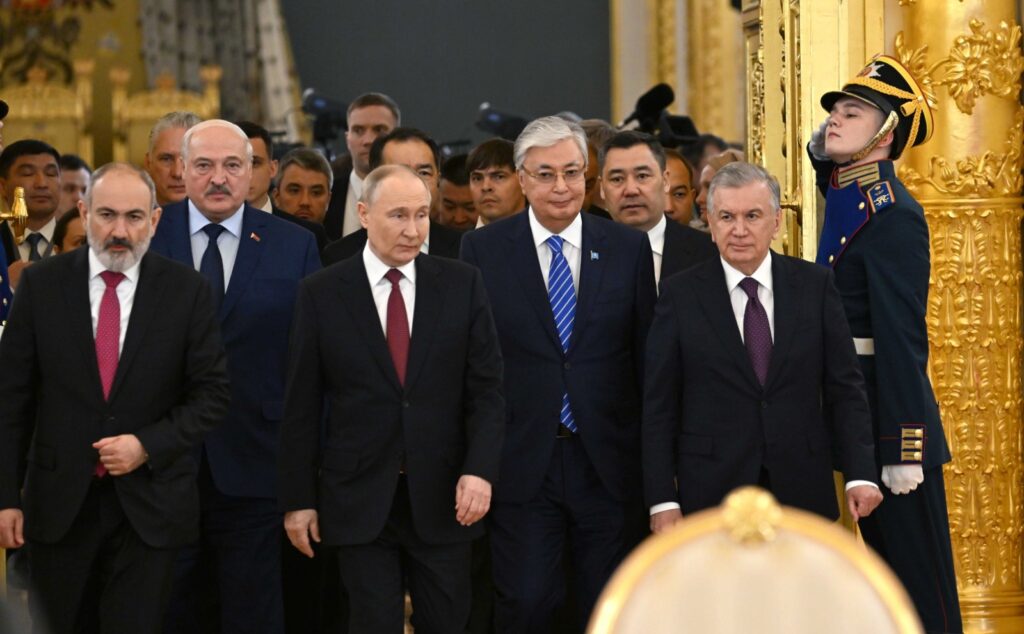
On May 8, Russian President Vladimir Putin, President of Belarus Alexander Lukashenko, President of Kazakhstan Kassym-Jomart Tokayev, President of Kyrgyzstan Sadyr Japarov, and Prime Minister of Armenia Nikol Pashinyan convened in Moscow for a meeting of the Supreme Eurasian Economic Council - the governing body of the Eurasian Economic Union (EEU). The event, which marked the tenth anniversary of the establishment of the Russian-led economic integration bloc, was also attended by heads of the EEU observer states, President of Cuba Miguel Diaz-Canel Bermudez and President of Uzbekistan Shavkat Mirziyoyev. In his address, Kazakhstan President Tokayev remarked that in the relatively short period since the Treaty on the Eurasian Economic Union was signed in Astana ten years ago, cooperation between the parties has contributed greatly to the development of Kazakhstan’s economy, and stated: “The correctness of the chosen vector of development of our association has been confirmed by the macroeconomic results of the past decade. Thus, Kazakhstan’s trade turnover with the EEU member countries has increased 1.7-fold and reached $28.5 billion.” Referencing the positive potential for EEU cooperation with rapidly developing countries in Asia, Africa, and the Middle East, he urged EEU member states to join the Ashgabat Agreement on the creation of an International Transport Corridor to engage with markets in the Persian Gulf. The Kazakh president also emphasized the need for improvements to trade links between Europe and Asia, North and South, and warned that unless renewed, the existing infrastructure in the Eurasian region will continue to deteriorate. Citing the modernization and expansion of transport and logistics infrastructure as a key priority, he stated, “In Kazakhstan, we plan to repair 11,000  and build over 5,000  kilometers of new railways by 2030. As part of the Belt and Road initiative, a Kazakh terminal, built in the Chinese city of Xi’an, accounts for up to 40% of all container traffic on the China-Europe route. There are also plans to launch 5 cross-border transport and logistics hubs on Kazakhstan’s borders with Russia, China, Uzbekistan, and Kyrgyzstan, and on the Caspian Sea.” Kyrgyz President Japarov announced that further development of Eurasian economic integration, including the creation of a single market for goods and services without barriers, a common energy market, and freedom of movement of labor resources, remains a priority for Kyrgyzstan. Regarding benefits afforded by Kyrgyzstan’s membership of the EEU, Japarov said that the country’s trade with EEU member states has grown by 76%, from $2.5 billion to $4.4 billion, its exports to EEU countries have tripled from $410 million to $1.23 billion, and its imports  increased by more than 50%, from $2 billion to $3 billion. Apart from gold, 80% of Kyrgyzstan’s exports go to the EEU countries. The Kyrgyz president also emphasized the importance of linking the EEU and the Chinese Belt and Road initiative. Despite the current observer status of his country and the EEU, Uzbek President Mirziyoyev reported that over the past three years, trade between Uzbekistan and the EEU has grown by 60 percent. Looking ahead, he announced, “Uzbekistan is interested in expanding practical partnership and...

New UN Program to Help Kyrgyz Apiaries Develop Export of Honey

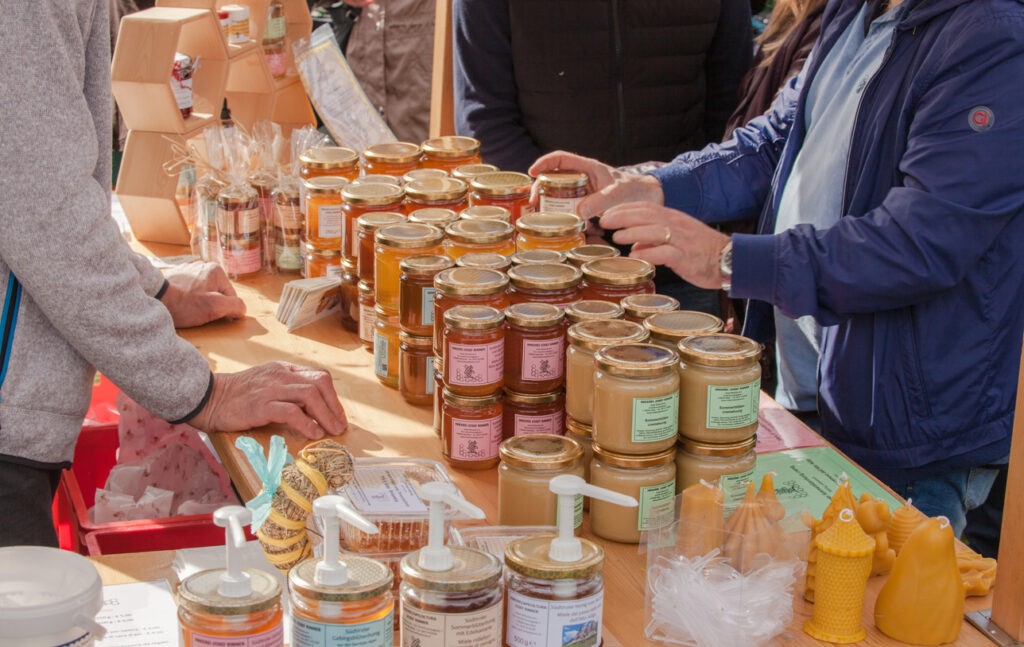
The United Nations Development Program (UNDP) in Kyrgyzstan, in cooperation with the Training and Advisory Services Center (TES-Center) Foundation, is launching an initiative to strengthen the value chain of natural honey for export, according to a report on the official UNDP website. The project will be funded by the Government of Finland and implemented in the Osh, Naryn, and Issyk-Kul regions. The authors of the initiative believe that Kyrgyzstan has significant potential for the production and export of honey. However, this requires a coordinated effort. "We support beekeepers in increasing their productivity and competitiveness of their natural honey, taking into account the introduction of innovative and resource-efficient green technologies, which will stimulate [sustainable] exports and the creation of new green jobs. The program is also aimed at integrating small farmers into the process of value addition," said Aisuluu Mambetkazieva, the UNDP Trade Facilitation Project Coordinator. The project will support beekeepers and their apiaries, exporters, service operators, and the local authorities. Special attention will be paid to the inclusion of women and people with disabilities, as well as environmental sustainability in the sector. The project is expected to generate at least 120 jobs, including those for women, in rural areas. The project will also provide capacity building for honey processing and export enterprises. Participants will be trained in the use of online marketplaces and e-commerce platforms.

Joint Portfolio of Uzbekistan and Saudi Arabia Projects Exceeds $30 Billion

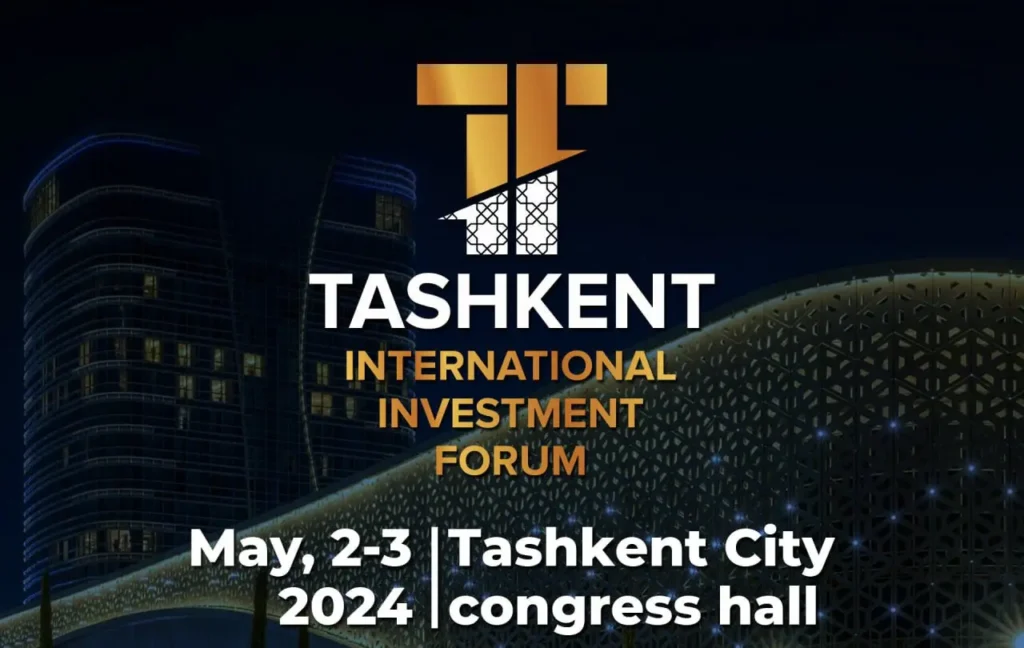
On May 2, Uzbek President Shavkat Mirziyoyev welcomed representatives of several countries to the Tashkent International Investment Forum. In discussion with the Speaker of the Parliament of Singapore, Sia Kian Peng, the two sides focused on cooperation in personnel training, investment, tourism and public safety, and emphasized the importance of joint, effective parliamentary control over their bilateral high-level agreements. During negotiations between Mirziyoyev  and the Chairman of the Cabinet of Ministers of Kyrgyzstan Aqilbek Japarov, the two leaders  concentrated on deepening strategic partnership between Uzbekistan and Kyrgyzstan, expansion of cooperation in various trade sectors such as industrial, energy, transport and logistics, and  marshalling interregional relations and cultural-humanitarian exchange. Special attention was paid to practical issues relating to the Kambarata HPP-1 (hydropower plant) and China-Kyrgyzstan-Uzbekistan railway projects. A delegation led by Prince Abdulaziz bin Salman Al-Saud, Minister of Energy of Saudi Arabia, used the opportunity to discuss the further expansion of practical cooperation, and the implementation of priority investment projects in Uzbekistan. The high level of bilateral trade and investment partnerships already achieved was noted. The portfolio of joint projects currently exceeds $30 billion, with Saudi Arabia's ACWA serving as a keen investor in Uzbek wind power generation. According to data provided by the Uzbek Government, agreements to implement projects worth $18 billion in the fields of green energy, infrastructure, healthcare and pharmaceuticals are set to be signed within the framework of the Tashkent International Investment Forum.