• KGS/USD = 0.01144 0%
  • KZT/USD = 0.00210 0%
  • TJS/USD = 0.10454 -0.1%
  • UZS/USD = 0.00008 0%
  • TMT/USD = 0.28571 0.28%
  • KGS/USD = 0.01144 0%
  • KZT/USD = 0.00210 0%
  • TJS/USD = 0.10454 -0.1%
  • UZS/USD = 0.00008 0%
  • TMT/USD = 0.28571 0.28%
  • KGS/USD = 0.01144 0%
  • KZT/USD = 0.00210 0%
  • TJS/USD = 0.10454 -0.1%
  • UZS/USD = 0.00008 0%
  • TMT/USD = 0.28571 0.28%
  • KGS/USD = 0.01144 0%
  • KZT/USD = 0.00210 0%
  • TJS/USD = 0.10454 -0.1%
  • UZS/USD = 0.00008 0%
  • TMT/USD = 0.28571 0.28%
  • KGS/USD = 0.01144 0%
  • KZT/USD = 0.00210 0%
  • TJS/USD = 0.10454 -0.1%
  • UZS/USD = 0.00008 0%
  • TMT/USD = 0.28571 0.28%
  • KGS/USD = 0.01144 0%
  • KZT/USD = 0.00210 0%
  • TJS/USD = 0.10454 -0.1%
  • UZS/USD = 0.00008 0%
  • TMT/USD = 0.28571 0.28%
  • KGS/USD = 0.01144 0%
  • KZT/USD = 0.00210 0%
  • TJS/USD = 0.10454 -0.1%
  • UZS/USD = 0.00008 0%
  • TMT/USD = 0.28571 0.28%
  • KGS/USD = 0.01144 0%
  • KZT/USD = 0.00210 0%
  • TJS/USD = 0.10454 -0.1%
  • UZS/USD = 0.00008 0%
  • TMT/USD = 0.28571 0.28%

Viewing results 403 - 408 of 724

SCO Summit in Astana: Correspondents from China Global Television Network, Times of Central Asia Discuss Upcoming Meeting

National leaders and other dignitaries from over 20 countries will be in the Kazakh capital of Astana this week for the annual summit of the Shanghai Cooperation Organization (SCO). The Times of Central Asia will be covering the SCO Summit live on 3 and 4 July from the city’s Palace of Peace and Reconciliation. The SCO is a political, security and economic alliance in the wider Eurasia region. This year’s Summit host Kazakhstan was a founding member of the Organization in 2001, alongside China and Russia, and its Central Asian neighbors Kyrgyzstan, Tajikistan and Uzbekistan. The last time the Summit was held in Astana, in 2017, India and Pakistan became full members. There are currently nine full member states, four observer states, and 14 dialogue partners, covering half of the world’s population, and almost a third of global GDP. This year's Summit will have significant implications for regional and global affairs. It is likely to produce initiatives aimed at reducing trade barriers, and promoting investments between SCO member states. High on the agenda will be the Belt and Road Initiative (BRI) – a crucial framework for enhancing connectivity and economic ties between China and its Central Asian partners. Other anticipated outcomes include new initiatives on climate change and sustainable development, as well as strengthened cultural and educational exchanges. Upon the initiative of Kazakhstan’s President Kassym-Jomart Tokayev, 2024 has been named the SCO “Year of Ecology”. Ahead of the Astana Summit, The Times of Central Asia’s senior editor Jonathan Campion spoke with an anchor from China Global Television Network, Mr Zhong Shi, about the role of the Shanghai Cooperation Organization plays in the Central Asia region. Their talk can be viewed in full in the videos below. In response to The Times of Central Asia’s question about what makes the SCO different from other alliances that the countries of Central Asia are aligned with, Mr Zhong explained that: “The SCO has been truly effective in combatting what we call the three enemies of all members, namely terrorism, extremism and separatism. There have been joint military drills conducted to enhance the coordination among armed forces”. Listen to Mr Zhong’s full response below: [video width="1920" height="1080" mp4="https://timesca.com/wp-content/uploads/2024/06/fullscreen-Zhong-Shi-answer-2-questions.mp4"][/video]   [video width="1920" height="1080" mp4="https://timesca.com/wp-content/uploads/2024/06/tw0-windows-Zhong-Shi-answer-2-questions.mp4"][/video] In turn, Mr Campion gave The Times of Central Asia’s perspective on the upcoming Summit. Asked about the impact that the Belt and Road Initiative has had on Central Asia, he replied: "Central Asia is evolving as a land bridge component to the Belt and Road Initiative linking China to the Caspian Sea. We’re seeing that investments in transport infrastructure are unlocking the region’s vast natural resources. With the world making a green transition, Kazakhstan stands out, as it has an abundance of critical materials – or green metals as they are known – that are used in the components of green technologies.” Listen to Mr Campion’s full response below: [video width="1920" height="1080" mp4="https://timesca.com/wp-content/uploads/2024/06/Jonathon-answer-Q2.mp4"][/video]   [video width="1920" height="1080" mp4="https://timesca.com/wp-content/uploads/2024/06/Jonathon-answer-Q3.mp4"][/video]  
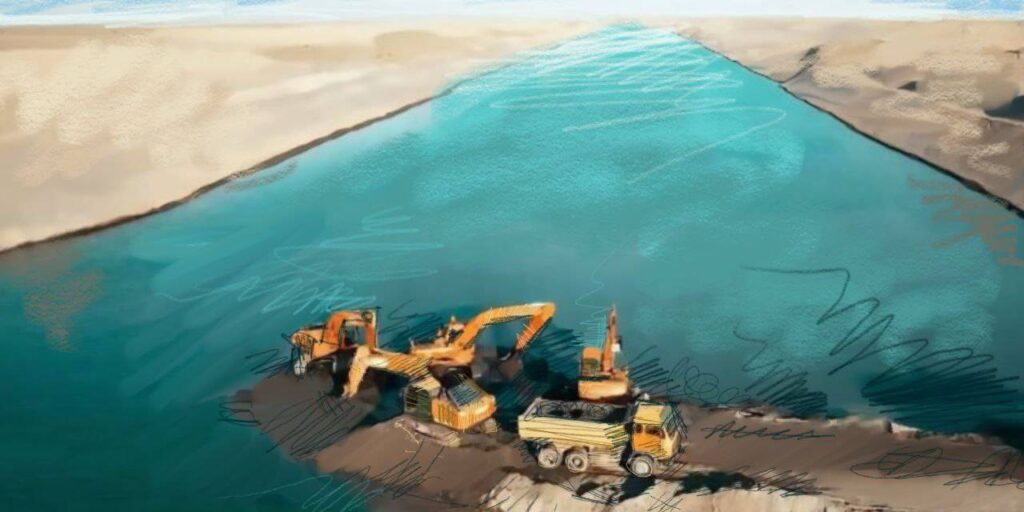
Qosh Tepa Canal Threatens Water Balance in Central Asia

The construction of the Qosh Tepa Canal may threaten Central Asia's water balance and the region must address the issue. The warning, given by Nikolay Podguzov, Chairman of the Board of the Eurasian Development Bank which is involved in projects affecting the region's water balance, was reported  by AKI press. According to experts, the Qosh Tepa Canal, currently under construction in Afghanistan, receives ten cubic kilometers of water per year from general drainage, and also, the Amu Darya river. Marat Imonkulov, Secretary of the Kyrgyz Security Council, said that a reduction of water in the Amu Darya will inevitably lead to an increase in water taken from the Syr Darya river for agriculture and other needs. Some analysts claim that under such a scenario, Central Asia will face a chronic water shortage. Although not one of its members, the EDB, reminded Afghanistan that the construction of the canal is being implemented by the state on its territory and Podguzov stressed, “The states mutually resolve issues related to relations through diplomatic channels. But we have to solve the problem together. I believe that the countries will agree." Analysts seek to resolve the situation by developing digital water accounting, water conservation, and proper treatment of the region's resources. The Qosh Tepa Canal project, conducted by the Taliban and currently underway in northern Afghanistan, is a significant initiative in managing the Amu Darya's water resource but during its first phase, has raised concerns among Central Asian countries. Heeding specialists' forecasts, the President of Uzbekistan, Shavkat Mirziyoyev, said that the construction of the Qosh Tepa Canal will change the water regime and balance in Central Asia.

Prime Minister of Kyrgyzstan Holds Meeting with U.S. Business Mission

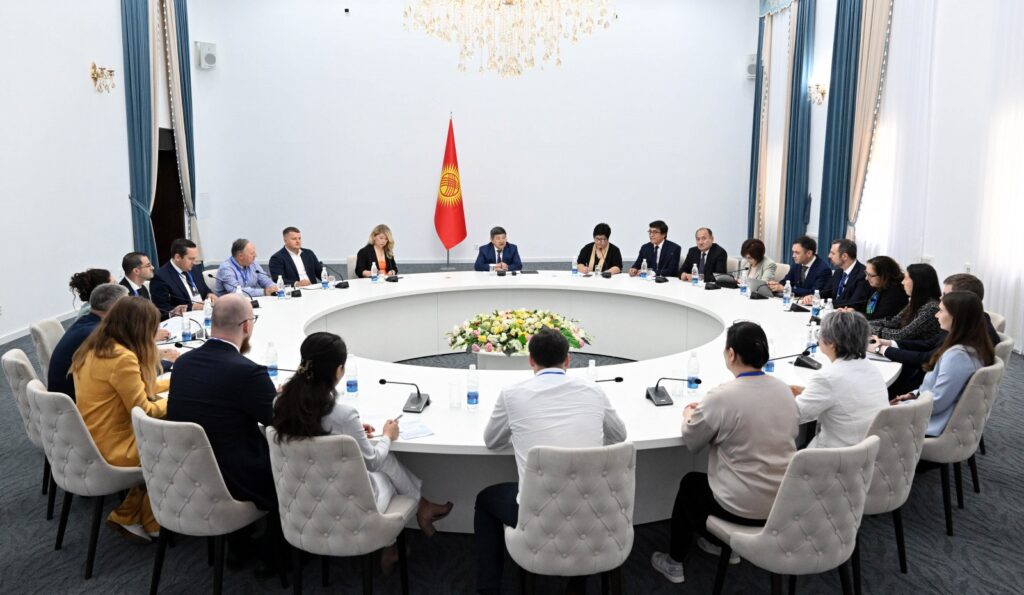
The Kyrgyz Chairman of the Cabinet of Ministers - Head of the Presidential Administration, Akylbek Japarov met with a business mission from the United States. The session was organized by the American-Kyrgyz Business Council, the Cabinet of Ministers of the Kyrgyz Republic press service reported. Representatives from several significant companies attended the meeting, including Abbott, Coca-Cola, GE Vernova Inc., OpenWay, Thomas Greg & Sons Limited, VISA, White & Case, and Jones Equity Fund. The parties discussed measures to develop and strengthen cooperation between the business communities of Kyrgyzstan and the United States, focusing on inter-bank collaboration, investment, digitization, and energy. Japarov spoke about the favorable investment climate in Kyrgyzstan and the government's efforts to create convenient conditions for doing business. During his working trip to the United States in April 2024, Japarov invited American business-people to visit Kyrgyzstan, stating that he hoped the visit would allow American business community to become acquainted with Kyrgyzstan's trade and investment potential, establish contacts, and cooperate with the local business community. Representatives of the American companies which are members of the U.S.-Kyrgyz Business Council confirmed their interest in expanding business ties between the two countries.

Kyrgyzstan to Construct Solar Plant with Chinese Partners

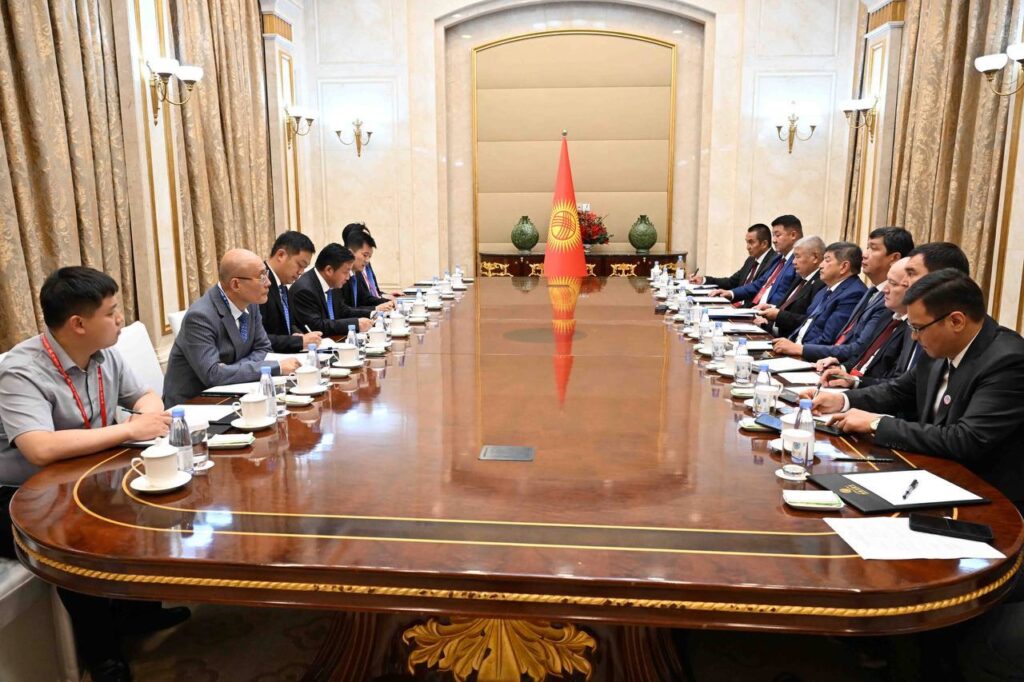
The Kyrgyz government's press service is reporting that Akylbek Japarov, the country's prime minister, met with the vice-chairman of China National Nuclear Corporation (CNNC), Lu Tezhong, and the president of Transformer Industrial Group Company Limited (TBEA), Zhang Xin, during his working trip to Urumqi, the capital of China's Xinjiang Uygur Autonomous Region. At the meeting, Japarov and Tezhong discussed issues in the energy sphere, particularly the construction of solar power plants, and the prospects for projects in other sectors of the economy. As a result of the meeting, Fortis KG LLP, Kyrgyzstan's national electricity network, and the cabinet of ministers' Green Energy Fund signed an investment project to construct a 400-megawatt solar power plant at the Kara-Talaa site in the Issyk-Kul region. Japarov and Zhang Xin discussed the modernization of the Bishkek CHPP, the construction of the Datka-Kemin high-voltage transmission line and substation, and projects to improve the power grids of the southern regions of Kyrgyzstan. Japarov emphasized the importance of the projects implemented by TBEA for the country, and invited the company to participate in developing renewable energy projects in Kyrgyzstan. One of the areas of cooperation is the introduction of technologies for charging electric vehicles and installing relevant services and devices.

Kyrgyz-Chinese Trade and Economic Cooperation Centre Opens in Urumqi

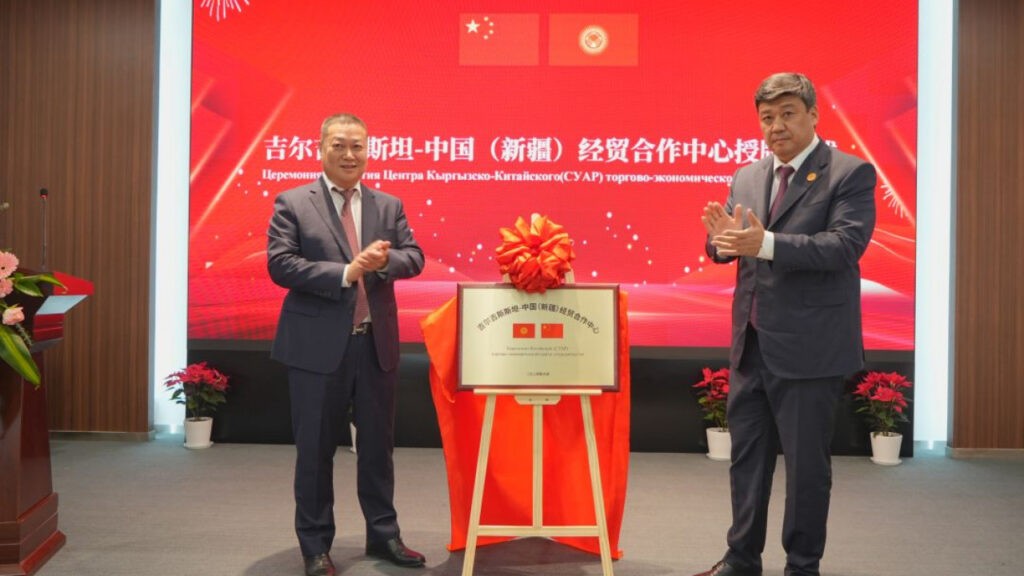
On June 26, Deputy Chairman of the Cabinet of Ministers of the Kyrgyz Republic Bakyt Torobaev attended the official opening of the Kyrgyz-Chinese (XUAR) Trade and Economic Cooperation Centre in Urumqi, in China’s northwestern Xinjiang Uygur Autonomous Region (XUAR). Established with authorization from the Trade Mission under the Ministry of Economy and Commerce of the Kyrgyz Republic in China, the centre occupies an area of over 400 square metres in the Xing Long Industrial Park, owned by Xing Long Corporation of Xinjiang. The main remit of the centre is to serve as a platform for negotiations between Kyrgyz and Chinese businesses through thematic meetings, events, presentations of projects, as well as the provision of up-to-date information on investment and opportunities for cooperation on joint projects in Kyrgyzstan. The Xing Long Corporation of Xinjiang earlier expressed interest in developing an industrial park in Kyrgyzstan to attract business from Chinese companies.      

Kyrgyzstan and EU Strengthen Economic Cooperation

During his working visit to Brussels, Kyrgyz President Sadyr Japarov held talks with Valdis Dombrovskis, the Executive Vice President of the European Commission. The main topics of discussion were deepening trade and economic cooperation, attracting investment, realizing joint projects in mining and the green economy, introducing digital technologies, and developing human resources. Dombrovskis emphasized the importance of strengthening partnerships between Kyrgyzstan and the European Union. He noted that signing the Enhanced Partnership and Cooperation Agreement opens new opportunities for realizing mutually beneficial trade and economic projects. He also expressed the EU's readiness to deepen economic cooperation and interest in participating in significant energy and infrastructure projects, such as the Kambarata HPP-1 and the China-Kyrgyzstan-Uzbekistan railroad, emphasizing their financial potential. Sadyr Japarov thanked the EU for its support and for signing the new Agreement on Enhanced Partnership and Cooperation, expressing his confidence that it would strengthen the agreements reached and create a modern legal basis for future bilateral interaction. The President noted that Kyrgyzstan provides significant opportunities for trade and investment due to its geographical location and transit potential. Japarov also emphasized the country's commitment to the green agenda, stating its intention to reduce greenhouse gas emissions by 44% by 2030 and achieve carbon neutrality by 2050. As part of the initiative to develop a green economy, Japarov proposed exchanging foreign debt for green projects, thus improving the global environmental situation. Projects on water management and the introduction of environmentally friendly technologies in Kyrgyzstan's mining industry were also discussed.