• KGS/USD = 0.01144 0%
  • KZT/USD = 0.00212 0%
  • TJS/USD = 0.10432 -0.29%
  • UZS/USD = 0.00008 0%
  • TMT/USD = 0.28571 0.28%
  • KGS/USD = 0.01144 0%
  • KZT/USD = 0.00212 0%
  • TJS/USD = 0.10432 -0.29%
  • UZS/USD = 0.00008 0%
  • TMT/USD = 0.28571 0.28%
  • KGS/USD = 0.01144 0%
  • KZT/USD = 0.00212 0%
  • TJS/USD = 0.10432 -0.29%
  • UZS/USD = 0.00008 0%
  • TMT/USD = 0.28571 0.28%
  • KGS/USD = 0.01144 0%
  • KZT/USD = 0.00212 0%
  • TJS/USD = 0.10432 -0.29%
  • UZS/USD = 0.00008 0%
  • TMT/USD = 0.28571 0.28%
  • KGS/USD = 0.01144 0%
  • KZT/USD = 0.00212 0%
  • TJS/USD = 0.10432 -0.29%
  • UZS/USD = 0.00008 0%
  • TMT/USD = 0.28571 0.28%
  • KGS/USD = 0.01144 0%
  • KZT/USD = 0.00212 0%
  • TJS/USD = 0.10432 -0.29%
  • UZS/USD = 0.00008 0%
  • TMT/USD = 0.28571 0.28%
  • KGS/USD = 0.01144 0%
  • KZT/USD = 0.00212 0%
  • TJS/USD = 0.10432 -0.29%
  • UZS/USD = 0.00008 0%
  • TMT/USD = 0.28571 0.28%
  • KGS/USD = 0.01144 0%
  • KZT/USD = 0.00212 0%
  • TJS/USD = 0.10432 -0.29%
  • UZS/USD = 0.00008 0%
  • TMT/USD = 0.28571 0.28%

Viewing results 409 - 414 of 727

Kyrgyzstan and EU Strengthen Economic Cooperation

During his working visit to Brussels, Kyrgyz President Sadyr Japarov held talks with Valdis Dombrovskis, the Executive Vice President of the European Commission. The main topics of discussion were deepening trade and economic cooperation, attracting investment, realizing joint projects in mining and the green economy, introducing digital technologies, and developing human resources. Dombrovskis emphasized the importance of strengthening partnerships between Kyrgyzstan and the European Union. He noted that signing the Enhanced Partnership and Cooperation Agreement opens new opportunities for realizing mutually beneficial trade and economic projects. He also expressed the EU's readiness to deepen economic cooperation and interest in participating in significant energy and infrastructure projects, such as the Kambarata HPP-1 and the China-Kyrgyzstan-Uzbekistan railroad, emphasizing their financial potential. Sadyr Japarov thanked the EU for its support and for signing the new Agreement on Enhanced Partnership and Cooperation, expressing his confidence that it would strengthen the agreements reached and create a modern legal basis for future bilateral interaction. The President noted that Kyrgyzstan provides significant opportunities for trade and investment due to its geographical location and transit potential. Japarov also emphasized the country's commitment to the green agenda, stating its intention to reduce greenhouse gas emissions by 44% by 2030 and achieve carbon neutrality by 2050. As part of the initiative to develop a green economy, Japarov proposed exchanging foreign debt for green projects, thus improving the global environmental situation. Projects on water management and the introduction of environmentally friendly technologies in Kyrgyzstan's mining industry were also discussed.
Kyrgyzstan and EU Sign Enhanced Partnership and Cooperation Agreement

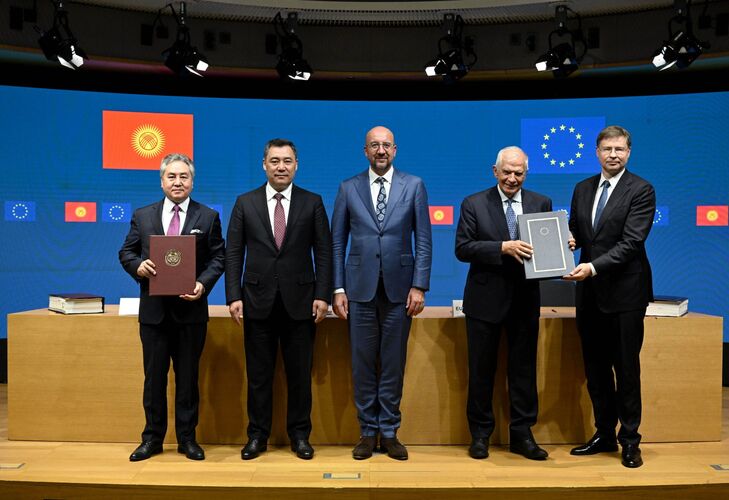
On June 25, President of the Kyrgyz Republic Sadyr Japarov met the President of the European Council Charles Michel in Brussels to discuss issues on Kyrgyzstan-EU interaction. Views were exchanged on prospects for trade and economic cooperation and the implementation of joint projects in energy, transport, rare metals, agriculture, and environmentally- friendly technologies Following the meeting, an Enhanced Partnership and Cooperation Agreement (EPCA) between the European Union and the Kyrgyz Republic was signed by the Minister of Foreign Affairs of the Kyrgyz Republic Jeenbek Kulubaev, High Representative of the European Union for Foreign Affairs and Security Policy/Vice-President of the European Commission Josep Borrell, and Executive Vice-President of the European Commission and Commissioner for Trade Valdis Dombrovskis. The new document replaces the Partnership and Cooperation Agreement (PCA) signed back in 1999. As reported by the Delegation of the European Union to the Kyrgyz Republic, the Agreement provides new legal grounds for reinforced political dialogue and deepening cooperation in areas such as trade and investment, sustainable development and connectivity, research and innovation, education, environment, and climate change, as well as rule of law, human rights, and civil society. It will also strengthen cooperation in foreign and security policy, including issues of conflict prevention and crisis management, risk reduction, cybersecurity, regional stability, disarmament, non-proliferation, arms and export control. In addition, the EPCA will create new opportunities for cooperation in critical raw materials, essential for green and digital transitions. High Representative of the European Union for Foreign Affairs and Security Policy/Vice-President of the European Commission Josep Borrell commented: “We are happy to count the Kyrgyz Republic amongst our close partners. The Enhanced Partnership and Cooperation Agreement demonstrates our steadfast commitment to strengthening and deepening our bilateral relations based on shared values and common interests in all areas of mutual benefit, reflecting new geopolitical and economic realities. We will continue working with Kyrgyzstan on further strengthening the protection of human rights and fundamental freedoms and promote cooperation with civil society which are essential pillars of an open democratic society.” Welcoming the initiative, Executive Vice-President and Commissioner for Trade Valdis Dombrovskis, announced: “This Enhanced Partnership and Cooperation Agreement marks a new chapter in the EU’s economic and trade relations with Kyrgyzstan. We have included an ambitious Trade and Sustainable Development Chapter that aims to promote fair and open competition, while also benefiting Kyrgyz consumers and SMEs. Through this Agreement, we are helping to create more opportunities for EU and Kyrgyz businesses and investors by facilitating trade flows and enhancing cooperation. We believe this partnership will contribute to the prosperity of our regions by generating new and better jobs and boosting economic development and resilience.” Since 2016, the Kyrgyz Republic has benefitted from unilateral and preferential access to the EU market through the Special Incentive Arrangement for Sustainable Development (GSP+) of the EU Generalised Scheme of Preferences. Kyrgyzstan is the EU’s third largest trading partner in Central Asia. GSP+ has contributed to an increase in EU-Kyrgyzstan trade in goods in 2023 by 116% (over 2022) reaching EUR 2.845 billion.    

Central Asian Leaders Offer Support, Condolences to Putin After Dagestan Attack

Several leaders in Central Asia have spoken by telephone with Russian President Vladimir Putin and expressed their condolences after attacks by alleged Islamic militants in the Russian area of Dagestan killed about 20 people.  The quick expressions of support on Monday reflect longstanding security ties between Russia and Central Asian countries, as well as growing concerns about extremist attacks in the region, particularly following the March 22 assault on the Crocus City concert hall in the Moscow area that killed more than 140 people. The violence in Russia on Sunday happened in two cities in a mostly Muslim region of the North Caucasus and targeted police and places of worship.  Uzbek President Shavkat Mirziyoyev said in his conversation with Putin that Uzbekistan was ready “to continue active cooperation between the relevant structures in the fight against common threats in the field of security,” according to a statement by Mirziyoyev. The two leaders also discussed implementation of agreements reached during a visit by Putin to Uzbekistan on May 26-28.  Kazakh President Kassym-Jomart Tokayev made similar remarks in a call with Putin, saying Kazakhstan “condemns any assassination and evil attempt on the lives of civilians and regards it as a great threat to international and regional security,” Tokayev’s office reported. It said the two presidents talked about strengthening their “strategic partnership” and discussed the agenda of the Shanghai Cooperation Organization summit, to be held in the Kazakh capital of Astana on July 3-4.  Tajikistan’s leader Emomali Rahmon sent a message expressing “a feeling of deep sadness” and pledges of collaboration on security issues to Putin, saying his country had been fighting terrorism for decades. “Tajikistan, which has been fighting against all forms of terrorism for more than 30 years, strongly condemns this inhuman act of violence in Dagestan and advocates active cooperation in the fight against terrorism,” Rahmon said.  Kyrgyzstan’s leader, Sadyr Japarov, who left Bishkek on Monday on an official trip to Belgium, also expressed solidarity with Russia.  The Islamic State group claimed responsibility for the March 22 attack in suburban Moscow and several Tajik suspects were arrested, leading to some harassment and increased scrutiny of many Central Asian migrants who travel to Russia in hopes of finding work. The situation fueled diplomatic tension between Russia and some Central Asian countries, though their leaders have worked to stabilize relations.  Putin blamed battlefield adversary Ukraine for the March 22 attack, but he didn’t offer evidence and Kyiv denied the allegation.

Kyrgyzstan to Build New Checkpoint on Border with China

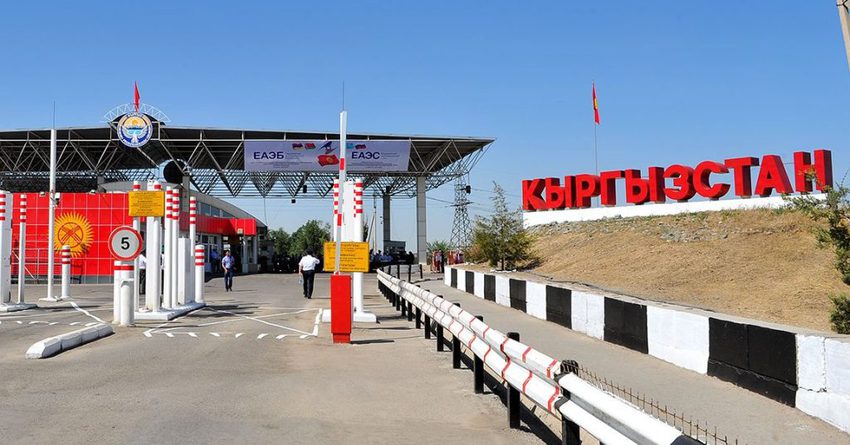
A bill regarding ratification of the intergovernmental agreement to open a new checkpoint named "Bedel" on the border with China was submitted to the Jogorku Kenesh (Parliament) by the Cabinet of Ministers of Kyrgyzstan. This move is aimed at facilitating border crossings, enhancing trade relations, and improving bilateral cooperation between Kyrgyzstan and China. Establishing the Bedel checkpoint is expected to streamline customs processes and boost economic activity in the region. The authorities in the Kyrgyz Republic have claimed the new checkpoint will reduce the delivery time of goods from the Xinjiang Uyghur Autonomous Region in China as compared to the current Kashgar—Torugart—Naryn—Bishkek transportation corridor. It is also assumed that trade turnover with China will increase exponentially. According to reports, Kyrgyzstan plans to allocate approximately 77.9 million som ($896,000) from the state budget towards the creation of the checkpoint.

Border Dispute No More: Are Bishkek and Dushanbe Ready to Make Peace?

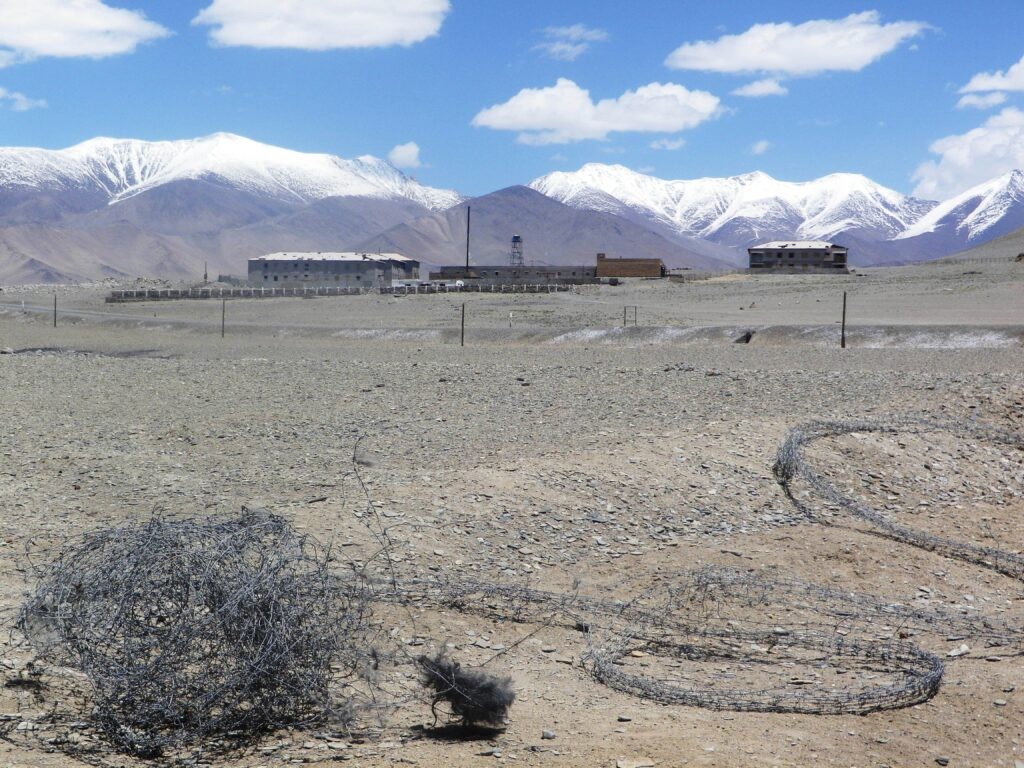
Kyrgyzstan and Tajikistan have long been restless neighbors from Tashkent and Astana's point of view. In many respects, Kazakhstan and Uzbekistan forced the current rapprochement of the Central Asian republics, as expressed on the outer perimeter in the C5+1 format, where the region strives to put forward a consolidated position. After all, investment does not come to problematic areas. The problem border The main sticking point in relations between Bishkek and Dushanbe stretches for almost a thousand kilometers - the border between the two states - the demarcation of which, following the collapse of the USSR, neither the government of Kyrgyzstan or Tajikistan was concerned about. There were enough problems to deal with: falling living standards, civil war in Tajikistan, and endless revolutions in Kyrgyzstan. To date, the border has still not been fully demarcated, causing problems for residents of both states over access to water, pastures, and roads. Disputed territories accounted for about 30% of the border between the two countries. The first alarm bells sounded back in 2014 - in January and May of that year there were armed incidents on the border between northern Tajikistan's in Sughd Province and Kyrgyzstan's Batken Province. Tajiks and Kyrgyz have lived compactly in this densely populated area for centuries. Tajik villages neighbor Kyrgyz villages, there are exclaves such as Vorukh, and the border can crisscross roads, presenting difficulties for traveling. "In Soviet times, people moved around quietly when the borders were conditional. Residents on both sides had free access to pastures and arable land. There were no problems along the watershed. If lands were given by the republics to each other for some purpose, local authorities knew where and whose land was located. With the collapse of the Union, the whole system ceased to function. And the problems of open unmarked borders became more acute," political observer Negmatullo Mirsaidov explained in a commentary for the BBC Russian Service after the January 2014 clash. Time passed, but the situation did not change, and a new aggravation occurred in the first year of the COVID-19 pandemic. Then, clashes were repeated with depressing regularity, and in 2022 came a military incursion by Tajik soldiers into a Kyrgyz border village with the seizure of administrative buildings. Armed clashes broke out all along the border and Russia intervened, forcing the parties to negotiate. Central Asia then picked up the baton, trying to melt the ice of hostility between the skirmishing neighbors. In early February, Tajik President Emomali Rahmon met with Kyrgyz Foreign Minister, Zheenbek Kulubaev, in Dushanbe. According to the press service of the head of Tajikistan, "Over the past four months, the parties have agreed on the design and working description of about 196 kilometers of the state border and to date have determined about 90% of the line of its passage." Considering that the Tajik-Kyrgyz border is about 980 kilometers long, about 100 kilometers remain to be agreed upon. Before the clash in 2022, more than 300 kilometers of the border were considered disputed....

Kyrgyzstan to Take Chinese Loan to Build Railroad

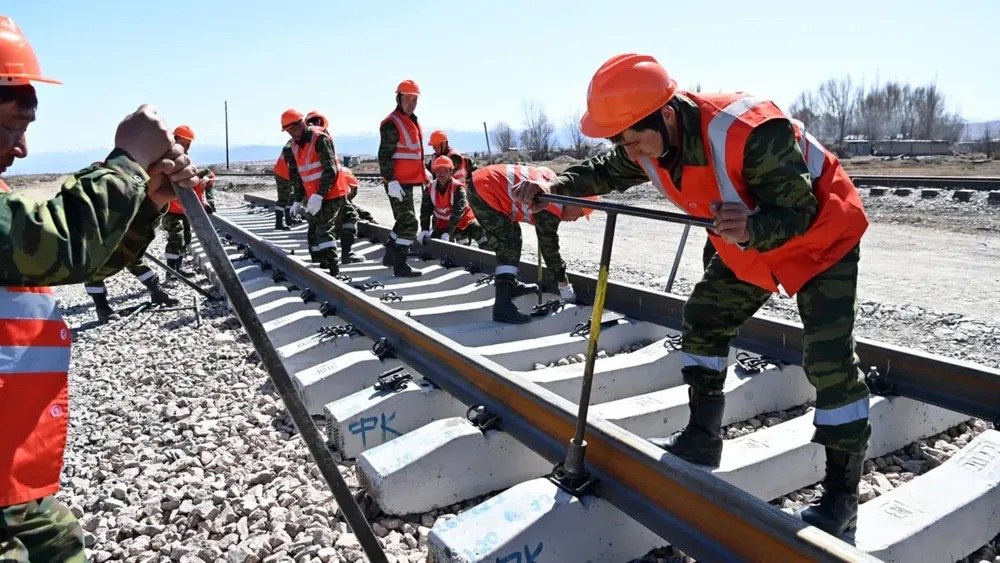
Kyrgyzstan intends to take a loan from China to construct the China-Kyrgyzstan-Uzbekistan railroad. Azamat Sakiyev, the General Director of Kyrgyz Temir Jolu NC, stated at the Parliamentary Committee on Transport, Communications, Architecture, and Construction meeting, 24.kg has reported. The Speaker noted that the feasibility study for the project has already been developed, and the agreement amounts to $4 billion 700 million. "According to the agreement, 51% of the costs will be covered by the People's Republic of China, and the Kyrgyz and Uzbek sides will assume 24.5% each," Sakiyev said. "Where will we find $1 billion?" MP Baktybek Sydykov asked, to which Sakiev replied that the Kyrgyz Republic intends to borrow money from Chinese banks. Sakiyev specified that the Chinese side would lend the joint venture half of the total project cost—$2 billion 350 million—and the parties would cover the other $2 billion 350 million at their own expense. As a result, Kyrgyzstan's share will amount to $783 million. The China-Kyrgyzstan-Uzbekistan railroad is a projected 454-kilometer railroad designed to connect the railroads of China and Uzbekistan through the territory of Kyrgyzstan and further through Turkmenistan, Iran, and Turkey, to connect with the European railroad network within the framework of the New Silk Road transport system. Previously, Kyrgyz President Sadyr Japarov had said the construction would cost between $3 and $5 billion.