• KZT/USD = 0.00221
  • TJS/USD = 0.10860
  • UZS/USD = 0.00008
  • TMT/USD = 0.29760
  • KZT/USD = 0.00221
  • TJS/USD = 0.10860
  • UZS/USD = 0.00008
  • TMT/USD = 0.29760
  • KZT/USD = 0.00221
  • TJS/USD = 0.10860
  • UZS/USD = 0.00008
  • TMT/USD = 0.29760
  • KZT/USD = 0.00221
  • TJS/USD = 0.10860
  • UZS/USD = 0.00008
  • TMT/USD = 0.29760
  • KZT/USD = 0.00221
  • TJS/USD = 0.10860
  • UZS/USD = 0.00008
  • TMT/USD = 0.29760
  • KZT/USD = 0.00221
  • TJS/USD = 0.10860
  • UZS/USD = 0.00008
  • TMT/USD = 0.29760
  • KZT/USD = 0.00221
  • TJS/USD = 0.10860
  • UZS/USD = 0.00008
  • TMT/USD = 0.29760
  • KZT/USD = 0.00221
  • TJS/USD = 0.10860
  • UZS/USD = 0.00008
  • TMT/USD = 0.29760
26 October 2026

Viewing results 31 - 36 of 136

Kyrgyzstan Parliament’s Secret Polygamy Law Repeal Blocked by President Japarov

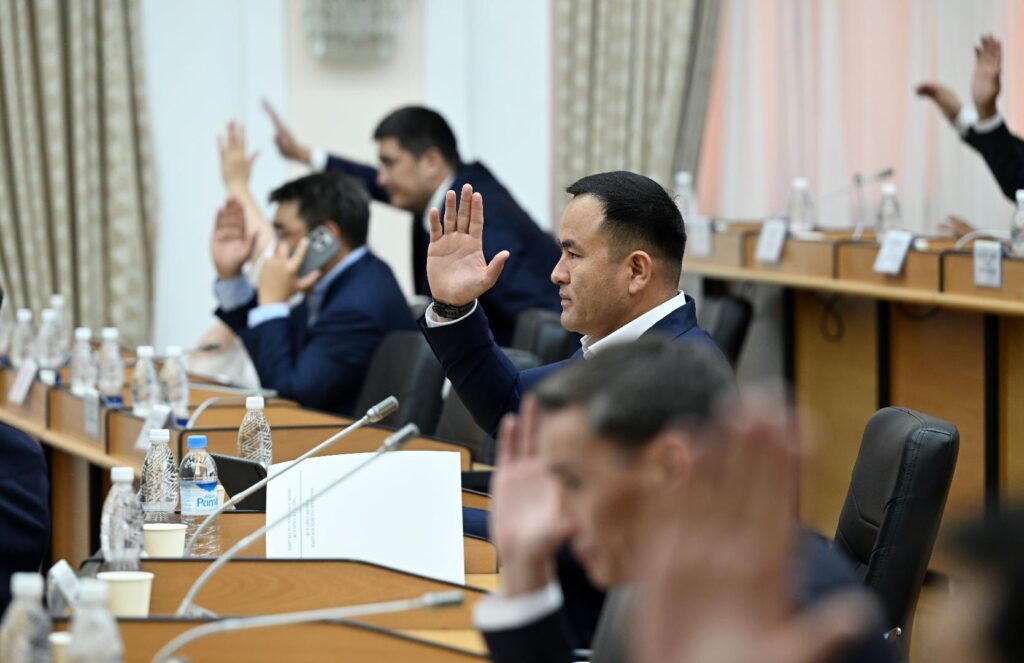
On June 25, 2025, Kyrgyzstan’s parliament, the Jogorku Kenesh, voted to repeal Article 176 of the Criminal Code, which criminalizes polygamy. The initiative was debated behind closed doors, without public hearings, and only came to light after the bill was submitted to President Sadyr Japarov for approval. According to the presidential administration, Japarov returned the bill for further revision. Before doing so, he sought official assessments from several key state bodies, including the Ombudsman’s Office, the Prosecutor General’s Office, the National Agency for Religious Affairs, the National Academy of Sciences, the Ministry of Justice, and the Constitutional Court. These institutions concluded that the proposal was incompatible with Kyrgyzstan’s Constitution and its international commitments, including the Convention on the Elimination of All Forms of Discrimination against Women (CEDAW) and the Convention on the Rights of the Child (CRC). In an explanatory note, the president stated that retaining criminal liability for polygamy "demonstrates a commitment to the principles of gender equality and the rule of law, protects women and children from legal and social inequality, and contributes to strengthening the institution of the family.” Under the current law, polygamy in Kyrgyzstan is classified as a minor offense. It is punishable by a fine ranging from 50,000 to 100,000 KGS (approximately $570 - $1,140), and criminal proceedings can only be initiated at the request of the victim. The Family Code permits only one officially registered marriage, and the civil registry office is not authorized to record second or subsequent unions.

Attacks on Doctors Surge in Kyrgyzstan Amid Systemic Failures

A recent spate of violent assaults on doctors in Kyrgyzstan has sparked growing concern within the healthcare sector. Over the past week alone, multiple incidents of medical staff being physically attacked have been reported at the National Hospital in Bishkek, with relatives of patients identified as the primary perpetrators. The first major incident involved a young resident doctor who was providing emergency treatment to a patient suffering from a severe nosebleed. According to local media reports, the patient's relatives attempted to interfere during the treatment and later assaulted the doctor as he accompanied the patient to a hospital ward. The doctor sustained a concussion, and his uniform was torn during the altercation. In a controversial move, police officers responding to the scene did not detain the attackers. Instead, they arrested the injured doctor, citing his use of obscene language. A court later sentenced him to three days of administrative detention. Human rights advocates say the doctor was denied legal counsel. Despite mobile phone video footage recorded by the doctor and corroborating statements from hospital staff, law enforcement agencies reportedly ignored this evidence. “The patient is much better, he received the necessary treatment and has been stable since. His relatives, however, acted with arrogance and cruelty toward medical personnel, seemingly convinced of their own impunity,” said Barmet Baryktabasova, chair of the Medical Trade Union. Just days later, a second assault occurred at the same hospital, this time targeting an emergency department physician. Although the attack was captured on CCTV, police again refrained from detaining the perpetrators, issuing only vague statements. The Medical Trade Union has announced plans to file formal appeals to the President’s Office, the Ministry of Health, the Prosecutor General, and the State Committee for National Security. The union argues that violence against medical professionals is becoming systemic and poses a threat to the integrity of Kyrgyzstan’s already strained healthcare infrastructure. Health Minister Erkin Checheibaev condemned the assaults in a public Facebook post: “There is lawlessness against doctors! The man who attacked the doctor must be punished. This sets a dangerous precedent when attackers face no consequences.” He emphasized the urgent need to protect the dignity and physical safety of medical personnel, warning that failure to act could lead to a severe staffing crisis in the coming years. This is not the first wave of violence against healthcare workers in Kyrgyzstan. In 2023, following several incidents, the National Hospital briefly enhanced security by installing panic buttons, surveillance cameras, and hiring private guards. However, these measures were later rolled back due to budget constraints. Currently, the average salary for public sector healthcare workers in Kyrgyzstan ranges from $300 to $400 per month. Combined with long hours and frequent high-stress situations, poor compensation is prompting many experienced professionals to exit the system. The government has pledged to implement healthcare funding reforms over the next three to four years, but many in the medical community fear those changes will come too late.

“Be a Man”: Bishkek Vice Mayor Detained in Public Showdown

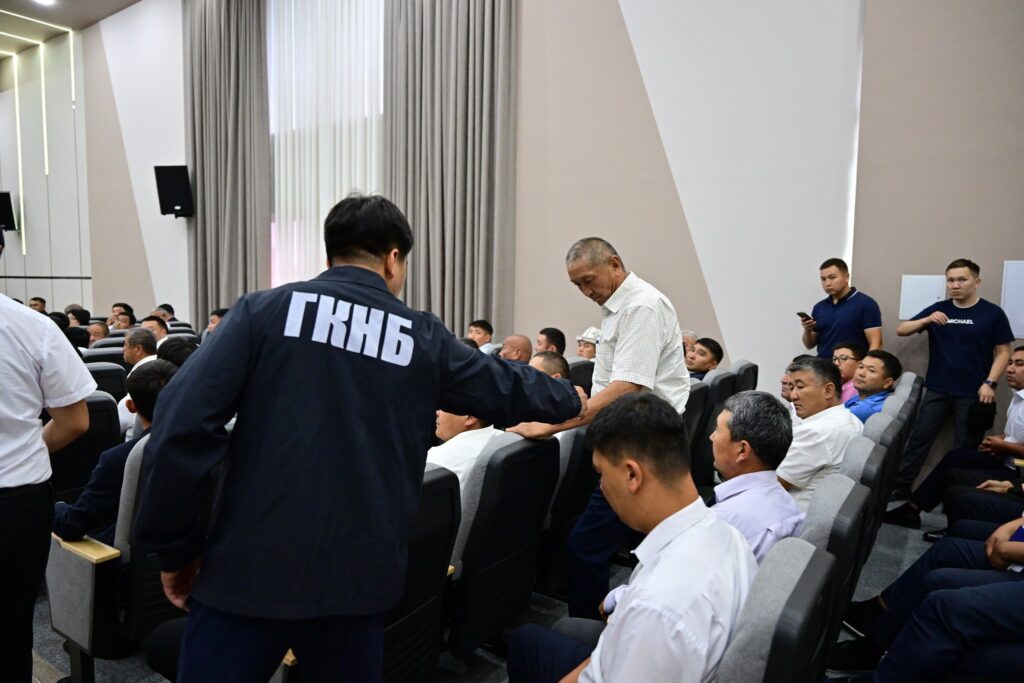
The Vice Mayor of Bishkek, Zhamalbek Yrsaliev, has been detained during a public meeting in the Tunguch neighborhood, presided over by Kamchybek Tashiyev, the controversial Chairman of Kyrgyzstan’s State Committee for National Security (GKNB). Residents at the July 16 meeting accused Yrsaliev of illegally occupying a 1,500 m² municipal land plot where unauthorized commercial kiosks and children's attractions had been operating for six years without any lease payments. According to Economist.kg, this misuse cost the city budget over 2.9 million Kyrgyz som ($33,160), and stalled the planned development of a public square and playground. During the meeting, Tashiyev confronted Yrsaliev directly. In a moment caught on video, he told the vice mayor to take responsibility for his actions and “Be a man,” ordering the security services to detain him immediately. Officers escorted Yrsaliev from the event to the GKNB headquarters. According to Sputnik Kyrgyzstan, Yrsaliev admitted responsibility and apologized, but Tashiyev continued to reprimand him, telling Yrsaliev, “You will not deceive the people.” The investigation is ongoing. The charges against Yrsaliev include abuse of office and corruption. Alongside him, officials from the Lenin and Oktyabr district administrations were also detained during the same operation, according to preliminary reports. Appointed as vice mayor in May 2024, Yrsaliev previously served as vice-mayor of Bishkek for housing and communal services, and akim of the Pervomaisky district. The arrest marks another chapter in Kyrgyzstan’s sweeping anti-corruption campaign under President Sadyr Japarov. In January 2023, former Deputy Prime Minister Zhenish Razakov was detained on suspicion of a $1 million fraud and abuse of office, and in December 2024, the authorities arrested the head of the state tax service and his deputy. While Yrsaliev’s detention has been officially framed as part of an anti-corruption effort, it unfolds within a broader political climate in Kyrgyzstan marked by increasing executive consolidation and the expanded role of the GKNB in domestic affairs. Independent watchdogs, including Freedom House, have noted a rise in politically motivated prosecutions and diminished judicial independence in recent years, raising concerns that cases such as this may serve not only legal but also political purposes. Further updates are expected as the investigation continues.

Kyrgyzstan Shutters April TV as President Signs New Media Law

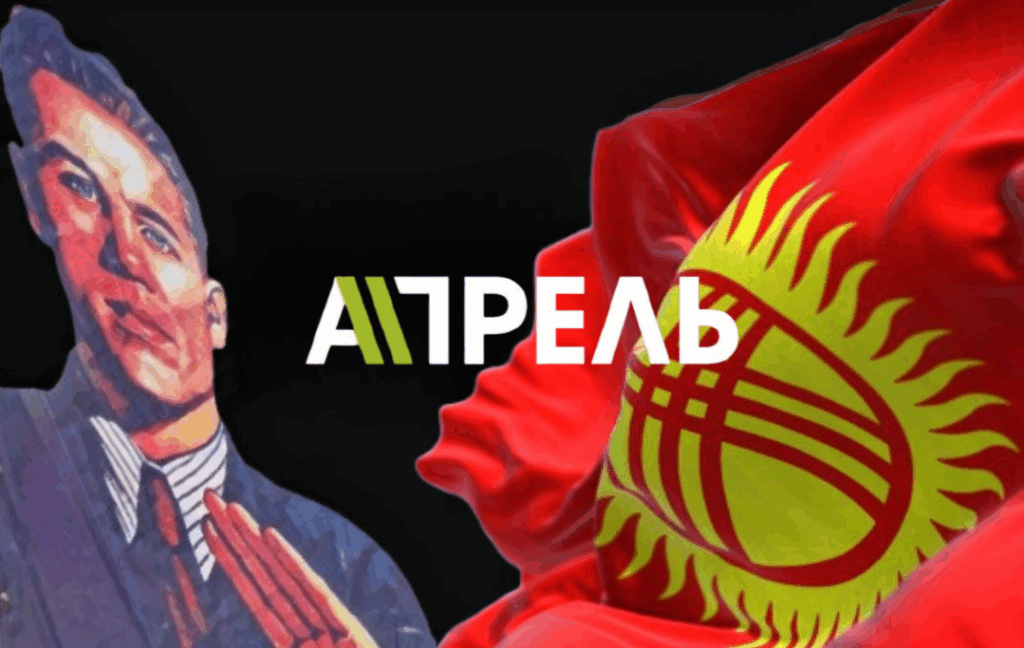
A district court in Bishkek has ordered the liquidation of April TV, one of Kyrgyzstan’s few remaining independent broadcasters, intensifying what some observers are calling an ongoing campaign to silence dissenting voices in the country’s media landscape. The decision, handed down by the Oktyabr District Court on July 9, followed a lawsuit brought by state prosecutors who alleged that the broadcaster's content was “biased, one-sided, destructive and manipulative,” and posed a threat to the constitutional order. In a related development, on July 11, President Sadyr Japarov signed a new law clamping down on media freedom into force. In the district court, prosecutors argued that April TV’s content risked inciting mass unrest and undermining the authority of the state. The court’s ruling cited assessments conducted by the State Committee for National Security (GKNB), which claimed that the broadcaster’s video reports negatively influenced public opinion, insulted government officials, and could provoke calls for the seizure of power. Over the past two years, President Japarov's administration claims to have successfully thwarted several attempted coups and assassination plots targeting high-ranking officials. These incidents, according to the government, highlight ongoing challenges to political stability in Kyrgyzstan, which has framed its efforts as critical to ensuring the country’s continued progress amidst a complex regional and domestic landscape. In addition to terminating April TV’s legal status, the court also authorized the blocking of its online platforms and affiliated channels, including the popular YouTube-based partner channel Next TV. Editor-in-chief of April TV, Dmitriy Lozhnikov, rejected the government’s claims, defending the station’s critical tone and stating that “criticizing the government isn’t a crime, but one of the core functions of the press.” In a final message before going offline, the outlet declared it was taking “a vacation from which [we] might never return.” At least ten current and former staff members of April TV were summoned for questioning by the GKNB as part of a broader criminal probe. No specific charges have been disclosed. The closure of April TV mirrors actions taken against other prominent independent outlets in Kyrgyzstan over the past two years. In February 2024, a Bishkek court approved the liquidation of Kloop, a media organization known for its investigative reporting on corruption – a ruling later upheld by the Supreme Court. The authorities claimed that its charter did not permit Kloop to engage in journalism, and objected to what they described as the “negative tone” of its reporting. In late May, the security forces conducted coordinated raids on the homes of eight current and former Kloop employees in Bishkek and Osh — detaining two on charges of “public calls for mass unrest” and compelling the others to sign non-disclosure agreements. Kloop has relocated its operations abroad, maintaining access to its content in Kyrgyzstan through mirror sites and launching a new podcast studio in Georgia. Despite mounting pressure, the outlet’s leadership remains defiant, vowing to continue producing the “most incisive investigations, the most objective news, and the boldest commentary.” In a similar vein, the investigative media outlet Temirov...

Kyrgyz Anti-Corruption Crackdown: Officials Arrested During Live Meeting in Osh

Several officials were arrested during a high-level government meeting in the southern Kyrgyz city of Osh, as part of an ongoing anti-corruption campaign led by the State Committee for National Security (GKNB). Kamchybek Tashiev, chairman of the GKNB, ordered the arrests during a gathering with the heads of state agencies. Six civil servants were detained on the spot after Tashiev accused them of embezzling state funds and providing false information. Among those taken into custody were the head of the Tax Service in the Uzgen district and the deputy head of the Tax Service in the Kara-Suu district. “Take him out, he’s lying!” Tashiev said, pointing to the deputy head of the Kara-Suu Tax Inspectorate. He also stated that the head of the service had already been transferred to the GKNB’s central office in Bishkek for interrogation. The detentions extended beyond the tax authorities. According to local media reports, two employees from the Cadastral Service in the Nookat district, a representative of the judiciary, and a passport office staff member in Uzgen were also arrested. All face allegations of corruption and misappropriation of public funds. These events in Osh follow a series of high-profile detentions in northern Kyrgyzstan. Over the past month, at least three mayors and several senior officials have been arrested in the Chui and Issyk-Kul regions. They are accused of abuse of office, illicit enrichment, and orchestrating corruption networks. During the meeting, Tashiev reiterated the GKNB’s commitment to combating corruption at all levels of government. He referenced the arrest of former State Tax Service head Altynbek Abduvapov in late 2024 as a prominent example. Investigators claim Abduvapov accumulated approximately $55 million in assets through illegal means. “He never had a business of his own. Employees say they gave him bribes ranging from $50,000 to $100,000 every month. We are confiscating everything. Altynbek Abduvapov will now be a poor man,” Tashiev declared. Political analysts suggest the crackdown indicates both an intensification of anti-corruption efforts and a recalibration of power dynamics between Kyrgyzstan’s northern and southern regions. While critics have accused the authorities of selective justice, GKNB officials maintain that the arrests are supported by solid evidence and reveal systemic governance failures.

Bans and Beliefs: Understanding Central Asia’s Most Controversial Restrictions

A recent controversy involving the Spiritual Administration of Muslims of Kazakhstan (SAMK) has reignited public debate over seemingly bizarre bans in Central Asia. SAMK was asked to comment on whether popular video games such as Counter-Strike 2, Dota 2, GTA, League of Legends, Minecraft, and Genshin Impact are permissible under Islamic law. SAMK responded that, from a Sharia perspective, all of these games are prohibited. The public interpreted this as an official ban, possibly even a fatwa, sparking a media uproar. But the reaction wasn’t unfounded: Central Asian republics often make headlines with prohibitions that, from the outside, can appear surreal. Yet, context often provides a more nuanced explanation. Turkmenistan: The Regional Champion of Bans Turkmenistan remains unmatched in its record of curious restrictions. Under its first president, Saparmurat Niyazov, the state banned smoking in cars, mobile phones, radios, stereo systems, clowns, and lip-syncing. Public smoking was also prohibited, and officials were barred from having gold teeth. Other bans targeted personal appearance. Men were forbidden from wearing long hair, beards, or mustaches, while makeup was banned for television presenters. Niyazov justified the latter by claiming it was difficult to distinguish men from women on screen and that Turkmen women’s natural “wheat-colored” complexion should be visible. Cultural life was similarly curtailed. Niyazov abolished ballet, opera, the circus, and even the national folk dance ensemble. “I don’t understand ballet. Why do I need it?” he said. “You can’t instill a love for ballet in Turkmen people if it’s not in their blood”. His successor, Gurbanguly Berdimuhamedov, retained many of these restrictions, particularly the sweeping limitations on internet access. According to Turkmen.news, as of 2023, approximately 75% of global IP addresses were blocked in Turkmenistan. The list of banned platforms includes Facebook, Instagram, TikTok, Telegram, YouTube, WhatsApp, and X (formerly Twitter). Cloud services such as Google Cloud, Microsoft Azure, and Dropbox are also blocked, along with most public DNS servers and online games such as Minecraft, Dota 2, and League of Legends. Dushanbe Follows Suit Kazakhstan and Turkmenistan are not alone in targeting video games. In 2024, the Interior Ministry in Tajikistan’s capital, Dushanbe, banned the distribution of games and video clips deemed violent or immoral. Authorities argued that such content negatively influenced youth behavior and contributed to crime. Games like Counter-Strike and GTA were explicitly named. Tajikistan has also imposed a range of non-digital bans. In 2018, the Committee for Architecture and Construction ordered that rooftops follow a citywide color scheme: green on one side of the river, burgundy on the other. The directive was short-lived. That same year, the mayor banned wearing house clothes, galoshes, and slippers in public, citing the need to uphold the capital’s dignity. The city also outlawed drying laundry on balconies to preserve the urban aesthetic. While these rules may seem odd, they reflect the ongoing transformation of societies that, until recently, were largely agrarian. Urbanization has brought with it an effort to instill new norms and behaviors. Sorcery, Beards, and Dress Codes This same logic applies...