• KGS/USD = 0.01144 0%
  • KZT/USD = 0.00214 0%
  • TJS/USD = 0.10508 0.48%
  • UZS/USD = 0.00008 0%
  • TMT/USD = 0.28490 -0.28%
  • KGS/USD = 0.01144 0%
  • KZT/USD = 0.00214 0%
  • TJS/USD = 0.10508 0.48%
  • UZS/USD = 0.00008 0%
  • TMT/USD = 0.28490 -0.28%
  • KGS/USD = 0.01144 0%
  • KZT/USD = 0.00214 0%
  • TJS/USD = 0.10508 0.48%
  • UZS/USD = 0.00008 0%
  • TMT/USD = 0.28490 -0.28%
  • KGS/USD = 0.01144 0%
  • KZT/USD = 0.00214 0%
  • TJS/USD = 0.10508 0.48%
  • UZS/USD = 0.00008 0%
  • TMT/USD = 0.28490 -0.28%
  • KGS/USD = 0.01144 0%
  • KZT/USD = 0.00214 0%
  • TJS/USD = 0.10508 0.48%
  • UZS/USD = 0.00008 0%
  • TMT/USD = 0.28490 -0.28%
  • KGS/USD = 0.01144 0%
  • KZT/USD = 0.00214 0%
  • TJS/USD = 0.10508 0.48%
  • UZS/USD = 0.00008 0%
  • TMT/USD = 0.28490 -0.28%
  • KGS/USD = 0.01144 0%
  • KZT/USD = 0.00214 0%
  • TJS/USD = 0.10508 0.48%
  • UZS/USD = 0.00008 0%
  • TMT/USD = 0.28490 -0.28%
  • KGS/USD = 0.01144 0%
  • KZT/USD = 0.00214 0%
  • TJS/USD = 0.10508 0.48%
  • UZS/USD = 0.00008 0%
  • TMT/USD = 0.28490 -0.28%

Viewing results 211 - 216 of 379

New U.S. Peace Corps Volunteers Arrive in Kyrgyzstan

On 11 June, the U.S. Embassy in Bishkek announced the arrival of 22 U.S. Peace Corps Volunteer Trainees in Kyrgyzstan to support English language education in secondary schools in the country’s Chui, Naryn, Issyk-Kul, Talas, Osh, and Jalal-Abad regions. Invited by the Kyrgyz Republic’s Ministry of Education and Science, the trainees are the 30th Peace Corps cohort to serve in Kyrgyzstan since the launch of the initiative in 1993. The new group brings the number of Peace Corps Volunteers and Trainees in the country to 53. Prior to starting work, the trainees must embark on an eleven-week course to familiarize themselves with Kyrgyzstan’s educational system, Kyrgyz language and culture, Teaching English as a Foreign Language (TEFL), and providing lessons with local teachers. On completion of the course in August, the participants will be sworn in as Peace Corps Volunteers and begin their two years’ service enhancing the teaching of English alongside local teachers across the country.  

Elite Kyrgyz Climber Gets Warm Homecoming After Himalayan Ascents

A 52-year-old climber from Kyrgyzstan has returned home after scaling two of the worlds’ highest peaks in a 10-day span in May. He said he climbed both Himalayan mountains without supplemental oxygen. Eduard Kubatov, head of Kyrgyzstan’s mountaineering federation, was welcomed with flowers at Manas International Airport in Bishkek on Thursday after climbing the Lhotse and Makalu mountains, which are both more than 8,000 meters above sea level. Kubatov, who ascended Mount Everest three years ago, previously said he wanted to climb K2 in Pakistan this month in his bid to summit the 14 mountains internationally recognized as “eight-thousanders.” Kubatov and climbing sherpa Dawa Chhiring got to the top of Makalu on May 30, 10 days after Kubatov summited Lhotse, said 14 Peaks Expedition, a trekking company based in Nepal that assisted him. The Kyrgyz climber said on Instagram that both ascents were “non-oxygen,” meaning he took on the greater challenge of ascending without bottled oxygen, and that he accomplished “the first major mountaineering double in the history of Kyrgyz mountaineering.” Climbing the world’s highest mountains without supplementary oxygen can be about 40% harder and so few climbers go without it that they are “like an endangered species,” Kubatov said on Facebook. “It is extremely honorable and highly valued in the world mountaineering system!” said Kubatov, adding that he believes stronger Kyrgyz climbers will eclipse his accomplishments in the future. In 1978, Reinhold Messner and Peter Habeler became the first people to climb without supplemental oxygen to the summit of Everest, the world’s highest mountain at 8,849 meters above sea level. Messner was also the first person to climb all 14 so-called “eight-thousanders.” Veteran climber Tim Mosedale has said there will always be a debate about using supplemental oxygen to climb the highest mountains. “Whether or not it is viewed as being ethical, it is undoubtedly sensible,” he wrote. “After all, a client who becomes debilitated puts the lives of other climbers, and the Climbing Sherpas, at risk.” Kubatov returned to Bishkek with other Kyrgyz climbers who also climbed in Nepal. Ilim Karypbekov became the fourth Kyrgyz citizen to summit Everest, and Kadyr Saidilkan, who climbed Everest last year, added Lhotse to his list of accomplishments on this year’s trip. Kyrgyzstan has a strong mountaineering tradition, and several peaks in the Central Asian country are in the 7,000-meter range.

Kyrgyzstan Seeks Investment in Energy

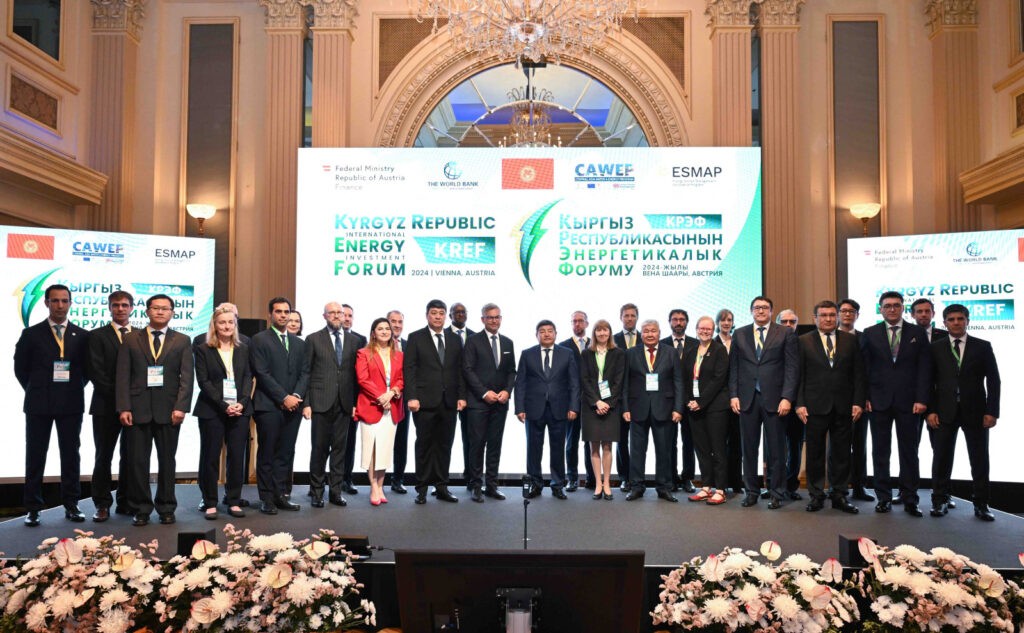
On June 10, The Kyrgyz Republic International Energy Investment Forum, organized by the Cabinet of Ministers of the Kyrgyz Republic with support from the World Bank Group and the Government of Austria, opened in Vienna. In his address to representatives of international financial organizations, delegations from Central Asian, European, and Middle East countries, and private investors, Chairman of the Cabinet of Ministers of the Kyrgyz Republic Akylbek Japarov emphasized the importance of discussions on the construction of Kambarata HPP-1 not only for Kyrgyzstan but also for the entire Central Asian region. Japarov then presented a paper on “Economic prospects and investment climate in the Kyrgyz Republic,” in which he stated, “In recent years, the economic growth of Kyrgyzstan has broken all records and demonstrated exceptionally sustainable development. The average GDP growth rate was 7%. And in the first quarter of 2024, the rate of economic growth accelerated to 8.8%.” Referencing the country’s “period of revival” in its energy sector, he continued, “Tariffs are being reviewed and better conditions provided in the form of benefits and preferences for investors. The implementation of more than 50 renewable energy projects has begun throughout the country. The state, on its own, has built and recently launched the Bala-Saruu hydroelectric power plant, which will provide electricity to the [country’s north-western] Talas region.” The head of the Cabinet of Ministers called on all international organizations to collaborate in implementing projects in the Kyrgyz energy sector especially the large-scale construction of Kambarata HPP-1 and stressed, “I am deeply convinced that through joint efforts the largest hydroelectric power plant in the region will be built and new horizons for green energy will open in the Central Asian region.” Japarov also touched upon Kyrgyzstan's tourist potential and with regard to winter sports, announced: “We are starting the construction of a Kyrgyz Courchevel. The French company S3V, one of the first operators of the world- famous resort of Courchevel, is implementing the Three Peaks ski cluster in Kyrgyzstan with plans for around 200 km of ski slopes. The resort will operate all year round and able to receive up to 850 thousand tourists annually, will become the largest in Central Asia. In addition, we are launching the construction of a resort near Bishkek with a 20-kilometer funicular, which will operate both winter and summer. In winter, it will provide a unique opportunity to ski within a 20-minute drive from the capital, Bishkek. All technical structures will be built by the Austrian company Doppel Maier.”    

Signs of Racism in Central Asia

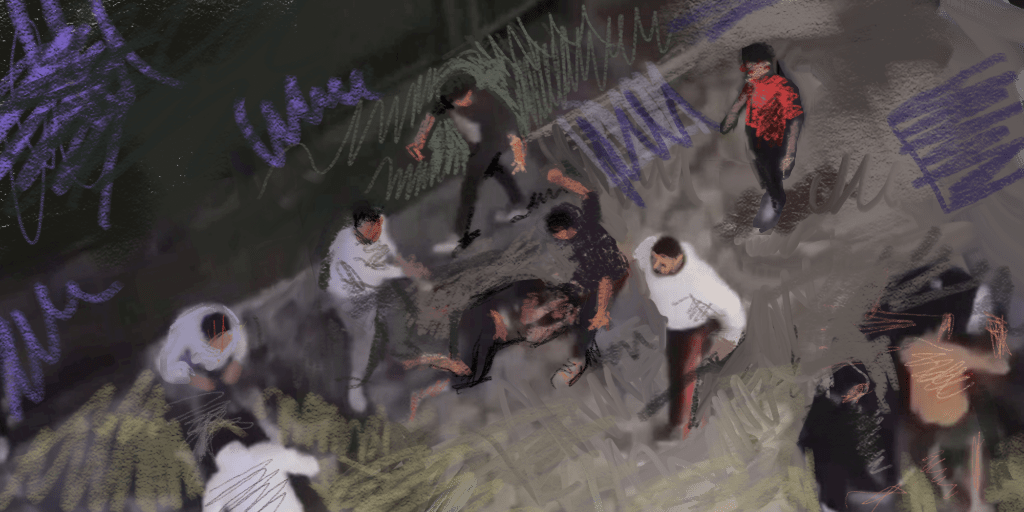
By Bruce Pannier Incidents in May showed two Central Asian countries – Kyrgyzstan and Turkmenistan – are afflicted by racism that is tacitly or explicitly supported by their governments. Overnight on May 17-18, hundreds of young Kyrgyz men gathered in eastern Bishkek near a dormitory used by foreign students. The Kyrgyz men were angered by a video posted on popular Kyrgyz social media sites on the morning of May 17 that showed a fight in Bishkek on May 13 between a small group of Kyrgyz and foreigners. The foreigners in the fight on May 13 turned out to all be Egyptians, and they were all detained. However, some social media posts claimed at least some of the foreigners involved in the fight were Pakistanis. Many people from Bangladesh, India, and Pakistan come to Kyrgyzstan to study at universities, particularly at medical colleges. More than 90% of foreign students at Kyrgyz universities are from India and Pakistan. A smaller number, in the low thousands, are working there illegally. In March, Kyrgyz authorities launched a campaign to find and deport illegal migrant laborers some 1,500 Pakistanis and 1,000 Bangladeshis have been caught. There have been isolated incidents when Kyrgyz were involved in physical altercations with South Asians in recent years, but nothing on scale of what happened in May 17-18. Besides bursting into the dormitory and assaulting foreign students, a group of some 60-70 Kyrgyz men broke into a sewing factory in Bishkek early morning May 18 and attacked foreign workers, who mostly from Bangladesh, India, and Pakistan. At least 41 people were injured, most of them South Asians. Pakistan in particular reacted, summoning the Kyrgyz Charge d'Affaires in Islamabad while a group of Pakistanis protested outside the Kyrgyz Embassy. Pakistani authorities also sent charter flights to Kyrgyzstan that brought back more than 1,000 Pakistani citizens. Kyrgyz authorities criticized the police for failing to calm the situation before it went out of control and later 10 policemen were sacked. Deputy Cabinet Chairman Edil Baisalov went to the dormitory to meet with some of the foreign students and apologize for the harm done to them “by a bunch of hooligans.” The top two people in the government – President Sadyr Japarov and head of security service Kamchybek Tashiyev – were more equivocal in their comments on the violence. Since coming to power in late 2020, Japarov and his longtime friend Tashiyev have promoted nationalist policies. Their emphasis on respecting Kyrgyz traditions and customs has gained them significant popularity in Kyrgyzstan. They need such support in a country that has had three revolutions since 2005, including the October 2020 revolution that resulted in them occupying their current positions. Young Kyrgyz men, like the hundreds who gathered on the evening of May 17, are an important pillar of support for Japarov and Tashiyev. President Japarov vaguely blamed “forces interested in aggravating the situation,” and added, “The demands of our patriotic youth to stop the illegal migration of foreign citizens and take tough measures against those...

One-Stop Service Center for Victims of Violence Opens in Kyrgyzstan

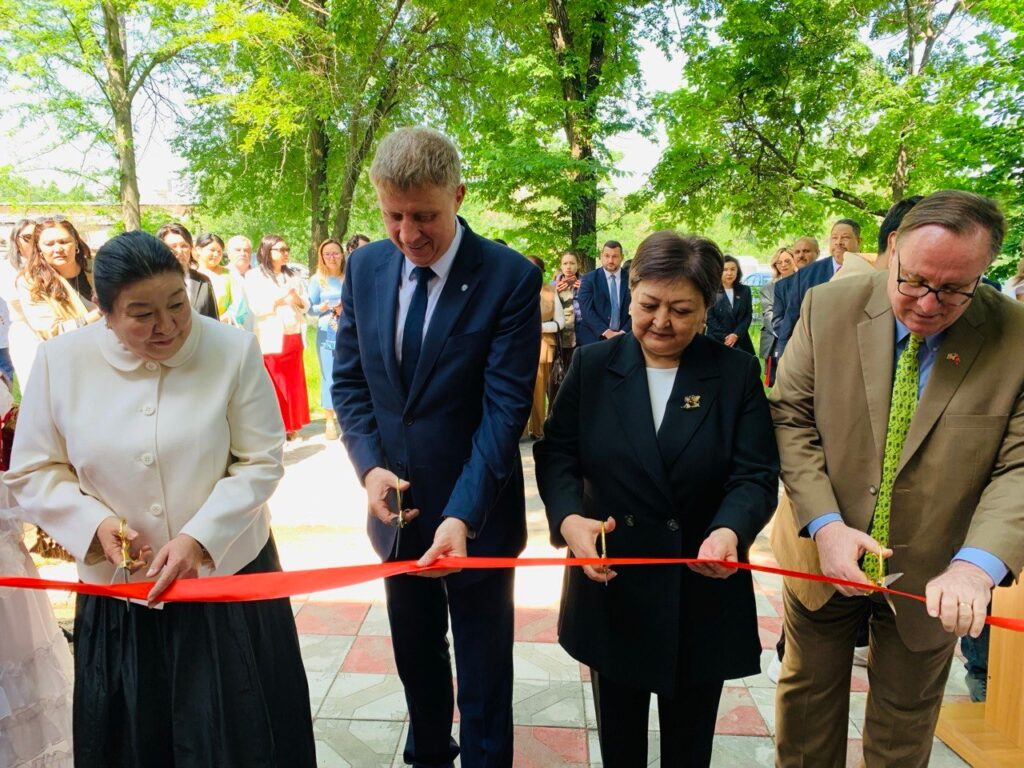
The first-ever One-Stop Service Center for Victims of Violence opened in Kyrgyzstan on May 28. Created through collaboration between the U.S. and Kyrgyz governments and the United Nations Office on Drugs and Crime (UNODC), the new center will provide critical support for survivors by integrating medical care, counselling, legal aid, and police investigation services under one roof, according to the U.S. Embassy in Kyrgyzstan. As victims of violence often have difficulties accessing essential services and sometimes face negative societal attitudes, the One-Stop Service Center aims to empower survivors, improve access to justice, and create a safer environment. During the opening ceremony, U.S. Ambassador to the Kyrgyz Republic Lesslie Viguerie said: “A thriving democratic and civil society is like a vibrant tapestry, woven together by the threads of strong relationships and communities. Gender-based violence, however, threatens to unravel this tapestry, weakening the bonds that hold our society together.”    

US Donates 12,000 English-Language Books to Schools and Libraries in Kyrgyzstan

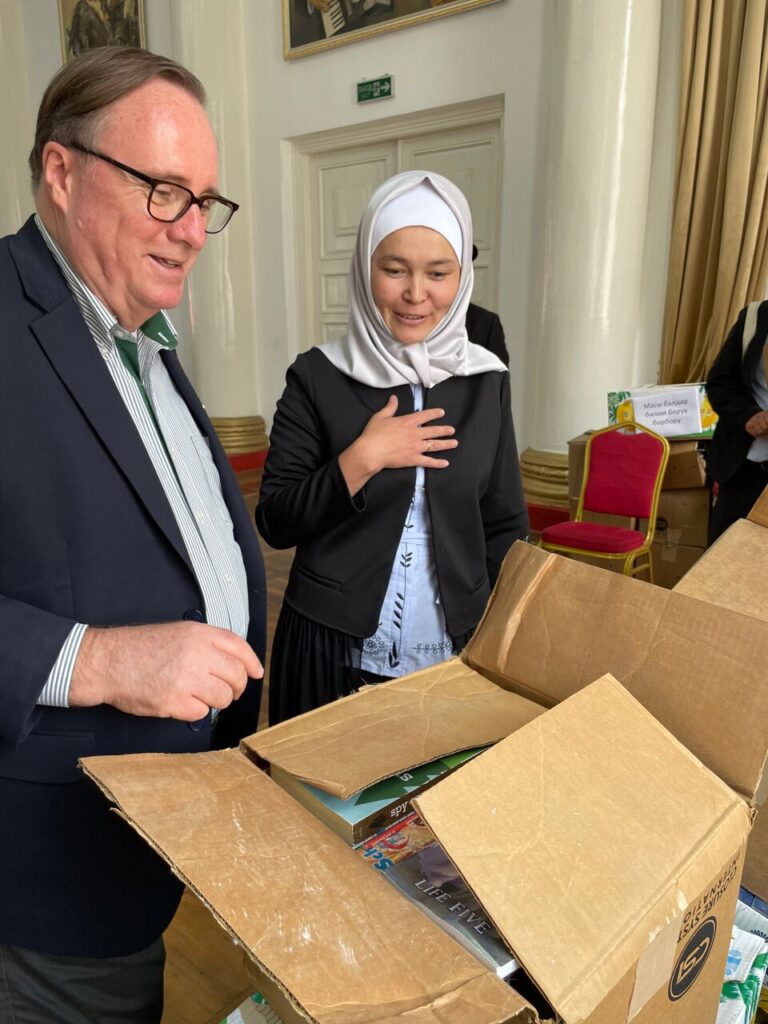
The United States has donated over 12,000 English-language books to 30 schools, libraries, and universities in the Osh, Jalal-Abad, and Batken regions of south Kyrgyzstan. The much-welcomed project is the initiative of a collaboration between the Rotary Club of the Fergana Valley, the Women’s Peace Bank Public Foundation, Osh State University, the U.S. Embassy, and the Kyrgyz government. The Rotary Club of Annapolis’ “Books for International Goodwill” project played a key role in securing book donations. The donation includes books for all ages – children to adults – and covering a wide range of subjects, is an invaluable resource for learning the English language. “These books are more than just paper and ink,” said U.S. Ambassador to the Kyrgyz Republic Lesslie Viguerie. “They are keys that unlock the world of English language learning and bridges connecting the people of the Kyrgyz Republic and the United States.” The donation was further praised by Akylai Karim, Project Leader at the Rotary Club of Fergana Valley and Women Peace Bank, who announced:  “This initiative is a celebration of the Kyrgyz-American friendship, trust, and collaboration. It will have a lasting, positive impact as youth learn English by reading these books and dream big about their future.”