• KGS/USD = 0.01144 0%
  • KZT/USD = 0.00212 0%
  • TJS/USD = 0.10456 0.19%
  • UZS/USD = 0.00008 0%
  • TMT/USD = 0.28490 0%
  • KGS/USD = 0.01144 0%
  • KZT/USD = 0.00212 0%
  • TJS/USD = 0.10456 0.19%
  • UZS/USD = 0.00008 0%
  • TMT/USD = 0.28490 0%
  • KGS/USD = 0.01144 0%
  • KZT/USD = 0.00212 0%
  • TJS/USD = 0.10456 0.19%
  • UZS/USD = 0.00008 0%
  • TMT/USD = 0.28490 0%
  • KGS/USD = 0.01144 0%
  • KZT/USD = 0.00212 0%
  • TJS/USD = 0.10456 0.19%
  • UZS/USD = 0.00008 0%
  • TMT/USD = 0.28490 0%
  • KGS/USD = 0.01144 0%
  • KZT/USD = 0.00212 0%
  • TJS/USD = 0.10456 0.19%
  • UZS/USD = 0.00008 0%
  • TMT/USD = 0.28490 0%
  • KGS/USD = 0.01144 0%
  • KZT/USD = 0.00212 0%
  • TJS/USD = 0.10456 0.19%
  • UZS/USD = 0.00008 0%
  • TMT/USD = 0.28490 0%
  • KGS/USD = 0.01144 0%
  • KZT/USD = 0.00212 0%
  • TJS/USD = 0.10456 0.19%
  • UZS/USD = 0.00008 0%
  • TMT/USD = 0.28490 0%
  • KGS/USD = 0.01144 0%
  • KZT/USD = 0.00212 0%
  • TJS/USD = 0.10456 0.19%
  • UZS/USD = 0.00008 0%
  • TMT/USD = 0.28490 0%

Viewing results 313 - 318 of 491

NGOs in Kyrgyzstan Have Two Months to Register as “Foreign Agents”

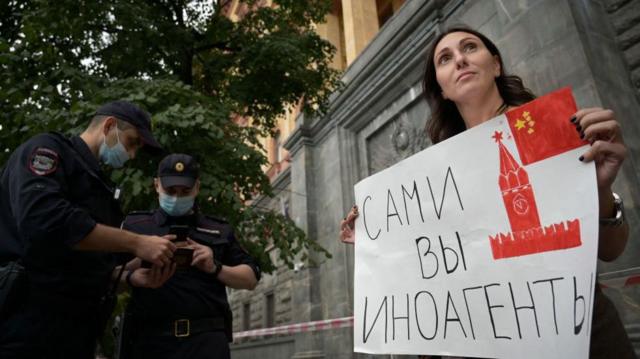
Kyrgyzstan's Ministry of Justice has approved the creation of a register for "non-governmental organizations performing the functions of a foreign representative", which gives authorities the right to inspect their activities. All non-profit agencies that receive foreign funding have been given two months from 16 May to submit documents to the ministry. Kyrgyz president Sadyr Zhaparov signed the law "on Foreign Representatives" on April 2, despite over 100 organizations and civil society figures appealing for him not to do so. Zhaparov made assurances at the time that non-governmental organizations would not be persecuted. Local NGOs funded from abroad that are engaged in political activities in Kyrgyzstan are now recognized as "performing the functions of a foreign representative", and are placed in a separate register. Organizations included in this register -- so-called 'foreign agents' -- may be subjected to various unscheduled inspections. Several international organizations, as well as the United States and certain countries in the European Union, have voiced criticisms of the new law. After it came into force, the Soros-Kyrgyzstan Foundation announced that it would be terminating its activities in Kyrgyzstan.
An Uneasy Calm After Unrest in Bishkek

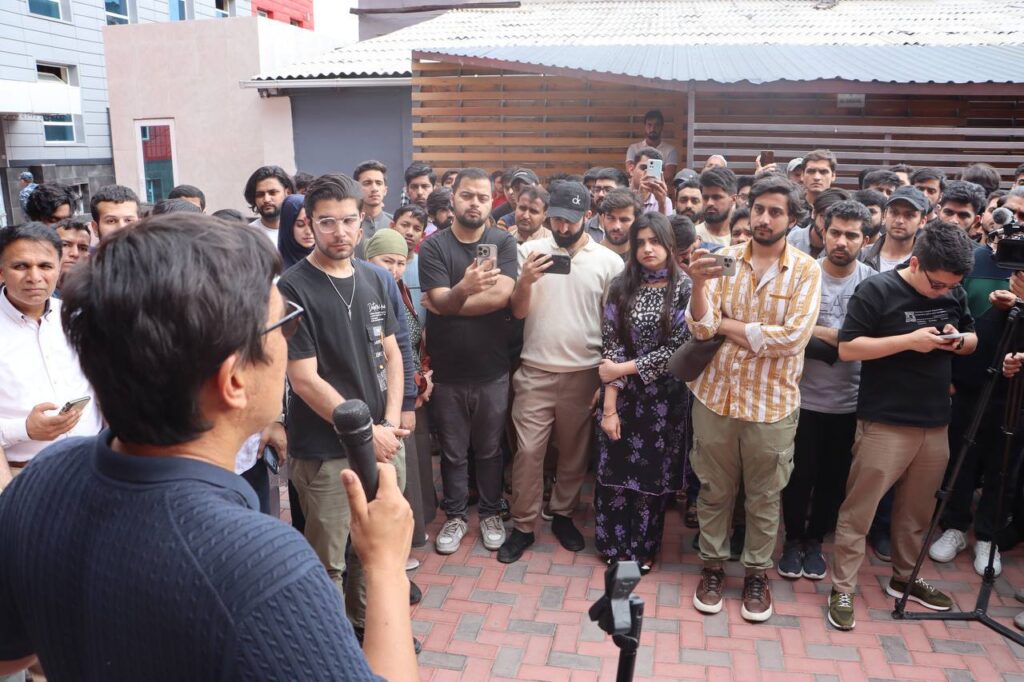
On the night of May 18, riots took place in Bishkek. The reason - a fight between foreign medical students and local youth. The trigger was a video of a scuffle, which occurred on May 13, when Egyptian citizens beat several locals. This video was then widely circulated on social networks. Local politicians have stated that they believe the situation was fueled from the outside.   What happened? On the night of May 18, protesters blocked several streets in the center of Bishkek. According to the Interior Ministry, the number of people continued to grow, and there was a threat of mass disorder, so all personnel from the capital's police were placed on alert. All hostels and dormitories in the city where foreign citizens live were put under guard. The protesters expressed dissatisfaction with the large number of migrants coming into the country from Egypt, Pakistan, India, and Bangladesh. The head of Kyrgyzstan's National Security Committee said law enforcement agencies detained several provocateurs who were calling for the overthrow of the government. By morning, the participants in the unauthorized rally had been dispersed. In total, about 1,000 people took part in the unrest, according to the capital's police. Law enforcement urged citizens not to give in to provocations and show a high-level of civil responsibility. The Ministry of Health of the Kyrgyz Republic reported that following the incident, 41 people sought medical assistance in Bishkek. Four Egyptians were detained - local media claim they were participants in the conflict that took place on May 13. Later, it became known that some Kyrgyz citizens had also been detained. The confrontation between local residents and foreigners has acquired an international dimension, with a number of government agencies in neighboring countries expressing their concern. For example, Kazakhstan introduced a special regime on the border with Kyrgyzstan. The authorities in Pakistan, meanwhile, have organized emergency flights, and a number of their students and workers are leaving Kyrgyzstan. Several thousand students from India, Pakistan, Egypt, Bangladesh and Nepal study at Bishkek's medical institutes. There are also migrant workers from these countries living in the country, who are mainly employed in the production of garments.   Who benefits from the unrest? According to deputy Dastan Bekeshev of the Jokorku Kenesh, the unrest is an attempt to find the authorities' vulnerabilities. "One of the indicators of economic growth is when citizens of the country hire foreign citizens as workers. And there is no way for us to avoid conflicts with foreign citizens. Conflicts are also arranged by our own citizens abroad. Of course, guests should not forget that they are guests and must coexist peacefully with the citizens of the country they are in. But we should also learn tolerance and wisdom when various conflicts occur. There are law enforcement agencies and they have every opportunity to punish a foreigner and expel him from Kyrgyzstan for a long time. Our laws on external migration are very strict," the parliamentarian wrote on his Telegram channel. The MP said...

Tension Spills Into Streets of Bishkek After Fight Involving Foreigners

Police in riot gear deployed in part of Kyrgyzstan’s capital overnight as large crowds gathered in anger over an alleged fight between local and foreign people which was widely circulated on social media. The Kyrgyz government later reported that 28 people, including three foreigners had been injured in the incident, whilst four foreign citizens were arrested for incitement. The crowds milled around some intersections of Bishkek for hours before dispersing early Saturday, and the Ministry of Internal Affairs said the situation was stable. Riot police cordoned off areas where the mobs had gathered and negotiated with the protesters in order to head off any further confrontations. The incident appeared to reflect tension over the presence in Kyrgyzstan of migrants. Kyrgyzstan’s Ministry of Internal Affairs is taking steps to tighten monitoring and penalties for foreigners who violate immigration laws, Kaktus Media reported. The fight which led to the wider conflagration happened at a hostel on May 13. Rumors spread on social media, and a video showing Kyrgyz students fighting with medical students from Egypt went viral. People started gathering on Friday night to show their dissatisfaction with what they said was the lax treatment of foreigners involved in the fight. However, police said three foreigners were detained on suspicion of hooliganism, the AKIpress news outlet reported. It said the suspects appeared in a video, apologizing for the fight and saying they would accept their punishment. “All measures were taken in a timely manner, they were detained, legal measures will be taken against them,” said Azamat Toktonaliev, head of Bishkek´s Internal Affairs Directorate. He told AKIpress that Kyrgyz citizens were invited to testify as witnesses and were not detained. Kyrgyzstan has expressed concern about the plight of some of its own citizens who travel to Russia in search of employment and have faced official scrutiny and sporadic harassment there. In the wake of the violence, diplomatic delegations from Pakistan and India have advised their students in Bishkek to stay indoors.

Bishkek Bets on Bikes and Buses

To alleviate congestion and traffic bottlenecks in the capital, the Bishkek Mayor's Office has green-lit a strategic plan for enhancing the city's road transport infrastructure over the 2024-2030 period. This initiative, as detailed on the municipal website, encompasses an ambitious range of projects. Highlights include the construction of bridges and new road junctions, the introduction of bike lanes within the road network, the consolidation of dedicated lanes into a coherent system, the expansion of parking facilities including an increase in bicycle parking spaces, and the establishment of transport hubs and park-and-ride lots. The vision driving these efforts is to significantly reduce car dependency in Bishkek, promoting instead a robust network of public and bicycle transport options. Plans are underway to construct seven park-and-ride facilities around the city’s perimeter, encouraging commuters to opt for public transport upon entering Bishkek. City officials have consistently advocated for strategies to lower rampant smog levels and congestion, including proposals to limit private car access into the city based on a vehicle's license plate number. Furthermore, the Mayor's Office announced plans to establish at least two advanced transport and transfer hubs at key entry points into Bishkek. These hubs will serve as critical junctions for intercity and regional bus routes, facilitating seamless connections with the city's public transport system. By 2030, these initiatives aim to achieve a 20% reduction in car usage within the city and cut congestion by 30%.

UN Special Rapporteurs Denounce Repressions of Independent Media in Kyrgyzstan

A number of UN Special Rapporteurs have denounced the repression of independent media in Kyrgyzstan and sent a letter to the authorities of the country. In the letter, they mentioned recent events related to the publications Kloop, 24.kg and Temirov Live, Vesti.kg  reports. The UN Special Rapporteurs called on the Kyrgyz authorities to fully respect international norms and standards regarding freedom of expression. "We are concerned that attacks on independent journalists and news outlets appear to be a direct result of their independent journalistic investigations. We are concerned that independent media and human rights defenders are worried that they will not be able to exercise their rights to freedom of expression and peaceful assembly, and associations to do their legitimate work without intimidation or reprisal," the letter states. The authors of the letter also ask the Kyrgyz authorities to provide detailed information on the charges against Kloop, 24.kg and Temirov Live. Earlier TCA reported that evidence regarding the case of 11 current and former journalists of Temirov Live, arrested on charges of calling for mass riots, were transferred to the court and will soon be handed over to the judge.

Kyrgyz Banks Try to “Warm Up” Economy With Interest Rate Cut

Commercial banks in Kyrgyzstan are expected to reduce interest rates on loans, with the National Bank of Kyrgyzstan (NBKR) lowering the rate from 13% to 11%. However, experts believe that the regulator's decision will not affect the banking sector. "We expect that now the market offers on deposits and loans will be revised. But time is needed for this. Commercial banks, financial organizations have to adapt their conditions. If currently the interest rates on loans average more than 15%, then a revision of rates is expected," Aida Karabayeva, head of the NBKR communications department, told a press conference in Bishkek. The rate cut is an attempt to warm up Kyrgyzstan's economy, weaken the national currency and increase export revenues, economists said. Thanks to the weakening of the Russian ruble against the Kyrgyz som, inflation in the country has fallen from 7.3% to 5.2%. This gives domestic producers and exporters room to maneuver. "At the moment we see that inflation risks are weakening. Previously, the tightening of monetary policy by the National Bank controlled the saving behavior of the population and the banking sector. This helps to ensure that the national currency does not depreciate," Ainura Mambetkul kyzy, head of the National Bank's economic department, told The Times of Central Asia. However, the situation has changed recently, Mambetkul kyzy said. Kyrgyzstan has enough finances to increase lending. This creates conditions for the growth of purchasing power of the population. And as a consequence, economic growth. Despite the confidence of the financial regulator, commercial banks are in no hurry to reduce interest rates on loans. In any case, they are waiting for the next statement of the financial regulator, in May this year. The fact is that Kyrgyzstan's banking system operates according to its own, domestic standards -- most of the borrowed funds are raised abroad by the second tier banks, or use citizens' deposit savings. Maerim Askarbekova, director of Senti financial company, commented: "The practice is that a decrease in the discount rate leads to a general decrease in rates in the whole market. This applies to both loans and deposits. Deposits, on the other hand, directly affect the bond market. The decrease in the discount rate affects the decrease in the price of money on the market. And if the loan that the bank has taken for its operations has foreign roots, the bank will demand lower interest rates. But, in any case, the NBKR interest rate is a benchmark."