• KGS/USD = 0.01144 0%
  • KZT/USD = 0.00215 0%
  • TJS/USD = 0.10599 -0.28%
  • UZS/USD = 0.00008 0%
  • TMT/USD = 0.28571 0%
  • KGS/USD = 0.01144 0%
  • KZT/USD = 0.00215 0%
  • TJS/USD = 0.10599 -0.28%
  • UZS/USD = 0.00008 0%
  • TMT/USD = 0.28571 0%
  • KGS/USD = 0.01144 0%
  • KZT/USD = 0.00215 0%
  • TJS/USD = 0.10599 -0.28%
  • UZS/USD = 0.00008 0%
  • TMT/USD = 0.28571 0%
  • KGS/USD = 0.01144 0%
  • KZT/USD = 0.00215 0%
  • TJS/USD = 0.10599 -0.28%
  • UZS/USD = 0.00008 0%
  • TMT/USD = 0.28571 0%
  • KGS/USD = 0.01144 0%
  • KZT/USD = 0.00215 0%
  • TJS/USD = 0.10599 -0.28%
  • UZS/USD = 0.00008 0%
  • TMT/USD = 0.28571 0%
  • KGS/USD = 0.01144 0%
  • KZT/USD = 0.00215 0%
  • TJS/USD = 0.10599 -0.28%
  • UZS/USD = 0.00008 0%
  • TMT/USD = 0.28571 0%
  • KGS/USD = 0.01144 0%
  • KZT/USD = 0.00215 0%
  • TJS/USD = 0.10599 -0.28%
  • UZS/USD = 0.00008 0%
  • TMT/USD = 0.28571 0%
  • KGS/USD = 0.01144 0%
  • KZT/USD = 0.00215 0%
  • TJS/USD = 0.10599 -0.28%
  • UZS/USD = 0.00008 0%
  • TMT/USD = 0.28571 0%

Viewing results 349 - 354 of 497

Bishkek Tightens Grip on NGOs

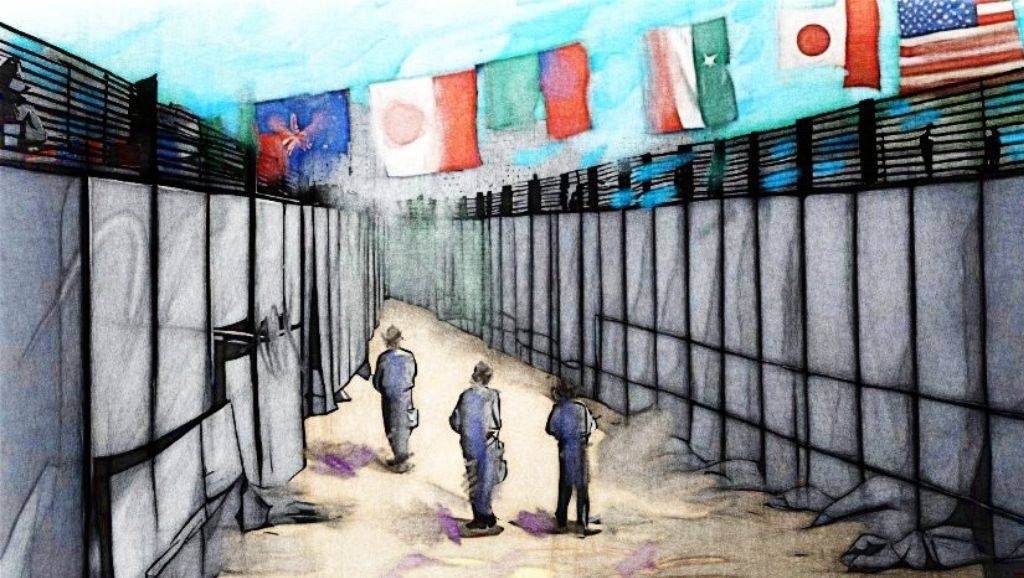
BISHKEK, Kyrgyzstan - Kyrgyzstan´s President said on Tuesday that he has approved a law that tightens control over non-governmental organizations which receive foreign funding, despite concerns that the measure could erode basic freedoms and services. President Sadyr Japarov defied international pressure to refrain from signing the law, which was passed by an overwhelming margin in Kyrgyzstan’s Parliament on March 14. In a Facebook post, he said the measure would make NGOs more accountable and increase transparency, an assertion that critics say is misleading. For decades, NGOs “just opened bank accounts, took money from foreign donors and used it as they saw fit, including for personal purposes,” Japarov said. “From now on they will be registered with the Ministry of Justice like everyone else. They will open bank accounts. They will start to work openly. There will be no more confusion.” NGOs “spread false information, saying 'we will be persecuted, we will be arrested as agents of a foreign state'. And the donors believed it,” said Japarov, adding that “there will be no persecution” of the groups. Critics say the law represents a slow-moving crackdown that rolls back efforts to develop civil society with the help of foreign governments and other institutions. “We're deeply disappointed that Kyrgyzstan's president Sadyr Japarov has signed the repressive law on 'foreign representatives,' citing misleading, untrue arguments about NGOs,” said the International Partnership for Human Rights, a Brussels-based group.  “At least get the facts straight,” Syinat Sultanalieva, a Central Asia researcher for Human Rights Watch, said of Japarov’s statement, adding that it was wrong of Japarov to suggest that NGOs “never registered and did not submit reports and basically ran amok unchecked.” In his statement, Japarov bristled at criticism from Western-affiliated institutions and said there was a double standard. “Why do non-governmental organizations in developed Western countries register with the Ministry of Justice, the Tax Service, open a bank account and not do the same when they come to us?” he said. “Or are we a second-class country? No, we are not. We will no longer allow such dubious actions.” Japarov had previously accused NGOs of spreading “inaccurate information,” emphasizing that the draft law “is close to the Foreign Agents Registration Act (FARA) adopted in 1938 in the United States.”. Some opponents claim it is based on Russia´s “foreign agents” law, and could be used as an instrument of oppression.
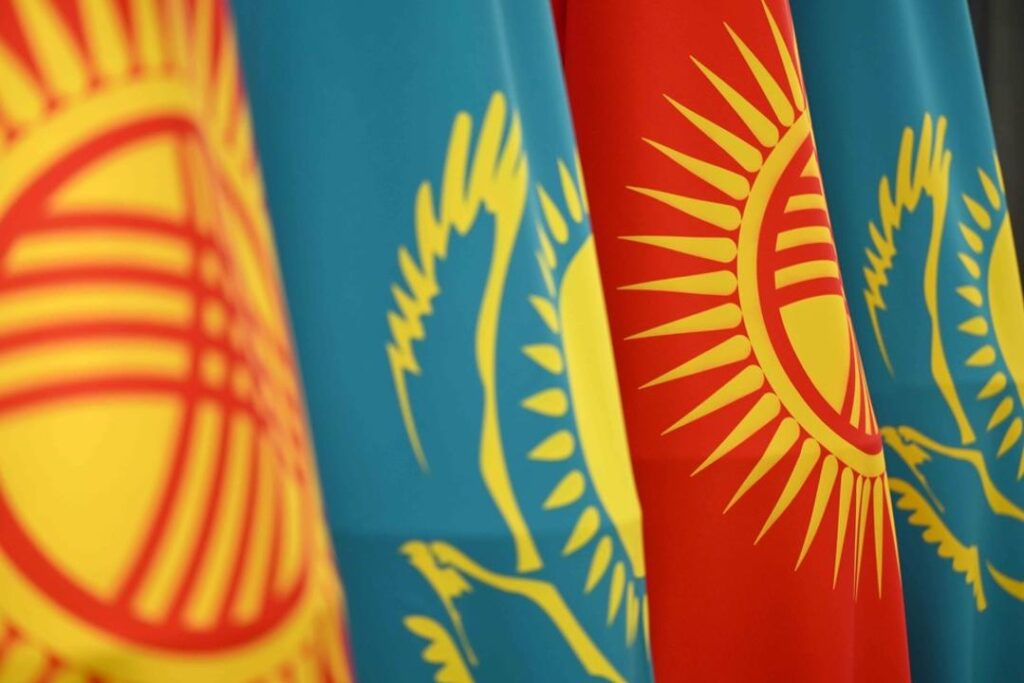
Kazakhstan and Kyrgyzstan to Unite Against External Military Threat

Proposals are in place for Kazakhstan and Kyrgyzstan to enter an agreement on deepening and expanding allied relations. Drafted by the President of Kazakhstan Kassym-Jomart Tokaye, the decree, ‘On the signing of an agreement on deepening and expanding allied relations between the Republic of Kazakhstan and the Kyrgyz Republic’, was recently published on the Open Regulatory Legal Acts portal. The draft treaty states that when faced with a situation that “represents a threat of armed attack from third states, the parties will immediately hold appropriate consultations with each other, both bilaterally and within the framework of international organizations of which they are members, with a view to adopting measures conducive to its peaceful settlement." Furthermore, Kazakhstan and Kyrgyzstan will “confirm their commitment not to participate in any blocks or alliances, and also refrain from participating in any actions directed against the other party.” The territories and resources of both countries will not be used “for the purpose of preparing or carrying out aggression or other hostile actions against the other party, as well as to the detriment of the state sovereignty, security and territorial integrity of the other party.” Kazakhstan and the Kyrgyz Republic will prevent the use on their territories of “communication systems and other infrastructure by third states for the purpose of preparing or carrying out armed actions against the other party.” The draft document also makes provision for strengthening economic relations between the two countries, in particular “by creating favorable conditions for mutual access of goods, services and investments, their protection in the territories of their states, and the implementation of joint investment projects.”

Kyrgyzstan Assassination Plot: Suspected Crime Boss Raimbek Matraimov Held in Pretrial Detention

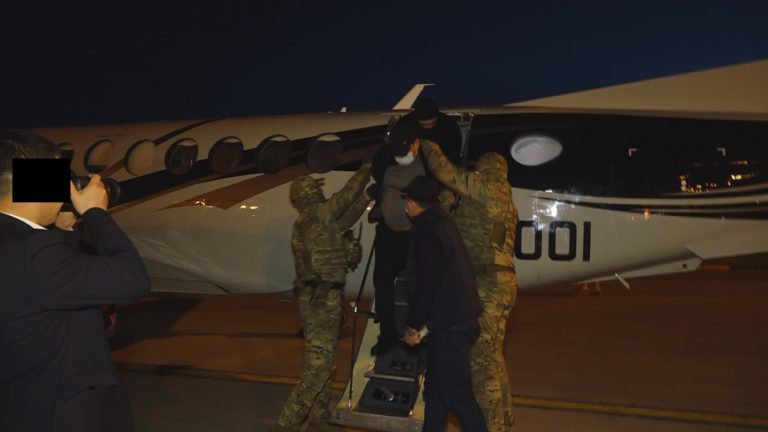
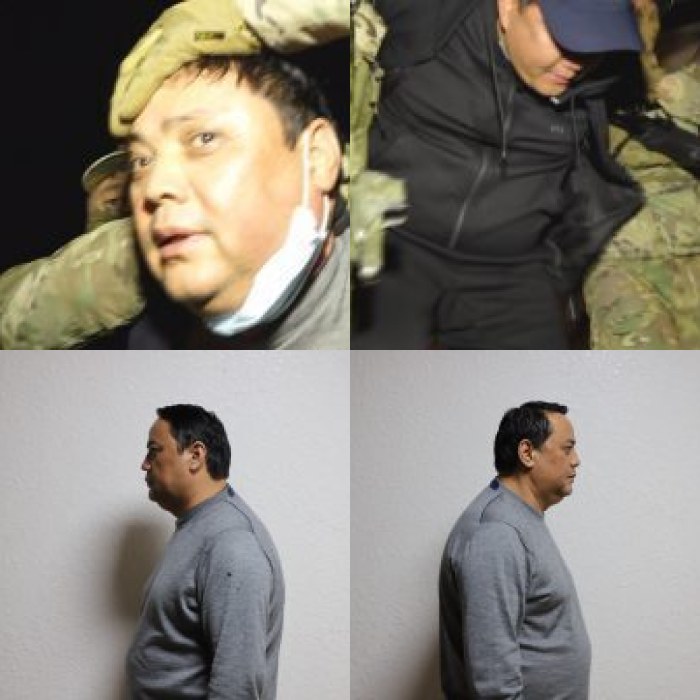
The corrupt Kyrgyz oligarch Raimbek Matraimov will spend the next month in pretrial detention in Bishkek, after the former deputy head of Kyrgyzstan’s customs service was extradited from Azerbaijan on Tuesday. Matraimov, once known as the country’s “kingmaker” for the influence his clan held over the Kyrgyz Government, was found to have profited from corrupt schemes he ran at the customs service, laundering at least $700 million for himself by allowing companies to evade import fees. In October 2020, upon the formation of a new government led by President Sadyr Japarov, Matraimov was ordered to repay $22.3 million in damages and restitution back to the state. However, rather than fall in line with Kyrgyzstan’s crackdown on organized crime, in recent years Raimbek Matraimov appears to have remained outside the law. The former official is now suspected of orchestrating a recent plot to assassinate members of Kyrgyzstan’s current leadership in retribution for the government’s fight against organized crime. It is the discovery of this plot that led Kyrgyz law enforcement to request Matraimov’s extradition this week from Baku, Azerbaijan’s capital, along with his three brothers, Tilek, Islambek, and Ruslan. Of the Matraimov brothers’ seizure in Azerbaijan, the Kyrgyz State Committee for National Security (CNSK) commented: “In this regard, on March 22, employees of the CNSK carried out operational and investigative measures, as a result of which all the above-mentioned persons were detained [in Baku]. Currently, investigative measures are being carried out to bring them to justice, according to the laws of Kyrgyzstan.” On Wednesday, March 27, the Birinchi Mai district court in Bishkek ruled that Raimbek Matraimov must stay in pretrial detention at the CNSK’s detention center until at least April 26. Officially, he is suspected of “money laundering and the abduction and illegal incarceration of unnamed individuals”. Matraimov had already been placed on the U.S. Treasury Department’s sanctions list, and the Global Magnitsky Human Rights Accountability Act (the ‘Magnitsky Act’), for his previous crimes at the customs service.

Kyrgyz Surgeons Performed Unique Heart Surgery in One Minute

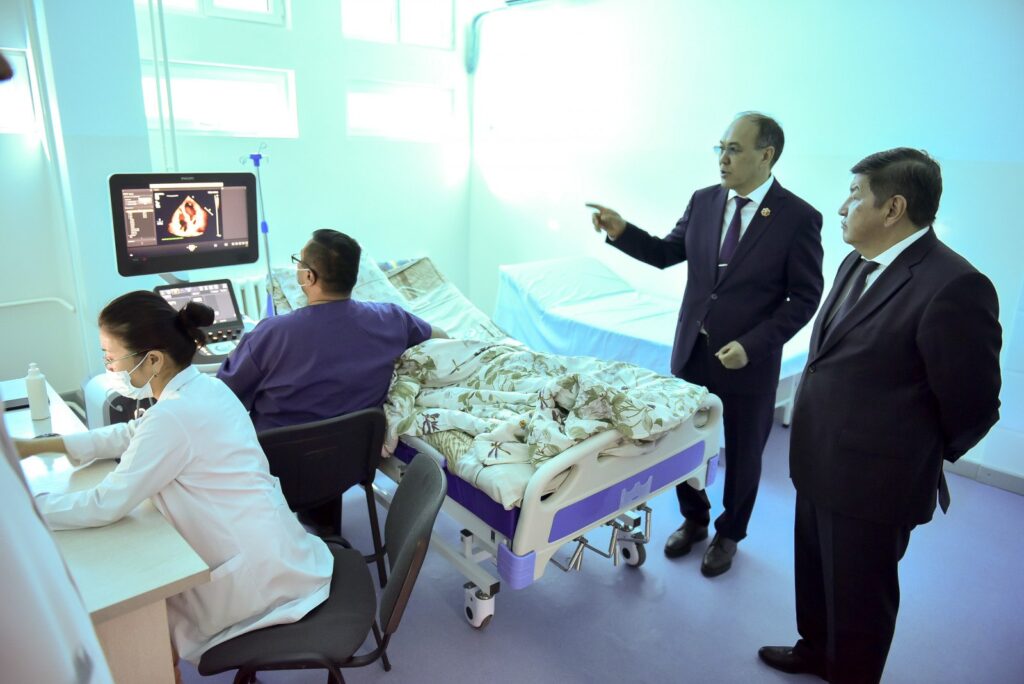
The National Centre of Cardiology and Therapy in Bishkek has announced its implementation of an Emergency Cardiology program to provide emergency care to patients with acute myocardial infarction. The authorities' purchase of new heart surgery equipment including a machine to create ultra-precise 3D reconstructions of the heart on a monitor and the importation of U.S.-made Azurion-7 devices for diagnosing and treating cardiovascular diseases was made possible by the allocation of $1.5 million from the World Bank. In his address at the presentation ceremony, Kyrgyz Prime Minister Akylbek Japarov welcomed the much needed acquisition of the state -of -the- art, high-tech equipment which will greatly reduce the number of patients dying from heart disease each year. Today, the centre reported that with the aid of new high-tech X-ray surgical equipment and Chinese colleagues' specialised knowledge of its intricacies, doctors performed a successful heart operation in a record time of just one minute and eight seconds. According to Kyrgyz doctors, the patient had been admitted 'with an open oval window'; a particularly dangerous symptom of cardiovascular disease because the presence of holes between the valves of the heart can cause air to eventually enter the brain and lead to a stroke. "We are monitoring the patient's condition and she is doing very well. She was only given a local anaesthetic and in 12 hours, can go home and slowly return to her everyday life," stated Chinese professor Shang Xiaaoqe after the operation. Almost half the patients attending the National Centre of Cardiology for strokes suffer from this type of disease but thanks to the new equipment and adoption of methods used by Chinese medics, its treatment will no longer pose a problem for Kyrgyz doctors. In addition to advice from their Chinese counterparts, Kyrgyz medics have arranged visits from Russian and Kazakh doctors to share their experience and best practices.

Kyrgyzstan to Switch to 12-Year School System

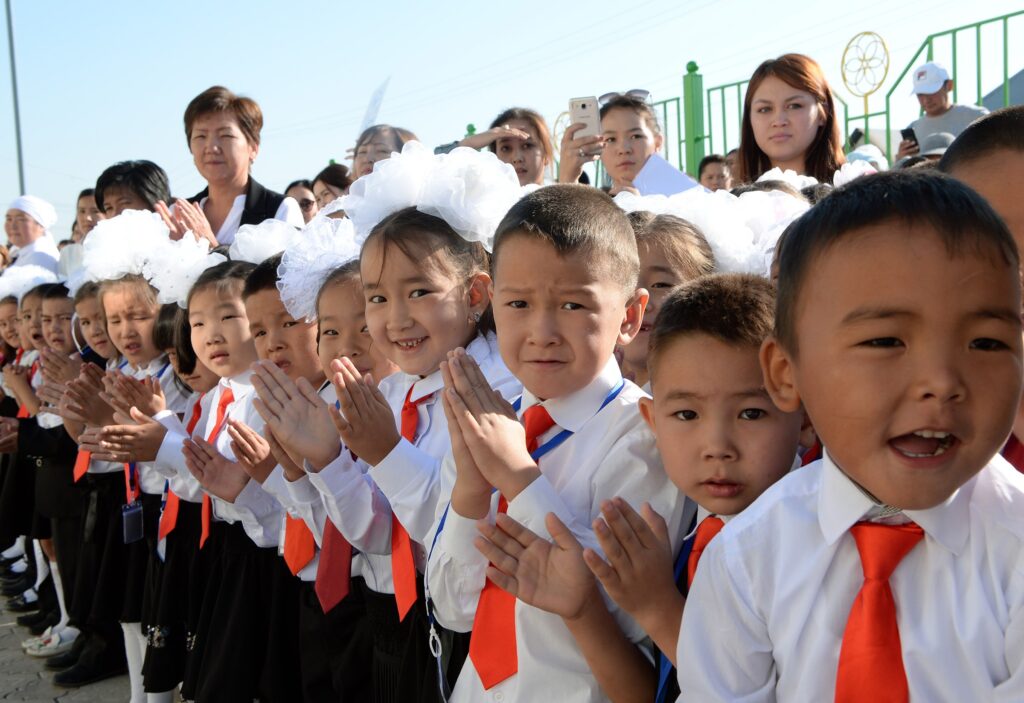
From the next academic year pupils in Kyrgyzstan are to stay at school for an extra year, a move that authorities believe will improve the quality of education, and make it easier for students to enter foreign universities. The Kyrgyz Ministry of Education and Science said the 12-year system will be introduced in schools in stages from September. By common consensus, Kyrgyzstan's school system has long been in need of modernization, as many approaches to education have not changed in decades. "We will gradually introduce this system so that children will not be overloaded. We have been working on this for more than a year. The transformation of the education system is aimed at updating the content of school education, improving its structure, aimed at preparing competitive youth, and integrating [them] into the global educational space," said education minister Dogdurkul Kendirbayeva at a press conference in Bishkek. Ms Kendirbayeva also explained how the transition to a 12-year system would take place. All of the country's first grade students will be tested in September this year; those children who are already comfortable with the second-grade curriculum will move to the second grade in January 2025. To improve the quality of teaching at Kyrgyz schools, the Asian Development Bank has provided a $20 million grant, as well as a loan for the same amount for 24 years. This money will pay for teachers to go on courses in science, technology, engineering and math. A new education system is also needed because currently only 30% of preschool-aged children in Kyrgyzstan are in preschools. This is partly because many parents use their young children as additional labor in the household, or use them as nannies for their younger siblings, and are in no hurry to send their children to school. Many families also don't have the money to send their children to preschool classes. But from the fall the preschool education program will become compulsory for all as part of the first year of education. Critics of the new system argue that it will hamper the most able young children, because they will now have to wait for their peers.

Former Kyrgyz Official Matraimov Extradited in Connection with Assassination Plot

According to statements issued by the special services of Kyrgyzstan, former deputy head of the customs service Raimbek Matraimov is connected with assassins who recently came to Bishkek from Azerbaijan to assassinate members of Kyrgyzstan's leadership. On March 23 Kyrgyz law enforcement became aware that the wanted Matraimov was in Baku, Azerbaijan's capital. The State Committee for National Security of Kyrgyzstan (CNSK) sent a letter to the Azeri authorities with a request to detain and extradite him. In Baku this request was fulfilled. Matraimov's brothers were also detained and flown to Kyrgyzstan, the CNSK reported. The investigation into Matraimov alleges that his clan once had its own people in virtually all government agencies, including the police, prosecutor's office, and parliament, where an entire political party worked on his behalf. Matraimov's group had enormous resources, and numerous levers of influence over the authorities. The 2020 coup d'état in Kyrgyzstan was carried out in part because Matraimov's party won the elections. As a result, those elections were deemed as corrupt, and subsequently voided. Matraimov was put on an international wanted list on January 26. He was charged in absentia under two articles of the Kyrgyz criminal code: illegal imprisonment and legalization of criminal proceeds. As The Times of Central Asia has previously reported, on March 22 in the center of Bishkek authorities detained members of a transnational criminal group, who came to Bishkek from Azerbaijan to assassinate the Kyrgyz political leadership. Kyrgyzstan's special services believe that Matraimov is linked to the criminals and is involved in organizing the assassination attempt. It was also reported that the former official was extradited with the aid of a government board of Kyrgyz authorities.