• KGS/USD = 0.01144 0%
  • KZT/USD = 0.00216 0%
  • TJS/USD = 0.10456 0%
  • UZS/USD = 0.00008 0%
  • TMT/USD = 0.28490 0%
  • KGS/USD = 0.01144 0%
  • KZT/USD = 0.00216 0%
  • TJS/USD = 0.10456 0%
  • UZS/USD = 0.00008 0%
  • TMT/USD = 0.28490 0%
  • KGS/USD = 0.01144 0%
  • KZT/USD = 0.00216 0%
  • TJS/USD = 0.10456 0%
  • UZS/USD = 0.00008 0%
  • TMT/USD = 0.28490 0%
  • KGS/USD = 0.01144 0%
  • KZT/USD = 0.00216 0%
  • TJS/USD = 0.10456 0%
  • UZS/USD = 0.00008 0%
  • TMT/USD = 0.28490 0%
  • KGS/USD = 0.01144 0%
  • KZT/USD = 0.00216 0%
  • TJS/USD = 0.10456 0%
  • UZS/USD = 0.00008 0%
  • TMT/USD = 0.28490 0%
  • KGS/USD = 0.01144 0%
  • KZT/USD = 0.00216 0%
  • TJS/USD = 0.10456 0%
  • UZS/USD = 0.00008 0%
  • TMT/USD = 0.28490 0%
  • KGS/USD = 0.01144 0%
  • KZT/USD = 0.00216 0%
  • TJS/USD = 0.10456 0%
  • UZS/USD = 0.00008 0%
  • TMT/USD = 0.28490 0%
  • KGS/USD = 0.01144 0%
  • KZT/USD = 0.00216 0%
  • TJS/USD = 0.10456 0%
  • UZS/USD = 0.00008 0%
  • TMT/USD = 0.28490 0%

Viewing results 1369 - 1374 of 2449

World Bank to Support Kyrgyzstan’s Food Industry

The World Bank's International Development Association will loan Kyrgyzstan $35 million to develop agro-food clusters in the Chui, Jalal-Abad, and Naryn regions. Of that amount, $5 million is a grant, and $30 million is an interest-free loan for 12 years with a six-year grace period. Kyrgyzstan's deputy minister for water resources and agriculture, Kubat Kaseyinov, said the allocated money will be used to develop a dairy cluster in Chui and Jalal-Abad. There are also plans to improve the seed system and breeding farms throughout the country. This includes providing equipment for seed farms, developing infrastructure, improving animal breeding policies and regulations, developing a national meat and dairy farming plan, and supporting selected breeding farms.

Investigative Website Kloop to Remain Blocked in Kyrgyzstan

Bishkek City Court has upheld a decision to block the investigative news site Kloop.kg. Kloop's lawyer Fatima Yakupbayeva commented: “ It would be interesting to know what justified today's judicial board of the city court's ruling. We believe the decision is unlawful. A dangerous precedent is being set for online publications and everyone who disseminates information because with this court ruling [it appears] that it is possible not to address the distributor itself but to go straight to the Ministry of Culture and ask for it to be blocked. This violates the balance provided for by the law “On Protection from Inaccurate Information.” Yakupbayeva added that Kloop will appeal the decision in the Supreme Court. As previously reported, the Kloop.kg website was initially blocked as a result of an article in which the politician Ravshan Dzheenbekov stated that he was tortured while in prison. This led to a complaint by the State Committee for National Security to the Ministry of Culture. Kloop's Russian-language website has been blocked in Kyrgyzstan since September 2023. The Kyrgyz-language version was blocked two months later.

Kyrgyzstan Lifts Ban on Mining of Uranium and Thorium

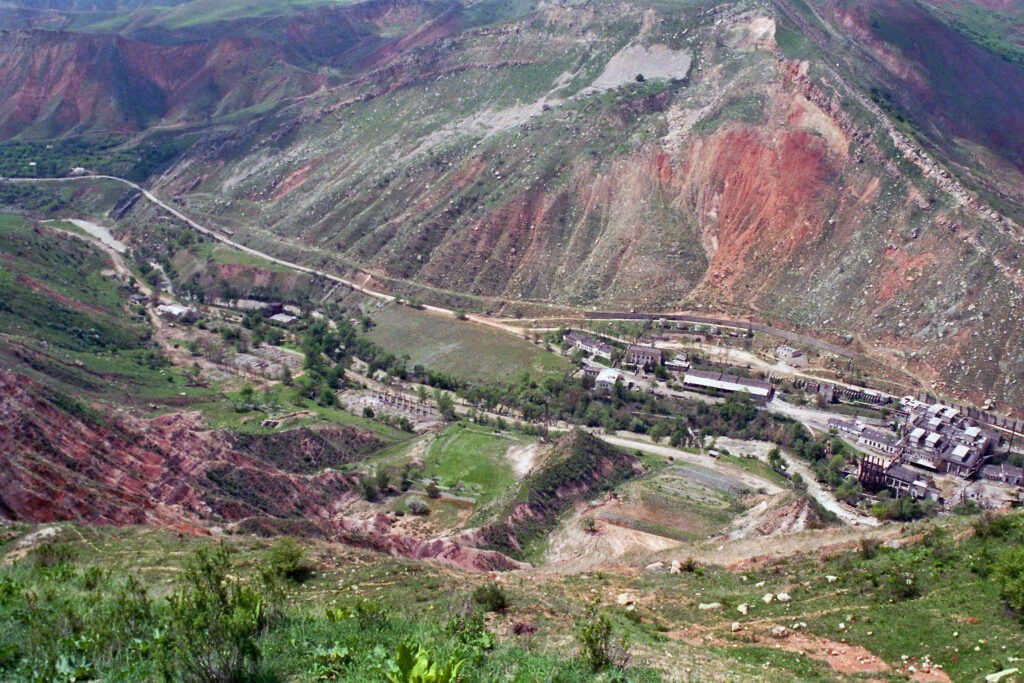
Deputies of the Kyrgyz Parliament have approved a bill lifting the ban on mining uranium and thorium by 69 votes in favor to three against. Parliamentarians are confident that the legislative changes will bring significant economic dividends to the country. The law banning uranium and thorium mining was passed in 2019. At that time, authorities wanted to sell the license to develop a deposit, but faced a significant pushback from residents who feared the project could harm the environment and damage the water table. The result was a complete ban on the entire territory of the Republic. In the Issyk-Kul region of Kyrgyzstan alone, 150,000 cubic meters of radioactive waste were accumulated from uranium mining in the last century. According to the Ministry of Emergency Situations, the country has 92 burial sites, with 23 tailing dumps containing uranium elements. Kyrgyzstan's total volume of poisonous and hazardous substances stands at 2.9 million cubic meters. The notes behind the new bill indicate that alternative sources of income are needed due to severe economic impacts over recent years. However, these activities must strictly comply with environmental norms and standards in uranium and thorium mining. Speaking in parliament, Minister of Natural Resources, Environment, and Technical Supervision, Melis Turganbayev assured deputies that the bill's passage would not harm the environment or the health of Kyrgyz citizens. “For uranium mining to be profitable, a deposit needs 40-50 tons. Kyrgyzstan lacks such reserves. There are occurrences from 0.01 to 0.08% in 83 locations. Our goal is not the uranium, but the associated metals,” Turganbayev said. Authorities plan to mine titanomagnetite, which is accompanied by uranium and thorium. Both elements will be processed at the Kara-Balta Combine in Chui Oblast. Thorium will be stored, while uranium will be sold to other states. Iskhak Masaliyev, one of the three deputies who voted against the bill, reminded his colleagues of discussions in the early 2000s on ecology. However, only now has it been possible to begin to eliminate harmful waste. Doctor of Geological and Mineral Sciences, academician Rozalia Jenchuraeva told The Times of Central Asia that the 2019 law banning mining was “a big folly” as it suspended all waste activities and impacted jobs, leaving hazardous materials lying no more than 20 meters deep are slowly contaminating the soil and water. “If they pull it all out, it will be wonderful. It will clean up the land. This is work for the Kara-Balta Combine. I think the government has decided to develop Kyzyl-Ompol, which is the right thing to do,” Jenchuraeva said. Jenchuraeva believes that Kyrgyzstan has qualified personnel who have previously worked at uranium sites, know how to mine uranium and thorium, and can develop the deposits using their expertise and resources. Earlier, President Japarov met with residents near the Kyzyl-Ompol deposit. “The development of Kyzyl-Ompol will create over a thousand jobs. This mine will become the second Kumtor (gold deposit). The local budget will cease to be subsidized, and the people will get richer,” the president said. Kyzyl-Ompol is...

UNICEF Donates Vehicles to Distribute Vaccines in Kyrgyzstan

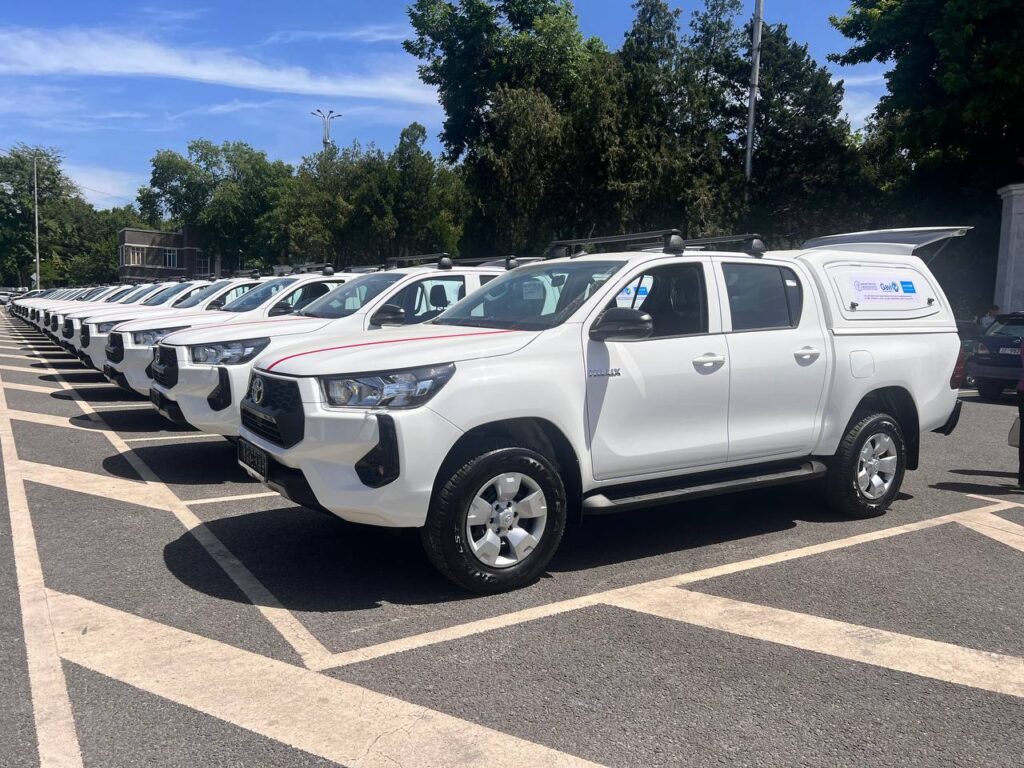
The Global Alliance for Vaccines and Immunization (GAVI) and UNICEF have donated 16 vaccine transport vehicles to Kyrgyzstan. The special cars were provided to the Kyrgyz Ministry of Health to increase immunization rates across the country. The vehicles will help improve the distribution of vaccines from regional to district storage facilities, ensuring their timely availability in remote regions of the country. “Vaccines against dangerous diseases such as measles, rubella, or pertussis require special storage and transportation conditions to be safe and effective. Therefore, improving this infrastructure directly affects the availability of life-saving vaccines for every child in Kyrgyzstan,” said UNICEF's acting representative in Kyrgyzstan Cristina Bruggiolo. Akchabar reports that this is the first batch of 26 vehicles that the ministry will receive. The remaining ten cars will arrive in the country by the end of July.

Chinese to Build Industrial Park and Bonded Warehouses in Kyrgyzstan

A memorandum of cooperation has been signed between the Ministry of Economy and Commerce of the Kyrgyz Republic and the Xinjiang Xing Long Corporation on the establishment of an industrial park in Kyrgyzstan and construction of bonded warehouses in the territories of both countries. The agreement was made during a visit by the Chinese company to Bishkek where delegates met with Deputy Minister of Economy and Commerce Nazarbek Malaev. The Chinese company has constructed innovative industrial parks in the city of Urumqi, Xinjiang, and owns the Xing Long Industrial Park in Urumqi spanning over 300,000 square meters and home to over 200 large and medium-sized companies. Deputy Minister Malaev welcomed the corporation’s plan to build an industrial park on the territory of Kyrgyzstan and pledged support for its to implementation. He also  expressed interest in pursuing joint industrial ventures in Kyrgyzstan.  

International Association of Crypto-Economy and AI Created in Kyrgyzstan

The International Association of Crypto-Economy and Artificial Intelligence was established in Kyrgyzstan with the assistance of the Russian Association of Crypto-Economy, Artificial Intelligence and Blockchain (RAKIB), TASS reports. RAKIB was created to unite participants in the blockchain technology market and investors in blockchain-based projects in cryptocurrencies. The association aims to promote the spread and deep integration of blockchain technologies into the economy and legalize the use of electronic currencies based on this technology. Alexander Brazhnikov, executive director of RAKIB, said on the margins of the Kazan Crypto-forum that the main tasks of the international association established in Kyrgyzstan will be to ensure security in the digital world, cross-border payments, and the creation of new projects. Brazhnikov will become the chairman of this association, which was officially registered a week ago and will have its headquarters in Bishkek. “We want to make people engaged in this business cooperate,” Brazhnikov said, noting that associations from different countries and individual legal entities can join the organization. According to him, some countries in Africa and the Middle East have shown great interest, and more than 15 countries may join the association by the end of 2024.