• KGS/USD = 0.01144 0%
  • KZT/USD = 0.00215 0%
  • TJS/USD = 0.10680 0.19%
  • UZS/USD = 0.00008 0%
  • TMT/USD = 0.28530 0%
  • KGS/USD = 0.01144 0%
  • KZT/USD = 0.00215 0%
  • TJS/USD = 0.10680 0.19%
  • UZS/USD = 0.00008 0%
  • TMT/USD = 0.28530 0%
  • KGS/USD = 0.01144 0%
  • KZT/USD = 0.00215 0%
  • TJS/USD = 0.10680 0.19%
  • UZS/USD = 0.00008 0%
  • TMT/USD = 0.28530 0%
  • KGS/USD = 0.01144 0%
  • KZT/USD = 0.00215 0%
  • TJS/USD = 0.10680 0.19%
  • UZS/USD = 0.00008 0%
  • TMT/USD = 0.28530 0%
  • KGS/USD = 0.01144 0%
  • KZT/USD = 0.00215 0%
  • TJS/USD = 0.10680 0.19%
  • UZS/USD = 0.00008 0%
  • TMT/USD = 0.28530 0%
  • KGS/USD = 0.01144 0%
  • KZT/USD = 0.00215 0%
  • TJS/USD = 0.10680 0.19%
  • UZS/USD = 0.00008 0%
  • TMT/USD = 0.28530 0%
  • KGS/USD = 0.01144 0%
  • KZT/USD = 0.00215 0%
  • TJS/USD = 0.10680 0.19%
  • UZS/USD = 0.00008 0%
  • TMT/USD = 0.28530 0%
  • KGS/USD = 0.01144 0%
  • KZT/USD = 0.00215 0%
  • TJS/USD = 0.10680 0.19%
  • UZS/USD = 0.00008 0%
  • TMT/USD = 0.28530 0%

Viewing results 1747 - 1752 of 2618

Consulate General of Uzbekistan Officially Inaugurated in Osh

The Consulate General of Uzbekistan celebrated its official inauguration in Osh city, fostering economic, cultural, and humanitarian ties and offering support to Uzbek citizens in the region. The ceremony drew notable figures like Vice Mayor Nurbek Kadyrov, Presidential Representative Elchibek Zhantaev, and Ambassador Khurshid Mirzakhidov, emphasizing the consulate's role in advancing cooperation. Zafarbek Akhmedov, a seasoned diplomat previously overseeing the Consular and Legal Department at Uzbekistan's Ministry of Foreign Affairs, heads this mission at 54 years old. Established in 2022, the consulate, led by Akhmedov, serves Batken, Jalal-Abad, and Osh regions in Kyrgyzstan.

EDB Forecasts Economic Growth for Kazakhstan, Kyrgyzstan and Tajikistan in 2024

The Eurasian Development Bank (EDB) has published its macroeconomic outlook for the Bank’s six member states — Armenia, Belarus, Kazakhstan, Kyrgyzstan, Russia, and Tajikistan. Bank analysts anticipate that GDP across the region’s countries will be close to a balanced growth path. Projections indicate a GDP growth in 2024 of 5.7% in Armenia, 2% in Belarus, 5% in Kazakhstan, 4.5% in Kyrgyzstan, 1.5% in Russia, and 7.3% in Tajikistan. According to EDB analysts, following Kazakhstan’s economic growth of 4.8% in 2023, an acceleration in GDP growth is anticipated for 2024, further bolstered by high investment activity. The expected decrease in interest rates is poised to provide an additional impetus. In the medium term, structural transformations are set to improve the quality of economic growth by expanding opportunities in manufacturing and service industries. Economic diversification creates prerequisites for an anticipated acceleration in 2025 and 2026, positioning Kazakhstan as a leader among Eurasian Economic Union member states in terms of growth rates. Strong domestic demand supported high economic activity in Kyrgyzstan and Tajikistan in 2023. EDB analysts project a slight deceleration in these countries in 2024, albeit with GDP growth rates still noticeably higher than the global average.

World Bank to Help Kyrgyzstan Reduce Air Pollution

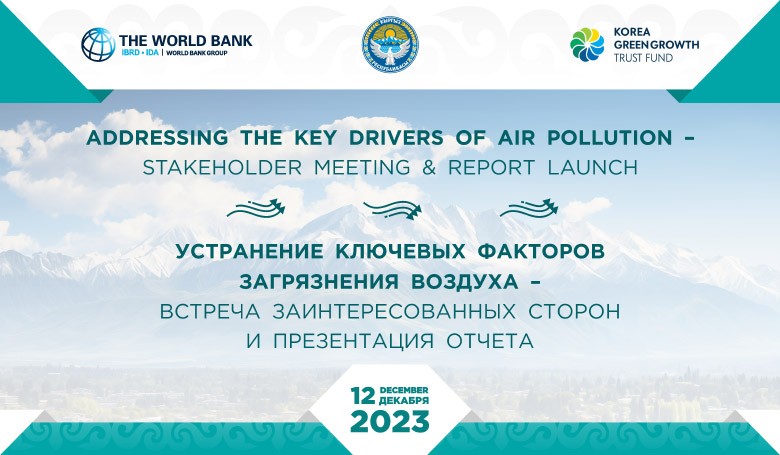
The World Bank and the Ministry of Natural Resources, Ecology and Technical Supervision (MNRETS) of the Kyrgyz Republic on December 12th hosted a stakeholder meeting to launch the World Bank's new report, Air Quality Analysis for Bishkek: PM2.5 Source Apportionment and Emission Reduction Measures, according to a statement on the World Bank website. The World Bank conducted this study in close coordination with MNRETS Hydrometeorological Service (Kyrgyzhydromet) under the Ministry of Emergency Situations and Bishkek Municipality to evaluate the air quality in Bishkek, focusing on PM2.5 pollution. Exposure to fine inhalable particles (PM2.5 with a diameter of 2.5 micro-meters or less) poses serious health risks, including respiratory infections, cancer, cardiovascular diseases, and premature deaths. In Bishkek, the average annual PM2.5 concentrations in 2022 surpassed the WHO guideline value of 5 µg/m3 by nearly sevenfold. During the last several winters, average daily concentrations of PM2.5 were often above 200 µg/m3, surpassing the WHO guideline of 15 µg/m3 by more than 13 times and placing Bishkek among the world’s most polluted cities. The losses caused by air pollution in Bishkek are estimated to be equivalent to 1.2% of the Kyrgyz Republic’s GDP, while air pollution at country level is estimated cost 5.1% of the GDP. In line with priorities and recommendations identified in the study, the World Bank jointly with MNRETS, KyrgyzHydromet and Bishkek Municipality has prepared a $50 million Kyrgyz Republic Air Quality Improvement Project to help the country reduce air pollution and the adverse effects it has on public health and the economy. This project is expected to not only directly benefit residents of Bishkek by improving the city’s air quality, but will also support the establishment of a sound Air Quality Management System that will drive policy actions for air quality improvement, aiming to mitigate the impact of air pollution on public health and economic development across the country.

U.S. and Central Asian Countries Focus on Protecting Rights of People with Disabilities

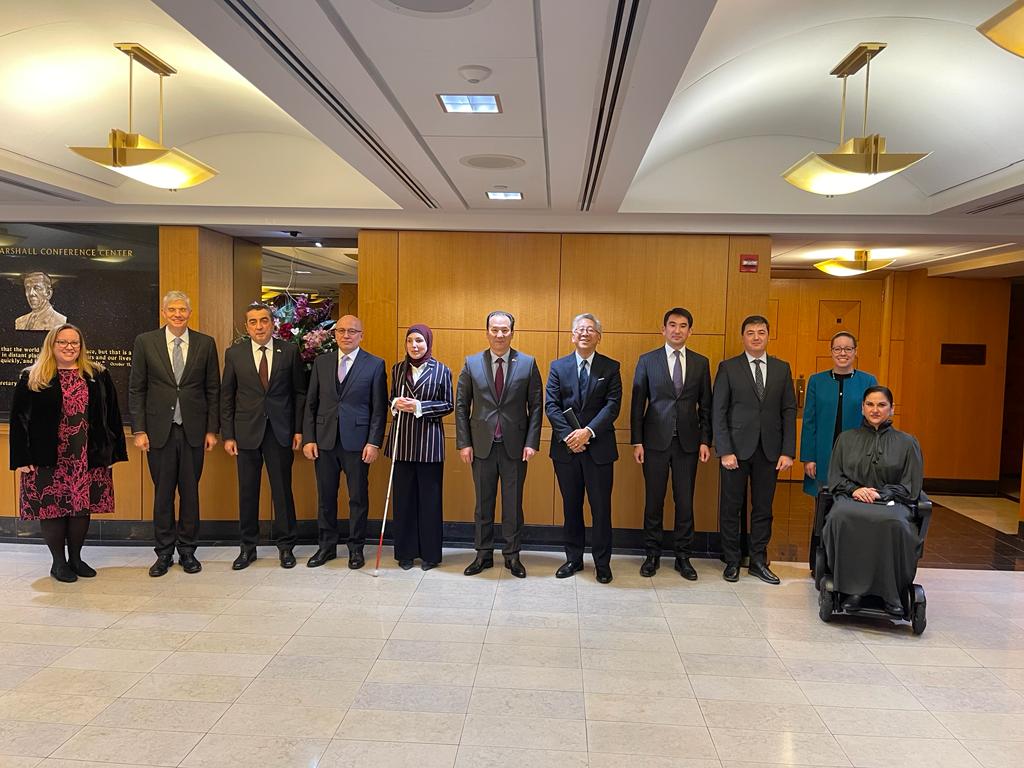
On December 11th, the U.S. Department of State hosted a meeting of representatives of C5+1 countries dedicated to protecting the rights of people with disabilities and finding practical solutions to their problems. The C5+1 diplomatic platform represents the U.S. Government’s holisitc approach to Central Asia, jointly engaging all five Central Asian nations. The meeting was attended by Sara Minkara, Special Adviser to the President of the United States on the International Rights of Persons with Disabilities, Donald Lu, Assistant Secretary of State, Deputy Assistant Secretary John Mark Pommersheim, and representatives of government agencies of the USA. The Ambassadors of Kazakhstan, Kyrgyzstan, Tajikistan, and Uzbekistan to the United States also spoke during the meeting, which was moderated by Minkara, who shared her experience and recommendations on ensuring protection of the rights of persons with disabilities. U.S. Assistant Secretary of State, Donald Lu stressed the importance of increasing cooperation within the C5+1 format on the rights of persons with disabilities in a multilateral format. Following the meeting, the participants agreed on joint actions in this direction.

Kyrgyzstan and Tajikistan Demarcate More Than 90% of Border

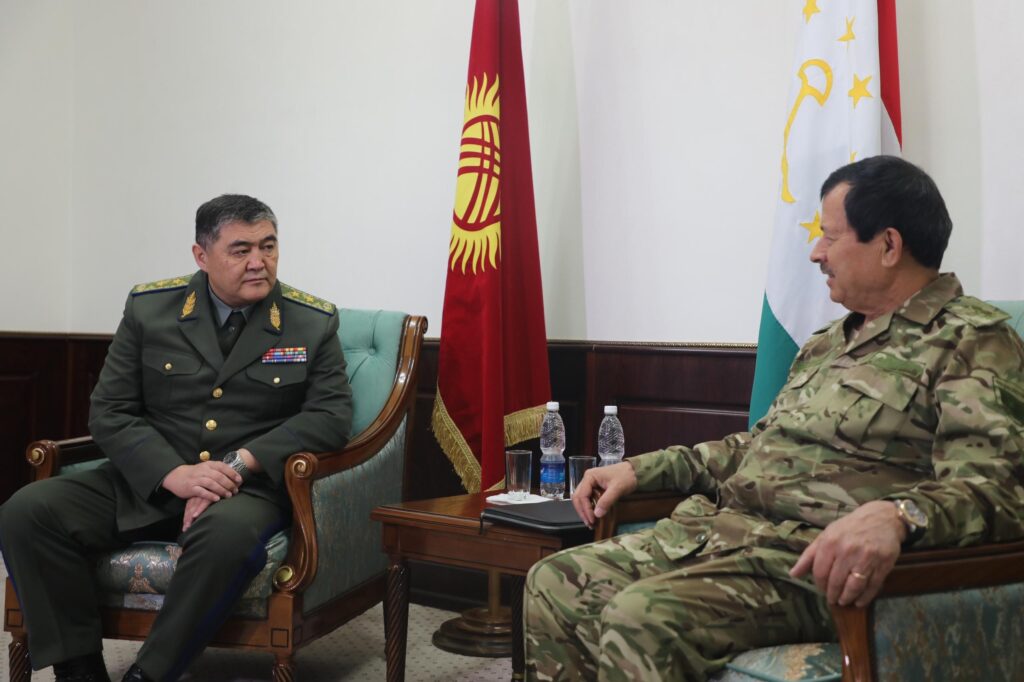
Following a meeting between government delegations, Chairmen of the National Security Committee of Kyrgyzstan, Kamchybek Tashiyev, and Tajikistan, Saimumin Yatimov, released a statement announcing that over 90% of the border between the two countries has now been agreed upon. “As a result of the work of the intergovernmental commission, agreements were reached on the harmonization of most of the state border - more than 90%,” Tashiyev said. “Work on the remaining sections will be completed soon, starting with Kayragach, Kulundu, Maksat, Arka, Arka-1, Arka-2, Zhany-Zher and up to Zhiydelik. The Working Group has fully completed the coordination. At the moment, we have almost completed work on the disputed areas about which there were questions." According to Tashiyev, several more meetings will be necessary to complete the demarcation and delimitation of the state border. In turn, Yatimov noted that vital issues were discussed at the meeting of the delegations. “There is a common interest, common goals, and common causes between the two states,” he said. “This is the security and socio-economic development of our states. A lot of work has been done today - we have advanced more than 120 kilometers, and have agreed on these issues in principle. If we take the total length of the state border between Tajikistan and Kyrgyzstan, Kamchybek Kydyrshayevich and I can confirm that over 90% of the state border has been agreed. We are really close to solving these issues.”

Civil Liberties Worsening in Kyrgyzstan Says Civicus Monitor

This year, Kyrgyzstan became one of the seven countries whose annual ranking in terms of civil liberties worsened. This is according to the report, "People's Power under Attack - 2023" published by global civil society alliance, Civicus Monitor. The methodology applied by Civicus Monitor sees countries divided into five categories depending on the points scored: countries with open (free) civil space, narrowed (freedoms are partially limited), partially closed (oppressive civil liberties), suppressed and closed. Kyrgyzstan scored 40 out of 100 points, and was therefore classified as a State with a suppressed (repressed) civil space. Since 2018, the republic has been included in the category of countries with a partially closed civil space. The reasons for this downgrade were the promotion of draft laws restricting the activities of NGOs and the media, increased pressure on independent media, criminal prosecution of civil society activists, journalists and other critics of the government, and long-term ban on peaceful assemblies in the central districts of Bishkek. Neighbors in the region also received relatively low ratings, with Turkmenistan (8 points), Tajikistan (12 points) and Uzbekistan (18 points) classified as countries with a closed civil space, whilst Kazakhstan (27 points) was classified as a state with a suppressed civil space. According to the authors, almost a third of humanity now lives in countries with a closed civil space. This is the highest percentage (30.6%) living in the most restrictive environment since the first Civicus Monitor report in 2018. Only 2.1% of people live in open states where civil space is both free and protected. This is half as much as six years ago, the report says.