• KGS/USD = 0.01143 0%
  • KZT/USD = 0.00202 0%
  • TJS/USD = 0.10433 0%
  • UZS/USD = 0.00008 0%
  • TMT/USD = 0.28575 0%
  • KGS/USD = 0.01143 0%
  • KZT/USD = 0.00202 0%
  • TJS/USD = 0.10433 0%
  • UZS/USD = 0.00008 0%
  • TMT/USD = 0.28575 0%
  • KGS/USD = 0.01143 0%
  • KZT/USD = 0.00202 0%
  • TJS/USD = 0.10433 0%
  • UZS/USD = 0.00008 0%
  • TMT/USD = 0.28575 0%
  • KGS/USD = 0.01143 0%
  • KZT/USD = 0.00202 0%
  • TJS/USD = 0.10433 0%
  • UZS/USD = 0.00008 0%
  • TMT/USD = 0.28575 0%
  • KGS/USD = 0.01143 0%
  • KZT/USD = 0.00202 0%
  • TJS/USD = 0.10433 0%
  • UZS/USD = 0.00008 0%
  • TMT/USD = 0.28575 0%
  • KGS/USD = 0.01143 0%
  • KZT/USD = 0.00202 0%
  • TJS/USD = 0.10433 0%
  • UZS/USD = 0.00008 0%
  • TMT/USD = 0.28575 0%
  • KGS/USD = 0.01143 0%
  • KZT/USD = 0.00202 0%
  • TJS/USD = 0.10433 0%
  • UZS/USD = 0.00008 0%
  • TMT/USD = 0.28575 0%
  • KGS/USD = 0.01143 0%
  • KZT/USD = 0.00202 0%
  • TJS/USD = 0.10433 0%
  • UZS/USD = 0.00008 0%
  • TMT/USD = 0.28575 0%

Viewing results 871 - 876 of 1402

Kyrgyz Football Gets Boost as Construction Starts on New Stadium

Kyrgyzstan is building a 45,000-seat stadium designed to host Asian Football Confederation finals as well as FIFA group matches. This week, President Sadyr Japarov announced that construction on the new stadium near Bishkek had begun and would take two years. Local and Turkish architects and engineers are involved, and there are also several advisers from Britain, he said. The shape of the stadium will aim to evoke a yurt, a circular tent that was a staple of nomadic life in Central Asia for millennia. Last year, FIFA President Gianni Infantino urged Kyrgyzstan to build a new football stadium to help develop the sport there. Kyrgyzstan’s national team does not have its own dedicated stadium. Currently, it plays matches at the Dolen Omurzakov Stadium in Bishkek. The facility, which can hold about 23,000 spectators, is also used by two local clubs.

Tennis World No. 4 Rybakina Wins Third Tournament of Year in Stuttgart

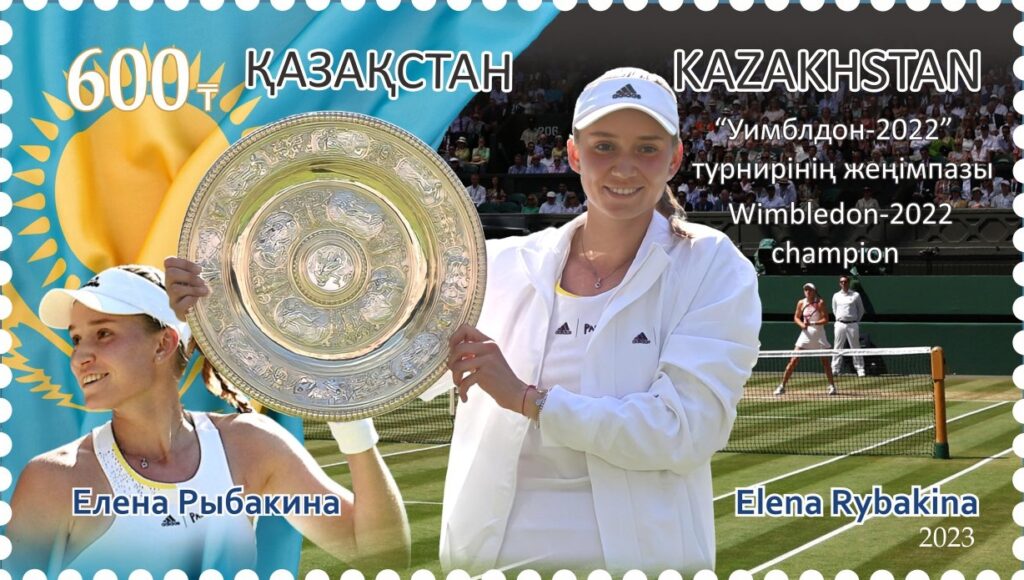
Kazakhstan’s Elena Rybakina is leading in 2024 tennis titles - three so far - after a comfortable victory over Marta Kostyuk in the Stuttgart final on Sunday. Rybakina, who has also won titles in Brisbane and Abu Dhabi this year, has now won a tour-leading 26 matches this season. That’s one more than world No. 1, Iga Swiatek of Poland. Kazakh President Kassym-Jomart Tokayev congratulated Rybakina on his Instagram page. “The first racket of Kazakhstan has won three titles this season. This is a great success,” Tokayev said. “I wish our Elena new sporting achievements.” Rybakina, 24, was born in Moscow and secured citizenship in Kazakhstan in 2017 after the tennis federation there offered generous support for her career. Rybakina won Wimbledon in 2022 and was runner-up at the Australian Open last year. Ranked No. 4 in the world, Rybakina was in command throughout her 6-2, 6-2 win over No. 27, Kostyuk of Ukraine. "I always believe in myself, of course, but it not only depends on me," Rybakina said. "There are a lot of great players, tough opponents. But I know if I feel fresh, if I'm physically ready, healthy, I'm playing my game, of course I have all the chances to win a Grand Slam on any surface.”

Kazakhstan: Floods Still a Threat, but Some Residents Returning Home as Waters Ebb

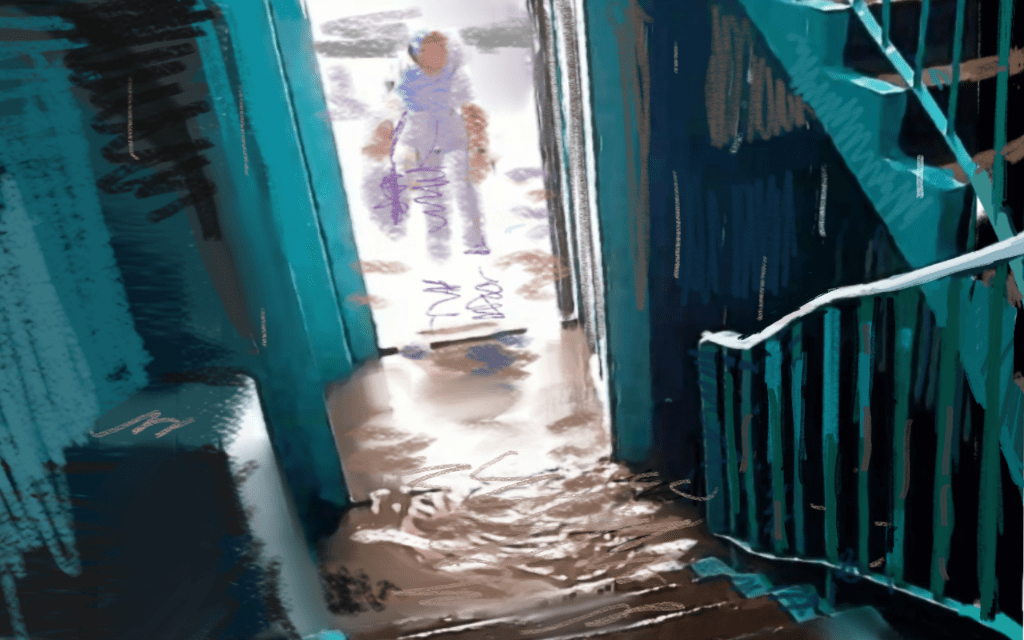
For weeks, it’s been a frantic grind of evacuations, pumping water and shoring up dams as Kazakhstan battles widespread floods. While the threat remains, water levels are declining in some areas and the country is working to help disaster victims in the long term. Some 22,700 people who fled their homes to escape floodwaters have returned, and the flood situation has stabilized in some hard-hit places such as Aktobe, according to the government. Still, thousands, many of them children, remain in evacuation centers, whilst others are in temporary housing. More than 100,000 people have been evacuated over the course of the crisis, which began in March as snow melted in the warmer weather. There is uncertainty about when Kazakhstan can fully shift from an emergency response to rebuilding. Water levels continue to be monitored closely, including on the Zhaiyk River, also known as the Ural. Television and radio reports are providing updates every few hours. The river’s water level has been described as exceeding a “critical level,” though authorities believe there is no danger to the adjacent city of Uralsk. The city is in West Kazakhstan and on the border with Russia, also hit by floods. In East Kazakhstan, the flood situation is considered stable. Providing hot meals and leisure activities for children are among the daily tasks for teams taking care of evacuated residents. But a volunteer network is looking ahead, launching a campaign to offer free legal services for flood victims. Some people are filing claims for financial compensation for their losses. Many are farmers who lost livestock. Transportation links were cut and truckers couldn’t reach their destinations. Kazakhstan’s Ministry of Industry and Construction has been developing a plan to help people affected by the floods, and it’s already being implemented in some areas. If a damaged house cannot be restored, its owner can choose – with state support - between building a new house or buying completed real estate. The building of houses has already begun in the Aktobe area. Apartments for 27 victims were bought in the city of Arkalyk, in the Kostanay region. New housing has also been provided in several other regions. “This work will continue until every victim is provided with housing,” said Minister of Industry and Construction, Kanat Sharlapaev. For all the efforts of the government and society right now, Kazakhstan could experience more seasons of catastrophic flooding. Some scientists suggest climate change intensified this year’s disaster. According to one analyst, uncontrolled construction and other official negligence have only exacerbated the threat.

TikTok Users Struggle to Access App after Kyrgyzstan Announces Restrictions

Kyrgyzstan is restricting access to TikTok. The Ministry of Digital Development sent a letter to internet providers, asking them to block the TikTok social media platform, local media has reported. The ministry cited the network´s failure to comply with a law designed to “prevent harm to the health of children, their physical, intellectual, mental, spiritual and moral development.” The ministry said it took action after receiving a memorandum from Kyrgyzstan’s State Committee for National Security about TikTok, whose owner is the Chinese firm, ByteDance. Users reported “difficulties and interruptions” in using TikTok, which was still accessible via some providers, the 24.kg news agency reported on Thursday. Opponents of the restrictions on video-based TikTok say it is part of a clampdown on free speech and other basic rights in Kyrgyzstan. They note that the authorities arrested some journalists in a separate case, and the parliament passed a law tightening control over non-governmental groups that get foreign funding. In the wake of this, the George Soros funded, Open Society Foundations, which claims it has spent more than $115 million on projects in education, public health, criminal justice, supplying water to rural communities and other areas since it opened in 1993, said earlier this week that it was closing down its Kyrgyz branch. Government officials in Kyrgyzstan started to move against TikTok last year, saying that some social networks were having a negative effect on children. The U.S. Congress is also fast-tracking legislation that would ban TikTok unless ByteDance sells its stake, with a vote due on Saturday. There are concerns in the U.S. that the app could share user data with the Chinese government; TikTok has said it is owned by a private company and doesn’t share such data.

Kazakh News Publisher Says New Media Law Does Little for National Press

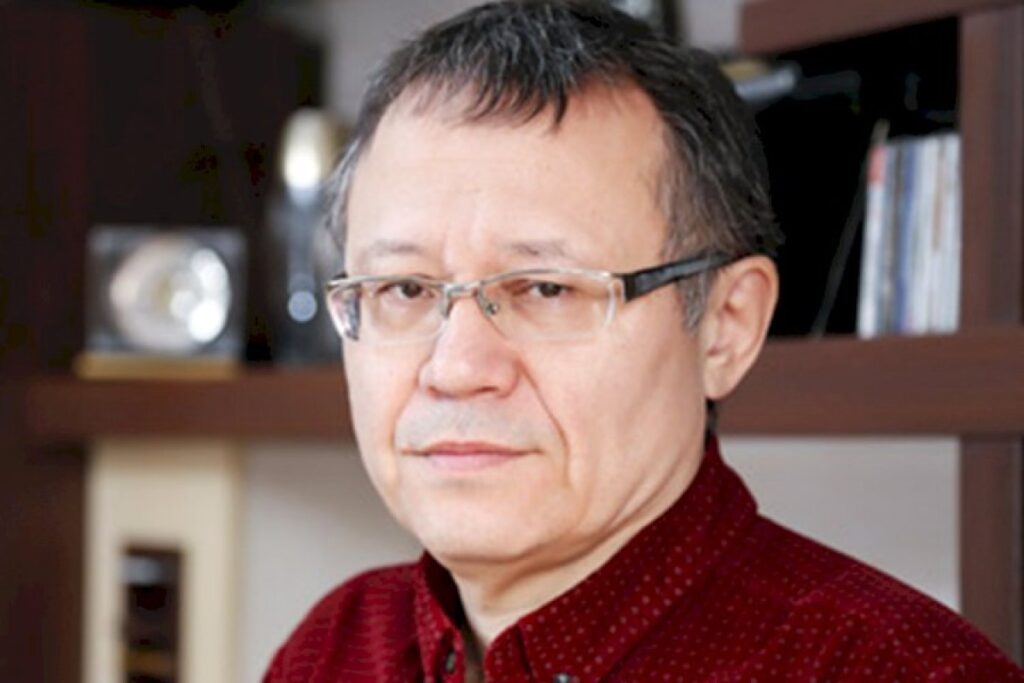
Kazakhstan's new law "On Mass Media," recently passed by its lower house of parliament (the Mazhilis), has agitated the country's reporters. In an interview with The Times of Central Asia, Dzhanibek Suleyev, the publisher of several news sites, remonstrates that the law should have been more supportive of the national press. An aspect of the law that has caused heated discussions is the Ministry of Foreign Affairs' new right to deny accreditation to foreign journalists "in case of a threat to the national security of the Republic of Kazakhstan." A few months ago the Ministry of Foreign Affairs didn't renew or refused to issue accreditation to 36 correspondents of the news website Azattyq, the Kazakh affiliate of the U.S. Government's Radio Free Europe/Radio Liberty (RFE/RL). No explanation was given for this rejection, and Azattyq has filed a lawsuit in court. Suleyev explained: "It is clear that the state wants to protect itself and society as much as possible from extremist publications and the spread of deviant morality, but what is proposed for those who simply do their work honestly, every day? We like to impose restrictions, but what about support? I think that if the state were to expand the field of cooperation, the press would be less critical." "Apparently, the state authorities have such an ambiguous opinion of Azattyq. In addition, the lack of accreditation clearly does not prevent 'going on the air,' the audience has access to the materials. I do not think that denial of accreditation to foreign media will become a mass phenomenon. The New York Times or leading sports publications and channels will hardly be denied accreditation. You have to understand that from the point of view of the state, there are ordinary media, and there are structures engaged in propaganda and counter-propaganda, and this should be taken into account," Suleyev explained. Suleyev said that the establishment of a one-year statute of limitations for media materials is a positive development, as it protects journalists' rights. It was initially proposed to set the term at three years from the date of publication. "It is good that it was reduced to a year, three years of limitation is the death of the publication. Of course, I would have liked to reduce the statute of limitations even further, but thanks for that. If journalists are always afraid of the court, how can they work? Because of the long statute of limitations, editorial offices need to keep archives, video, audio and documents, not everyone can do this. Besides, with a long statute of limitations, it is easier to settle scores with the press, to get unwanted people closed down," he said. Suleyev was happy to see more television programs in Kazakh. The new law aims to increase the amount of Kazakh-language and domestic content on television and radio. From 2025 at least 55% of TV and radio programs should be broadcast in Kazakh, rising to 60% from 2027. Retransmission of foreign TV and radio channels will be reduced to 10%...

Development of Kazakhstan’s Cinematography: An Inside Look – An Interview with Kazakh Actor, Abay Kazbayev, on Kazakhstan’s Film Industry and its Prospects for Development

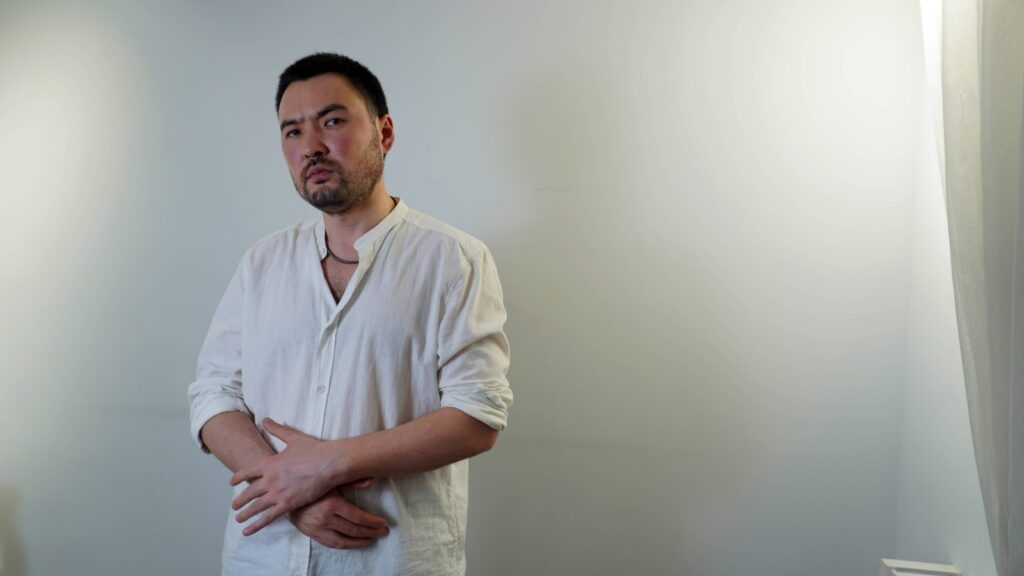
Kazakhstan's film industry is attracting more and more attention globally, and many talented actors are contributing to its development. One such theater and film actor is Abay Kazbayev, who agreed to share his experience and vision of the industry.   How did you start in the industry?   I have no specialized education, but I’m constantly learning. I started to explore a career path as an actor at the age of 33, after trying my hand in many different fields.  I’m now actively engaged in developing my range, from plasticity to internal monologue. To date, I’ve worked on series such as Shahristan, Upperty, and Shabashniki. Shooting the latter, I had to shave my head for the role, which looked strange. In general, I like to experiment on the image. It’s interesting to observe the change of type. I also worked on two theater projects, on one of which I was lucky enough to work with Saulius Varnas, a European theater director. He staged the play, A House in the Middle of Spring, based on Eugene Ionesco's script, Hunger and Thirst. On this project, I worked with such professionals as Marat Amiraev, Altynshash Shayakhmetova, Sharim Dostay, and others. In my second theater project, I had the lead role, but, unfortunately, we managed to stage just one private performance. (Shakhrisatn is a Kazakh detective thriller from 2023; Marat Amiraev is a famous Kazakh actor who starred in such series as 5:32 and Prisoners; Altynshash Shayakhmetova is a Kazakh actress who starred in such series as Boztorgai and Bir Toksan.)   How do you perceive the evolution of Kazakhstan's cinematography over the past decades? What key changes have taken place, in your opinion?   It is difficult to talk about decades, as ten years ago, I was in a completely different sphere. But I can say that coming to the movie theater I can now watch one or two of our domestic films, which certainly pleases me. Ten or twenty years ago, the release of a Kazakhstani film in theaters was something of an event, but it’s now become the norm. Many people criticize our movies for being limited to comedies and crime dramas but I for one, greatly enjoy movies such as Business in the Kazakh Way. It is still too early to talk about (local movies) as an industry, since to my mind, it doesn’t exist as such. Having said that, we have plenty of people engaged in creating movies: directors, producers, actors, - actors turned directors, actors turned producers, and vice versa. A highlight for me, was the movie Nomad. Released about twenty years ago, it ignited the dreams of many aspiring artists many of whom have since made a name for themselves, including Sanjar Madi, who starred in many of its scenes. Other key events include Akan Satayev's The Racketeer which came out a few years after Nomad, followed by Farhat Sharipov's The Tale of the Pink Hare. Both provided a wave of new faces and young blood to...