• KGS/USD = 0.01144 0%
  • KZT/USD = 0.00212 0%
  • TJS/USD = 0.10549 -0.28%
  • UZS/USD = 0.00008 0%
  • TMT/USD = 0.28530 0%
  • KGS/USD = 0.01144 0%
  • KZT/USD = 0.00212 0%
  • TJS/USD = 0.10549 -0.28%
  • UZS/USD = 0.00008 0%
  • TMT/USD = 0.28530 0%
  • KGS/USD = 0.01144 0%
  • KZT/USD = 0.00212 0%
  • TJS/USD = 0.10549 -0.28%
  • UZS/USD = 0.00008 0%
  • TMT/USD = 0.28530 0%
  • KGS/USD = 0.01144 0%
  • KZT/USD = 0.00212 0%
  • TJS/USD = 0.10549 -0.28%
  • UZS/USD = 0.00008 0%
  • TMT/USD = 0.28530 0%
  • KGS/USD = 0.01144 0%
  • KZT/USD = 0.00212 0%
  • TJS/USD = 0.10549 -0.28%
  • UZS/USD = 0.00008 0%
  • TMT/USD = 0.28530 0%
  • KGS/USD = 0.01144 0%
  • KZT/USD = 0.00212 0%
  • TJS/USD = 0.10549 -0.28%
  • UZS/USD = 0.00008 0%
  • TMT/USD = 0.28530 0%
  • KGS/USD = 0.01144 0%
  • KZT/USD = 0.00212 0%
  • TJS/USD = 0.10549 -0.28%
  • UZS/USD = 0.00008 0%
  • TMT/USD = 0.28530 0%
  • KGS/USD = 0.01144 0%
  • KZT/USD = 0.00212 0%
  • TJS/USD = 0.10549 -0.28%
  • UZS/USD = 0.00008 0%
  • TMT/USD = 0.28530 0%

Viewing results 679 - 684 of 1307

Silk Road Treasures: Almaty’s Mountains

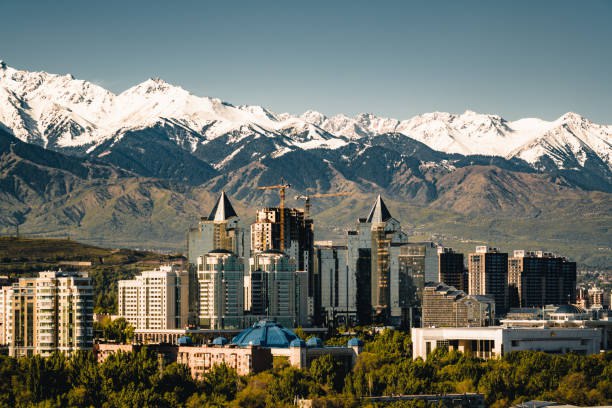
Under the banner of "Silk Road Treasures", TCA's people -journalists, editors, authors- share their personal experiences of Central Asia and her people, and by listing their favorite places, literature, films, architecture and archaeological sites, alongside encounters with customs and traditions, provide pointers for readers wishing to visit the region. Vagit Ismailov, Journalist The first thing a travelers notice when descending at Almaty International Airport are the towering snow-capped peaks of the Zailiyskiy Alatau mountains. However, alongside their majestic presence which make this city unique, the mountains harbour a constant threat which anyone who has experienced an earthquake whilst inside a high-rise building, will both well understand and fear. Almaty, capital of Kazakhstan until 1997, is one of those cities whose growth is independent of either metropolitan status or the presence of large enterprises. Now one of the most dynamic cities in the post-Soviet space and, perhaps, one of the most prosperous in Central Asia, the ever-evolving city absorbs money from other regions and boasts a wealth of amenities, high-end restaurants and cosy cafes to welcome customers day and night. Inevitably, the population continues to rise and as commented by one of Almaty's akims (mayors), every day, the number of people entering the city is equivalent to Latvia's population of over 1.5 million. As a result, the roads are constantly clogged with traffic, again showing the megacity's restless energy and the potential for further growth. Amidst the boom in development which has spurred the construction of modern residential and business complexes, the city center remains quintessentially Soviet in style, flanked by streets of  familiar communist apartment blocs from the sixties and seventies. Today's new builds reach for the sky but under the Soviet regime, high-rise construction was forbidden in Almaty. The only exception was the Kazakhstan Hotel, which standing 102 meters high, is now the city's third tallest building. Constructed in 1977, it was designed to withstand zone 9-point seismic activity, but nevertheless, its survival of several earthquakes is regarded as miraculous. [caption id="attachment_22785" align="aligncenter" width="600"] Hotel "Kazakhstan" Image: @iStock[/caption] The proximity of the mountains and unspoilt natural landscape, provide residents and tourists alike, a perfect place to relax and enjoy the great outdoors. The nearby resorts of Shymbulak and Medeo, home to  the world's largest ice rink which sits like a diamond in a box of green velvet, offer a range of winter sports facilities. Cable cars traversing deep gorges, operate all year round, aiding access to the high pastures, and panoramic views of the Tien Shan ranges, and numerous, graded hiking trails wind through passes to lakes and waterfalls. Scenery aside, visitors can experience more of what Kazakhstan has to offer by sampling local fayre in various venues and watching demonstrations of eagle hunting, and for lovers of antiquity, there are petroglyphs to be discovered, carved on red rock, and the famous Boroldai Saka Burial mounds, dating back to V-VIII BC. [caption id="attachment_22786" align="aligncenter" width="540"] Medeo. Image: @iStock[/caption] But the threat of the Zailiyskiy Alatau is ever-present. In 1887, ...
Kyrgyzstan’s First President Akayev Wants to Restore His “Former President” Status

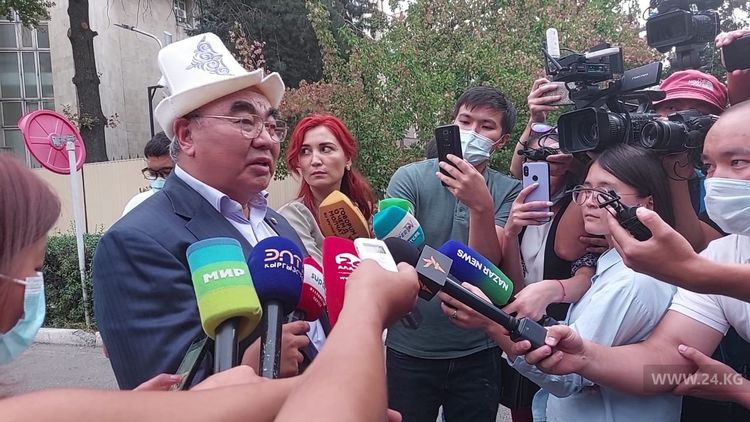
Kyrgyzstan's first president, Askar Akayev, has sent a letter to the country's parliament (Jogurku Kenesh) asking for his status as a former leader of the republic to be restored. Having served as president from 1991 until 2005, this title was removed from Akayev in 2010. According to law, the status of former president gives a citizen several social and legal guarantees. The ex-president is granted state protection on the republic's territory, a state dacha for life, and a monthly allowance equal to three-quarters of the Kyrgyz president's salary. The head of the country's parliamentary committee on constitutional legislation, Cholpon Sultanbekova, has said that Akayev's appeal had already sparked discussions in society. According to Sultanbekova, Akayev wrote a letter on July 30 to the speaker of the Jogorku Kenesh, but only now has the letter been sent to the deputies for consideration. “The issue will not be immediately put on the agenda. First, it will be considered by the factions and deputies. It will be put on the agenda only after that,” Sultanbekova said. On March 24, 2005, after the coup d'état (Tulip Revolution), Akayev fled to Moscow, fearing for his life. In 2010, after the April Revolution, when Kyrgyzstan's second president, Kurmanbek Bakiyev, was overthrown, Akayev was stripped of his presidential status by a decree of the interim government. Edil Baisalov, deputy head of Kyrgyzstan's cabinet of ministers, has commented that Akayev has ex-presidential status from a legal standpoint. “There is no doubt that Askar Akayev continues to possess the title of ex-president of the Kyrgyz Republic. If anyone wants to deprive him of this status, there should be a full impeachment procedure, which so far has only taken place against Atambayev in 2019 (the third President of Kyrgyzstan),” Baisalov wrote. Kyrgyzstan's current president, Sadyr Japarov, also spoke out about the matter. He noted that he had not discussed the issue with Akayev. “This is a matter for the parliament. How the Jogorku Kenesh will decide whether it will or will not give its consent is the legal right of the parliament. Whether to deprive the status of 'ex' or to restore it is also decided by parliament. Of course, there were many negatives during Akayev's rule. But along with that, there were positive moments in the years when the country gained independence,” the president said. Japarov said Askar Akayev could make such a request to parliament, unlike other fugitive presidents, Bakeev and Atambayev, who have criminal cases pending in Kyrgyzstan. “There were human casualties in the cases of Atambayev and Bakiyev. Therefore, I think it is wrong if the parliament restores them to the status of ex-president,” Japarov said.

Turkmenistan in World’s Top Ten for Cheap Gasoline

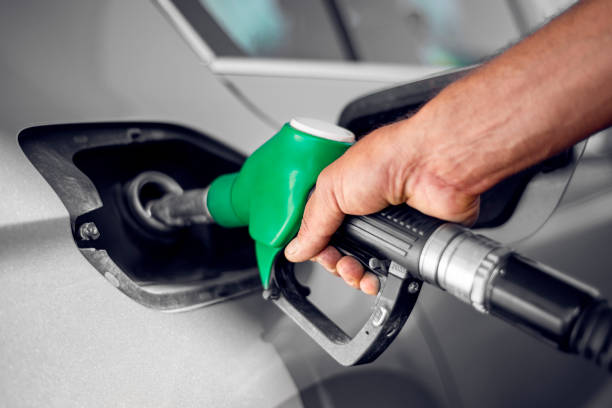
According to The Global Petrol Prices portal, the cheapest gasoline price in the world is $0.029 per liter in Iran. In addition, low prices were observed in Libya ($0.032), Venezuela ($0.035), Egypt ($0.309), Algeria, Kuwait ($0.344), Malaysia ($0.471) and Nigeria ($0.485). According to the portal, the price of one liter of gasoline, Octane-95, in Turkmenistan is $0.0429. It ranks 8th in the list of most affordable gasoline prices. The highest gasoline prices are recorded in countries such as Israel, Barbados, Singapore, Denmark, Switzerland, the Netherlands, Liechtenstein, Iceland, Monaco, and Hong Kong. The highest price is observed in Hong Kong—$3.269 per liter. Kazakhstan has the next lowest price among Central Asian countries. The country is placed 11th in the ranking for the cheapest gasoline prices. In Kazakhstan, one liter of Octane-95 gasoline costs $0.507. The price of gasoline in Kyrgyzstan, which is 30th on the list, was $0.874 per liter at the beginning of September 2024. The price of a liter of gasoline in Uzbekistan during this period was $0.986, ranking 42nd. Fuel markets in these Central Asian countries are regulated, and prices stay mostly the same. The table does not include information about the cost of gasoline in Tajikistan. The Global Petrol Prices portal has been tracking retail energy prices since 2012, including fuel prices, electricity, and natural gas prices in more than 150 countries. Neven Valev, Ph.D., an economist with extensive scientific experience, leads the team of economists.

Canadian-Manufactured Aircraft Arrives in Kyrgyzstan to Perform Domestic Flights

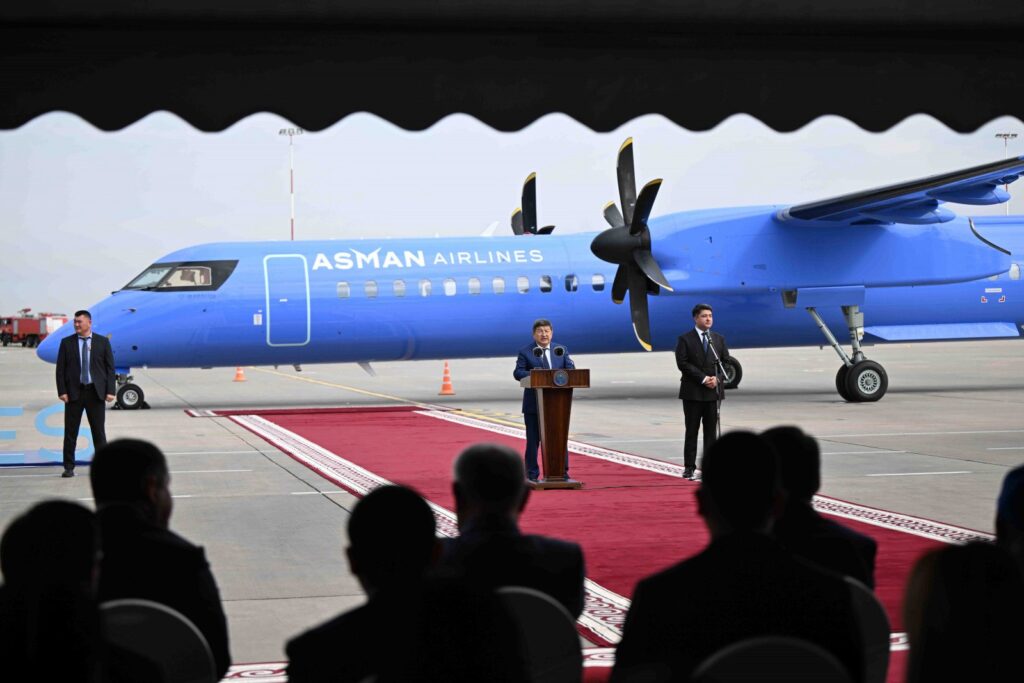
The first Bombardier Dash 8 Q400 aircraft, purchased by Kyrgyzstan’s Manas International Airport Open Joint Stock Company for its Asman Airlines, has arrived in Bishkek. The airplane, made by Canadian manufacturer De Havilland Aircraft, is a short-haul plane capable of carrying up to 80 passengers and transporting them over a distance of up to 2,000 kilometers. Manas International Airport, which runs all airports in the country, is purchasing two Bombardier Dash 8 Q-400 aircraft for the local Asman Airlines at its own expense. Another Q-400 aircraft will arrive later. Kyrgyzstan is experiencing growth in passenger traffic on both domestic and international flights. In 2023, the total passenger traffic amounted to 5.609 million passengers, an increase from 3.98 million, or 41%, in 2021. In addition, the regional airports in Karakol, Kazarman, Kerben, Talas, and Naryn have been reconstructed at the expense of Manas International Airport, allowing the launch of new domestic routes. A new international airport in the southern Jalal-Abad region is under consideration.

Uzbek Politician Calls for Ban on Soviet Symbols

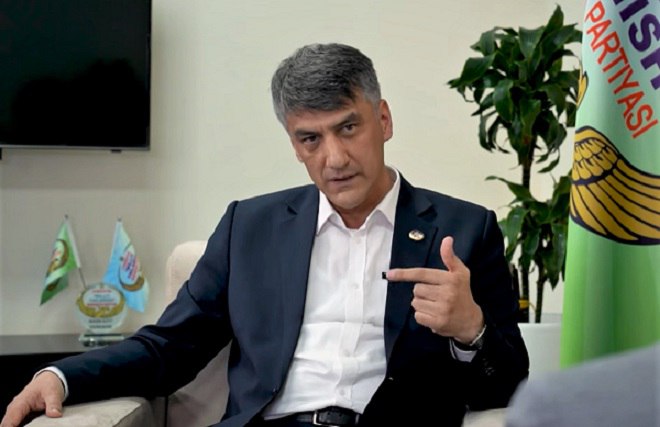
Alisher Qodirov, the deputy speaker of the legislative chamber of Uzbekistan's Parliament (Oliy Majlis) and leader of the Milliy Tiklanish (National Revival) Party, has proposed an initiative to ban the promotion of Soviet ideology and symbols in the country. The idea emerged after the high-profile case of a Samarkand pensioner who expressed a desire to restore the Soviet Union, for which he was sentenced to three years of restricted freedom under an article on encroachment on Uzbekistan's constitutional order. Qodirov supported the court's decision, noting that he considered Soviet ideology harmful and hostile to national values. In his statement, he emphasized that the Soviet regime had harmed not only Uzbekistan but the whole world, undermining the cultural and spiritual foundations of the people. He recalled the discrimination suffered by the Uzbek people during the Soviet period and emphasized the need to analyze this period. He stands firmly against its justification and promotion. “The Uzbek people were discriminated against and humiliated by the Soviet authorities and are still healing the wounds of the past. The Soviet ideology, which rejected nations, values, and faith, harmed not only our people but also the entire humanity, and these phenomena continue to be a misfortune,” Qodirov said. The politician also called the promotion of Soviet ideas a crime against the constitutional order and a betrayal of the people and ancestors who were victims of the regime. Qodirov has repeatedly spoken out against symbols relating to the USSR. In May 2021, he called the raising of the red flag at a concert in Tashkent a provocation and an insult to the people, explaining that the symbol of the Soviet occupier state was soaked in the blood of Uzbek intellectuals who had been repressed by the regime.

Kashagan LPG to Fuel Kazakhstan’s Domestic Market

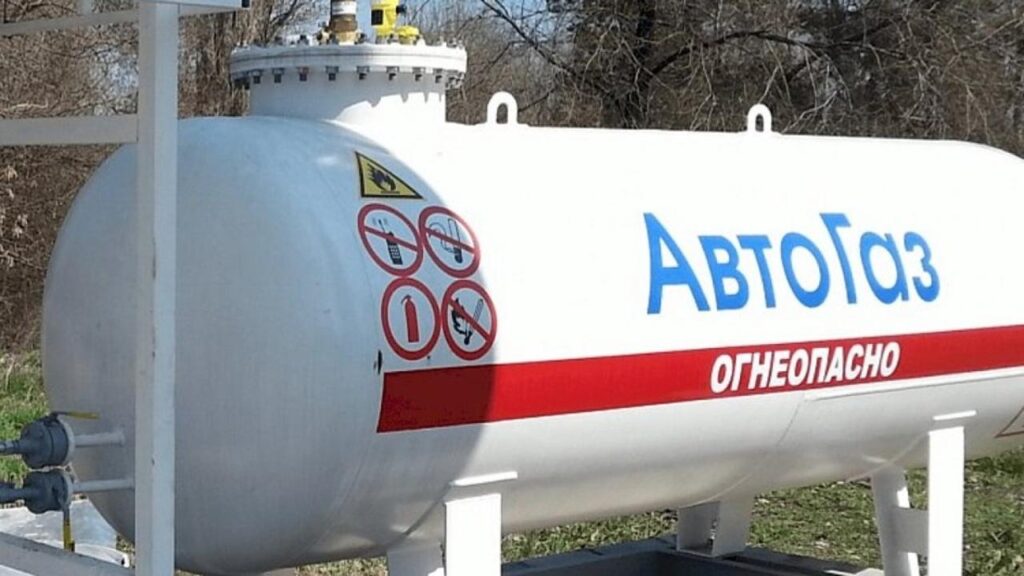
The Ministry of Energy of Kazakhstan announced on September 4 that following the negotiations between the partners of the North Caspian Project and Kazakhstan’s national gas company QazaqGaz, with the participation of the Ministry of Energy of Kazakhstan, an agreement had been signed regarding the sale and purchase of liquefied petroleum gas (LPG) from Kazakhstan’s Kashagan oil field. The North Caspian Project was developed under the North Caspian Sea Production Sharing Agreement signed in 1997, by Kazakhstan and an international consortium including KazMunayGas (16.88%), Eni (16.81%), Shell (16.81%), ExxonMobil (16.81%), TotalEnergies (16.81%), CNPC (8.33%), and INPEX Ltd (7.56%). The move comes amid the increasingly high demand for LPG, which cheaper than gasoline, is the most popular and economical fuel amongst Kazakhstan's vehicle owners. According to the agreement, supplies of LPG from Kashagan will be released at the end of 2025 and by 2027, on completion of work on the infrastructure, reach over 700,000 tons per year. The Ministry of Energy believes that supplies from Kashagan will help reduce the chronic shortage of LPG in Kazakhstan, and positively impact the socio-economic situation in the country's regions. As recently reported  by The Times of Central Asia, supplies have long failed to meet demand. In July, Kazakhstan’s Minister of Energy, Almasadam Satkaliyev, stated that in 2023, Kazakhstan had 582,000 motor vehicles running on LPG, an 18% increase compared to 2022 (491,000), resulting in a rise in consumption by 400,000 tons, or 28%. Last year, LPG consumption volumes amounted to 2.2 million tons compared to 1.8 million in 2022, and according to analysts, may increase this year by a further 200 thousand tons and reach 2.4 million annually. According to the Minister, Kazakhstan produced 1.6 million tons of LPG in 2023 and plans the same volume for 2024.