• KGS/USD = 0.01144 0%
  • KZT/USD = 0.00216 0%
  • TJS/USD = 0.10456 0%
  • UZS/USD = 0.00008 0%
  • TMT/USD = 0.28571 0%
  • KGS/USD = 0.01144 0%
  • KZT/USD = 0.00216 0%
  • TJS/USD = 0.10456 0%
  • UZS/USD = 0.00008 0%
  • TMT/USD = 0.28571 0%
  • KGS/USD = 0.01144 0%
  • KZT/USD = 0.00216 0%
  • TJS/USD = 0.10456 0%
  • UZS/USD = 0.00008 0%
  • TMT/USD = 0.28571 0%
  • KGS/USD = 0.01144 0%
  • KZT/USD = 0.00216 0%
  • TJS/USD = 0.10456 0%
  • UZS/USD = 0.00008 0%
  • TMT/USD = 0.28571 0%
  • KGS/USD = 0.01144 0%
  • KZT/USD = 0.00216 0%
  • TJS/USD = 0.10456 0%
  • UZS/USD = 0.00008 0%
  • TMT/USD = 0.28571 0%
  • KGS/USD = 0.01144 0%
  • KZT/USD = 0.00216 0%
  • TJS/USD = 0.10456 0%
  • UZS/USD = 0.00008 0%
  • TMT/USD = 0.28571 0%
  • KGS/USD = 0.01144 0%
  • KZT/USD = 0.00216 0%
  • TJS/USD = 0.10456 0%
  • UZS/USD = 0.00008 0%
  • TMT/USD = 0.28571 0%
  • KGS/USD = 0.01144 0%
  • KZT/USD = 0.00216 0%
  • TJS/USD = 0.10456 0%
  • UZS/USD = 0.00008 0%
  • TMT/USD = 0.28571 0%

Viewing results 187 - 192 of 1504

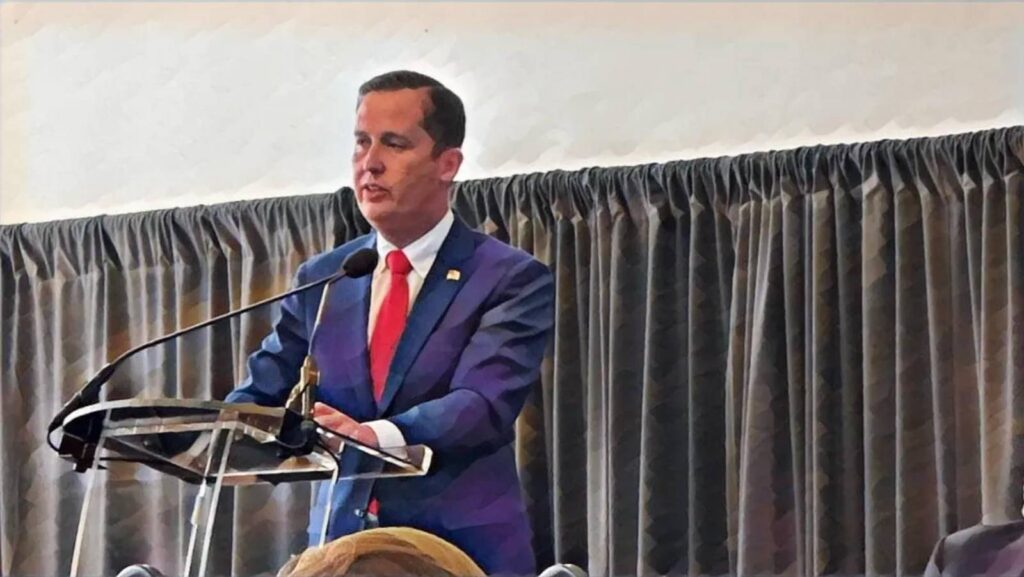
The Deal Zone: U.S. Secretary of Commerce Howard Lutnick Unveils Economic Agreements with Central Asia at C5+1 Summit

WASHINGTON, D.C. — November 2025 — The United States and Central Asian nations announced a record series of trade and investment agreements at the 10th-anniversary C5+1 Summit, signaling a new phase of cooperation in energy, infrastructure, technology, and artificial intelligence. The high-profile event at the Department of Commerce brought together ministers, ambassadors, and business leaders from across the region. Secretary of Commerce Howard Lutnick said the initiatives reflect Washington’s renewed commitment to long-term regional growth and partnership. “We’re advancing a clear strategy, which is reciprocal trade and strategic investment … the Department of Commerce is helping America and Central Asian firms connect, invest and grow together.” On digital investment, Lutnick said: “If you want to invest in digital, you know, America is going to be open for business. We are open for our great allies to be able to buy our best chips and have them in country, which is a complete change from the prior Biden administration. So if the country has the proper set of digital laws, we will then encourage our great companies to invest digitally in the C5+1 and grow digitally there.” He also described the C5+1 as central to U.S. engagement: “The C5+1 platform is a cornerstone of that strategy" and "We’re proud to see your new initiatives taking shape for energy diversification, logistics modernization, [and] emerging partnerships across the trans Caspian corridor.” The event then moved into the “Deal Zone,” where close to twenty agreements across the region were announced. The Times of Central Asia attended the ceremony and reports below the deals as they were introduced on stage. “These are not abstract projects. They are real investments, creating real jobs, extending connectivity and strengthening resilience from the Caspian all the way to California.” The deals, as announced in sequence during the session, are listed below.   Kazakhstan: Boeing with Air Astana Airlines — Purchase of up to 15 Boeing 787 Dreamliners, opening new North American routes representing Air Astana’s historical largest order. Cove Capital with the Government of Kazkhstan — $1 billion investment to develop the largest known untapped tungsten deposit in the world valued at more than $80 billion. Leidos with KazAero — Modernization of national air-traffic-control systems using Skyline X ATMS technology as well as to facilitate the deployment, testing and training of staff of all their air traffic control centers. John Deere and the Government of Kazakhstan — $3–5 billion agricultural-equipment agreement. 60% involves tractors and seeding equipment manufactured in Iowa, Illinois, and North Dakota. Citigroup with KTZ Locomotives + U.S. EXIM Bank — $1.6 billion export-credit financing for locomotive procurement. This was a follow up to the agreement signed at the recent United National General Assembly meeting, the largest ever locomotive deal in the history of the world. Colorado School of Mines, Education Testing Service, Arizona State University with the Kazakhstan Ministry of Science and Higher Education — Supporting the establishment of a university. The project will substantially contribute to the development of professional engineers and geoscientists with critical...

C5+1: Diplomats and Executives Define Investment Path

Before the historic White House meetings on November 6 between President Trump and the five Central Asian presidents, U.S. and regional diplomats and business leaders met at the Kennedy Center on the occasion of the C5+1 Business Forum, hosted by the U.S. Department of State, to launch a new chapter of cooperation, with a focus on strengthening commercial and investment ties in energy, finance, and manufacturing. Deputy Secretary of State Christopher Landau, who moderated the panel discussion, said economic engagement is returning to the center of U.S. foreign policy. “The purpose of foreign policy is to increase the prosperity of the American people by finding opportunities for mutually beneficial economic and commercial interchange,” he said. Executives from Chevron, Citi, Freedom Holding, and Uzbekistan’s UzAvtosanoat described how decades of partnership  had demonstrated the wisdom of making strategic investments in the region. These partnerships continue to reshape  the economic and financial landscape for the better.  Participants highlighted Central Asia’s economic stability, solid reserves, and consistent policies, and were confident in faster growth to be driven by increased capital flows and by regional projects like Kazakhstan’s Tengiz oil expansion. Both sides promised to translate diplomacy into dealmaking. Landau further noted that under President Trump and Secretary of State Marco Rubio, the State Department has elevated commercial diplomacy to a core mission. He stressed that mutual respect, win-win agreements, and consistent engagement are key to driving results. Central Asians have waited decades for this: action, not talk. Two-way trade and investment are now front and center. Chevron Points to Long-Term Energy Investment Chevron Corp. Chief Executive Mike Wirth said the company’s 30-year presence in Kazakhstan remains one of its largest international operations. Chevron was the first major U.S. investor to enter the country after independence and is now the biggest foreign investor. The US$ 48 billion Future Growth Project at Kazakhstan’s Tengiz oilfield, co-managed by Chevron and 50%-partner Tengizchevroil LLP, is up and running with expansion underway. “Our history is really founded on relationships and trust,” Wirth said. “The most enduring aspect of it (our work) is the respect and love that our American employees have for the culture and people of Kazakhstan.” He said more than 500 Kazakh employees have trained in Chevron operations worldwide, many of whom now hold senior roles in government and industry. Citi Expands Access to Global Capital Citi’s Managing Director Stephanie von Friedeburg outlined the bank’s activities in Central Asia, where it began operations more than three decades ago. Citi now serves about 800 corporate clients across the region, supporting private companies, governments and state-owned enterprises with strategic planning, capital issuance, and risk management services. The bank has arranged Eurobond sales for the Kyrgyz Republic and Tajikistan and handled more than US$40 billion in fundraising for Kazakhstan since 2014. In Uzbekistan, Citi has supported 19 capital-market transactions and advised the government on improving its credit rating. “We help countries understand how rating agencies look at them (and) how to improve their ratings,” von Friedeburg said. “That allows them...

Tensions Simmer Between Pakistan and Afghanistan, in Setback for Central Asian Trade Hopes

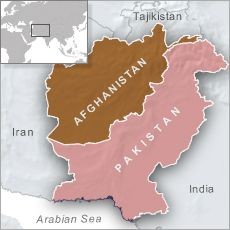
A round of peace talks between Pakistan and Afghanistan in Istanbul came under strain after another clash between the two countries along their border. A resolution to the conflict is important to Central Asian countries that want to trade south through Afghanistan and onward to Pakistani seaports that open the way to the Indian Ocean. Pakistan’s government and the ruling Taliban in Afghanistan accused each other of instigating the latest confrontation on Thursday, though they still expressed commitment to a delicate ceasefire that was agreed to last month. Dozens of people were killed and cross-border trade was suspended during the fighting in October.   According to the Taliban’s account, Pakistani forces fired on the Afghan border town of Spin Boldak as the talks in Turkey began on Thursday.   Afghan forces, “out of respect for the negotiation team and to prevent civilian casualties, have so far shown no reaction. It is worth noting that in the previous round of negotiations, both sides had agreed to extend the ceasefire and prevent any acts of aggression,” Taliban spokesman Zabihullah Mujahid said on X.  Pakistan’s Ministry of Information and Broadcasting, however, said firing started from the Afghan side and that Pakistan forces responded.  “The situation was brought under control due to responsible action by Pakistani forces and the ceasefire remains intact. Pakistan remains committed to ongoing dialogue and expects reciprocity from Afghan authorities,” the ministry said. Turkey, which along with Qatar is mediating, said ahead of the talks this week that the two sides had agreed to continue the ceasefire and establish “a monitoring and verification mechanism” to ensure peace and impose penalties for any violations. But Pakistani Information Minister Attaullah Tarar, while thanking the mediators, said late Friday that Afghanistan had failed to control terrorism, indicating that the talks in Istanbul had not overcome major sticking points.   A key dispute is over Pakistani allegations that militants have used Afghan territory as a sanctuary while carrying out attacks against targets in Pakistan. The Taliban in Afghanistan denies those allegations. Additionally, Afghanistan doesn’t recognize its porous, 2,600-kilometer border with Pakistan, saying it’s a British colonial-era construct that divided the ethnic Pashtun populations that have traditionally dominated Afghanistan.  These complexities pose a challenge for landlocked countries in Central Asia that are looking to diversity their trade routes. Several Central Asia-South Asia projects in the works – the Trans-Afghan Railway, the TAPI natural gas pipeline and the CASA-1000 electricity project - have a long way to go before completion.  Meanwhile, the post-Soviet states of Kazakhstan, Kyrgyzstan, Uzbekistan, Turkmenistan and Tajikistan are working on other trade and investment opportunities. Their leaders held a summit with U.S. President Donald Trump in Washington on Thursday, building ties with the West even as they nurture more established contacts with Russia and China.  

Daines, Gor, Meredov Launch C5+1 Talks on Next-Gen U.S.–Central Asia Ties

Washington, D.C. — The United States and the five nations of Central Asia – Kazakhstan, Kyrgyzstan, Tajikistan, Turkmenistan and Uzbekistan – marked a decade of partnership on Thursday with an opening panel at the C5+1 Tenth Anniversary Business Conference hosted by the U.S. Department of State. U.S. Senator Steve Daines (Montana), Sergio Gor, the newly appointed U.S. Special Envoy for South and Central Asia and Ambassador to India and Rashid Meredov, Turkmenistan’s Foreign Minister kicked things off with a bold forward-looking vision centered on deeper economic cooperation, net two-way investment flows, and a bolstered U.S. commitment to the region. Held at the Kennedy Center’s REACH campus, the session brought together senior U.S. officials, and Central Asian leaders and private sector companies to deepen a decade of growing cooperation, building on Trump’s transactional approach and first term achievements. Celebrating a Decade of Cooperation U.S. Senator Steve Daines, who moderated the session, not only praised the C5+1 platform’s record of achievements since 2015 but went further. He called the anniversary “a momentous occasion for our nations” to move forward in friendship and a sense of pragmatism, anchored in growing commerce, new investments, cultural exchange, and security cooperation. Daines emphasized that relations with the C5 countries are “vitally important for our national security and prosperity,” adding that the event aimed to pave the way for stronger, results-driven partnerships. Turning to the next speaker, Ambassador Sergio Gor, Daines offered unusually personal remarks, describing him as “truly one of the closest confidants of President Trump.” He noted that “Mr. Gor’s nomination demonstrates President Trump and his administration’s commitment to fostering closer ties between all of our nations.” Daines expressed eagerness to work with  “Sergio and the rest of President Trump’s team” to build upon the successes of previous US-Central Asian relations. U.S. Envoy Stresses Renewed Engagement In his address, Ambassador Sergio Gor,  underscored the administration’s renewed commitment to the region. He recounted that he and Deputy Secretary of State Christopher Landau had visited Kazakhstan and Uzbekistan just last week, praising the hospitality and partnership shown by both governments. Gor extended his appreciation to Kazakhstan, which he noted had “recently become a sponsor of the Kennedy Center,” and thanked Ambassador Richard Grenell for hosting the forum. Gor emphasized that “this President is making this partnership a top priority,” adding that the focus on the five Central Asian nations “is something that has been ignored in past administrations.” According to Gor, President Trump “has made a commitment and has instructed every individual here within the U.S. government to make sure [Central Asia] gets the priority that it deserves.” He emphasized the need to ramp up energy cooperation, open new trade avenues, and secure supply chains for critical minerals. “We are committed to further developing Central Asia’s vast mineral wealth and advancing critical-mineral security,” Gor underscoring C5+1’s shift from dialogue to deliverables and mutual cooperation. He also previewed the White House leaders’ meeting and dinner scheduled for later in the day, noting that several “historic deals” in commerce...

Coal Mine Explosion in Tajikistan Kills Six Afghan Workers

Six Afghan workers have been killed in a coal mine explosion in Tajikistan’s Sughd region, according to local sources cited by Tasnim News Agency. The blast occurred in the Ayni district, where all six victims were reportedly working underground at the time. Rescue operations are still underway, and the bodies have yet to be recovered. Sources say five of the deceased were from Afghanistan’s Daikundi province and one from Lal wa Sarjangal district in Ghor province. Tajik authorities have not yet released the official identities of the victims. Earlier this year, a similar incident occurred in another Sughd coal mine, where eight Afghan miners, also from Daikundi, lost their lives, according to Etilaatroz. Local residents and mine workers report that such tragedies are becoming increasingly frequent due to unsafe working conditions, lack of protective equipment, and minimal regulatory oversight. Hundreds of Afghan nationals work in Tajikistan’s coal mines, often in hazardous and unregulated conditions. “We are not allowed to complain or talk to the media. If we do, we risk being fined or deported,” one Afghan worker told a local news outlet. Many report being employed without formal contracts, with employers failing to provide adequate workplace safety measures. Experts note that widespread unemployment and economic hardship in Afghanistan have driven many young men to seek employment abroad, particularly in Central Asia. Jobs in mining, construction, and seasonal agriculture remain common, but often come without legal protections or health insurance. Local observers estimate that more than 14 Afghan workers died in coal mine accidents in Tajikistan in 2024 alone. This latest incident comes just days after northern Afghanistan was struck by a 6.3-magnitude earthquake that killed at least 27 people and injured nearly 1,000 others.

New Projects, Evolving Trade: Recent News from Tajikistan That You Might Have Missed

Recent weeks in Tajikistan have seen new investment deals, changing trade dynamics, and interesting social developments. Here are some stories that you may have missed. Energy investments pledged at Dushanbe Invest-2025 The Dushanbe Invest-2025 Forum resulted in 26 agreements worth roughly US $3.1 billion across the energy, manufacturing, and telecommunications sectors. Energy projects accounted for nearly US $2.4 billion of that total, reflecting Dushanbe’s aims to position itself as a hydropower hub for Central Asia. Officials also promoted “green investment” and developments in AI, while President Emomali Rahmon met with Qatar’s minister for foreign trade to discuss economic cooperation. These moves signal a drive to attract sustainable finance, and diversify an economy that is still reliant on remittances from Tajik guest workers in Russia. Growing trade with Iran and Uzbekistan Regional trade expanded significantly in October. Tajikistan and Iran reaffirmed their intention to expand industrial and trade cooperation, with mutual turnover nearing $380 million in 2024 and a target to surpass $500 million in the near future. Agreements include joint ventures in mining, agriculture, and pharmaceuticals. At the same time, trade between Tajikistan and Uzbekistan reached over $70o million in 2024 -- an almost three-fold increase from recent years. The governments of the neighboring countries are now exploring logistics corridors and simplified customs rules to further integrate their economies. Tourism boom: International visitors up by a quarter With increased government support, tourism has become one of Tajikistan’s most promising growth sectors. During the first nine months of 2025, the country received nearly 1.4 million foreign visitors -- a 24 percent increase compared with previous years. The influx of tourists is driven by new simplified visa rules, social media campaigns, and improved domestic air routes. Adventure travel in the Pamir Mountains and cultural tourism in ancient cities such as Khujand and Istaravshan are leading this wave. Sharp decline in UK trade New figures show that trade between Tajikistan and the United Kingdom fell by almost 39 percent in the four quarters ending Q2 2025, totaling just £22 million. Imports from the UK dropped 32 percent, while exports from Tajikistan plunged 62.5 percent, according to the UK trade factsheet. Landmark border agreement ratified In late October, Uzbekistan’s parliament approved a trilateral border-junction agreement with Tajikistan and Kyrgyzstan, resolving a long-standing territorial issue. The agreement should ease cross-border trade and transportation, reduce tensions in remote areas, and open the door to regional infrastructure projects linking the three countries. For Tajikistan, which has some of Central Asia’s most complex borders, the agreement represents a diplomatic milestone that could translate into tangible economic gains. Looking ahead The last month’s events highlight that Tajikistan is cautiously re-entering international dialogue in Central Asia and beyond. Tajikistan’s leadership is using investment forums, tourism, and pragmatic diplomacy to stabilize and diversify the economy. Yet challenges remain, chiefly the country's heavy economic dependence on remittances, vulnerability to climate-related shocks, and limited industrial capacity.