• KGS/USD = 0.01143 0%
  • KZT/USD = 0.00202 0%
  • TJS/USD = 0.10599 -0.19%
  • UZS/USD = 0.00008 0%
  • TMT/USD = 0.28575 0%
  • KGS/USD = 0.01143 0%
  • KZT/USD = 0.00202 0%
  • TJS/USD = 0.10599 -0.19%
  • UZS/USD = 0.00008 0%
  • TMT/USD = 0.28575 0%
  • KGS/USD = 0.01143 0%
  • KZT/USD = 0.00202 0%
  • TJS/USD = 0.10599 -0.19%
  • UZS/USD = 0.00008 0%
  • TMT/USD = 0.28575 0%
  • KGS/USD = 0.01143 0%
  • KZT/USD = 0.00202 0%
  • TJS/USD = 0.10599 -0.19%
  • UZS/USD = 0.00008 0%
  • TMT/USD = 0.28575 0%
  • KGS/USD = 0.01143 0%
  • KZT/USD = 0.00202 0%
  • TJS/USD = 0.10599 -0.19%
  • UZS/USD = 0.00008 0%
  • TMT/USD = 0.28575 0%
  • KGS/USD = 0.01143 0%
  • KZT/USD = 0.00202 0%
  • TJS/USD = 0.10599 -0.19%
  • UZS/USD = 0.00008 0%
  • TMT/USD = 0.28575 0%
  • KGS/USD = 0.01143 0%
  • KZT/USD = 0.00202 0%
  • TJS/USD = 0.10599 -0.19%
  • UZS/USD = 0.00008 0%
  • TMT/USD = 0.28575 0%
  • KGS/USD = 0.01143 0%
  • KZT/USD = 0.00202 0%
  • TJS/USD = 0.10599 -0.19%
  • UZS/USD = 0.00008 0%
  • TMT/USD = 0.28575 0%
15 February 2026

Viewing results 205 - 210 of 354

In Unequal Relationship, Trade Turnover Between Tajikistan and Russia Increases

From January to April 2024, Russia retained the status of Tajikistan's leading trade partner, with trade between the countries increasing by 24.2% compared to the same period last year and reaching $636.8 million, according to the Statistics Agency under the President of Tajikistan. Symptomatic of the deeply unequal relationship is that during this period, Tajikistan bought Russian goods worth $600.7 million, while the Russian Federation only bought $36.1 million from Tajikistan. According to the Statistics Agency, Tajikistan's other top trading partners are China (+19.7%, up to $548.7 million), and Kazakhstan ($441.6 million). From January to April, Tajikistan's total foreign trade volume exceeded $2.7 billion, an increase of 28.7% compared to last year.

Kyrgyzstan Plans to Export Electricity to Pakistan Next Year

Kyrgyzstan's energy ministry has presented a project to develop the country's National Energy Program until 2035. As part of this project, both Kyrgyzstan and Tajikistan will export electricity to Pakistan next year. The CASA-1000 (Central Asia - South Asia) program plans to supply electricity to Afghanistan and Pakistan. The Kyrgyz side forecasts that around 1.25 billion kilowatt-hours of summertime electricity will be exported to South Asia in 2025. In summer Kyrgyzstan's reservoirs are full, and hydroelectric power plants produce a lot of electricity, which has nowhere to go -- unlike in winter, when there is an electricity shortage in the country. At the same time, officials plan to increase electricity production and exports yearly. In 2026 supplies are expected to grow to 1.7 billion kWh. Electricity exports starting from 2028 will average 1.75 billion kWh. At the beginning of this year Kyrgyzstan signed a joint declaration with Pakistan and Tajikistan to resume the CASA-1000 project. It began constructing high-voltage power lines near the border with Tajikistan, after construction had been halted due to the border conflict between Bishkek and Dushanbe. Power lines were also resumed in Afghanistan, where construction was also stopped after the Taliban came to power.

AIIB Forwards Construction of Strategic Bridge in Tajikistan

The Asian Infrastructure Investment Bank (AIIB) has approved a loan equivalent to US $75.5 million to Tajikistan for the construction of a 920-meter-long bridge and approach routes on the Obigarm-Nurobod section of M41 International Highway. The bridge is the first of such magnitude in Tajikistan and a critical component of the county’s road network. Linking Corridors 2, 3 and 5 of the Central Asia Regional Economic Cooperation Program, it will provide essential connections between Tajikistan’s landlocked terrain and neighbouring regional markets. Designed to withstand all weathers, the bridge will connect over 350,000 residents of the northeast region of Tajikistan to the capital Dushanbe, as well as the border of Kyrgyzstan. To align with Tajikistan’s National Development Strategy, the government has prioritized its timely completion and construction of the 75-kilometer Obigarm-Nurobod section has been divided into three phases to ensure synchronized implementation. Illustrative of a collaborative approach to advancing sustainable development and enhancing connectivity in Tajikistan, AIIB has fostered close coordination with other financiers, including the Asian Development Bank, OPEC Fund for International Development and European Bank for Reconstruction and Development. Lauding the initiative, Konstantin Limitovskiy, AIIB’s Vice President for Investment Operations in Region 2, commented: “The project aligns with two core thematic priorities of AIIB. First, it contributes to cross-border connectivity by establishing vital cross-border links with improved road safety along Tajikistan's essential corridor and ensuring connectivity between regions. Secondly, it embraces green-finance principles by integrating environmentally and socially responsible practices and promoting resilient sustainable mechanisms in the road infrastructure development.”    

Mining Output Grows in Tajikistan

Mining output in Tajikistan has grown by more than 18% over the past year. Enterprises in the mining and precious metals industry for the first four months of 2024 produced quantities worth 4.3 billion somonis ($398.6 million), which is 667 million somonis ($61.7 million) or almost 19% more than the same period in 2023, Sputnik has reported. According to Muhammadvalishokh Makshulov, a spokesman from the ministry of industry and new technologies, the demand depends primarily on increasing enterprises' capacity and creating new directions in their work. According to the ministry, last year the company Zarafshon launched a metallurgical plant to produce metallic copper, built on the most modern technologies in the world, thanks to the acquisition of more than $119 million. Also, on 5 July 2023, the enrichment plant of TVEA Dushanbe Mining Industry LLC, with a capacity of processing 900,000 tons of ore per year in the Ayni district of the Sughd region, started operating. This company started production at two mines: Kumargi Bolo and Duobai Sharqi. The first mine is located at an altitude of almost 4,000 meters, and the second is at 2,300 meters. Last year, with the attraction of $43 million in foreign capital, construction began on the second stage of a metallurgical plant to produce lead, silver, and copper for the Tajik-Chinese mining and industrial company. Currently 21 companies are engaged in the mining and processing of minerals and precious metals in Tajikistan, seven of which are active due to Chinese investments. About 12,500 people work in the business of mining and processing minerals and precious metals. Of these, 11,500 are Tajik citizens, and the rest are Chinese.

Ten Thousand Hectares of Land in Tajikistan Left Without Water

Asia-Plus reports that more than 10,000 hectares of irrigated land in Tajikistan's Khatlon region have not been irrigated due to the failure of pumping stations. Almost 900 hectares of irrigated land have fallen out of agricultural use. This situation was criticized by the country's president, Emomali Rahmon, at a meeting with leaders and civic figures from Khatlon region on May 25 . At the meeting in Dangara district Rahmon said: “We must increase the production of agriculture and agricultural products year by year, supply the consumer market of our country with food products at any time of the year, and constantly reduce the dependence of our country’s economy on the import of food products.” He also called on agriculture workers to fill the domestic consumer market with the most necessary goods, organizing its adequate backup, preventing unjustified price increases, establishing continuous operation of all sectors of the national economy, leaders, and responsible persons to approach with serious attitude and high responsibility. According to Rahmon, 18 pumping stations are not working in the Khatlon region, which has led to the dehydration of more than 5,000 hectares of land.

The Geography of Labor: Where Do Central Asian Migrants Travel To?

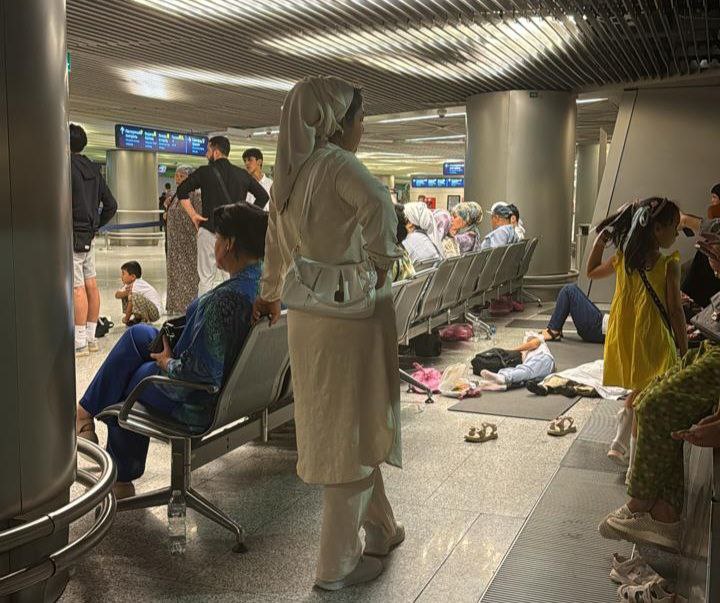
Since February 2022, international observers have been predicting changes in labor migration in Central Asia. It is no secret that for 30 years Russia was the main attraction for labor resources in the region, and in the "noughties," Kazakhstan joined as a viable alternative. Over the past two years, the geography of labor migration from Central Asia has expanded somewhat, but still not to the extent that one could say that the region is slipping away from Moscow's economic influence. In Russia itself, despite growing anti-migrant sentiment after the terrorist attack at the Crocus City concert hall, the country's leadership has no intention of refusing to accept migrants from Central Asia. The current phase of Russia's economic development requires a constant inflow of labor resources, so Moscow is even talking about expanding the geography of sources of labor on an industrial scale, particularly to African countries. However, the movement of labor resources from Central Asia to the outside world is a process that benefits both the countries of origin of migrants and those who receive them. The region's countries shed their excess population, thus avoiding possible social explosions, while the receiving countries get workers willing to do low-paid and low-skilled labor. This is true for three of the five Central Asian countries. We do not consider Turkmenistan -- a republic closed to the outside world -- but labor migration from Kazakhstan is more like a "brain drain," which puts it on a par with Russia, which is experiencing similar problems. In the Central Asian republics, the topic of labor migration is still victimized, and the pejorative term "gastarbeiters" remains in common use. Thus, research on these processes is not permanent, which makes it difficult to work with statistical data. And since the largest receiving country is Russia, where chaos reigns regarding labor migration, we can only operate with approximate data. Uzbekistan Let us start with Uzbekistan, the most populous republic in Central Asia. Uzbekistan does not have the same opportunities as Kazakhstan with mineral resources, primarily oil. In Uzbekistan, the rate of labor migration abroad remains the fastest; only the pandemic has been able to affect it. Before the pandemic, in 2019, according to official data, more than 2.5 million Uzbek citizens were listed as labor migrants. In 2021, this number dropped to 1.67 million people, but now, the number of those who left for work has recovered. The main labor migration flows come from Russia - 71%, Kazakhstan - 12%, South Korea - 4% and Turkey - 3%. In the first quarter of 2024, cross-border remittances to Uzbekistan increased from $2.3 billion to $2.5 billion. Russia's share dropped to 68% (78-87% in previous years). Kyrgyzstan Russia, Turkey, and Kazakhstan are also the main destinations for migrants from Kyrgyzstan. South Korea and the UK have been added to the list recently. According to open-source data, in 2022, 1.2 million labor migrants from Kyrgyzstan were registered in Russia, with about 30,000 in Turkey and Kazakhstan. In Kyrgyzstan, labor migration has become important...