Viewing results 199 - 204 of 435
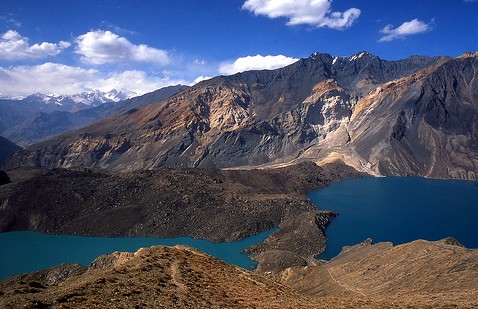
On August 3, a Tajik-Uzbek working group on the shared use of water from Central Asia's transboundary rivers met in Dushanbe. Participants discussed the potential for using the water from Lake Sarez, in the Tajik National Park in the east of the country, to provide Central Asian countries with clean drinking water. Other potential joint projects between Tajikistan and Uzbekistan in the field of water management were also considered. In 2018, the presidents of Tajikistan and Uzbekistan, Emomali Rahmon and Shavkat Mirziyoyev, first discussed using the Sarez freshwater as drinking water, during a visit by Rahmon to Uzbekistan. The nations subsequently commissioned a feasibility study from the Intergovernmental Joint Commission on Trade and Economic Cooperation. Rahmon has repeatedly emphasized that Tajikistan has ample freshwater resources, and has previously used speeches at political forums to suggest using the Sarez mountain lake to provide Central Asian countries with drinking water. The Tajik government has also offered to supply drinking water from Sarez to Iran, Jordan, and the United Arab Emirates. The Times of Central Asia has previously written that Central Asia will face severe water shortages in the coming years. More than 80% of the available water in Central Asia is used for irrigation, 40% of which is lost during delivery in the fields. With the commissioning of the Qosh Tepa canal in Afghanistan, the water shortage will become even more serious from 2028. The chairman of the Eurasian Development Bank, Nikolay Podguzov, has warned that the Qosh Tepa's construction could threaten Central Asia's water balance.
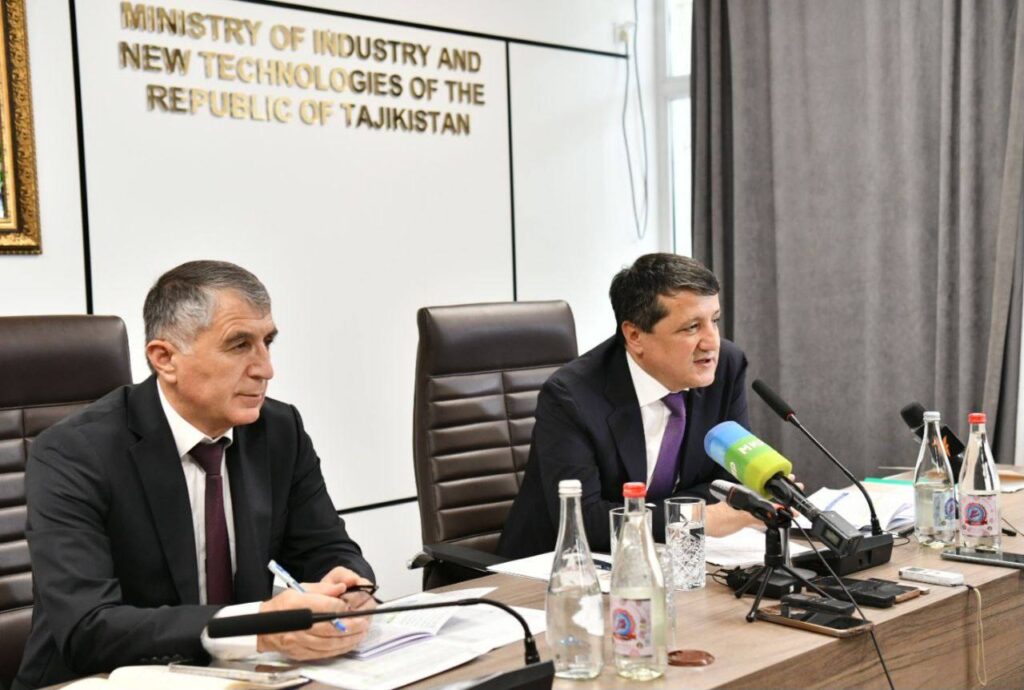
As previously reported by TCA, Tajikistan is the only Central Asian country with a national strategy for the development of AI. In 2022, President Emomali Rahmon signed off a national strategy to achieve 5% of the GDP from developing artificial intelligence by 2040. On August 1, the Minister of Industry and New Technologies of Tajikistan, Sherali Kabir, announced at a press conference that work had begun in securing the first patent for the artificial intelligence algorithm 'zGAN' , developed by the local research laboratory of Tajikistan, and stated: “At a time when two-thirds of the world’s countries have yet to develop their national AI strategies, these steps highlight Tajikistan’s ambition to take a key position in technology and innovation." Referencing Tajikistan's progress in the field, Azizjon Azimi, chairman of the Council on AI under the Ministry of Industry, said more than 300 experts had been trained in artificial intelligence and its applications in the economy were expanding. "The leading case is using 'zGAN' algorithms for credit scoring. More than 30 banks in over ten countries have already implemented this algorithm by the Tajik fintech zypl.ai, which automatically issued loans worth over $200 million. To date, zypl.ai has attracted more than $3 million in private direct investment in the development of AI in Tajikistan." Azimi emphasized that in addition to the impact of 'zGAN' in the economic sphere, plans are in place for its application in agriculture, industry, and healthcare. He also reiterated that an agreement had been signed to develop AI programs for the Emirate of Ras al-Khaimah based on Tajikistan's national AI development strategy.
As reported by Asia-Plus, the Ministry of Transport of Tajikistan and the Korea International Cooperation Agency (KOICA) have signed a memorandum of negotiations on the $4 million economical and technical development of the Jaloliddin Balkhi–Nizhniy Pyanj railway project. “The main goal of this project is to enter the market of South Asian countries—Afghanistan, Pakistan, India,” stated Azim Ibrahim, Minister of Transport of Tajikistan after explaining and that the railway will ensure the development of regional trade, help maintain the condition of roads, and reduce the burden and intensity of traffic on the streets. “If the project is successfully implemented, Tajikistan will become an attractive railway transit country," he continued. "And the increase in the volume of cargo and product transportation with neighbouring countries will prove very beneficial for Tajikistan and other countries in the region." Acting Ambassador of South Korea to the Republic of Tajikistan, Kim Jeon Sik, hailed the project as another step towards the country's progressive future and said that with direct access to the sea, Tajikistan had the potential to become the main link in international cargo transportation. He closed by expressing his hope that South Korea’s first railway construction project in Central Asia would be completed within three years.
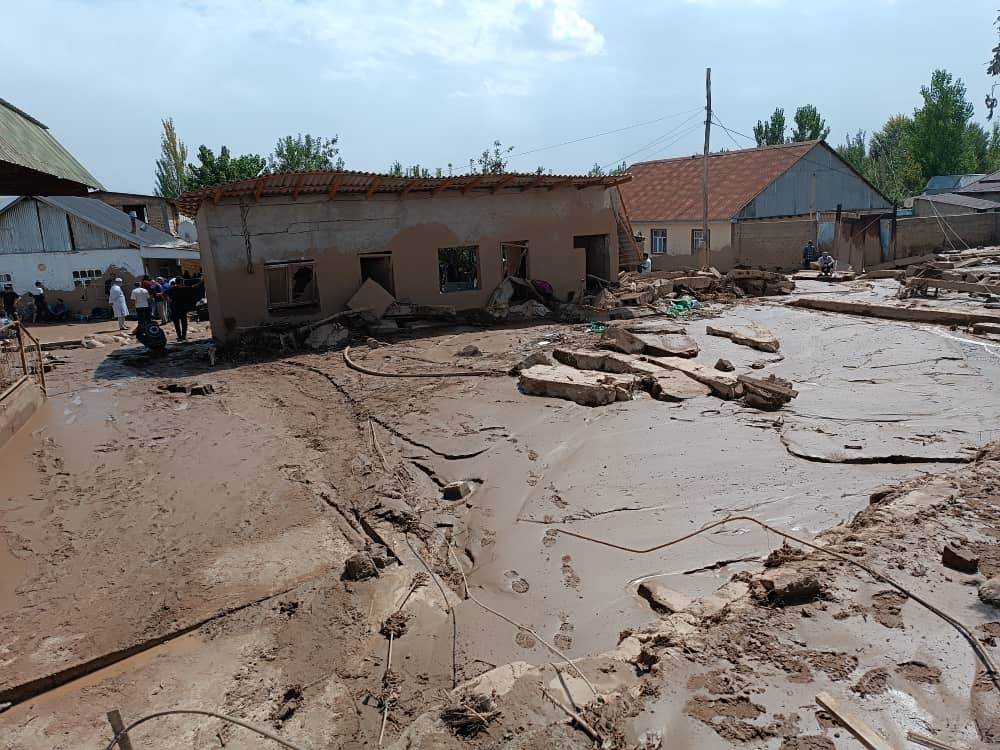
The head of Tajikistan’s committee for emergency situations and civil defense, Rustam Nazarzada, has said at a press conference that the economic damage caused by natural disasters in the country this year has amounted to over $12 million. Floods, landslides, heavy rains, avalanches, rockfalls, and earthquakes, which have claimed over 100 lives this year, have also caused considerable damage to Tajikistan’s economy and private sector. Nazarzoda said that 532 emergency cases were registered during this period, 57 more than last year.
The Asian Development Bank has published its latest report, “Asian Development Outlook (ADO) July 2024: Steady Growth, Slowing Inflation,” in which it has increased its forecast for economic growth in Central Asia from 4.3% to 4.5% in 2024. In the first quarter (Q1) of 2024, the Kyrgyz Republic is expected to have grown at a rate of 8.8% thanks to robust service and construction industry output supported by both foreign and domestic investment. Other regional economies have also experienced solid economic activity. As a result of a notable increase in exports, which included gold sales, Tajikistan maintained its robust economic trajectory in Q1 2024, with an 8.2% growth rate. Net gas exports and government investment, meanwhile, are Turkmenistan’s primary sources of growth. The first quarter of 2024 also saw 6.2% growth in Uzbekistan, due to a spike in fixed capital investment. The growth prospects of Kazakhstan, however, the largest economy in the region, remain unchanged. With the main growth drivers being construction, manufacturing, and services, GDP expanded by 3.7% in Q1 2024. This year, manufacturing and construction will continue to be the primary forces behind economic expansion. Strong building growth will be supported by government assistance to victims and restoration of damaged infrastructure following the worst floods in thirty years. Mining is also anticipated to contribute significantly to Kazakhstan’s medium-term growth following the Tengiz oil field expansion project's completion in Q2 2025. The ADB has also lowered inflation forecasts for 2024 and 2025. In May 2024, the Kyrgyz Republic experienced a decrease in inflation from 11.3% to 4.6%, primarily due to fluctuations in the prices of essential commodities. Other regional economies are also experiencing a reduction in inflationary pressures. A steady exchange rate and relatively restrictive monetary policy decreased Kazakhstan's inflation rate to 9.0% from 18.5% from 2023 to January–May 2024. Inflation in Tajikistan for the first four months of 2024 was 3.8%. Inflation in Uzbekistan has also dropped from 11.4% in the previous year to 9.2% in the first five months of 2024.
The Global Center on AI Governance has published a report titled “Results of the Global Index on Responsible AI in Eastern Europe and Central Asia.” Among Central Asian countries, Uzbekistan has been judged to use artificial intelligence in the most responsible way. Recent AI initiatives in Uzbekistan cover fields including cultural and linguistic diversity, international cooperation, public sector skills development, and transparency. Kazakhstan ranks second in the region. Among Central Asian countries, Kazakhstan ranks first for the number of government initiatives related to responsible AI. Kyrgyzstan ranks third in the region, demonstrating significant non-governmental sector participation in responsible AI. However, the need for a comprehensive government system affects its overall outcome. The report states that the country has received a high rating for responsible AI governance, second only to Uzbekistan in the region. However, due to the scarcity of government frameworks, which, along with government initiatives, had the most weight in the index score, Kyrgyzstan scored lower in the Responsible AI Index. Tajikistan is the only Central Asian country with an AI national strategy aimed at development until 2040. It ranks fourth in the region. However, this strategy covers only 5 out of 19 thematic directions. Tajikistan's scores are relatively high regarding responsible AI governance; however, the country has the most passive non-state sector among the pillars assessed. Turkmenistan has the lowest indicator in the region. Government structures related to the responsible use of artificial intelligence have not been identified in the country.