• KGS/USD = 0.01144 0%
  • KZT/USD = 0.00206 0%
  • TJS/USD = 0.10415 -0.19%
  • UZS/USD = 0.00008 0%
  • TMT/USD = 0.28571 0%
  • KGS/USD = 0.01144 0%
  • KZT/USD = 0.00206 0%
  • TJS/USD = 0.10415 -0.19%
  • UZS/USD = 0.00008 0%
  • TMT/USD = 0.28571 0%
  • KGS/USD = 0.01144 0%
  • KZT/USD = 0.00206 0%
  • TJS/USD = 0.10415 -0.19%
  • UZS/USD = 0.00008 0%
  • TMT/USD = 0.28571 0%
  • KGS/USD = 0.01144 0%
  • KZT/USD = 0.00206 0%
  • TJS/USD = 0.10415 -0.19%
  • UZS/USD = 0.00008 0%
  • TMT/USD = 0.28571 0%
  • KGS/USD = 0.01144 0%
  • KZT/USD = 0.00206 0%
  • TJS/USD = 0.10415 -0.19%
  • UZS/USD = 0.00008 0%
  • TMT/USD = 0.28571 0%
  • KGS/USD = 0.01144 0%
  • KZT/USD = 0.00206 0%
  • TJS/USD = 0.10415 -0.19%
  • UZS/USD = 0.00008 0%
  • TMT/USD = 0.28571 0%
  • KGS/USD = 0.01144 0%
  • KZT/USD = 0.00206 0%
  • TJS/USD = 0.10415 -0.19%
  • UZS/USD = 0.00008 0%
  • TMT/USD = 0.28571 0%
  • KGS/USD = 0.01144 0%
  • KZT/USD = 0.00206 0%
  • TJS/USD = 0.10415 -0.19%
  • UZS/USD = 0.00008 0%
  • TMT/USD = 0.28571 0%

Viewing results 343 - 348 of 674

Demarcation of the Tajikistan-Kyrgyzstan Border Nears Completion

As reported by Asia-Plus, on July 26, the governor of the Sughd region in Tajikistan, Rajabboy Ahmadzade, announced that the state border between Tajikistan and Kyrgyzstan, which has been closed for three years,  is expected to open soon. The commission for delineating the border between Tajikistan and Kyrgyzstan has been in progress since 2022 but as stated by Ahmadzade, “To date, 94% of the border line has been fully delineated. We believe that everything will be resolved positively shortly." The minister advised that on July 21-24, representatives of the Ministry of Transport of Kyrgyzstan and Tajikistan visited the disputed areas and Tajik towns of Chorkukh and Vorukh. He did not disclose the location of the remaining 6% of disputed territories, but added that the commission would meet again from August 11 - 17 in Botken, Kyrgyzstan. The armed border between Tajikistan and Kyrgyzstan was closed after clashes on 14-17 September 2021. A year later, officials and representatives of both countries' border commission met in Sughd to discuss means of resolving the issue. The conflict was caused by uncertainties regarding the exact demarcation of the border between the two republics which spans some 980 kilometers. With its scant natural resources and dwindling water supplies, the border between Kyrgyzstan and Tajikistan has been the scene of numerous skirmishes for many years. In 2014, all borders between Kyrgyzstan and Tajikistan were closed indefinitely to Kyrgyz and Tajik citizens following clashes over a bypass road in disputed territory; mortars were fired and both armies suffered casualties. Trouble spilled over again throughout 2021 and 2022, reportedly starting over a water dispute in the Vorukh enclave, and leaving an unknown number in the hundreds killed, and up to 136,000 people evacuated. In September 2022, another shooting took place on the border between the two countries.

Tajikistan-Born Singer, Criticized in Russia, Prepares to Release an Anti-War Song

In 2023, Tajik-Russian singer Manizha Sanghin, harshly criticized in Russia for her public comments on sensitive issues, travelled to the picturesque “Valley of the Forty Girls” in southern Tajikistan to record an anti-war song to be released on Friday. The mountainous location, known to Tajiks as Childukhtaron, derives its name from ancient lore about a group of girls who turned into towering rock formations when an invading force swept through their homeland. Whether the girls-turned-rocks were meant to block the invaders, or simply bear silent witness, depends on the telling. Tajikistan-born Sanghin said she felt an affinity for the girls as standing at the foot of the rock, she recorded ‘Gun’. Written a decade ago, the song was originally about the devastating civil war in Tajikistan in the 1990s but had been put to rest after being abandoned by music producers in Britain. Following  Russia’s full-scale invasion of Ukraine in 2022, they talked about the song again and the singer, a goodwill ambassador for UNHCR, the U.N. refugee agency, said in YouTube video, "I thought, I have to release it. Because now, it's not just a song about war in Tajikistan. It's a song about war in Ukraine, in Gaza, and all wars around the globe." Music producer Liz Horsman who described Sanghin as" brave in the face of ongoing investigations into her anti-war stance,” readily agreed to record the song and since the war made travel between Britain and Russia impossible, the pair arranged to meet in Tajikistan. Seven months pregnant with her daughter, Sanghin described her return to her homeland as “very poetic”. Over the years, the singer has sparked a fair share of controversy. In 2021, when she represented Russia at the Eurovision contest with a song called “Russian Woman,” she was condemned for advocating women’s and LGBT rights. She was then denounced online and Russian promoters cancelled many of her concerts after she criticized the invasion of Ukraine. She was further alienated following her comments about the brutal treatment of several Tajik suspects in a terrorist attack that killed 144 people at a Moscow music venue in March. Sanghin condemned the attack but described the abuse of the suspects as “public torture.” “I am a systemic victim of cyberattacks and cyberbullying. Sometimes I have to block thousands of bots a week and sometimes daily... They follow, mass unfollow and report my profile,” Sanghin said on Instagram in May. “Instagram’s algorithm then thinks that I am breaking community rules and doesn’t show my posts to most of my followers. (Sometimes it can last for months).” Sanghin asked followers on the social media platform to leave a comment or just a heart emoji as a possible way to help her “get out of this ‘shadow ban.’”  

ADB to Support Climate-Friendly Business Environment in Tajikistan

The Asian Development Bank (ADB) says it has approved a $50 million policy-based grant for a program that will help the government of Tajikistan foster a climate-responsive business environment and support small and medium-sized enterprises (SMEs) in the country. The program aims to transform Tajikistan's business environment through digitization, reforms to increase exports, improvement of infrastructure governance, fiscal transparency, and support for climate-friendly SMEs. Underscoring ADB's commitment to supporting Tajikistan in its transition to a green economy, ADB Director General for Central and West Asia Yevgeniy Zhukov commented, “By promoting climate-responsive investments and improving the overall business environment, we aim to stimulate economic growth, create green jobs, and enhance the country's resilience to climate change." The program will support reforms subsidizing climate-friendly SMEs, and prioritizing funding for female entrepreneurs. It advances digitization and e-commerce through the Agency for Innovation and Digitization and the approval of the E-Commerce program. The program will also support enhanced public investment management through assessments to recommend improvements and prioritize climate-focused projects. Fiscal transparency will improve the Ministry of Finance’s capacity to publish government finance statistics. The program will also promote international trade and investment by streamlining trade documentation processes and updating regulatory frameworks for issuing local and green bonds.

A Eurasian Perspective on the Historic Conviction of U.S. Senator Bob Menendez

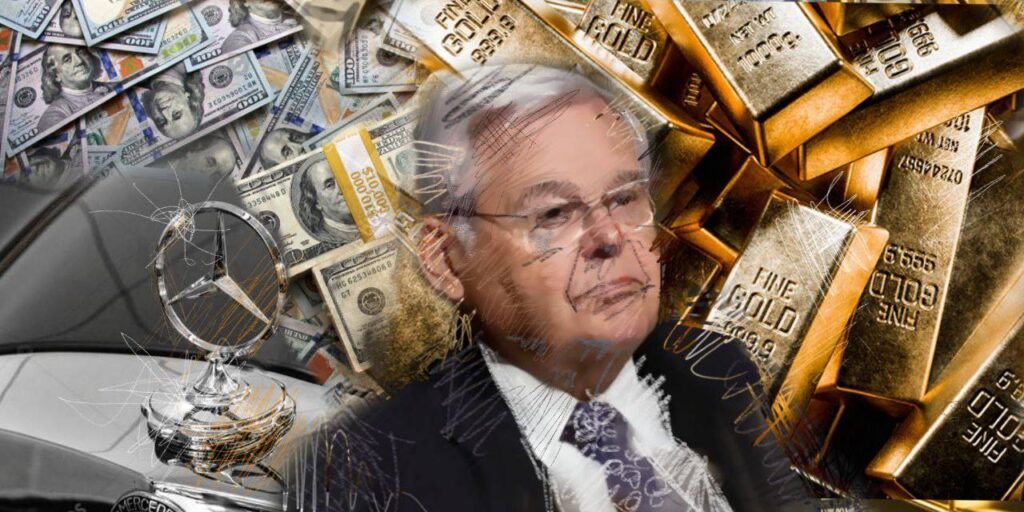
On July 16, a federal court in New York found United States Senator Robert "Bob" Menendez (D) guilty on 16 counts in a corruption trial, including charges of accepting bribes to benefit the governments of Egypt and Qatar, obstruction of justice and extortion. He is the first U.S. senator to be convicted as a foreign agent and the charges collectively carry a potential sentence of 222 years in prison. Bribery charges involved receiving gold bars worth over $100,000 and more than $480,000 in cash as well as a Mercedes-Benz for his wife. “This wasn't politics as usual. This was politics for profit,” summarized Damian Williams, an attorney for the Southern District of New York. According to federal prosecutors, among other things, Menendez helped secure millions of dollars of U.S. aid for Egypt and used his office to assist a multi-million-dollar deal with a Qatari fund. Egypt’s intelligence and military officials are said to have bribed him and his wife at a time when U.S. military aid to the country would have paused due to human rights concerns. Menendez also used his official position “to protect and enrich” individuals in exchange for payments, including helping a New Jersey businessman secure a halal certification monopoly with regards to U.S. meat exports to Egypt. Striking similarities to another recent “influence-for-sale” scandal For many Europeans, this U.S. case resembles the European Union’s own Qatargate scandal, which broke out in 2022 and unveiled how foreign governments (Qatar, Morocco and Mauritania) have been channeling hundreds of thousands of euros to a ring of elected European Parliament officials who, in turn, were leveraging their authority to benefit these clients. The services included “attempts to manipulate the Parliament” and “scheming to kill off six parliamentary resolutions condemning Qatar’s human rights record” as Politico reports. In his plea deal, Antonio Panzeri, the chief of the European Parliament's Subcommittee on Human Rights (DROI), admitted to receiving bribes as well as to leading and participating in a criminal organization. This criminal organization reportedly doled out bribes to EU officials through two NGOs named Fight Impunity and No Peace Without Justice, which were allegedly set up to launder money and help fund the scheme. In Menendez’s case, the money ran through his wife’s consultancy. Qatargate allegations extended beyond the Middle East and North Africa. For instance, Atlantico.fr reported that Panzeri and his associates may have been corrupted by at least two Kazakh criminal figures. Europeans appeared lenient on corruption as Panzeri only received a five-year prison sentence, of which four would be suspended and the one year he’d serve would be under house arrest with an electronic bracelet. Momentum behind investigations of key suspects has since waned, leading the EU Observer to call Qatargate “a missed opportunity to bring Europe to justice”. Foreign policy priorities pushed by Senator Menendez need to be re-examined When public officials are found to have used their office to promote external interests, their past policy activities should be closely examined. Bob Menendez has been a member of...

SCO Summit: Eurasian Alliance Signs Security Agreements; Welcomes Belarus

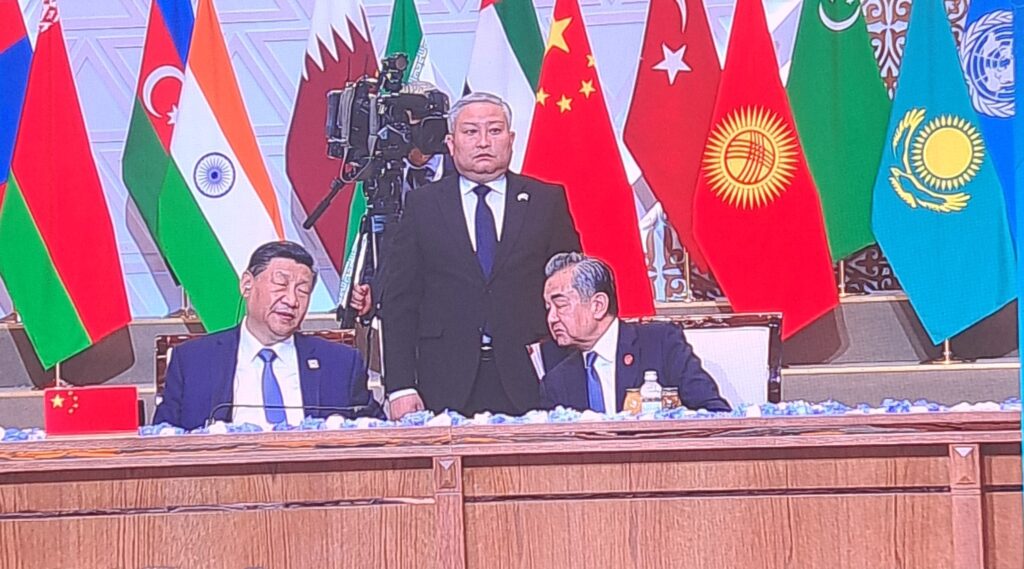
By Jonathan Campion, reporting from the SCO Summit in Astana   At the Shanghai Cooperation Organization (SCO) Summit in Astana this morning, leaders from the bloc’s member states signed a host of agreements intended to promote cohesion in the Eurasia region. The first session, which was held behind closed doors, had begun with the signing of the document that accepted Belarus as the SCO’s 10th full member. The SCO is a political, security and economic alliance, of which Kazakhstan, Kyrgyzstan, Tajikistan and Uzbekistan are founding members. The group also includes China, Russia, Iran, India, Pakistan, and now Belarus. The organization has four observer states and 14 dialogue partners, covering half of the world’s population, and almost a third of global GDP.  The first agreement signed was a document outlining the Shanghai Cooperation Organization’s development strategy for the next 12 months. In 2025 Kazakhstan will pass chairmanship of the alliance to China, and there is speculation that the SCO may grow further next year, to include at least one new member. With security a growing concern for members, particularly in light of the March terrorist attack outside Moscow, for which the terror group Islamic State Khorasan Province (ISIS-K) have claimed responsibility, leaders approved the SCO’s latest three-year Cooperation Program to counter terrorism, separatism and extremism. The parties also signed an agreement on the organization’s regional anti-drug strategy. Another high-profile document is the SCO’s development strategy for cooperation in the energy sphere. Kazakhstan is at the forefront of the region’s transition to green energy, with Chinese leader Xi Jinping mentioning the country’s new Zhanatas wind farm and the Turgusun hydropower station as key joint projects with China in an article published in the Kazakh press this week. The heads of state were welcomed to the Summit by Kazakh President Kassym-Jomart Tokayev, with his Russian counterpart Vladimir Putin, Aleksandr Lukashenko of Belarus and Chinese leader Xi Jinping the last to arrive, ten minutes after the other dignitaries. Some leaders did not arrive at all: India’s Narendra Modi is not attending this year’s SCO Summit, and has sent the country’s external affairs minister Subrahmanyam Jaishankar in his place.  The Summit's afternoon session is styled as "SCO Plus". In attendance are the heads of state of the alliance's dialogue partners, including the presidents of Turkey and Azerbaijan, Recep Tayyip Erdogan and Ilham Aliyev. Turkmenistan – which is not affiliated to the SCO but which is invited as a guest – is led not by its President Serdar Berdimuhamedov, but by his father Gurbanguly Berdimuhamedov, the former leader who is now the chairman of the country’s People’s Council.  

Astana Hosts SCO Summit: A New Platform for Kazakh Diplomacy

With the first events of the Shanghai Cooperation Organization (SCO) Summit taking place this morning in Kazakhstan’s capital, Astana, conversations are beginning about what the host country will be discussing – and with whom. The SCO is a political, security and economic alliance in the wider Eurasia region, aimed at promoting trade and investments between member states, as well as global security. Its nine full members are Kazakhstan, Kyrgyzstan, Tajikistan, Uzbekistan, China, Russia, Iran, India and Pakistan. The Organization – which includes four observer states and 14 dialogue partners – covers half of the world’s population, and almost a third of global GDP. Kazakhstan’s multi-vector approach to its foreign policy has seen the country combining its role within the SCO with cooperation with Western governments, through dialogue with the European Union and the United States’ C5+1 platform. President Tokayev recently commented that: “Kazakhstan is committed to multilateral cooperation. In our foreign policy we proceed from the national interests, and are in favor of solving all disputable issues on the basis of rational compromise. In addition to the SCO, this year our country is chairing five other international organizations. This is an unprecedented case, one could say an achievement in the history of Kazakh diplomacy.” This multi-vector approach is key to Kazakhstan’s international diplomacy. Indeed, ‘mutually beneficial cooperation’ and ‘mutually beneficial strategic partnership’ have become the watchwords of Tokayev’s presidency. Over the past decade, Kazakhstan has become an increasingly important land-bridge between East and West, both in terms of trade and diplomacy. Due to projects such as the Belt and Road Initiative and the Middle Corridor, Kazakhstan’s location has made it an indispensable ally to China, whilst playing a pivotal role in the expansion of transcontinental trade has led to Central Asia, in the words of Tokayev, “become a global stakeholder.” In the opinion of experts, more of the same can be expected at this week’s SCO Summit. In an interview conducted by the Kazinform news agency, local political analyst Valery Volodin stressed that: “It goes without saying that each government will be defending its own interests [at the Summit]. But Kazakhstan will be placing an emphasis on regional stability, which will allow countries to implement a host of joint projects with China and Russia. Besides this, Kassym-Jomart Tokayev’s gift for diplomacy will push the SCO to become not just a discussion club, but a real mechanism to solve problems in Eurasia using dialogue between governments.” In an article in The Geopolitics, Michael Rossi, a professor of political science at Long Island University, posited that Kazakhstan is not playing the so-called ‘Great Game’ between East and West, but rather pointing out the scope for "Big Opportunities". “Kazakhstan’s positive relations with countries often in conflict, such as Russia and Ukraine, China and the United States, Azerbaijan and Armenia, and Israel and the Palestinian territories, grant Astana legitimacy,” Rossi writes, “to act as a buffer and stabilizing force among major powers. This positioning allows Kazakhstan to reduce tensions and potentially mediate conflicts. Under...