• KGS/USD = 0.01144 0%
  • KZT/USD = 0.00207 0%
  • TJS/USD = 0.10463 0%
  • UZS/USD = 0.00008 0%
  • TMT/USD = 0.28490 0%
  • KGS/USD = 0.01144 0%
  • KZT/USD = 0.00207 0%
  • TJS/USD = 0.10463 0%
  • UZS/USD = 0.00008 0%
  • TMT/USD = 0.28490 0%
  • KGS/USD = 0.01144 0%
  • KZT/USD = 0.00207 0%
  • TJS/USD = 0.10463 0%
  • UZS/USD = 0.00008 0%
  • TMT/USD = 0.28490 0%
  • KGS/USD = 0.01144 0%
  • KZT/USD = 0.00207 0%
  • TJS/USD = 0.10463 0%
  • UZS/USD = 0.00008 0%
  • TMT/USD = 0.28490 0%
  • KGS/USD = 0.01144 0%
  • KZT/USD = 0.00207 0%
  • TJS/USD = 0.10463 0%
  • UZS/USD = 0.00008 0%
  • TMT/USD = 0.28490 0%
  • KGS/USD = 0.01144 0%
  • KZT/USD = 0.00207 0%
  • TJS/USD = 0.10463 0%
  • UZS/USD = 0.00008 0%
  • TMT/USD = 0.28490 0%
  • KGS/USD = 0.01144 0%
  • KZT/USD = 0.00207 0%
  • TJS/USD = 0.10463 0%
  • UZS/USD = 0.00008 0%
  • TMT/USD = 0.28490 0%
  • KGS/USD = 0.01144 0%
  • KZT/USD = 0.00207 0%
  • TJS/USD = 0.10463 0%
  • UZS/USD = 0.00008 0%
  • TMT/USD = 0.28490 0%

Viewing results 163 - 168 of 476

Tajikistan and Central Asia Face Escalating Water Crisis

Central Asia is emerging as one of the regions most vulnerable to drought, according to the latest Global Drought Outlook published by the United Nations. A Region Under Climate Pressure The report highlights a persistent rise in average annual temperatures, diminishing snow cover, and accelerated glacier retreat, particularly in the mountainous regions of Tajikistan and Kyrgyzstan, as key drivers of water insecurity. “Climate change is accelerating glacier retreat... This poses a long-term threat to the region's water security,” the report states. Tajikistan, which holds over 60% of Central Asia’s glaciers, plays a critical role in the region’s hydrology. Agriculture on the Brink The first sector to suffer from prolonged drought is agriculture, which underpins food security across Tajikistan, Uzbekistan, and Turkmenistan. Most agriculture in these countries relies on outdated irrigation systems ill-equipped to handle evolving climate conditions. According to the Food and Agriculture Organization (FAO), the global incidence of droughts rose by 29% between 2000 and 2023. In Central Asia, this trend has resulted in declining crop yields, income losses, and forced livestock sales. In Tajikistan’s Khatlon and Sogd regions, farmers experience income drops of 15-30% during dry years. Despite generating more than 60% of the region's freshwater through glaciers and high-altitude rivers, Tajikistan struggles with its own water shortages. Nearly 60% of water is lost due to leakage in dilapidated canals, compounded by inefficient water management. Rural communities are particularly affected, with thousands of families lacking regular access to clean water. Hydropower and Economic Risks Tajikistan relies on hydropower for over 90% of its electricity. However, inconsistent snowfall and prolonged summer droughts have drastically lowered reservoir levels, threatening national energy stability. More than half of the country’s 14,000 kilometers of irrigation canals require modernization. From 2000 to 2016, drought-related economic losses in Central Asia exceeded $2 billion. In 2023 alone, Tajikistan incurred $5.4 million in damages due to power shortages. Droughts are also impacting public health, employment, and migration. Natural disasters annually affect around 1.4 million people in Uzbekistan and 500,000 in Kazakhstan and Tajikistan. By 2050, drought-related losses are expected to reach 1.3% of regional GDP annually, with up to five million climate migrants projected. Regional and Global Responses Tajikistan, a signatory to the UN Convention to Combat Desertification, is pursuing land restoration and sustainable water management projects. Under the ISCAUZR-2 initiative (Central Asian Initiative on Sustainable Land Management), the country secured nearly $1.5 million to support sustainable agricultural practices. Efforts include the development of fruit tree nurseries, installation of drip irrigation systems, construction of freshwater reservoirs, and deployment of monitoring sensors at water sources. Agroforestry techniques and drought-resistant crop varieties are also being introduced. Despite these initiatives, the region continues to face rising temperatures, Asia has already surpassed a +1.04°C increase and Tajikistan has lost more than 1,000 glaciers. An estimated 10 million people across Central Asia lack sustainable access to safe drinking water. Natural phenomena increasingly compound one another: droughts cause dust storms, which in turn accelerate glacier melt. The UN report warns that without systemic...

The Battle for Control Over Central Asia’s Digital Future

Central Asia is digitalizing quickly. Governments across the region have invested in smart cities, 5G, and AI-powered platforms. Kazakhstan ranks 24th in the world in global e-government indexes, and in Tashkent and Bishkek, young, tech-savvy populations are pushing for innovation. But such progress is not without risks. A new report from the German Marshall Fund (GMF), a Washington-based think tank, outlines how Central Asia is becoming ever more reliant on Chinese and Russian technology. These two countries, the report argues, are using digital tools not just to supply infrastructure but to shape how governments in the region manage data, surveillance, and speech. Beijing and Moscow’s tech exports act as snares, tying customers into their own economies. “Central Asian governments are aware of these challenges,” Dylan Welch, the author of the report and a China analyst at the GMF, told The Times of Central Asia. But he notes that it can be difficult to convince policymakers to prioritize the dangers of such overexposure. “For the national leaders, their imperative is to deliver economic growth because they have these young, dynamic populations that need jobs… if they don't deliver on that, then they're in for a long period of instability at home,” he said. This makes Chinese and Russian offers to develop their digital industries extremely tempting. An Entrenched Presence The report coincides with a flurry of Russian and Chinese engagement in the region. Over the weekend, Kazakhstan announced that between them, Beijing and Moscow will be responsible for delivering a new generation of nuclear reactors to the country, currently leaving French and Korean alternatives out in the cold. Then came this week’s visit of Chinese President Xi Jinping to Astana for a summit with the five Central Asian leaders. On the digital front, one notable announcement from this summit included a plan to develop an Artificial Intelligence Cooperation Center in Kyrgyzstan. China has used the term “Digital Silk Road” to describe its investments in Central Asia, and it has built much of the physical infrastructure behind the region’s digitization drive. For its part, Russia has exported its software, legal models and surveillance practices. Taken together, these systems are helping local governments tighten control over digital life. “This strategic integration makes it more difficult for regional states to diversify in the future, even though many continue to pursue multi-vector foreign policies aimed at balancing global partnerships,” Yunis Sharifli, Non-Resident Fellow at the China-Global South Project, told TCA. Where the Vulnerabilities Lie The report uses a “technology stack” framework to explain the problem. This framework looks at five layers: network infrastructure, data storage, consumer devices, digital platforms, and government policies. Across these layers, it argues, Central Asia is exposed to Chinese and Russian influence. Take Kazakhstan. It may be the most advanced digital economy in the region, but most of its internet traffic still passes through Russia. Telecom firms across the region are also required to install a Russian-made surveillance technology known as SORM (System for Operative Investigative Activities), which can intercept internet...

Flash Floods Severely Damage Irrigation Infrastructure and Crops in Tajikistan

Heavy rains and ensuing flash floods have inflicted significant damage on agriculture and infrastructure near the city of Penjikent in northwestern Tajikistan. The rural community of Kosatarosh was particularly hard-hit, with key irrigation canals damaged and dozens of hectares of farmland inundated. Key Canals and Farmland Affected According to the emergency response headquarters under the Penjikent city administration, flooding and mudslides disrupted the flow of two major irrigation canals, Khalifa Hassan and Farmetan. Around 20 meters of the bank of the Khalifa Hassan Canal was washed away, with sediment and debris accumulating in the channel. The Farmetan Canal was partially blocked, endangering the water supply for local farms. The disruption poses a serious threat to agricultural output, as the Khalifa Hassan Canal supplies water to over 3,500 hectares of cropland and orchards. Local authorities estimate that at least 80 hectares of rice, potatoes, corn, and other crops, cultivated by both collective farms and private households, were affected. On the morning of June 16, Penjikent Mayor Abduholik Kholikzoda visited the affected area and held an emergency meeting with representatives of the Committee for Emergency Situations and other relevant agencies. Authorities agreed to initiate a rapid damage assessment and commence restoration work. The State Administration for Land Reclamation and Irrigation of the Zarafshon River Basin has been tasked with clearing debris from the canals and repairing damaged sections. Specialists from the Zarafshon joint venture have already deployed equipment and begun initial repair operations. Authorities Had Issued Warnings The Tajikistan Hydrometeorological Agency had issued a warning on June 12-13 about the heightened risk of mudslides in mountainous and foothill regions, including areas in Sughd region, such as Ayni, Penjikent, and Iskanderkul, as well as regions under direct republican jurisdiction and parts of the Gorno-Badakhshan Autonomous Region. “Precipitation expected in mountainous and foothill areas could lead to mudslides,” the agency warned. The Emergency Committee advised residents to avoid rivers and reservoirs, suspend fishing and hunting, and temporarily cease grazing livestock in vulnerable mountainous areas. Volatile Summer Weather Increases Risk Forecasters predict that June 2025 will be unusually hot across Tajikistan, with temperatures expected to exceed seasonal averages by more than two degrees. The southern and lowland regions are expected to experience particularly high temperatures. Despite the heat, meteorologists warn of possible short-term rainfall, thunderstorms, dust storms, and squalls. Authorities have urged citizens to remain vigilant, particularly in flood-prone mountainous areas, where weather volatility continues to pose a risk. The situation in Penjikent underscores the increasing vulnerability of such regions to climate-induced disasters.

Experts Warn of Escalating Climate Risks for Central Asia

As global temperatures rise, Central Asia is emerging as one of the world’s most vulnerable regions to the impacts of climate change. This warning comes from three recent reports by the World Meteorological Organization (WMO), which predict intensified warming, more frequent droughts, and rapid glacier retreat in the region. Without urgent adaptation and coordinated policy responses, the region faces growing risks to its water resources, agriculture, and energy systems. Beyond the Climate Norm According to the WMO’s Climate Outlook for 2025-2029, Central Asia is projected to experience sustained warming and greater variability in precipitation. Every year in the 2025-2029 period is expected to be hotter than the 1991-2020 average. Particularly troubling is the growing likelihood that global temperatures may temporarily exceed +1.5°C above pre-industrial levels in the near term. One contributing factor is the heightened intensity of the South Asian monsoon, which is 82% more likely to be stronger than normal. While this could increase rainfall, the unpredictability raises concerns, periods of heavy rain could be followed by prolonged droughts, severely impacting regional agriculture. Another alarming development is the rapid retreat of glaciers in the Pamirs, which feed the region’s primary waterways, including the Amu Darya and its major tributary, the Vakhsh.  The loss of these glaciers threatens long-term water availability and necessitates a rethinking of regional water management strategies. The WMO forecasts that the 2025-2029 period could be the warmest on record, with global temperatures projected to rise by 1.2-1.9°C. Although the chance of exceeding +2°C during this period is currently low, about 1%, the probability is rising. Spring Floods, Summer Droughts A second WMO report, though focused on the Pacific region, reinforces global climate trends relevant to Central Asia. It confirms that 2024 was the hottest year on record, with global average temperatures 1.55°C above pre-industrial levels. For high-altitude countries like Tajikistan, the implications are already evident. Snow is melting earlier, shortening the runoff season. Water that once lasted through summer now disappears within weeks in the spring, heightening the risks of spring flooding followed by summer droughts. The region lacks sufficient reservoir infrastructure to capture and store water during periods of excess. The report also highlights the looming disappearance of Indonesia’s glaciers by 2026, a fate that may soon await Central Asia’s glaciers. The consequences are serious, particularly for countries like Tajikistan, where over 90% of electricity is generated by hydropower. Climate anomalies across the region are increasing, including dust storms, intense rainfall, extreme heat, and landslides. The WMO stresses the urgent need for adaptation measures such as modernized infrastructure and improved climate monitoring and water management systems. The Need for a Regional Strategy The third WMO report emphasizes Central Asia’s unique vulnerability to droughts, which often cross national borders. This underscores the need for a coordinated regional approach, especially in the Amu Darya and Syr Darya river basins. The report advocates for transboundary mechanisms for monitoring, data sharing, and joint response strategies. While Central Asia is part of the Global Network of Climate-Resilient River Basins, progress...

Central Asian Glaciers Shrinking Irreversibly, Expert Warns

Glaciers in Central Asia are melting at an alarming rate with no signs of recovery, according to Tohir Majitov, head of the Uzbek public organization "Suvchi," in an interview with Kazinform. Majitov highlighted the escalating pressure on water supplies due to population growth and agricultural expansion across the region. "In 1991, Central Asia had nearly 6 million hectares of irrigated land. By 2024, this figure has grown to over 10 million hectares. The population has also increased from around 45 million to more than 80 million. Water supply for this growing population is now a serious issue," he explained. He noted that Uzbekistan and Kazakhstan heavily depend on the Syr Darya and Amu Darya rivers, which originate in the mountainous regions of Kyrgyzstan and Tajikistan. A critical challenge arises from the differing water needs: upstream countries store water during summer for hydropower generation in autumn and winter, while downstream nations like Kazakhstan and Uzbekistan require substantial water primarily during the summer growing season. Majitov issued a stark warning about the region's largest glacier, Tajikistan's Fedchenko Glacier, which has reportedly lost over 40% of its mass. "Between 1990 and 2005, the glacier shrank by 50 meters," he stated. "Its length is 77 kilometers, width 2.4 kilometers, and depth reaches one kilometer. Glaciers in Kyrgyzstan have also lost over 30% of their mass." To tackle these pressing water challenges, Majitov proposed the formation of a regional body. "We suggest creating an Aral Sea Committee to improve water management and ensure food security. It may take several years, but all Central Asian countries should take part," he urged. He believes that efficient water use could enable the region to expand irrigated land by 2-3 million hectares, potentially feeding up to 100 million people. Previously, The Times of Central Asia reported concerns from other experts on the region's water crisis. A fundamental conflict exists between upstream countries, like Kyrgyzstan and Tajikistan, which have water but need to release it in winter for electricity generation, and downstream countries, such as Uzbekistan and Turkmenistan, that require that water in summer for agricultural purposes. What was once primarily a technical concern has now evolved into a complex regional problem, exacerbated by climate change. Nations are increasingly constructing dams, engaging in disputes over water allocation, and experiencing a decline in mutual trust. The future stability of Central Asia may hinge on its capacity to effectively manage this escalating water crisis.

Dushanbe Proposed as Regional Glaciology Hub Amid Accelerating Glacier Melt

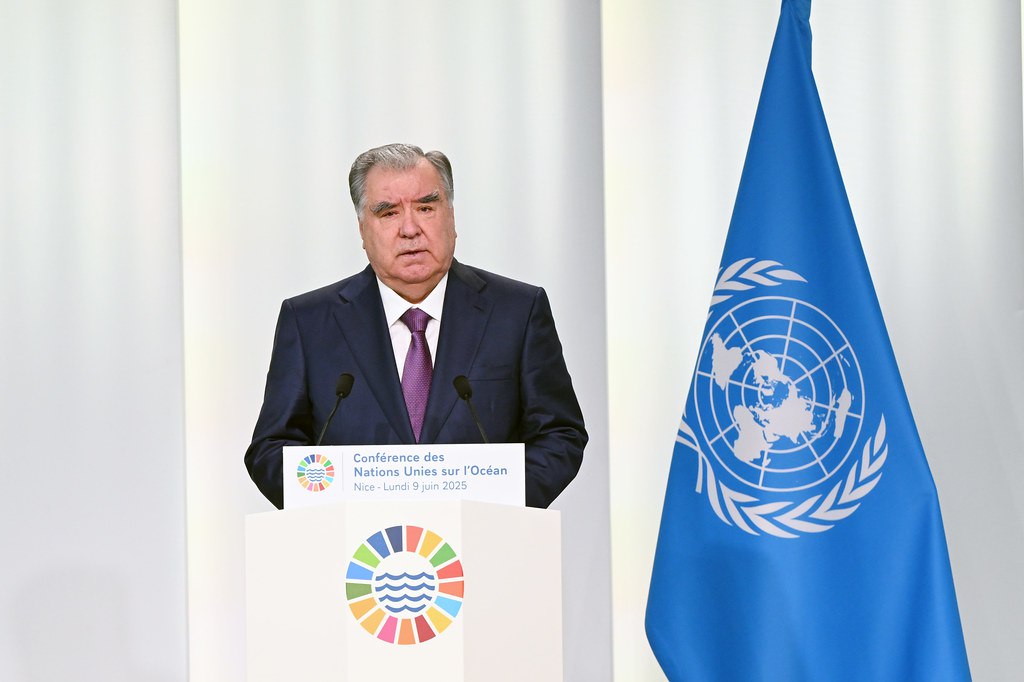
Tajikistan's President Emomali Rahmon, speaking in France on June 8 at the launch of the International Decade of Cryosphere Sciences (2025-2034), has proposed establishing a Regional Coordination Center for Glaciology in Dushanbe. The event was held as part of the Third UN Ocean Conference in Nice, which convened heads of state and government from 65 countries, UN Secretary-General António Guterres, and leaders of international organizations. Glaciology Center in the Heart of the Pamir Mountains Addressing the international community, Rahmon underscored Tajikistan's commitment to creating a glaciology center. "Given the importance of glaciers and in order to study the impact of climate change on them more accurately, we have decided, with the assistance of international partners, to establish a Regional Coordination Center for Glaciology in Dushanbe," he stated. He highlighted that Tajikistan is home to up to 60% of all glaciers in Central Asia, playing a pivotal role in the region's sustainable development. However, their rapid shrinkage poses a threat not only locally but globally. Rahmon warned that if current melting trends persist, up to a billion people could face negative consequences by 2050, particularly in coastal areas and on islands. Tajikistan: Initiator of the Climate Agenda Rahmon emphasised that Tajikistan had been a proactive advocate for water and climate issues on the global stage for two decades. He emphasized the broad international support for the joint initiative by Tajikistan and France to designate 2025-2034 as the "Decade of Action for Cryosphere Sciences." "Our initiatives in the field of water and climate issues have received the support of the international community and are being implemented through 14 resolutions of the UN General Assembly," Rahmon noted. He concluded by urging the international community to expand cooperation for cryosphere preservation and the development of scientific potential in this critical area. From Declarations to Coalitions Rahmon's speech followed the first International High-Level Conference on Glacier Protection held in late May. This forum attracted over 2,500 delegates from 80 countries, including scientists, heads of delegations, international organizations, and donor agencies. The conference's primary outcome was the signing of the Dushanbe Declaration, a document advocating for urgent action to protect glaciers and synchronize international efforts. Participants called for significant reductions in greenhouse gas emissions, a transition to sustainable production models, and the implementation of robust climate monitoring systems. An international coalition was also announced, poised to unite states, scientific institutions, environmental movements, and international organizations. Its mandate will include monitoring the declaration's implementation, facilitating the exchange of best practices, attracting investment, and developing climate change adaptation technologies.