• KGS/USD = 0.01144 0%
  • KZT/USD = 0.00203 0%
  • TJS/USD = 0.10394 -0.38%
  • UZS/USD = 0.00008 0%
  • TMT/USD = 0.28571 0%
  • KGS/USD = 0.01144 0%
  • KZT/USD = 0.00203 0%
  • TJS/USD = 0.10394 -0.38%
  • UZS/USD = 0.00008 0%
  • TMT/USD = 0.28571 0%
  • KGS/USD = 0.01144 0%
  • KZT/USD = 0.00203 0%
  • TJS/USD = 0.10394 -0.38%
  • UZS/USD = 0.00008 0%
  • TMT/USD = 0.28571 0%
  • KGS/USD = 0.01144 0%
  • KZT/USD = 0.00203 0%
  • TJS/USD = 0.10394 -0.38%
  • UZS/USD = 0.00008 0%
  • TMT/USD = 0.28571 0%
  • KGS/USD = 0.01144 0%
  • KZT/USD = 0.00203 0%
  • TJS/USD = 0.10394 -0.38%
  • UZS/USD = 0.00008 0%
  • TMT/USD = 0.28571 0%
  • KGS/USD = 0.01144 0%
  • KZT/USD = 0.00203 0%
  • TJS/USD = 0.10394 -0.38%
  • UZS/USD = 0.00008 0%
  • TMT/USD = 0.28571 0%
  • KGS/USD = 0.01144 0%
  • KZT/USD = 0.00203 0%
  • TJS/USD = 0.10394 -0.38%
  • UZS/USD = 0.00008 0%
  • TMT/USD = 0.28571 0%
  • KGS/USD = 0.01144 0%
  • KZT/USD = 0.00203 0%
  • TJS/USD = 0.10394 -0.38%
  • UZS/USD = 0.00008 0%
  • TMT/USD = 0.28571 0%

Viewing results 379 - 384 of 594

Japan-Funded Project Helps Tajikistan Manage Its Border With Afghanistan

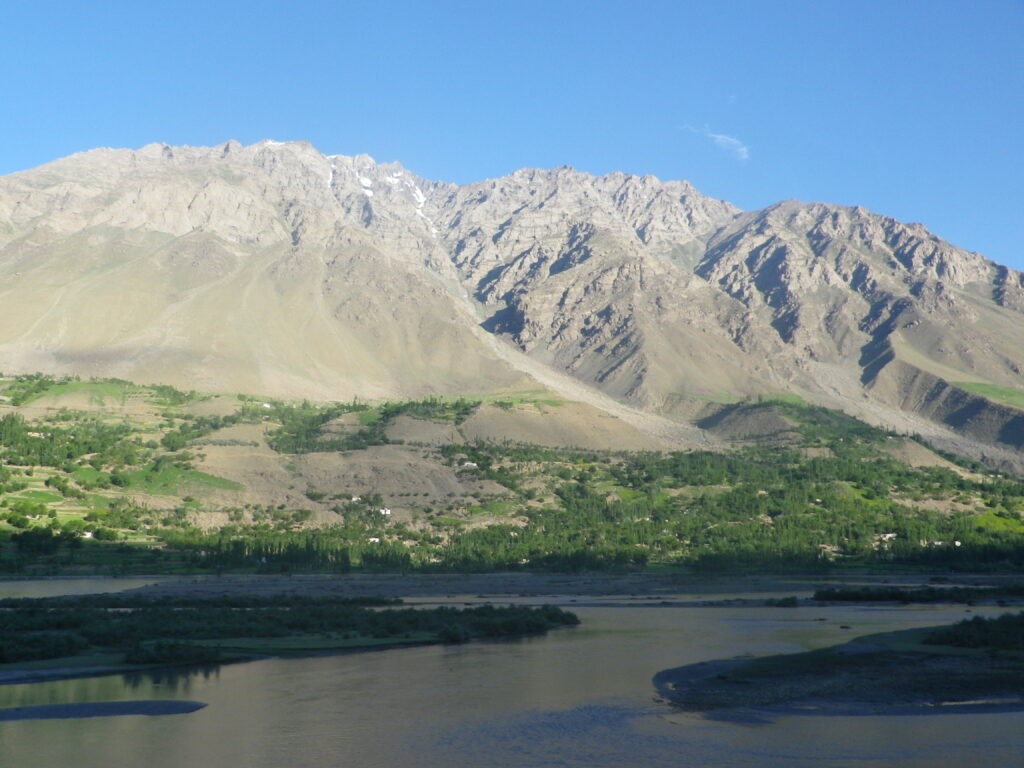
Japan has long been a "steadfast supporter of Tajikistan, contributing tens of millions of dollars to the country’s development through the United Nations Development Programme (UNDP)." The Japanese government, through its Japan International Cooperation Agency (JICA), is also funding the “Border Management Project” – an initiative to support the Tajik Government in controlling its national border with Afghanistan, UNDP Tajikistan reports. The project aims to both secure the length of the Tajik-Afghan border and facilitate cross-border trade. It was initially launched in 2015, and will run until 2025. Since its launch the parties have constructed a new border checkpoint at Langar, and modernized the old checkpoints at Khumrogi and Shogun. Toshihiro Aiki, Japan’s ambassador to Tajikistan, recently commented: “We have had favorable relationships with the government of Tajikistan since its first steps of independence. Japan supports Tajikistan in many ways, considering strategic aspects, especially in light of the changed political landscape involving the whole Eurasian continent. There are some challenges that not only Tajikistan but most of the countries face.”  Given the problem of drug trafficking at the Tajik-Afghan border, the initiative is also supporting Tajikistan in disrupting illicit activities, protecting border communities from the harmful effects of the drug trade. 
Tajik President, Kyrgyz FM Discuss Border Delimitation

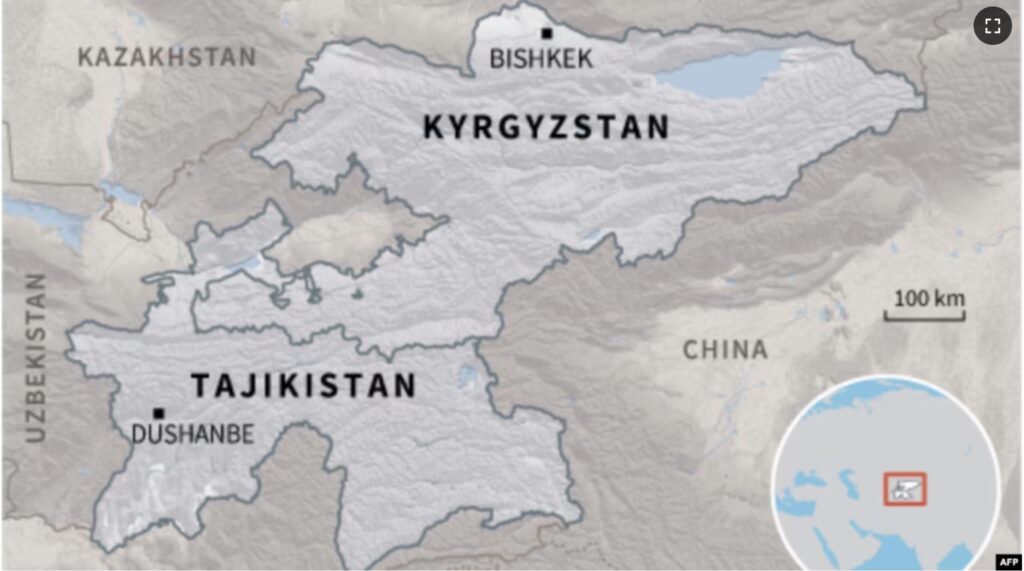
The ongoing process of delimiting the state border between Kyrgyzstan and Tajikistan was discussed during a February 5th meeting between Tajikistan’s president Emomali Rahmon and Kyrgyzstan’s minister of foreign affairs Jeenbek Kulubaev in Dushanbe.  The parties announced that over the past four months the Kyrgyz and Tajik sides have reached an agreement on 196km of the state border, and to date almost 90% of their 975km border has been prepared for demarcation, the Tajik president’s press service said.  Mr Rahmon and Mr Kulubaev also discussed the joint use of water resources of transboundary rivers, and the expansion of commercial and economic relations between the two countries. The delimitation and demarcation of the Kyrgyz-Tajik border has been an issue since the collapse of the Soviet Union. The issue has turned into an urgent problem in recent years after several deadly clashes took place along disputed segments of the border.  Many border areas in Central Asian republics have been disputed since 1991. The situation is particularly complicated around the numerous exclaves in the Ferghana Valley, where the borders of Tajikistan, Uzbekistan, and Kyrgyzstan meet.

President Rahmon Invites Qatari Business to Invest in Tajikistan

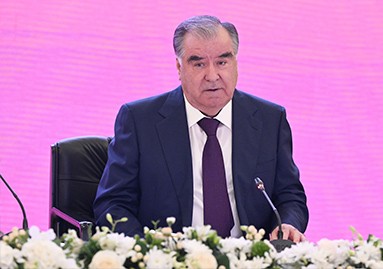
During his state visit to Qatar on January 22nd, the president of Tajikistan, Emomali Rahmon, held negotiations in Doha with the emir of the state of Qatar, Sheikh Tamim bin Hamad Al Thani.  During the meeting, it was proposed to launch joint transport-transit projects in order to expand the logistics networks between the two countries. This will facilitate the transportation of cargo and passengers, as well as transit to other countries, Rahmon’s press service reported. Also on January 22nd, Rahmon met with Qatar’s business community, expressing his views on a broad scope of cooperation opportunities with leading Qatari companies in the fields of agriculture, transport infrastructure, logistics, civil aviation, and tourism. The president emphasized that the government of Tajikistan is ready to support the proposals of investors to establish cooperation in these priority areas. In his speech to the Qatari business community, Rahmon spoke about the current economic situation in Tajikistan and the macroeconomic stability ensured in the country. The president said that Tajikistan’s GDP growth rate in the last 20 years has been more than 7% on average, and in 2023 reached 8.3%, while inflation was 3.8%. “Today, more than 720 public investment projects worth more than USD 13.8 billion are under implementation in our country.” Rahmon said that attracting investments is a priority for the Tajik government, and in this context, vast opportunities for investment have been created, and tax and customs incentives and guarantees are widely applied.  According to Rahmon, Tajikistan’s aluminum production and lithium resources provide for favorable conditions for the production of electric vehicles. “That’s the two main types of materials for the production of electric cars available in our country,” he said. The president pointed out that industrial production can be another future direction of cooperation, adding that projects in the light industry, food, metallurgy, machine building, chemistry, production of construction materials and pharmaceuticals are a priority for Tajikistan. Rahmon also mentioned that Tajikistan is rich in mineral resources, with some 800 deposits of minerals, rare and precious metals, including copper, silver, gold, lead, lithium, antimony, nickel, tungsten, vanadium and other rare minerals having been discovered and partially prepared for mining in Tajikistan. The president added that the reserves of food salt in Tajikistan amount to more than 72 billion tons, which is sufficient to meet the consumption needs of all inhabitants of the planet for this product for more than 300 years.

Infrastructure development: Qatari investors see prospects in Tajikistan

During a state visit to Qatar, Tajik president Emomali Rahmon met with Ahmad Muhammad Tayyib, the head of investment at the Qatari company Diyori, to discuss the implementation of the ‘Diar Dushanbe’ construction project. Qatari companies see prospects for investing in Tajikistan’s tourism infrastructure and social facilities. During the meeting with Mr Rahmon the parties expressed the need for timely realization of the next stages of construction of the project. The Diar Dushanbe project was identified as a “5-star multifunctional complex", which emphasizes its importance for the development of the region. Diar Dushanbe will have an autonomous system for water and energy supply. It will also include business and shopping centers, restaurants, cafes and apartments.

Kyrgyzstan and Tajikistan continue to work on harmonizing state border

Topographic working groups of the two countries gathered in the city of Batken in the Batken region of Kyrgyzstan between January 10 and January 16, and agreed on another major 38.35-kilometer section their state borders, the press service of the Kyrgyzstan Cabinet of Ministers reports. "In accordance with the agreement reached in the period from January 10 to 16, 2024 in the city of Batken of Batken oblast of the Kyrgyz Republic held a meeting of topographic working groups and working groups on legal issues of the government delegations of the Kyrgyz Republic and the Republic of Tajikistan on delimitation and demarcation of the Kyrgyz-Tajik state border," reported Cabinet of Kyrgyzstan on its website. The Kyrgyz authorities note that the meeting was held in an atmosphere of friendship and mutual understanding, and a protocol was signed following the meeting. The parties will continue work on the description of the remaining areas at the next meeting, which will be held in Tajikistan. The previous meeting was also held on the territory of Tajikistan from December 17 to 23, 2023. At that time, almost 12 kilometers of the state border were agreed upon. It should be noted that as of today, Kyrgyzstan and Tajikistan have agreed on 90 percent of the territories of the state border, the total of which is 975 kilometers. Next year, the authorities of both countries plan to finalize the delimitation. Issues related to delineating a common border between the two countries arose after the collapse of the USSR, particularly with regards to lands rich in water resources, given that irrigation of agricultural lands and private plots is critical in this arid region. More than 30 years have passed since the collapse of USSR, and the parties still have not agreed on the disputed territories. This has caused periodic conflicts between the citizens of border villages and residents of enclaves and border guards of Kyrgyzstan and Tajikistan, including the use of heavy weapons. The last such conflict took place on the territory of Batken oblast of Kyrgyzstan and Sughd oblast of Tajikistan in September 2022, where hundreds died deaths on both sides and civilian infrastructure was destroyed. Since May 2021, land and air communication between the countries remains closed. The presidents of the Kyrgyz Republic and Tajikistan have repeatedly discussed the delimitation and demarcation of the state border, and have decided to put an end to this ongoing issue after the above-mentioned most recent conflict. Since then, meetings of topographic groups have been held on a regular basis. The situation on the disputed territories is also monitored by the Collective Security Treaty Organization (CSTO). Both countries are members of the CSTO.

Russian Military to Train Specialists in Tajikistan’s Army

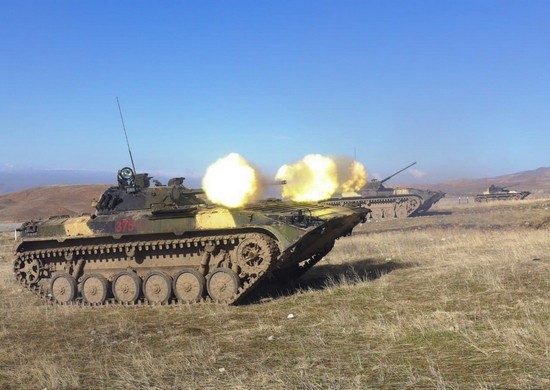
Russian military instructors from the Central Military District of the Russian 201st base in Tajikistan will train 1,000 specialists in the Armed Forces of Tajikistan in 2024, the Russian Ministry of Defense has stated. Training will take place in the Lyaur and Sambuli bases in 14 military specialties: driver mechanic and gunner operator of the T-72 tank, crew commander of the BM-21 Grad multiple launch rocket system, gunner of the 2S1 Gvozdika self-propelled artillery gun, gunner of the BTR-80 armored personnel carrier, gunner-operator of the BMP-2 infantry fighting vehicle, reconnaissance officer, grenade launcher, and others, the ministry said. The 201st military base stationed in Tajikistan is Russia’s largest military facility outside its borders. Located in two cities, Dushanbe and Bokhtar, the bases include motorized rifle, tank, artillery, reconnaissance, and air defense units. Russian President Vladimir Putin had earlier stated during President Rahmon’s visit to Moscow in November 2023 that Russia and Tajikistan would continue deepening cooperation in defense, military-technical, counterterrorism and antidrug trafficking operations. “We will continue working to maintain peace and stability in Central Asia. We intend to continue actively using the potential of the 201st Russian military base in Tajikistan,” Putin said at the time.