• KGS/USD = 0.01143 0%
  • KZT/USD = 0.00202 0%
  • TJS/USD = 0.10599 -0.19%
  • UZS/USD = 0.00008 0%
  • TMT/USD = 0.28575 0%
  • KGS/USD = 0.01143 0%
  • KZT/USD = 0.00202 0%
  • TJS/USD = 0.10599 -0.19%
  • UZS/USD = 0.00008 0%
  • TMT/USD = 0.28575 0%
  • KGS/USD = 0.01143 0%
  • KZT/USD = 0.00202 0%
  • TJS/USD = 0.10599 -0.19%
  • UZS/USD = 0.00008 0%
  • TMT/USD = 0.28575 0%
  • KGS/USD = 0.01143 0%
  • KZT/USD = 0.00202 0%
  • TJS/USD = 0.10599 -0.19%
  • UZS/USD = 0.00008 0%
  • TMT/USD = 0.28575 0%
  • KGS/USD = 0.01143 0%
  • KZT/USD = 0.00202 0%
  • TJS/USD = 0.10599 -0.19%
  • UZS/USD = 0.00008 0%
  • TMT/USD = 0.28575 0%
  • KGS/USD = 0.01143 0%
  • KZT/USD = 0.00202 0%
  • TJS/USD = 0.10599 -0.19%
  • UZS/USD = 0.00008 0%
  • TMT/USD = 0.28575 0%
  • KGS/USD = 0.01143 0%
  • KZT/USD = 0.00202 0%
  • TJS/USD = 0.10599 -0.19%
  • UZS/USD = 0.00008 0%
  • TMT/USD = 0.28575 0%
  • KGS/USD = 0.01143 0%
  • KZT/USD = 0.00202 0%
  • TJS/USD = 0.10599 -0.19%
  • UZS/USD = 0.00008 0%
  • TMT/USD = 0.28575 0%
15 February 2026

Viewing results 127 - 132 of 194

Tajikistan’s Hajj Pilgrims Reach Record Numbers

Around 10,000 Tajikistani nationals traveled to Saudi Arabia in 2023 to complete the Hajj pilgrimage, which is nearly three times higher than five years ago. Prior to the COVID-19 pandemic, 2,000-3,000 Tajikistanis made pilgrimages to the town of Mecca each year. This increase was first reported by the Asia-Plus news site. One of the reasons for the growing number of pilgrims is the improvement of living standards in Tajikistan. In recent years citizens' incomes have increased, meaning they have had the opportunity to go on pilgrimage more often. Additionally, visa procedures for Tajikistan have been simplified by Saudi Arabia's introduction of an e-visa system -- which citizens of Uzbekistan and Kyrgyzstan also have access to. Those going to Mecca can now obtain a tourist visa for $140 through the official Saudi e-visa website. Previously, Tajik citizens could travel to the Kingdom only after first obtaining a visa from the Saudi Arabian embassy in Dushanbe. Another reason is that Hajj pilgrimages are becoming more popular culturally. Tajik society has become more religious in recent years, with some people now performing Hajj three or four times in their lifetime. However, in one of his greetings to the nation last year, the prominent Imam Ali Rahman expressed his concern that some people “make visiting the house of God a special family competition, and [feel obliged to] perform Hajj several times.” Going on Hajj has also become cheaper. In recent years the price of a simple pilgrimage has decreased slightly, and it has become possible to travel through Uzbekistan and Russia. Tajik companies providing Umrah Hajj services this year are asking for between 17,000 somoni ($1,550) and 19,000 somoni ($1,750) per person. Previously this amount ranged from 20,000 somoni ($1,832) to 25,000 somoni ($2,290).
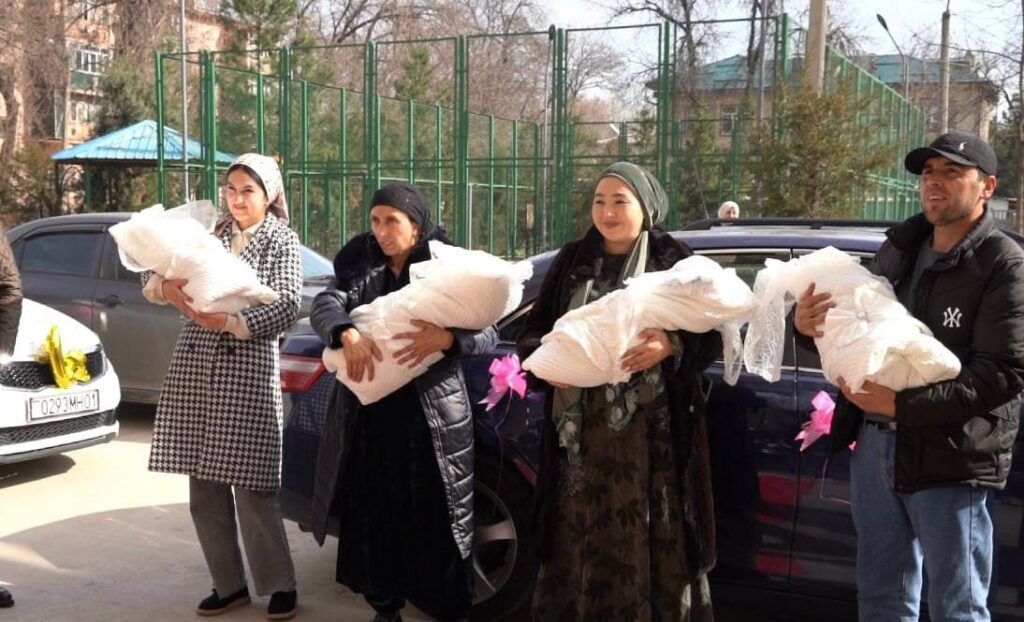

Set of Quadruplets Born in Dushanbe

A set of quadruplets, one boy and three girls, have been born in Dushanbe. They weigh between 1.8 and 2.2 kg, and doctors have declared the newborns to be in good health. The quadruplets' parents intended to give them the names Ahmadjan, Hosiya, Aliya, and Sumaya. The family doesn't yet own a home, are paying exorbitant rent for a one-room apartment, and are seeking assistance from the government. The father of the quadruplets, Kanoatsho Khudoyorov, hopes they will be assigned a one-room apartment in the capital, saying their load would be lessened multiple times over by such a kind deed. “It is difficult to look after and feed children in the village,” he stated. Parents with four or more children have, for a few years now, been eligible for housing assistance or financial aid from the government. While Khudoyorov is very happy about the birth of his children, he's also concerned about the family’s future, because, as the kids get older, the cost will only mount. He finds it challenging to find work that pays the rent, utility bills, and the kids’ needs. “We pay 4,000 somoni ($365) for this apartment; the term ends on February 10, and I need to find a cheaper apartment. My salary is not enough for everything,” said the construction worker. This is the second instance of quadruplets born this year in Tajikistan. Two sons and two daughters were born on January 14th to 27-year-old Mijgona Asoeva of Kizilkala village in the Khatlon Region.

Electronic Devices Banned From Classrooms

The use of personal electronic devices has been banned in schools, the head of Tajikistan’s Ministry of Education and Science, Rahim Saidzoda has said in an interview with Omuzgor. "We have made significant efforts to prevent students from using electronic copies [of materials] while they are in school. We have nearly finished supplying the necessary number of [physical] books to schools. Students were permitted to use electronics in class until recently - this was because of a lack of textbooks. Presently, the circumstances have changed; funds are sufficient, and the books have been published," the minister stated. Another reason for the ban is that parents frequently protested that their childrens' phones were taken away from them at during random searches at some schools, and that some administrators were even demanding payment in exchange for returning the device. Teachers and parents appear split on the issue. The first group feels that gadgets keep kids from studying and they haven’t figured out how to use these devices for learning; the second, on the other hand, feels that new technologies need to be introduced in order to stay up to date. A look at how the issue is handled in Kazakhstan – where children are banned by law from using phones in class - may shed light on the issue. In Kazakhstan, if the school has special boxes, children leave their devices in there, and if not, they are to remain in the children’s backpacks. The Deputy Minister of Education of Kazakhstan, Natalya Jumadildayeva, said she agrees with parents in Tajikistan who believe that use of electronic devices during classes will lower the results of both those using them, and their distracted classmates.

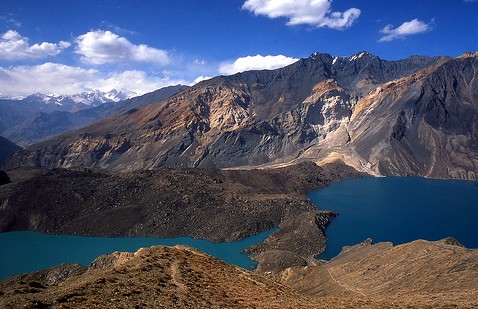
Earthquakes Rekindle Fears Over Lake Sarez

On the evening of January 30th, an earthquake struck in the Gorno-Badakhshan Autonomous Province on the border between Tajikistan and Xinjiang. Though this instance only had a magnitude of 4.4, it comes in the wake of the magnitude 7 quake which pounded the China-Kyrgyzstan border on January 23rd, shaking buildings in Almaty. As recently as February 2023, a series of earthquakes, the largest measuring 6.8, hit forty miles west of Murgab on the border between Tajikistan and China’s Xinjiang province. This was the eighteenth such instance measuring 6.5 or more over the course of the last century, and serves to focus attention on extremely remote Lake Sarez in Tajikistan. [/vc_column_text][vc_single_image image="14212" img_size="full" el_class="scond-image" parallax_scroll="no" woodmart_inline="no"][vc_column_text woodmart_inline="no" text_larger="no"]Plan of Lake Sarez and the Usoi Dam, 1913 At five-hundred-meters deep and 47 miles long, mountainous Lake Sarez contains more than 3.85 cubic miles of water. It was formed in 1911, when a 2.2 billion cubic meter landslide caused by an earthquake with an estimated magnitude of 6.5-7.0 blocked the Bartang River’s path. The sound of the quake was recorded over 2,350 miles away at the Pulkovo seismic station near St. Petersburg. Thus, the tallest natural dam in the world, the three-mile long, 567-meter high Usoi Dam was formed, whilst the villages of Usoi and Sarez were buried beneath the landslide and the lake, respectively, killing 302 people. According to the two survivors, the dust clouds cleared only after some days to reveal a mountain where the village of Usoi used to stand. The lake has been a potential disaster waiting to happen ever since. In 1968, a landslide caused two-meter-tall waves to rock the lake, and with glacial melting causing water levels to rise by eight inches a year, pressure on the natural dam is building. As early as the 1970s, plans were hatched to harness the lake as a hydroelectric power station, but technical issues and its far-flung location saw the scheme come to nothing. In 2018, a deal was signed with Hong Kong-based Heaven Springs Harvest Group to sell the lake’s “blue gold” as drinking water, but inaccessibility again largely scuppered the project.[/vc_column_text][vc_single_image image="13414" img_size="full" el_class="scond-image" parallax_scroll="no" woodmart_inline="no"][vc_column_text woodmart_inline="no" text_larger="no"]Murgab Bazaar, Gorno-Badakhshan - Photo: Times of Central Asia Back in 1997, a gathering of experts in Dushanbe concluded that the Usoi Dam was unstable. Their findings suggested that a powerful earthquake could precipitate a collapse of the dam. However, a study conducted by the World Bank in 2004 contradicted these conclusions, arguing that the dam was, in fact, stable. Nevertheless, the main threat identified was not the dam's general stability but a specific geological feature - a partially detached mass of rock, approximately 0.72 cubic miles in size. There are concerns that this precarious massive rock formation could detach and plunge into the lake. This event could trigger a catastrophic flood, and, as such, while the dam itself may be stable, the potential for disaster still looms large. In this earthquake-prone environment, were the dam to be breached a tidal...

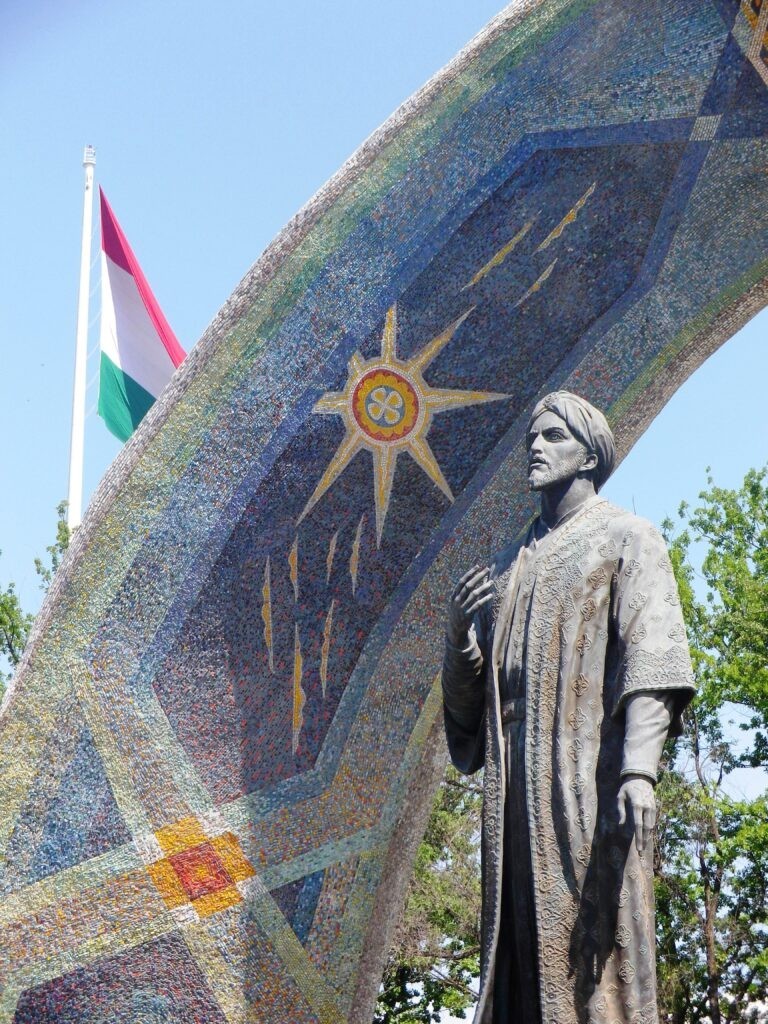
Tajikistan Elevates Cultural Presence with Permanent Delegation at UNESCO

In a significant move, Tajikistan has taken a stride towards enhancing its international cultural representation by establishing a Permanent Delegation to UNESCO. President Emomali Rahmon, on January 12th, issued a decree formalizing the establishment of this delegation. The decision is expected to bolster Tajikistan's standing in the global community, facilitating active engagement with UNESCO, and providing a platform to advocate for and safeguard the nation’s cultural heritage on the international stage. Tajikistan has already made notable contributions to UNESCO's recognition of cultural treasures. In December, the traditional art of text decoration known as "Tazhib" and the celebration of "Sada" secured places on the Representative List of the Intangible Cultural Heritage of Humanity. Additionally, the craft of producing atlas and adras, as well as cultural elements like chakan, the musical genre "falak," and the observance of "Yaldo night" have earned spots on UNESCO's list. Given the shared cultural heritage of Central Asian nations, certain elements transcend national borders, embodying the essence of regional traditions. For instance, Tajikistan, along with other Central Asian countries, shares intangible cultural heritage items like the Navruz holiday, shashmakom music, silk weaving techniques, and the art of making the traditional dish, plov. Tajikistan is actively pursuing UNESCO recognition for the ancient farmers' festival, Mehrgon, as part of its intangible cultural heritage. Mehrgon, deeply rooted in Tajik history, marks the culmination of the harvest season. Its inclusion in UNESCO's list would represent an acknowledgment of Tajikistan's distinctive cultural traditions. Moreover, Tajikistan has submitted a proposal to inscribe twelve sites of ancient Khuttal on the UNESCO World Cultural Heritage Register. This collection of sites includes cities, palaces, fortresses, mausoleums, and monasteries, collectively bearing witness to the profound history of the region. If accepted, the inclusion of these sites on the World Cultural Heritage List would contribute to their preservation for generations to come.

Independent Media Facing Repression in Tajikistan, Says Watchdog

In Tajikistan, President Emomali Rahmon’s bid to centralize control includes efforts to silence political opponents, human rights activists, and independent voices. Now, Tajikistan’s media is in its “worst state” since the years of the civil war, the Committee to Protect Journalists (CPJ) said in a report released on January 4th. In the report, entitled “In Tajikistan, independent media throttled by state repression,” the media watchdog said that seven journalists were sentenced to lengthy prison terms in retaliation for their work in 2022 and 2023. Four journalists - Abdullo Ghurbati, Zavqibek Saidamini, Abdusattor Pirmuhammadzoda, and Khurshed Fozilov - received sentences of seven or seven-and-a-half years, whilst Khushom Gulyam received eight years, Daler Imomali ten years, and Ulfatkhonim Mamadshoeva twenty years. The harsh sentences are seen by many as a deeply chilling escalation in the years-long constriction of independent media, the report states. Only two significant independent media voices now remain in Tajikistan: privately-owned news agency, Asia-Plus, and the U.S. Congress-funded Radio Free Europe/Radio Liberty’s local service, the Czechia-based Radio Ozodi. Both regularly face harassment and threats. Their websites have long been subjected to partial shutdowns by local internet service providers, the CPJ report said. Asia-Plus has been forced to moderate its content, reducing its political coverage following a May 2022 threat from the authorities to shutter its operations. A handful of other outlets either avoid political topics entirely, or barely function due to lack of funding. Several local journalists told CPJ that they were forced to self-censor their reporting, and pointed to a “dramatic fall” in the number of critical articles and an increasing tendency for local media to avoid domestic politics in favor of “safe” topics such as culture, sport, and limited international news. Another big problem the media in Tajikistan faces is its finances. Lacking domestic sources of funding amid a limited advertising market, independent media has been reliant on international donors for years, local journalists told CPJ. Yet in recent times, this source of support has declined significantly, particularly since the start of Russia’s war in Ukraine.