
• KGS/USD = 0.01144 0%
  • KZT/USD = 0.00208 0%
  • TJS/USD = 0.10458 -0.1%
  • UZS/USD = 0.00008 0%
  • TMT/USD = 0.28490 0%
  • KGS/USD = 0.01144 0%
  • KZT/USD = 0.00208 0%
  • TJS/USD = 0.10458 -0.1%
  • UZS/USD = 0.00008 0%
  • TMT/USD = 0.28490 0%
  • KGS/USD = 0.01144 0%
  • KZT/USD = 0.00208 0%
  • TJS/USD = 0.10458 -0.1%
  • UZS/USD = 0.00008 0%
  • TMT/USD = 0.28490 0%
  • KGS/USD = 0.01144 0%
  • KZT/USD = 0.00208 0%
  • TJS/USD = 0.10458 -0.1%
  • UZS/USD = 0.00008 0%
  • TMT/USD = 0.28490 0%
  • KGS/USD = 0.01144 0%
  • KZT/USD = 0.00208 0%
  • TJS/USD = 0.10458 -0.1%
  • UZS/USD = 0.00008 0%
  • TMT/USD = 0.28490 0%
  • KGS/USD = 0.01144 0%
  • KZT/USD = 0.00208 0%
  • TJS/USD = 0.10458 -0.1%
  • UZS/USD = 0.00008 0%
  • TMT/USD = 0.28490 0%
  • KGS/USD = 0.01144 0%
  • KZT/USD = 0.00208 0%
  • TJS/USD = 0.10458 -0.1%
  • UZS/USD = 0.00008 0%
  • TMT/USD = 0.28490 0%
  • KGS/USD = 0.01144 0%
  • KZT/USD = 0.00208 0%
  • TJS/USD = 0.10458 -0.1%
  • UZS/USD = 0.00008 0%
  • TMT/USD = 0.28490 0%

Viewing results 61 - 66 of 310

Tensions Simmer Between Pakistan and Afghanistan, in Setback for Central Asian Trade Hopes

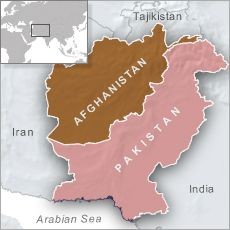
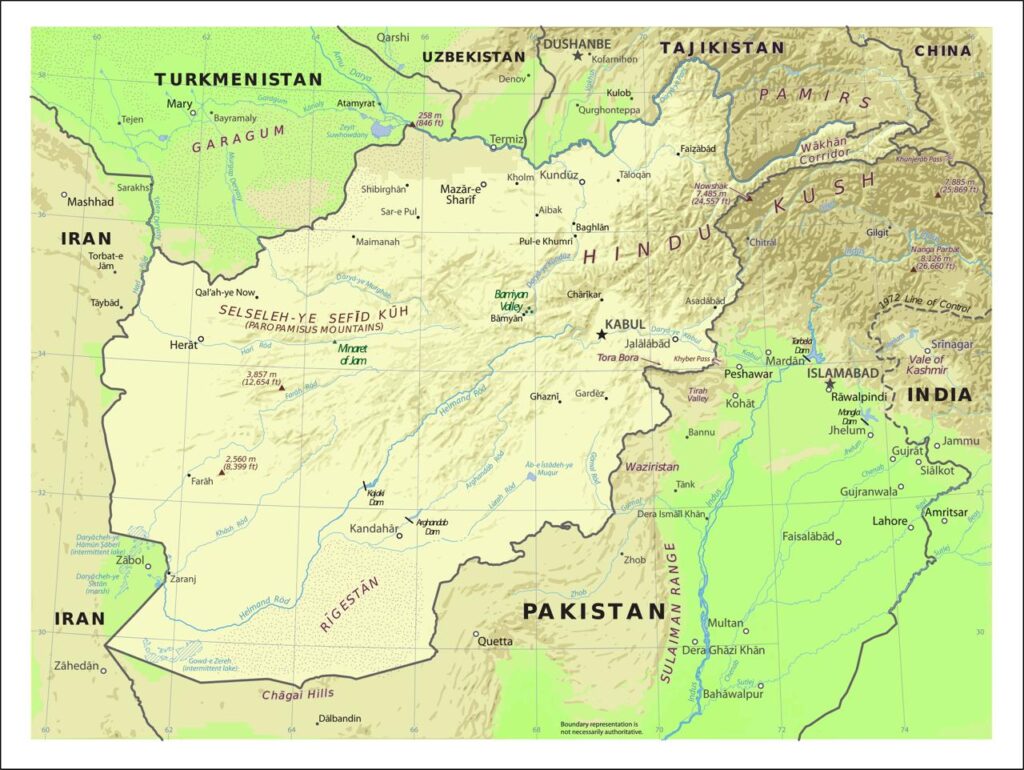
A round of peace talks between Pakistan and Afghanistan in Istanbul came under strain after another clash between the two countries along their border. A resolution to the conflict is important to Central Asian countries that want to trade south through Afghanistan and onward to Pakistani seaports that open the way to the Indian Ocean. Pakistan’s government and the ruling Taliban in Afghanistan accused each other of instigating the latest confrontation on Thursday, though they still expressed commitment to a delicate ceasefire that was agreed to last month. Dozens of people were killed and cross-border trade was suspended during the fighting in October.   According to the Taliban’s account, Pakistani forces fired on the Afghan border town of Spin Boldak as the talks in Turkey began on Thursday.   Afghan forces, “out of respect for the negotiation team and to prevent civilian casualties, have so far shown no reaction. It is worth noting that in the previous round of negotiations, both sides had agreed to extend the ceasefire and prevent any acts of aggression,” Taliban spokesman Zabihullah Mujahid said on X.  Pakistan’s Ministry of Information and Broadcasting, however, said firing started from the Afghan side and that Pakistan forces responded.  “The situation was brought under control due to responsible action by Pakistani forces and the ceasefire remains intact. Pakistan remains committed to ongoing dialogue and expects reciprocity from Afghan authorities,” the ministry said. Turkey, which along with Qatar is mediating, said ahead of the talks this week that the two sides had agreed to continue the ceasefire and establish “a monitoring and verification mechanism” to ensure peace and impose penalties for any violations. But Pakistani Information Minister Attaullah Tarar, while thanking the mediators, said late Friday that Afghanistan had failed to control terrorism, indicating that the talks in Istanbul had not overcome major sticking points.   A key dispute is over Pakistani allegations that militants have used Afghan territory as a sanctuary while carrying out attacks against targets in Pakistan. The Taliban in Afghanistan denies those allegations. Additionally, Afghanistan doesn’t recognize its porous, 2,600-kilometer border with Pakistan, saying it’s a British colonial-era construct that divided the ethnic Pashtun populations that have traditionally dominated Afghanistan.  These complexities pose a challenge for landlocked countries in Central Asia that are looking to diversity their trade routes. Several Central Asia-South Asia projects in the works – the Trans-Afghan Railway, the TAPI natural gas pipeline and the CASA-1000 electricity project - have a long way to go before completion.  Meanwhile, the post-Soviet states of Kazakhstan, Kyrgyzstan, Uzbekistan, Turkmenistan and Tajikistan are working on other trade and investment opportunities. Their leaders held a summit with U.S. President Donald Trump in Washington on Thursday, building ties with the West even as they nurture more established contacts with Russia and China.  
Turkmen Border Guards Delay Medical Aid for Seriously Injured Man at Shavat Checkpoint

At the border between Turkmenistan and Uzbekistan, a seriously injured man was forced to wait for hours at the Shavat checkpoint after Turkmen border guards refused to allow immediate medical evacuation while verifying his documents. The incident involved a married couple from Kunya-Urgench, Turkmenistan, who were en route to visit relatives in Uzbekistan’s Andijan region when they were involved in a car accident on October 13. The man, who was sitting in the front seat, sustained multiple injuries, including broken ribs, a fractured shoulder and foot, and numerous bruises and lacerations. His wife, who was in the back seat, suffered only minor bruises. Following the accident, both were taken to the Khorezm Regional Hospital in Urgench, Uzbekistan, where the man underwent treatment for nine days. His injuries required extensive casting. On October 22, an Uzbek medical commission declared him fit for transport and approved his transfer to Turkmenistan for further treatment. An ambulance transported the patient to the Shavat checkpoint, accompanied by a doctor and his wife. At approximately 11:00 a.m., Turkmen border guards carried the man, still on a stretcher, across the border, assuring the family that an ambulance had already been dispatched from Dashoguz. However, no medical team arrived for another five hours. The man remained on a stretcher on the ground beside the border post until 4:00 p.m., while his wife repeatedly pleaded with officers to call the ambulance again. Although the border guards assisted the man twice when he needed to relieve himself, they did not provide medical assistance. It later emerged that officials were conducting background checks, verifying the authenticity of the couple’s visas, and contacting Ashgabat as well as the Uzbek embassy to confirm the couple’s stated purpose of visiting relatives rather than engaging in commercial activity. When the ambulance eventually arrived, yet another obstacle emerged: Dashoguz Regional Hospital refused to admit the patient, citing concerns over the validity of the diagnosis and the origin of the medical documentation. Only after the intervention of higher authorities was the man finally admitted for treatment.

Central Asia Faces Billions in Climate Adaptation Costs, UNEP Warns

Central Asia ranks among the most climate-vulnerable regions in the world and will require tens of billions of dollars to adapt to the accelerating effects of global warming, according to a new report by the United Nations Environment Programme (UNEP). The report identifies Central Asia as one of the fastest-warming areas globally. However, current adaptation funding remains drastically insufficient to meet the growing threat. A Region Under Threat Developing countries worldwide, including those in Central Asia, will need up to $310 billion annually by 2035 to adapt to climate change. UNEP highlights the region’s specific challenges: rapidly melting glaciers, widespread soil degradation, worsening water scarcity, and increasing aridity, all of which endanger food security and energy sustainability. “If we don't start investing in adaptation now, we will face increasing costs every year,” said UNEP Executive Director Inger Andersen. Tajikistan and Kyrgyzstan are particularly exposed, with more than 70% of their populations employed in agriculture, which depends heavily on mountain rivers fed by glacial runoff. According to UNEP, glacier volumes in the region have shrunk by over 30% in the past decade. The changing flow of the Amu Darya and Syr Darya rivers threatens not only agriculture but also the hydropower sectors in both countries. Diminished access to water could lead to socio-economic instability in vulnerable communities. Funding Gap Widens UNEP estimates that developing countries in Europe and Central Asia need roughly $51 billion annually for adaptation. Yet, only a fraction of that figure is currently being met. Tajikistan, for example, has outlined total climate financing needs of $8 billion by 2030 and $17 billion by 2050. In Uzbekistan, the cost of modernizing irrigation and water management systems alone is expected to approach $10 billion by 2030. UNEP has urged governments in the region to accelerate the updating of national adaptation plans, many of which have not been revised in over a decade, and to enhance cooperation in the Amu Darya and Syr Darya basins. Priority areas include investment in irrigation infrastructure, early warning systems, and flood control. From Glaciers to Farms In response to UNEP’s findings, international organizations have begun to fund targeted adaptation initiatives. The Green Climate Fund, for instance, has approved $250 million for the From Glaciers to Farms program, spearheaded by the Asian Development Bank. The project aims to strengthen agricultural and water resilience in glacier-dependent countries in Central Asia, the South Caucasus, and parts of South Asia. It covers four major river basins: the Naryn and Panj in Central Asia, the Kura in the South Caucasus, and the Swat in Pakistan, benefiting approximately 13 million people. Funding will support the development of irrigation networks, reservoir construction, glacier monitoring, and early warning systems. The program also places a strong emphasis on empowering women entrepreneurs in agriculture and improving the financial sustainability of rural communities.

Border Violence Between Afghanistan and Pakistan: A New Risk for Central Asia

The escalating tensions between Afghanistan and Pakistan are forcing a reassessment of Afghanistan’s viability as a “partner space.” With cross-border clashes increasingly resembling a prolonged pattern rather than isolated incidents, and with both sides showing little willingness to compromise, the question grows more urgent: Can Afghanistan realistically become a partner for Central Asian countries, or is it destined to remain a persistent source of regional instability? This confrontation is deeply unsettling for the countries of Central Asia. Still in the early stages of formulating coherent policies toward Afghanistan, they have tentatively linked their development strategies to the hope of having a stable neighbor to the south – one that might serve as a bridge to South Asia. Against this backdrop, deteriorating Afghan-Pakistani relations breed more frustration and anxiety than hope. No country in the world, except Russia, has recognized the Taliban regime de jure. This broad reluctance reflects deep skepticism; few are willing to assume legal obligations or share responsibility for Kabul’s actions. Yet, Afghanistan remains far from isolated. Its geographic centrality makes it impossible to ignore. Accordingly, Central Asia has developed a distinct approach to dealing with its southern neighbor. It can be summarized as: We do not recognize, but we cooperate; we do not trust, but we verify; we do not agree, but we engage. In essence, Afghanistan’s neighbors, particularly the ones in Central Asia, have adopted a pragmatic, long-term strategy: engage without illusions or formal recognition, while maintaining the flexibility to adjust based on Kabul’s behavior. For these countries, Afghanistan does not stand as an independent priority. Its role is evaluated solely within the broader regional framework. In the most favorable scenario, Afghanistan serves as a transit corridor linking South and Central Asia. Yet even this utility is not indispensable; viable alternatives through Iran, the South Caucasus, Turkey, and China already exist and are expanding. Looking ahead, three broad scenarios can be envisioned: Optimistic: The Taliban demonstrate readiness for responsible engagement. This would enable Afghanistan’s gradual integration into trade and transport initiatives, expansion of economic ties, and a firm establishment as a bridge between Central and South Asia. Pessimistic: Afghanistan remains a chronic risk factor and flashpoint for regional crises. The ongoing Afghan-Pakistani confrontation, no longer a fleeting episode but an entrenched conflict, is a clear warning sign. If this becomes the norm, it will deter serious investment, no stakeholder will commit to a country that cannot guarantee peace with its neighbors. Inertia: Central Asian states continue their cautious balancing act under the logic that “a bad peace is better than a good war.” While cooperation continues at a minimal level, countries prioritize alternative routes and avoid deep commitments. Under this status quo, ambitious projects like the Trans-Afghanistan Railway and the TAPI pipeline are unlikely to materialize. The former risks losing the “trans” prefix; the latter may, for now, become little more than a Turkmenistan-Afghanistan venture. Nonetheless, there remains a window for diplomacy. Pressured by Turkey and Qatar, Kabul and Islamabad have agreed to resume negotiations aimed...

Turkmenistan Halts Gas Exports to Turkey Amid Contract Talks

Turkmenistan has temporarily suspended natural gas exports to Turkey, according to an October 24 report by the Chronicles of Turkmenistan, which cited Maksat Babaev, chairman of the state concern Turkmengaz. Babaev made the announcement during a press conference following the Oil and Gas of Turkmenistan 2025 international conference. Gas deliveries began in March 2025 under a short-term contract for 2 billion cubic meters per year. The project was framed as a pilot initiative to assess technical and logistical challenges. Murad Archaev, Deputy Chairman of Turkmengaz, stated that the company is fully prepared to resume supplies. “The Turkish side was very pleased with the start of deliveries. We also support it, and once the existing issues are resolved, supplies will continue under the signed contract,” Archaev said, as quoted by MK Turkey. Babaev added that Turkmenistan has other potential buyers if an agreement on price or volume cannot be reached. “This is the market,” he said, according to Oilcapital, citing Reuters. As previously reported by The Times of Central Asia, Turkey began importing Turkmen gas via Iran under a swap agreement, with deliveries totaling about 1.3 billion cubic meters by year-end. In May, President Recep Tayyip Erdoğan announced Ankara's intention to extend the deal for another five years. Meanwhile, Turkey’s Ministry of Energy said in October that it seeks to increase gas imports from Turkmenistan via the Caspian Sea. The ministry emphasized that the Turkish market could serve as a gateway for Turkmen gas to reach other countries, including European Union members. Earlier this year, both sides hailed the launch of deliveries as a milestone in regional energy cooperation.

Cyprus as a Mirror of Turkish Geopolitics: How Ankara Uses Northern Cyprus to Project Influence in Central Asia

Northern Cyprus has become a microcosm of Turkish foreign policy, a space where Ankara combines military presence, the ideology of “Turkic brotherhood,” and economic leverage. For Turkey, this territory is not merely a long-standing geopolitical dispute but a laboratory for a new diplomatic model centered on the vision of a “great Turkic world.” As noted by Stratfor, despite the decisive victory of Republican Turkish Party leader Tufan Erhürman in the October 19, 2025, presidential elections in the self-declared Turkish Republic of Northern Cyprus (TRNC), a candidate who supports renewed negotiations with the Republic of Cyprus and advocates for a federal model, Ankara has shown no intention of revising its entrenched two-state doctrine. Analysts suggest Turkey may apply economic pressure and diplomatic isolation, including suspension of subsidies and credit lines, should Erhürman attempt to implement a federal solution. Concurrently, Turkey is lobbying for the TRNC’s recognition within the Organization of Turkic States (OTS), aiming to set a symbolic precedent: if Turkic-speaking nations will not support each other, who will? For Central Asia, this initiative reflects Ankara’s commitment to unifying the Turkic world under its political leadership, extending far beyond cultural solidarity. Political Implications for Central Asia Turkey’s push to incorporate the TRNC into the OTS shifts the organization from a cultural bloc to a geopolitical instrument. Should Northern Cyprus gain observer status, Ankara will likely expect symbolic support from its Turkic partners. This poses a significant dilemma for Central Asian states. Aligning with Turkey could be perceived by Western actors as a breach of international law, while maintaining neutrality might be viewed as a rejection of Turkic unity. Kazakhstan, Uzbekistan, and Turkmenistan have so far emphasized adherence to international law and sovereignty. At the April 2025 EU-Central Asia summit in Samarkand, these states jointly reaffirmed UN Security Council resolutions from the early 1980s, which declared the TRNC’s independence and all related separatist actions legally invalid. Kyrgyzstan may face a more delicate challenge due to its deep humanitarian and educational ties with Turkey. Northern Cyprus thus serves as a litmus test for Turkic integration: how closely can nations align without compromising their political autonomy? Economic and Energy Dimensions Cyprus plays a strategic role in Turkey’s energy policy, linking the Caspian region, the Caucasus, and the Eastern Mediterranean. Turkish control over Northern Cyprus bolsters its influence over maritime logistics, offshore gas development, and export corridors. This holds direct relevance for Central Asia. A stronger Turkish position in the Mediterranean enhances its leverage over energy transit routes from the Caspian to Europe, particularly in relation to the Trans-Caspian pipeline and the Middle Corridor. Over time, Ankara is expected to use energy infrastructure as a tool for political engagement, promoting an “economy of Turkic solidarity”, offering mutual benefits, but often tied to strategic conditions. Security and Military Presence The TRNC functions as a prototype for Turkey’s military protectorate model, a way to retain control while presenting itself as a guarantor of stability. This model is echoed across the Turkic region through Turkey’s expanding military partnerships...
