• KGS/USD = 0.01144 0%
  • KZT/USD = 0.00205 0%
  • TJS/USD = 0.10784 0%
  • UZS/USD = 0.00008 0%
  • TMT/USD = 0.28490 0%
  • KGS/USD = 0.01144 0%
  • KZT/USD = 0.00205 0%
  • TJS/USD = 0.10784 0%
  • UZS/USD = 0.00008 0%
  • TMT/USD = 0.28490 0%
  • KGS/USD = 0.01144 0%
  • KZT/USD = 0.00205 0%
  • TJS/USD = 0.10784 0%
  • UZS/USD = 0.00008 0%
  • TMT/USD = 0.28490 0%
  • KGS/USD = 0.01144 0%
  • KZT/USD = 0.00205 0%
  • TJS/USD = 0.10784 0%
  • UZS/USD = 0.00008 0%
  • TMT/USD = 0.28490 0%
  • KGS/USD = 0.01144 0%
  • KZT/USD = 0.00205 0%
  • TJS/USD = 0.10784 0%
  • UZS/USD = 0.00008 0%
  • TMT/USD = 0.28490 0%
  • KGS/USD = 0.01144 0%
  • KZT/USD = 0.00205 0%
  • TJS/USD = 0.10784 0%
  • UZS/USD = 0.00008 0%
  • TMT/USD = 0.28490 0%
  • KGS/USD = 0.01144 0%
  • KZT/USD = 0.00205 0%
  • TJS/USD = 0.10784 0%
  • UZS/USD = 0.00008 0%
  • TMT/USD = 0.28490 0%
  • KGS/USD = 0.01144 0%
  • KZT/USD = 0.00205 0%
  • TJS/USD = 0.10784 0%
  • UZS/USD = 0.00008 0%
  • TMT/USD = 0.28490 0%

Viewing results 37 - 42 of 148

ADB Approves $75M Loan to Boost Nursing Sector in Turkmenistan

The Asian Development Bank (ADB) has approved a $75 million loan and an additional $2 million grant from the Japan Fund for Prosperous and Resilient Asia and the Pacific to expand and improve the nursing and midwifery workforce in Turkmenistan. According to an ADB statement, this marks the bank’s first health sector project in the country. “The project aims to provide high-quality health services based on people’s needs and ensure equitable access to health care through strengthening the nursing profession and education,” said ADB Country Director for Turkmenistan Artur Andrysiak. He noted that this is ADB’s third project in Turkmenistan, reflecting a growing partnership as the Bank and the country celebrate 25 years of cooperation. The Turkmen government has prioritized healthcare reform, with a focus on improving the education and qualifications of health workers. Nurses, often the first point of contact in the health system, will be empowered to deliver both essential care and preventive services under the new initiative. Plans include the design and construction of a climate-resilient nursing school in Ashgabat, featuring state-of-the-art facilities such as clinical simulation labs, dormitories, a mother-friendly room, and an edible garden to promote nutrition. The project will also provide new medical and educational equipment and update curricula, teaching methods, and faculty training in line with international standards. The total project cost is estimated at $98 million, with the Turkmen government contributing $23 million in counterpart financing. The initiative builds on ADB’s growing cooperation with Turkmenistan in recent years. In August 2024, ADB adopted a new country partnership strategy for Turkmenistan covering 2024-2028. The strategy focuses on supporting the transition to a climate-resilient and sustainable economy, enhancing competitiveness through diversification and human capital development, and advancing structural reforms and institutional capacity.

The Unseen Animals of Central Asia: A Photography Exhibit by Bogna Wiltowska

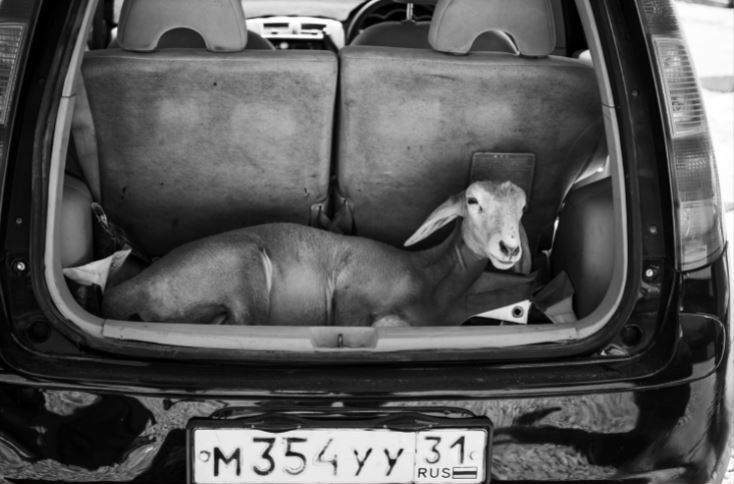
For six months, Polish photographer Bogna Wiltowska documented animals in farms and slaughterhouses in Central Asia as a We Animals Fellow. On World Farmed Animals Day (Oct 2nd), a virtual exhibition of her work will open, allowing everyone to witness the untold stories of the animals Bogna encountered in Kyrgyzstan and Kazakhstan - countries experiencing the gradual industrialization of animal agriculture. Explaining her choice to focus on animals in this yet unexplored region, Bogna said, “Until now, the lives of farmed animals in Central Asia have remained largely undocumented. At the same time, I knew that an animal advocacy movement led by passionate grassroots activists was slowly beginning to emerge there. This was the perfect moment to take a closer look at what was happening and give animals a voice in countries where they aren’t often considered.” [caption id="attachment_36666" align="aligncenter" width="734"] Image: Bogna Wiltowska[/caption] Every year, We Animals awards a small number of Animal Photojournalism Fellowships, which support up-and-coming photojournalists to tell the stories of animals used for food. Fellows work remotely with We Animals’ founder, award-winning photojournalist Jo-Anne McArthur, for approximately six months. The Fellow receives funding to cover project costs and a stipend for the duration of the Fellowship, totalling $6,500 CAD ($4,670). Based in Poland, Bogna is the Director of Investigations at the non-profit Otwarte Klatki and has worked in several countries documenting industrial farming and rescuing animals. Despite witnessing enormous suffering, she remains committed to a better world for animals. [caption id="attachment_36667" align="aligncenter" width="732"] Image: Bogna Wiltowska[/caption] Bogna was awarded the fellowship in recognition of her experience, well-planned project, and desire to grow in the field of animal photojournalism. Her project illuminates underrepresented animals and provides advocates in Central Asia with strong visuals for their work. Reflecting on this project, Bogna said, “The Fellowship was one of the most important experiences in my work for animals. After over a decade of working for animals and managing a large organization with an investigations team, I felt deeply tired and overwhelmed. The Fellowship placed me in a completely new role. This time, I was the one receiving support (instead of giving it), and I had the chance to learn from the best in areas where I had previously been self-taught.” [caption id="attachment_36668" align="aligncenter" width="1163"] Image: weanimals.org[/caption] The virtual exhibition will run from October 2nd to 31st, 2025. The free event is entirely virtual and available in English. It contains some graphic imagery.

Turkmenistan Expands Educational Partnership with UK’s AQA

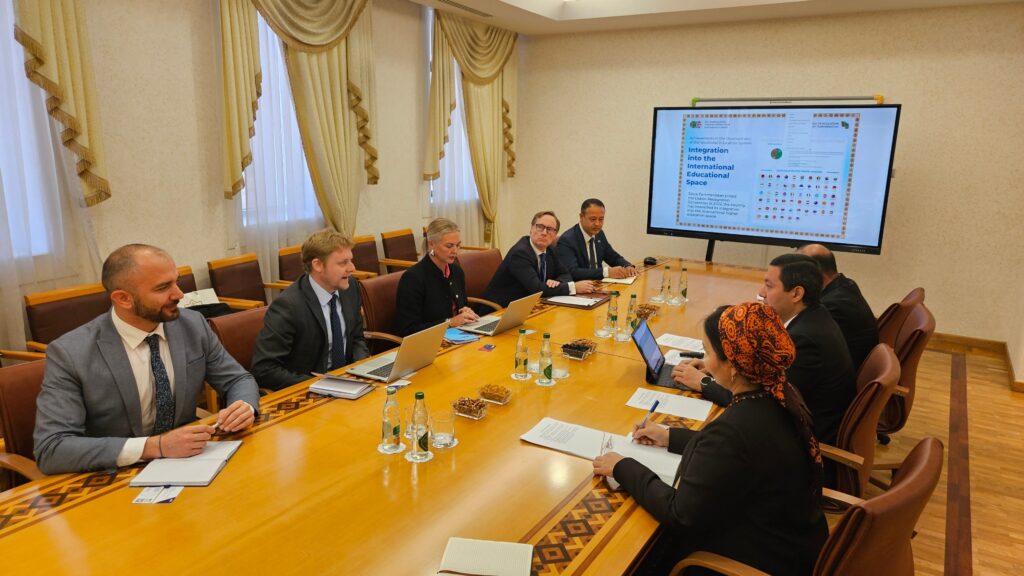
The Ministry of Education of Turkmenistan has held an official meeting with representatives of AQA Global Assessment Services, a leading UK-based organization specializing in educational assessment. The AQA delegation included Sean Crowley, Director of International Business Development; Anna Green, Director of Assessment Systems; and regional consultant Vali Huseyn. Deputy Minister of Education Azat Ataev emphasized Turkmenistan’s interest in deepening strategic cooperation with AQA, particularly in introducing modern methods of academic evaluation. “Our key task is to improve the quality of education and ensure it fully meets the needs of the labor market,” Ataev said. Regional Experience AQA has led numerous educational reform initiatives globally, including across Central Asia. In Uzbekistan, the organization contributed to the development of a new model for senior school graduation exams, aligning national assessments with international standards. In Kazakhstan, AQA supported the transition to a criteria-based assessment system, which formed the basis for updated qualification requirements. Experts note that such reforms increase trust in national diplomas, improve transparency, and make education systems more competitive and aligned with labor market demands. Prospects for Cooperation During the meeting in Ashgabat, both sides discussed several areas for collaboration, including: the introduction of modern examination platforms digital analytics of learning outcomes development of qualification standards training of teachers and administrators in examination processes Particular emphasis was placed on methodological support and establishing a systematic approach to educational planning. According to participants, the adoption of international best practices will help Turkmenistan build a sustainable, data-driven model of educational development.

“Ergenekon Is Not Just a Myth, It’s a Cultural Bridge”: An Interview with Artist and Designer Emre Erdur

Today, comics and visual storytelling are increasingly going beyond entertainment. They are becoming part of a cultural dialogue, helping audiences reconnect with their roots. One such project is the graphic novel series The Legend of Ergenekon (Ergenekon Destanı), created by Turkish artist and designer Emre Erdur. The Legend of Ergenekon is a Turkic origin myth that tells of a people driven into a remote valley after defeat in battle, where they lived in isolation for centuries until a blacksmith forged a path through the surrounding mountains. Guided by a gray wolf, they emerged to reclaim their strength and expand across the steppe. In Central Asia, the story symbolizes resilience, unity, and renewal, often invoked as a metaphor for nations overcoming hardship to reassert independence and identity on the Eurasian crossroads. It resonates strongly in Kazakhstan, Kyrgyzstan, Turkmenistan, and Uzbekistan, where Turkic identity, language, and heritage are foundational. Born in Istanbul and trained as an architect at Mimar Sinan Fine Arts University, Emre Erdur worked for many years in the entertainment and design industries. Since 2019, however, he has dedicated himself to developing a multi-volume graphic novel series inspired by ancient Turkic history and mythology. His work was first presented at a festival in Taldykorgan. As part of his research, he visited the National Museum of Kazakhstan in Astana and collaborated with historian Assoc. Prof. Dr. Talgat Moldabay to ensure historical accuracy. [caption id="attachment_35647" align="aligncenter" width="1824"] Image: Emre Erdur[/caption] For Central Asia, Ergenekon Destanı is more than a creative project; it represents an effort to connect a shared heritage through the language of comics and popular culture. In an interview with The Times of Central Asia, Emre Erdur spoke about his inspiration, research, the role Kazakhstan plays in his work, and his plans for expanding this unique visual universe. TCA: You were born and educated in Turkey, yet you chose to dedicate yourself to wider ancient legends and Turkic history. When did you first feel drawn to this theme? Erdur: Yes, I was born in the westernmost corner of Turkic geography, but every individual in this world has cultural roots that reach out and nourish them. Naturally, as an artist, the desire to draw from and explore my own roots is an inner force. Although I was born and raised in Istanbul, you can find traces of our roots as far as Yakutia in Russia, Buryatia, Mongolia, the Altai, further south in East Turkestan, in the Gobi Desert, and even in Korea. None of these places feels separate from us; you can sense the connection. Of course, as a human being, every part of this world is valuable and fascinating; each region holds its own beauty and heritage. But there is also something called “national identity,” which is different from our individual identity. Our soul cannot be confined to this world; it knows no geography or race, it belongs beyond time and space. Yet during our lifetime on Earth, we do carry both national and individual identities, and defining them correctly...

Knowledge Day in Central Asia: What’s Changing in Schools This Academic Year?

Secondary schools across Central Asia are embracing modern teaching methods and aiming to elevate the status of teachers, as the new academic year begins with a wave of reforms. Kazakhstan: AI in Classrooms and Teacher Protections In Kazakhstan, the academic year begins on September 2, as Constitution Day on the 1st is a national holiday. Over 370,000 first-graders are expected to enter school this year. As previously reported by The Times of Central Asia, significant reforms are underway in the country’s education system. Amendments to the Law “On the Status of Teachers” will shield educators from non-teaching duties and protect them from undue legal responsibility. President Kassym-Jomart Tokayev has emphasized that educators should not be held accountable for incidents involving children that occur outside school or due to parental negligence. New “personal safety” lessons will also be introduced across all educational levels, from kindergartens to colleges. These age-appropriate classes will cover topics ranging from water safety and interaction with strangers to cyberbullying, financial literacy, and legal awareness. Schools and colleges are also rolling out DosbolLIKE, an anti-bullying initiative piloted in 50 schools last year, designed to curb bullying in student communities. Artificial intelligence will be introduced into the curriculum via “Digital Literacy” and “Computer Science” classes. AI-focused online courses called Day of AI are now available for grades 1-11, with training programs also developed for teachers. Despite the construction of 1,200 new schools accommodating over a million students in recent years, the high birth rate continues to strain infrastructure. In Almaty alone, the shortage exceeds 34,000 school places. Uzbekistan: Ivy League Aspirations and Civic Values In Uzbekistan, school also starts on September 2, a customary date. The first lesson will be conducted under the motto: “In the name of the Motherland, in the name of the nation, in the name of the people!” According to the Ministry of Preschool and School Education, 738,000 first-graders will receive gifts from President Shavkat Mirziyoyev. An international school is set to open this September, initially enrolling 60 top-performing graduates of the 8th grade. The curriculum will include leadership and social activism training, with a focus on preparing students for admission to Ivy League universities. A nationwide talent identification and development program is also in development. The weekly Kelazhak Soati (“Hour of the Future”) class will debut this year, aiming to strengthen students’ moral values and encourage reflection on their future roles in society. Kyrgyzstan: Transition to 12-Year Education This academic year marks Kyrgyzstan’s official transition to a 12-year education system. The reform affects lesson structures, curricula, and textbooks. The transition, to be completed by 2028, includes the redistribution of students across grade levels. For example, third graders born in 2015 will skip to fifth grade, and sixth graders born in 2012 will advance to eighth grade. Further shifts are scheduled for the next two academic years. While the extended education model is expected to allow deeper learning and skills development, the transition period may cause confusion among students, parents, and educators. Adapting to new...

Bold Pavilions, Big Statements: Central Asia at Osaka Expo 2025

On a sweltering August day, The Times of Central Asia arrived at the Osaka Expo 2025. The theme, "Designing Future Society for Our Lives," set the stage for a carnival of new ideas and technology. Pavilions buzzed with invention, each one a world of its own. Central Asia turned heads - with all five countries represented - with vibrant stalls, bustling booths, and grand castle-like showpieces that drew crowds from every corner. [caption id="attachment_35420" align="aligncenter" width="2560"] Kazakhstan Pavilion; image: TCA, Stephen M. Bland[/caption] Kazakhstan’s pavilion presents the theme “Born Bold” in the “Connecting Lives” zone, alongside South Korea, Germany, Luxembourg, Nepal, Azerbaijan, Iran, Monaco, and Türkiye. At its heart rises the shanyrak, the sacred crown of the yurt, once a symbol of roots and now a beacon of unity, mirroring the Expo’s spirit of innovation and shared horizons. The story begins with the essence of the Kazakh people. Generations, history, culture, and traditions unfold from the Kazakh Khanate and the vast steppe to Abai’s poetry and the nation’s sporting heroes. It is a narrative of memory and strength, where the past is not closed, but carried forward as a living value. [video width="1280" height="720" mp4="https://timesca.com/wp-content/uploads/2025/08/KZ1-REMOVE-AUDIO-Videobolt.net_.mp4"][/video] From history, the focus shifts to unity. Every guest becomes part of the experience as their face is woven into a digital mosaic, a vivid symbol of belonging. Interactive technologies present Kazakhstan as a country where diversity does not divide but connects. From past to present, the spotlight then falls on a Kazakhstan that is inventive and future-ready. Visitors explore the country’s energy transition, green initiatives, digitalization, and work in artificial intelligence, alongside its rise as an investment hub. [caption id="attachment_35413" align="aligncenter" width="2560"] Prolonging life - ALEM at the EXPO; image: TCA, Stephen M. Bland[/caption] The final chapter places pride and place on the groundbreaking ALEM (Astana Life Ex-situ Machine) developed by Kazakh scientists. Created by the Heart Center Foundation, it is already redefining the possibilities of transplantation. The window for organ transplants is short, from just a few hours for a heart or lungs to more than a day for a kidney. ALEM changes the game. By replicating the body’s internal conditions, it can keep a donor heart alive for 24 hours, opening new possibilities. Only a few models currently exist, including the one on display in the pavilion. [caption id="attachment_35414" align="aligncenter" width="2560"] The Turkmenistan Pavilion; image: TCA, Stephen M. Bland[/caption] The Turkmenistan Pavilion dazzles with three lavish floors beneath an iconic, rounded-triangular ceiling that symbolizes circulation, sustainability, and the flow of life. On the ground level, an epic immersive video left the Japanese audience gasping as it honored Turkmenistan’s great men, legendary horses, and loyal dogs, while women appeared only in fleeting roles. [video width="1280" height="720" mp4="https://timesca.com/wp-content/uploads/2025/08/TK1.mp4"][/video] The second-floor shifts to the present, celebrating modern achievements, from the smart city of Arkadag to advances in industry, finance, and science. The space unfolds as an eclectic mix of books, jewelry, rugs, and even everyday objects like bottles of oil. At its center, a glowing...