• KGS/USD = 0.01144 0%
  • KZT/USD = 0.00210 0%
  • TJS/USD = 0.10438 0%
  • UZS/USD = 0.00008 0%
  • TMT/USD = 0.28490 0%
  • KGS/USD = 0.01144 0%
  • KZT/USD = 0.00210 0%
  • TJS/USD = 0.10438 0%
  • UZS/USD = 0.00008 0%
  • TMT/USD = 0.28490 0%
  • KGS/USD = 0.01144 0%
  • KZT/USD = 0.00210 0%
  • TJS/USD = 0.10438 0%
  • UZS/USD = 0.00008 0%
  • TMT/USD = 0.28490 0%
  • KGS/USD = 0.01144 0%
  • KZT/USD = 0.00210 0%
  • TJS/USD = 0.10438 0%
  • UZS/USD = 0.00008 0%
  • TMT/USD = 0.28490 0%
  • KGS/USD = 0.01144 0%
  • KZT/USD = 0.00210 0%
  • TJS/USD = 0.10438 0%
  • UZS/USD = 0.00008 0%
  • TMT/USD = 0.28490 0%
  • KGS/USD = 0.01144 0%
  • KZT/USD = 0.00210 0%
  • TJS/USD = 0.10438 0%
  • UZS/USD = 0.00008 0%
  • TMT/USD = 0.28490 0%
  • KGS/USD = 0.01144 0%
  • KZT/USD = 0.00210 0%
  • TJS/USD = 0.10438 0%
  • UZS/USD = 0.00008 0%
  • TMT/USD = 0.28490 0%
  • KGS/USD = 0.01144 0%
  • KZT/USD = 0.00210 0%
  • TJS/USD = 0.10438 0%
  • UZS/USD = 0.00008 0%
  • TMT/USD = 0.28490 0%

Viewing results 4699 - 4704 of 5671

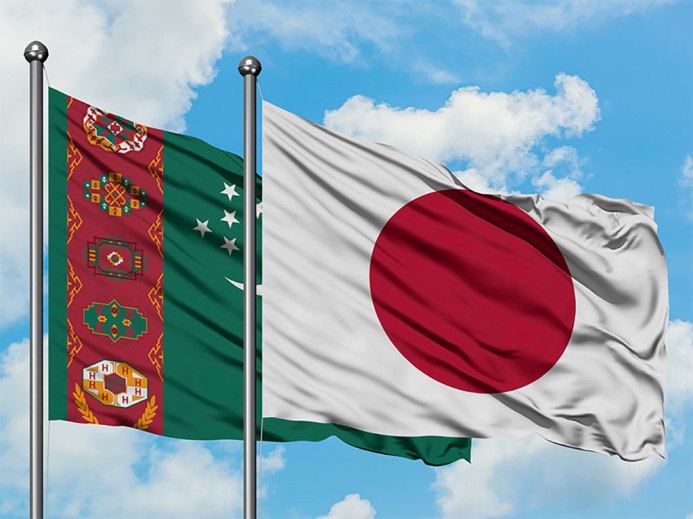
Turkmenistan Strengthens Cooperation with Japanese Investors

As reported by TDH, Gurbanguly Berdimuhamedov, chairman of the Halk Maslahaty of Turkmenistan, recently engaged in a meeting with representatives of Japan's Kawasaki Heavy Industries Ltd., including Senior Strategic Advisor Tatsuya Watanabe and Executive Director Kenji Sanada. During the meeting,  Japan's role as an important strategic partner for Turkmenistan in the Asia-Pacific region was noted, with particular regard to bilateral cooperation between the two countries and within the framework of international organizations, including the UN. A long-term partnership has been established with Kawasaki Heavy Industries Ltd., and several major projects have been implemented, including a plant for producing gasoline from natural gas in Ovadandepe, a urea plant in Mary province, and the Keliati cement plant. New opportunities for cooperation were discussed alongside Turkmenistan's plans to produce and process natural gas. The importance of using advanced technologies and observing environmental standards in the implementation of projects was emphasized.

U.S. Seeks Alternative Routes for Central Asia’s Exports

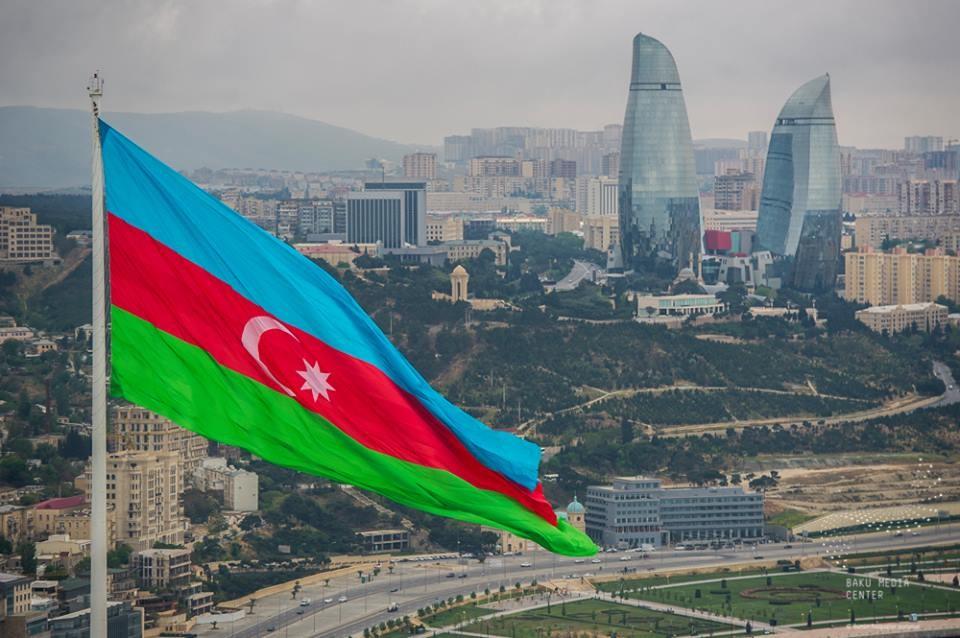
According to reports, U.S. Assistant Secretary of State for European and Eurasian Affairs James O'Brien stated to the House Foreign Affairs Committee,  that the United States wants to ensure that items exported from Central Asia go through routes that exclude Russia and China. One such route is through Azerbaijan. “This applies to the entire Central Asian region; all of these countries’ exports to world markets currently go through China and Russia. For a workaround, they need to cooperate with Azerbaijan,” commented O'Brien, regarding goals of his upcoming trip to Baku. “One route goes through Georgia to the Black Sea, but another, potentially larger, would go through Azerbaijan, Armenia, and Turkey." In order to orchestrate such, the diplomat explained, "we need a peace agreement between Azerbaijan and Armenia.” O’Brien added that the U.S. supports the conclusion of a peace agreement between Armenia and Azerbaijan.

Turkmenistan to Increase Border Crossing Limit from Afghanistan to 120 Trucks Daily

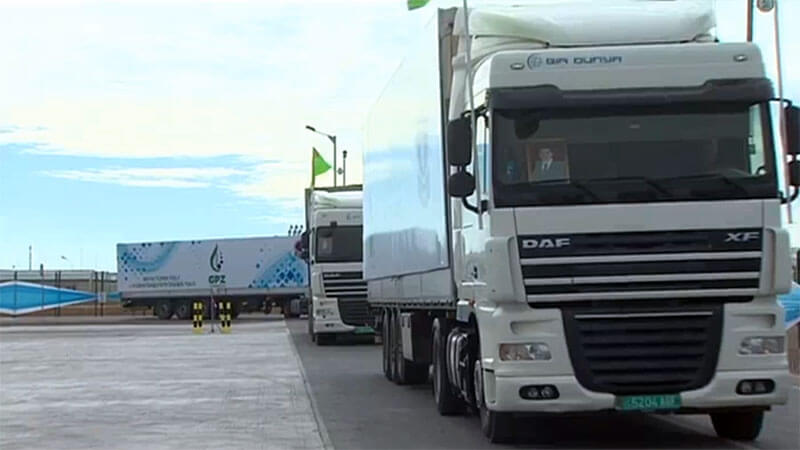
Bakhtar News reported on June 26 that Turkmenistan is ready to increase the number of commercial cargo trucks passing through the border between Serkhetabad and Torgundi from Afghanistan to 120 per day. This issue was discussed at a meeting between the Consul General of Turkmenistan in Afghanistan, Batur Yulov, and the Governor of Herat Province, Sheikh Mawlana Noor Ahmad Islamjar. Consul General Yulov also reported that Turkmenistan has completed repair work at the Noor Jihad substation to increase the volume of electricity exported to Afghanistan. In turn, Mawlana Noor Ahmad Islamjar once again called for acceleration of the construction of the TAPI gas pipeline, as well as organizing a meeting with the participation of the transport departments of Afghanistan, Turkmenistan, and Kazakhstan to discuss the resumption of the China-Kazakhstan-Turkmenistan route. The governor of Herat also asked that the procedure for issuing visas to Afghan traders who are transporting fresh and dried fruits to Turkmenistan be simplified. In February 2024, the chairman of the Halk Maslahaty (People’s Council), Gurbanguly Berdimuhamedov, promised to simplify the issuance of visas to Afghan businessmen and transport workers in a meeting with the head of the Ministry of Foreign Affairs of Afghanistan, Amirkhan Muttaki.

Fugitive Oligarchs Ablyazov and Khrapunov Ordered to Return $32 Million to Kazakhstan by U.S. Court

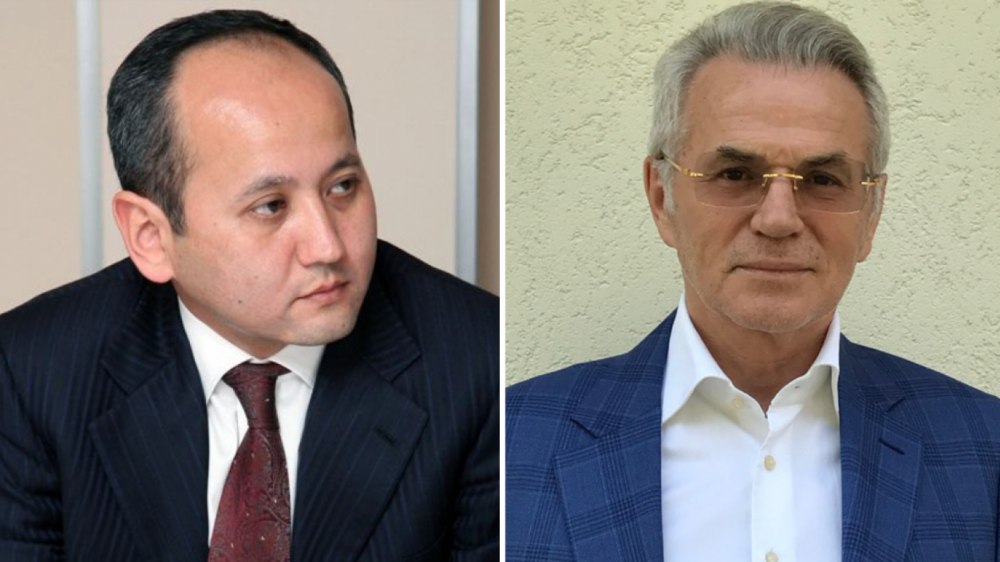
Kazakhstan has secured a victory in the United States against Felix Sater and his companies, which were involved in investing money stolen by Mukhtar Ablyazov from BTA Bank. The jury in the U.S. District Court for the Southern District of New York awarded over $32 million in favor of BTA and the city of Almaty. In addition, the Kazakh oligarch and former Mayor of Almaty and Minister of Emergency Situations, Viktor Khrapunov, was reported by BTA's press service to have caused multi-billion-dollar damages through his actions. After a three-week trial, the jury recognized BTA Bank and the city of Almaty as victims of Sater's unlawful activities, which included the misappropriation of property, unjust enrichment, and obtaining money fraudulently. The compensation awarded exceeded the requested amount, totaling more than $32 million including interest. The trial, which began on June 10, 2024, demonstrated that Mukhtar Ablyazov abused his position at BTA Bank by issuing fictitious loans worth billions of dollars, leading to the bank’s collapse. At the time, BTA was the third-largest bank in Kazakhstan. Ablyazov also privatized state land and sold it at undervalued prices to companies he controlled. In addition, the Khrapunov's fraudulent actions, meanwhile, caused over $300 million in damages to Almaty, leaving significant urban land undeveloped, whilst other assets were sold to the Khrapunovs shell companies for significantly less than their market value through fictitious tenders. Evidence presented in court showed that Ablyazov and Khrapunov combined their stolen funds, with Ilyas Khrapunov, Viktor’s son and Ablyazov’s son-in-law, accused of laundering a substantial part of these funds. In September 2018, a UK court fined Ilyas Khrapunov $500 million for helping Ablyazov breach an asset freezing order. The Bayrock Group, Inc., Global Habitat Solutions (both owned by Sater), and MeM Energy Partners LLC (owned by Mendel Mochkin) were found to have facilitated the laundering of the stolen money into the U.S. financial system. The jury determined that Sater and Mochkin knowingly laundered the funds stolen by Ablyazov and Khrapunov. Additionally, the jury, having been presented with comprehensive evidence of Ablyazov's fraud against BTA Bank, returned a unanimous verdict against his co-conspirators. For the first time, a U.S. jury also unanimously ruled in favor of the city of Almaty concerning fraud committed by Viktor Khrapunov. Sater was not the only defendant in the asset laundering case. Daniel Ridloff and RRMI-DR LLC were also ordered to return assets to BTA and the Almaty Akimat. Ferrari Holdings LLC, another defendant, is in default, but Almaty Akimat and the bank plan to seek a judgment against it. In Kazakhstan, in 2018 Mukhtar Ablyazov was sentenced in absentia to life imprisonment for organizing a murder and embezzling funds from depositors of BTA Bank. In the same year, Viktor Khrapunov and his wife, Leila Khrapunova, were also sentenced in absentia to 17 and 14 years in prison, respectively. Back in December 2022, the Southern District Court in New York ruled against Ablyazov and his associates in the amount of $218 million. In total, Ablyazov stands accused of...

New Report Analyses Eurasian Transport Network

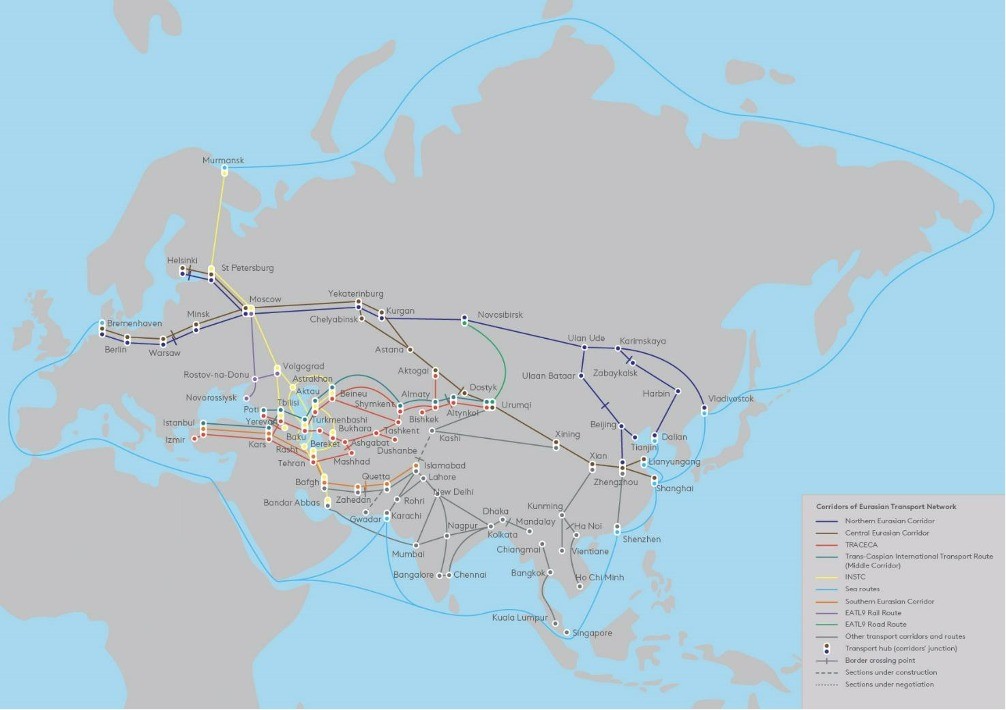
On 27 June, the Eurasian Development Bank (EDB) released a report titled “The Eurasian Transport Network”. The report introduces a new conceptual approach to future developments within the Eurasian Transport Network and outlines key projects and initiatives aimed at improving transport connectivity in Eurasia. The Eurasian Transport Network is a system of interconnected latitudinal and longitudinal international transport corridors and routes, facilitating intra- and trans-continental connectivity for Eurasian countries. It builds upon over 50,000 km of international east-west and north-south transport corridors, linking Asia, Europe, and the Middle East. The Eurasian Transport Network consists of five key international transport corridors: the Northern, Central and Southern Eurasian Corridors, TRACECA, and the International North-South Transport Corridor (INSTC), along with branch lines and regional routes. According to EDB analysts, in 2023, international freight traffic along these five corridors of the Eurasian Transport Network totaled 260 million tons, including 3.6 million 20-foot containers (TEU). Compared to 2013, the volume of international container traffic has more than tripled. The most dynamic growth has been driven by foreign trade and transit container transit with China. Since 2013, the number of container trains to and from China via the Eurasian Economic Union countries and Central Asia has increased by a factor of 200. The EDB introduced the concept of a Eurasian Transport Network in 2021, and this report presents its detailed framework. Three years ago, the EDB released a report titled “The International North–South Transport Corridor: Promoting Eurasia’s Intra- and Transcontinental Connectivity”, which estimated that connecting international transport corridors would yield a 40% increase in freight traffic. In 2024, this projection was fully confirmed by the dynamic development of the INSTC and its linkage to TRACECA. The advancement of the Eurasian Transport Network is paving the way for the establishment of a transport hub in Central Asia. The development of multimodal transport and transit corridors is the only viable solution for Central Asian countries due to the significant distances between trade partners. Establishing a transport hub will facilitate an increase in international traffic, including transit. The EDB projects that freight traffic along the three main corridors running through Central Asia will increase by 1.5 times to 95 million tons by 2030. Container traffic is expected to grow even more rapidly, by almost two-thirds, reaching 1.7 million TEU. Evgeny Vinokurov, EDB Chief Economist, underlines that “at present, transportation costs for landlocked countries are 1.4 times higher than for coastal states. Even during the time of the Silk Road, trade routes in Central Asia were predominantly latitudinal, in the east-west direction. Building new north-south transportation links is a historic opportunity for Central Asia. This is an opportunity to become the continent’s transport hub, unlock new production niches and improve conditions for foreign trade, especially with West and South Asia.” The EDB concludes that given the limited investment opportunities facing most developing countries in Eurasia, a key area of cooperation to develop transport links in Eurasia is boosting the number of projects attractive to international development banks and private investors. This includes projects implemented...

Inside Turkmenistan: What Self-Isolation Reveals About the Nation

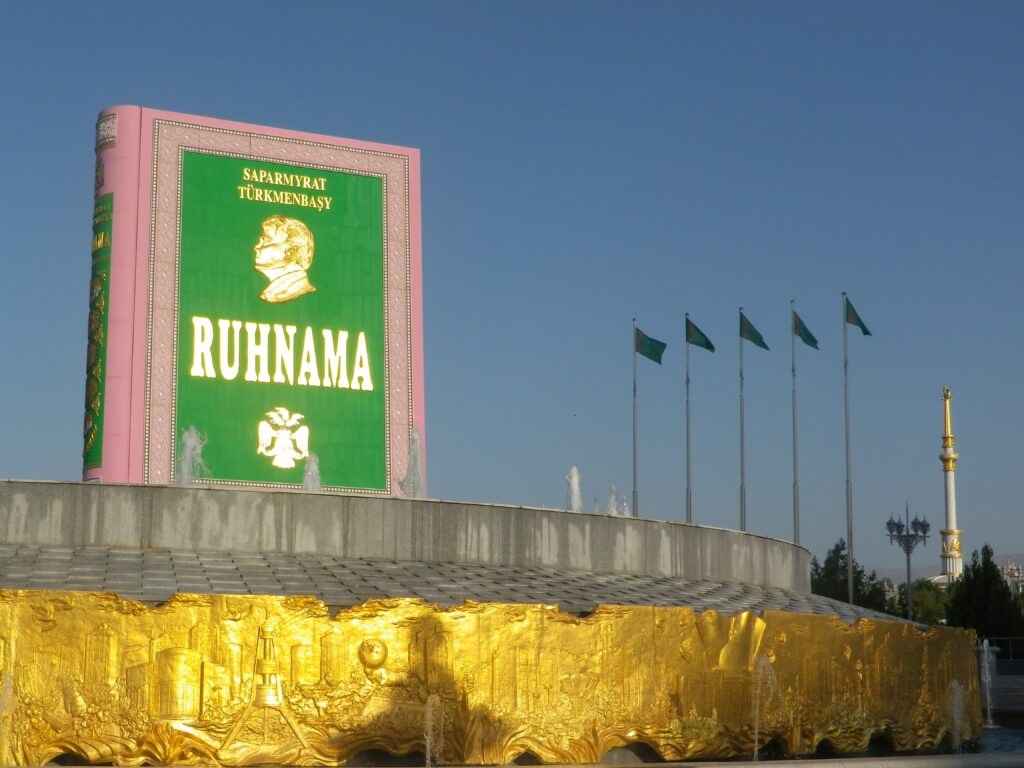
Getting into Turkmenistan has always been a complex undertaking. For most foreigners, the only option available is to apply through an accredited Turkmen travel firm, meaning a 'guide' will trail ones every move. Alternately, there is a five day transit visa, though these are denied more often than they are issued. Arguably the second most insular state in the world after North Korea, it is fair to say that Turkmenistan really isn't in the market for tourists. Frozen in time The first leader of independent Turkmenistan was Saparmurat Niyazov, who climbed up the ladder in the Soviet nomenklatura (administration) and held such positions as First Secretary of the Ashgabat City Committee of the Communist Party of the Turkmen SSR; Chairman of the Council of Ministers of the Turkmen SSR (i.e., Prime Minister); and First Secretary of the Central Committee of the Communist Party of the Turkmen SSR before the collapse of the Soviet Union. From First Secretary, he became President of Turkmenistan for life, as formalized legislatively in 1999. In the second half of 1993, the Democratic Party of Turkmenistan (formerly the Communist Party of the Turkmen SSR) proposed the extension of Niyazov's powers until 2002 - a second term without re-election - and in January 1994, 99.9% of voters purportedly supported this in a nationwide referendum. From 1994 to 1995, Turkmenistan considered renaming the president's office "Shah" and declaring the republic a Shahdom. However, the idea did not find favor with the elders. Niyazov's strained relationship with his son was also taken into account, and the idea was buried. Declaring himself "Turkmenbashi" (father of the Turkmen people," Niyazov began to rain down a cavalcade of decrees including bans on lip-syncing, car radios, cinema, clowns and the playing of recorded music at weddings. Long hair on men and beards were outlawed, citizens with gold teeth ordered to have them extracted. "I watched young dogs when I was young," Niyazov stated. "They were given bones to gnaw to strengthen their teeth. Those of you whose teeth have fallen out did not chew on bones. This is my advice." All hospitals outside of Ashgabat were shut and the funds were instead spent on a $20 million new leisure center for horses. Compulsory education was cut by a year so students could no longer qualify to study abroad. The opera house and ballet boarded up, in place of culture came such fanciful projects as the $50 million dollar Turkmenbashi’s World of Fairytales theme park and the world’s largest shoe. Six meters long and one and a half meters tall, it was manufactured to symbolize the "great strides" Turkmenistan had made under Niyazov’s leadership. Numerous editions of Niyazov's, Ruhnama, (book of the soul) - his version of Mao’s Little Red Book - were released. A heady cocktail of pseudo-spiritual cogitations and revisionist history, the book claimed the Turkmen people to be the inventors of the wheel and heirs to Earth’s oldest civilisation. Within a year, most bookstores carried nothing but the Ruhnama, and novelists...