• KGS/USD = 0.01144 0%
  • KZT/USD = 0.00216 0%
  • TJS/USD = 0.10456 0%
  • UZS/USD = 0.00008 0%
  • TMT/USD = 0.28490 0%
  • KGS/USD = 0.01144 0%
  • KZT/USD = 0.00216 0%
  • TJS/USD = 0.10456 0%
  • UZS/USD = 0.00008 0%
  • TMT/USD = 0.28490 0%
  • KGS/USD = 0.01144 0%
  • KZT/USD = 0.00216 0%
  • TJS/USD = 0.10456 0%
  • UZS/USD = 0.00008 0%
  • TMT/USD = 0.28490 0%
  • KGS/USD = 0.01144 0%
  • KZT/USD = 0.00216 0%
  • TJS/USD = 0.10456 0%
  • UZS/USD = 0.00008 0%
  • TMT/USD = 0.28490 0%
  • KGS/USD = 0.01144 0%
  • KZT/USD = 0.00216 0%
  • TJS/USD = 0.10456 0%
  • UZS/USD = 0.00008 0%
  • TMT/USD = 0.28490 0%
  • KGS/USD = 0.01144 0%
  • KZT/USD = 0.00216 0%
  • TJS/USD = 0.10456 0%
  • UZS/USD = 0.00008 0%
  • TMT/USD = 0.28490 0%
  • KGS/USD = 0.01144 0%
  • KZT/USD = 0.00216 0%
  • TJS/USD = 0.10456 0%
  • UZS/USD = 0.00008 0%
  • TMT/USD = 0.28490 0%
  • KGS/USD = 0.01144 0%
  • KZT/USD = 0.00216 0%
  • TJS/USD = 0.10456 0%
  • UZS/USD = 0.00008 0%
  • TMT/USD = 0.28490 0%

Viewing results 4711 - 4716 of 5773

Diplomatic Scandal: Kyrgyz Ambassador Fired for “Khanate of Permissiveness”

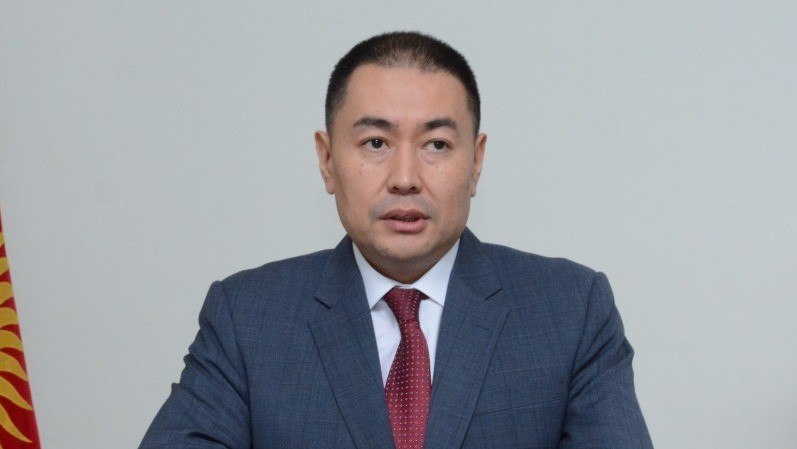
The staff of the Kyrgyz diplomatic mission in Pakistan appealed to the leadership of the Foreign Ministry with a request to take action against Ambassador Ulanbek Totuyaev. According to the staff of the diplomatic mission, Totuyaev "has organized himself a Khanate of permissiveness in the foreign office entrusted to him." The diplomat has been removed from his post by presidential decree. The press service of the Kyrgyz Ministry of Foreign Affairs said that Totuyaev grossly violated the rights of his subordinates by giving them assignments that had nothing to do with the work of a diplomatic officer. "He treated his subordinates unethically, did not solve their everyday problems, and arranged terrible living conditions, driving them into cramped dormitory-type apartments. At the same time, he and his family lived in a separate residence with luxuries, including security," the Foreign Ministry stated. According to diplomats working in Pakistan, four cars are assigned to the Kyrgyz Embassy in Islamabad, two of which Totuyaev and his wife used for personal purposes. "The board of the Kyrgyz Foreign Ministry considered this issue and recommended to the President of the Kyrgyz Republic that Totuyaev be dismissed from his post," the ministry stated. Totuyaev, however, disagrees with the decision. In an interview with Kyrgyz media, he claimed that the real reason for his removal was his antipathy towards Foreign Minister Zheenbek Kulubaev.

Former Employee of Academy of Sciences Detained in Kyrgyzstan

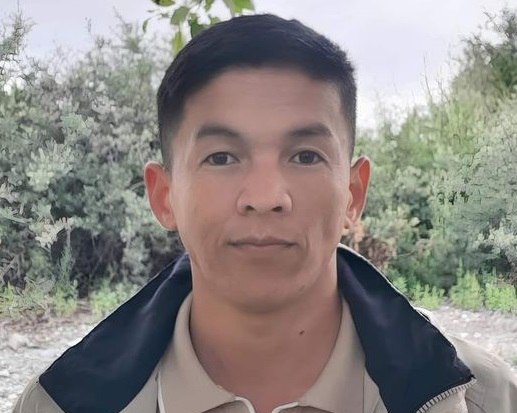
Human rights activist Gulshayyr Abdirasulova has reported on social media that Zhomart Karabayev, a former employee of the Academy of Sciences in Kyrgyzstan, has been detained by officers of the SCNC (State Committee for National Security). According to Abdirasulova, Karabayev had openly expressed his disagreement with the activities of special services and refused to participate in expert examinations in multiple cases. "Zhomart Karabayev, a former employee of the NAS (National Academy of Sciences), has repeatedly stated that the NAS provides its' expertise on [criminal cases] under the dictation of special services. He also stated this at the trial of Olzhobai Shakir (who was sentenced to five years in prison in May this year in a case pertaining to the preparation for mass riots - ed.). Now, he has been taken away by GKNB officers. Is this what they want? To investigate themselves? Or should the young man be jailed for his statement about breaking the law? We are waiting for the official position of the SCNS," Abdirasulova wrote. "The lawyer said that Zhomart is suspected of committing an act under Article 278 part 3 of the Criminal Code - calls for mass riots. The lawyer believes there are no grounds for suspicion of committing this crime and hopes the case will be dropped. Zhomart remains in the [custody of the] SCNS until the measure of restraint is considered". According to local media, Karabayev was summoned to the SCNS for questioning yesterday, and was not released following interrogation.

Astana Hosts SCO Summit: A New Platform for Kazakh Diplomacy

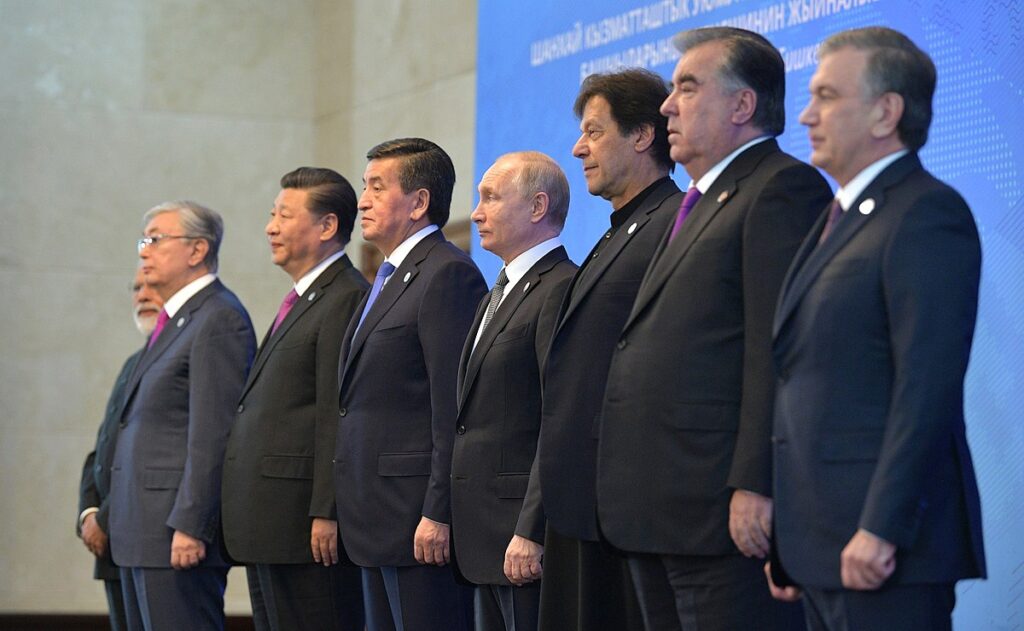
With the first events of the Shanghai Cooperation Organization (SCO) Summit taking place this morning in Kazakhstan’s capital, Astana, conversations are beginning about what the host country will be discussing – and with whom. The SCO is a political, security and economic alliance in the wider Eurasia region, aimed at promoting trade and investments between member states, as well as global security. Its nine full members are Kazakhstan, Kyrgyzstan, Tajikistan, Uzbekistan, China, Russia, Iran, India and Pakistan. The Organization – which includes four observer states and 14 dialogue partners – covers half of the world’s population, and almost a third of global GDP. Kazakhstan’s multi-vector approach to its foreign policy has seen the country combining its role within the SCO with cooperation with Western governments, through dialogue with the European Union and the United States’ C5+1 platform. President Tokayev recently commented that: “Kazakhstan is committed to multilateral cooperation. In our foreign policy we proceed from the national interests, and are in favor of solving all disputable issues on the basis of rational compromise. In addition to the SCO, this year our country is chairing five other international organizations. This is an unprecedented case, one could say an achievement in the history of Kazakh diplomacy.” This multi-vector approach is key to Kazakhstan’s international diplomacy. Indeed, ‘mutually beneficial cooperation’ and ‘mutually beneficial strategic partnership’ have become the watchwords of Tokayev’s presidency. Over the past decade, Kazakhstan has become an increasingly important land-bridge between East and West, both in terms of trade and diplomacy. Due to projects such as the Belt and Road Initiative and the Middle Corridor, Kazakhstan’s location has made it an indispensable ally to China, whilst playing a pivotal role in the expansion of transcontinental trade has led to Central Asia, in the words of Tokayev, “become a global stakeholder.” In the opinion of experts, more of the same can be expected at this week’s SCO Summit. In an interview conducted by the Kazinform news agency, local political analyst Valery Volodin stressed that: “It goes without saying that each government will be defending its own interests [at the Summit]. But Kazakhstan will be placing an emphasis on regional stability, which will allow countries to implement a host of joint projects with China and Russia. Besides this, Kassym-Jomart Tokayev’s gift for diplomacy will push the SCO to become not just a discussion club, but a real mechanism to solve problems in Eurasia using dialogue between governments.” In an article in The Geopolitics, Michael Rossi, a professor of political science at Long Island University, posited that Kazakhstan is not playing the so-called ‘Great Game’ between East and West, but rather pointing out the scope for "Big Opportunities". “Kazakhstan’s positive relations with countries often in conflict, such as Russia and Ukraine, China and the United States, Azerbaijan and Armenia, and Israel and the Palestinian territories, grant Astana legitimacy,” Rossi writes, “to act as a buffer and stabilizing force among major powers. This positioning allows Kazakhstan to reduce tensions and potentially mediate conflicts. Under...

Putin in Full Diplomatic Mode on SCO Sidelines

Russian President Vladimir Putin has faced Western efforts to isolate him because of the war in Ukraine. But he has a full day of diplomacy on the sidelines of the Shanghai Cooperation Organization event in Kazakhstan. Putin has meetings with the leaders of Azerbaijan, Kazakhstan, Mongolia, Turkey, China and Pakistan on Wednesday, one day ahead of the main group events at the summit in Astana, Kazakhstan’s capital, according to Tass, the official Russian news agency. Russia views the summit in Astana as an "opportunity to organize bilateral contacts with the country leaders who will attend it," said Putin aide Yury Ushakov, according to Tass. Ushakov said he expected Putin to hold several more “brief bilateral contacts” on Thursday. Putin’s flurry of diplomacy comes despite Western sanctions that have sought to weaken Russia’s military campaign in Ukraine, now in its third year. Many countries prefer to maintain trade with Russia, a key producer of energy and other natural resources. Central Asia has chosen neutrality in the Russia-Ukraine conflict and with the exception of a handful of private entities has avoided  sanctions. The SCO is a forum for discussion of security, economic and political issues. Its members are China, Russia, Kazakhstan, Kyrgyzstan Tajikistan, Uzbekistan, Iran, India and Pakistan. Belarusian President Alexander Lukashenko, a close ally of Putin, has said he expects Belarus to become a new member of the group at the Astana meeting.

SCO Summit: Tokayev and Xi Laud Kazakhstan-China Ties

On the eve of the 2024 Shanghai Cooperation Organization (SCO) Summit, hosted this year by Kazakhstan in its capital Astana, the leaders of Kazakhstan and China were keen to highlight the strength of their countries’ partnership. The SCO is a political, security and economic alliance in the wider Eurasia region, aimed at promoting trade and investments between member states, as well as global security. The Organization – which includes nine full members, four observer states and 14 dialogue partners – covers half of the world’s population, and almost a third of global GDP.  In comments to China’s Xinhua news agency, Kazakh President Kassym-Jomart Tokayev spoke of a “close political dialogue” between the two countries, supported by the SCO, thanks to which “China is consolidating its position as Kazakhstan’s leading trade and investment partner”.  Mutual trade between the countries reached a historic record of $41 billion in 2023. Tokayev added that “China became one of the top four foreign investors in Kazakhstan in 2023, investing around $2 billion in direct investments, a year-on-year growth of 16.4%. The total volume of Chinese investment in the Kazakh economy is over $25 billion. Around 4,700 Kazakh-Chinese enterprises operate in our country.” In his comments to Xinhua Tokayev also highlighted Kazakhstan’s growing cultural ties with China, mentioning a new agreement on a visa-free regime between the countries, the creation of cultural centers in both nations, and the fact that 2024 has been named the “Year of Kazakhstan tourism in China”. The president himself lived in China for eight years, where he studied Chinese in Beijing before working for the Soviet Union’s embassy to China. In turn, in a letter published by the Kazinform news agency, China’s leader Xi Jinping noted: “China is now Kazakhstan’s largest trading partner and its top export destination. Major strategic projects including the Zhanatas wind farm, Turgusun hydropower station, and the modernization of Shymkent Oil Refinery have been completed and commissioned. China-Kazakhstan crude oil and natural gas pipelines are operating in a safe and stable manner. The ‘green lanes’ for fast customs clearance of agricultural products are available at all border ports between the two countries, which makes green agri-products of high quality from Kazakhstan easily accessible for Chinese consumers. The potential for cooperation in new energy and transportation infrastructure has been unleashed. The transport and logistics terminal in Xi’an, the Western Europe-Western China Highway, and the China-Europe Railway Express all operate smoothly, providing a strong boost to the development of both China and Kazakhstan.” Kazakhstan has a multi-vector approach to its foreign policy; its role within the SCO complements the country's cooperation with the United States through the C5+1 platform, and a constant dialogue with the European Union. In a recent speech about Kazakhstan's chairmanship of the Shanghai Cooperation Organization this year, President Tokayev commented: "Kazakhstan is committed to multilateral cooperation. In our foreign policy we proceed from the national interests, and are in favor of solving all disputable issues on the basis of rational compromise. In addition to the...

A Permanent Piece of ‘Home’: The Trend for Kyrgyz Ornament Tattoos

An interview with Master Tattoo Artist, Zarema Kubanychbekova In recent years, there has been a growing interest in representing traditional, national ornament in the art of tattooing in Kyrgyzstan. TCA met Zarema Kubanychbekova, a talented tattoo artist with nine years' experience, to discuss this trend and its peculiarities.   TCA: How did you become involved in the tattoo industry? I first picked up a tattooing machine on October 17, 2015, almost 9 years ago. It was challenging but exciting. I have been drawing since early childhood, literally from kindergarten, and subsequently all my activities were somehow connected with creativity, but I never imagined that my life would be connected with tattooing. The decision to embark on this path was absolutely spontaneous, but after completing my first piece, I was in no doubt that it was exactly what I wanted to do. [caption id="attachment_19780" align="aligncenter" width="431"] Zarema[/caption]   TCA: What can you say about the popularity of tattoos incorporating traditional Kyrgyz motifs? There is definitely a trend, and it is good to see. I believe that it is mostly because people have begun to value their roots and culture. A lot of tattoos are made for people who travelling abroad, want something to remind them of home. Tourists regard them as souvenirs of their time spent in Kyrgyzstan whilst locals want something to remind them of their origins.   TCA: What features of Kyrgyz ornament do you use most frequently in your work and what do they symbolise? Some time ago, we collaborated with a client on the idea to ‘embroider’ the ornament on the skin. In other words, to replicate the texture of threads to make it resemble a ‘tush-kiyiz’ or traditional wall-hanging. It came together somehow by itself, although the initial request was for a simple contour work, and the result was both highly unusual and beautiful. I often create patterns inspired by petroglyphs using point by point (dot work), which is interesting, because motifs were originally applied to these ancient stones by almost the same method. Each ornament has its own unique meaning, and people generally choose those which best resonate with them.   [caption id="attachment_19779" align="aligncenter" width="476"] artist's own tattoo[/caption]   TCA: Do you consider such tattoos a form of self-expression? Yes; in recent years I have noticed more and more, people's desire to express themselves through their ethnicity and love for their land. It's great!   TCA: What are the difficulties or peculiarities of creating tattoos from traditional motifs compared to other styles? There are no particular difficulties as such. There was however, a case whereby my client and I consulted with a woman specialist in runes/ornaments to clarify how best to marry two symbols so that when combined, they would not lose their meaning. [caption id="attachment_19781" align="aligncenter" width="494"] Zarema[/caption]   TCA: How do you view the future of this current trend in Kyrgyzstan? I think the theme of Kyrgyz ornamental tattoos will always be relevant. Time passes, the world changes, but our roots remain solid.