• KGS/USD = 0.01144 0%
  • KZT/USD = 0.00210 0%
  • TJS/USD = 0.10454 -0.1%
  • UZS/USD = 0.00008 0%
  • TMT/USD = 0.28571 0.28%
  • KGS/USD = 0.01144 0%
  • KZT/USD = 0.00210 0%
  • TJS/USD = 0.10454 -0.1%
  • UZS/USD = 0.00008 0%
  • TMT/USD = 0.28571 0.28%
  • KGS/USD = 0.01144 0%
  • KZT/USD = 0.00210 0%
  • TJS/USD = 0.10454 -0.1%
  • UZS/USD = 0.00008 0%
  • TMT/USD = 0.28571 0.28%
  • KGS/USD = 0.01144 0%
  • KZT/USD = 0.00210 0%
  • TJS/USD = 0.10454 -0.1%
  • UZS/USD = 0.00008 0%
  • TMT/USD = 0.28571 0.28%
  • KGS/USD = 0.01144 0%
  • KZT/USD = 0.00210 0%
  • TJS/USD = 0.10454 -0.1%
  • UZS/USD = 0.00008 0%
  • TMT/USD = 0.28571 0.28%
  • KGS/USD = 0.01144 0%
  • KZT/USD = 0.00210 0%
  • TJS/USD = 0.10454 -0.1%
  • UZS/USD = 0.00008 0%
  • TMT/USD = 0.28571 0.28%
  • KGS/USD = 0.01144 0%
  • KZT/USD = 0.00210 0%
  • TJS/USD = 0.10454 -0.1%
  • UZS/USD = 0.00008 0%
  • TMT/USD = 0.28571 0.28%
  • KGS/USD = 0.01144 0%
  • KZT/USD = 0.00210 0%
  • TJS/USD = 0.10454 -0.1%
  • UZS/USD = 0.00008 0%
  • TMT/USD = 0.28571 0.28%

Viewing results 4777 - 4782 of 5698

Kazakhstan and Uzbekistan: A Partnership Born From Rivalry

Kazakhstan and Uzbekistan are the largest countries in Central Asia in terms of their economy, population, and vital infrastructure. In the first decades after the collapse of the USSR, the two republics visibly competed for regional supremacy, but this situation has changed dramatically. A Test of Sovereignty Uzbeks and Kazakhs are related Turkic peoples who have lived side by side for centuries, and, therefore, have experienced many mutual offenses from each other in their shared history. Perhaps this is the semi-official explanation for the rivalry between Tashkent and Astana during the reigns of the first presidents of these republics - Islam Karimov and Nursultan Nazarbayev. Another explanation for the struggle for leadership in Central Asia between Nazarbayev and Karimov lies in an old Kazakh proverb: "Two heads (of sheep) cannot fit in one pot." The implication is that there cannot be two leaders in one region at this level of multiple countries and personalities. Nazarbayev and Karimov, out of rivalry between the Soviet party nomenklatura, to which they both belonged, could not allow either of the other to rise. In the end, Moscow chose closer relations with Astana, which led to Tashkent withdrawing from the Collective Security Treaty Organization. Kazakh political scientist Maxim Kaznacheev has stated that this happened because Kazakhstan participated in various alliances, whilst Uzbekistan refused to do so, an indication that Tashkent had passed the sovereignty test, to the chagrin of Russia. "The ability of the government to pursue a sovereign policy should be put at the top of the list when determining a real regional leader. Uzbekistan has done better on this exam. Over the past decades, officially Tashkent has relied mainly on bilateral arrangements, avoiding active participation in multilateral integration formations," the political scientist stated. The Devil in the Details Despite these characteristics, Tashkent does not appear to have gained any advantages from this strategy, whether forced or chosen, due to a weak diplomatic corps. However, perhaps an Uzbek renaissance is yet to come. In late 2022, the Eurasian Development Bank published a report, "Central Asia's Economy: A New Look," which analyzed the prospects for interaction between Central Asian countries and the potential for the region to become a significant player in the world's economic map. According to this document, Kazakhstan remains the leading Central Asian economy, with its nominal 2021 GDP of $197.1 billion, 1.3 times the combined volume of the other four countries in the region. The report noted that by the end of 2022, Kazakhstan accounted for almost 60% of the total GDP of Central Asia. At the same time, GDP growth at the end of 2022 amounted to 3.2% compared to an average annual growth rate of 3.9% from 2010-2021. Uzbekistan is the next-largest economy in Central Asia after Kazakhstan, with a GDP of $69.2 billion in 2021, and $80.4 billion by the end of 2022. Although its nominal GDP is far smaller than Kazakhstan's, and its annual growth rate ($11 billion vs. $27 billion) does not seem to threaten Kazakhstan's...
Kyrgyzstan to Take Chinese Loan to Build Railroad

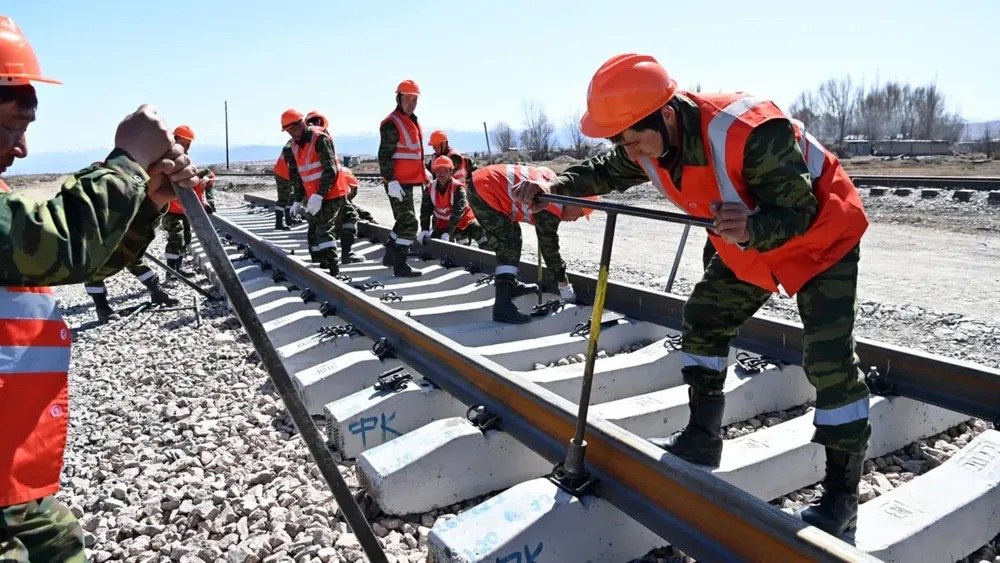
Kyrgyzstan intends to take a loan from China to construct the China-Kyrgyzstan-Uzbekistan railroad. Azamat Sakiyev, the General Director of Kyrgyz Temir Jolu NC, stated at the Parliamentary Committee on Transport, Communications, Architecture, and Construction meeting, 24.kg has reported. The Speaker noted that the feasibility study for the project has already been developed, and the agreement amounts to $4 billion 700 million. "According to the agreement, 51% of the costs will be covered by the People's Republic of China, and the Kyrgyz and Uzbek sides will assume 24.5% each," Sakiyev said. "Where will we find $1 billion?" MP Baktybek Sydykov asked, to which Sakiev replied that the Kyrgyz Republic intends to borrow money from Chinese banks. Sakiyev specified that the Chinese side would lend the joint venture half of the total project cost—$2 billion 350 million—and the parties would cover the other $2 billion 350 million at their own expense. As a result, Kyrgyzstan's share will amount to $783 million. The China-Kyrgyzstan-Uzbekistan railroad is a projected 454-kilometer railroad designed to connect the railroads of China and Uzbekistan through the territory of Kyrgyzstan and further through Turkmenistan, Iran, and Turkey, to connect with the European railroad network within the framework of the New Silk Road transport system. Previously, Kyrgyz President Sadyr Japarov had said the construction would cost between $3 and $5 billion.

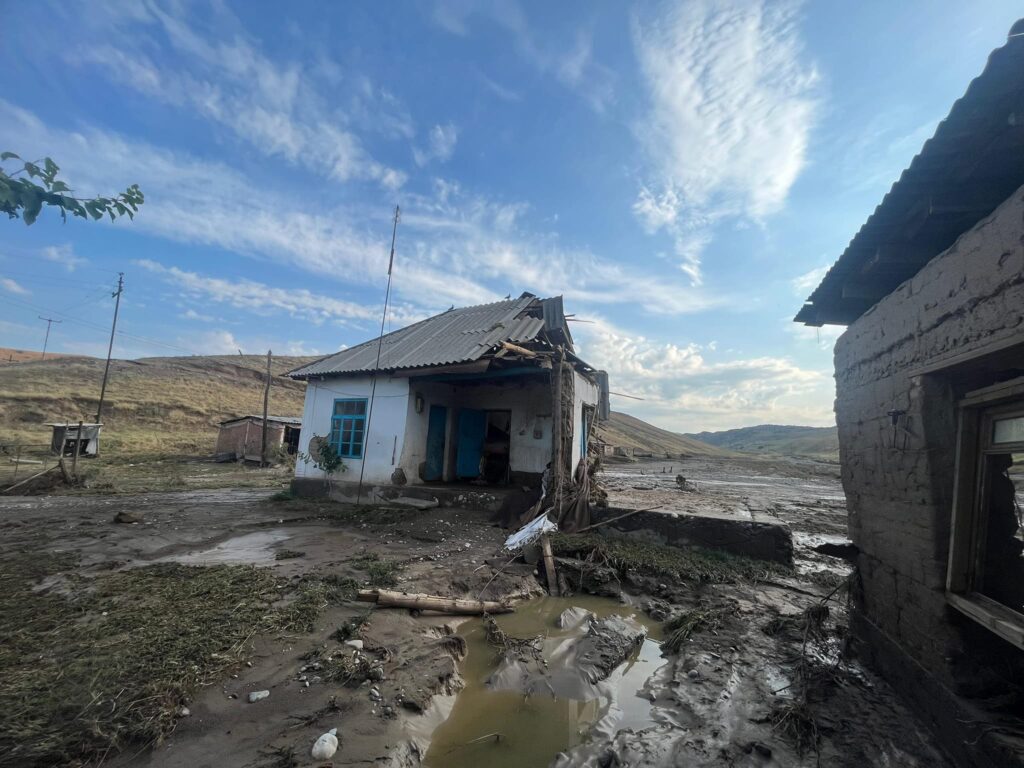
One Dead in Mudflows in Southern Kyrgyzstan

Mudflows in Kyrgyzstan's southern Jalal-Abad region have forced 300 families to evacuate their homes, and a 10-year-old child has died, the country's Ministry of Emergency Situations reports. On June 18th, after heavy rain, a mudflow descended in several villages, flooding over 50 buildings. According to the Ministry, police, doctors, and civil protection officers are working to repair the damage from the disaster. Deputy Minister for Emergency Situations Edelbek Kulmatov said that the Kochkor-Ata water basin is 15-20 kilometers from the affected villages. "Water accumulates, and the stream rushes down the mountain hollow, traveling over 20 kilometers. Unfortunately, some cowsheds and families live 16 kilometers away from the settlement. The mudflow carried away a 10-year-old child, who died," Kulmatov said. During the day, rescuers used heavy special equipment to clear 16 households from mudflows. Flooded internal roads were also cleared and put back into operation. Doctors are on duty at the site to monitor residents' health. Currently, the Ministry of Emergency Situations employees are conducting disinfection procedures within the two villages in the Jalal-Abad region. A section of the Bishkek-Osh highway is temporarily blocked due to the mudflows. However, residents of some evacuated houses are returning to their homes despite many buildings still being damaged by flooding.

Azerbaijan and Kazakhstan to Invest in Fiber Optic Cables in Caspian Sea

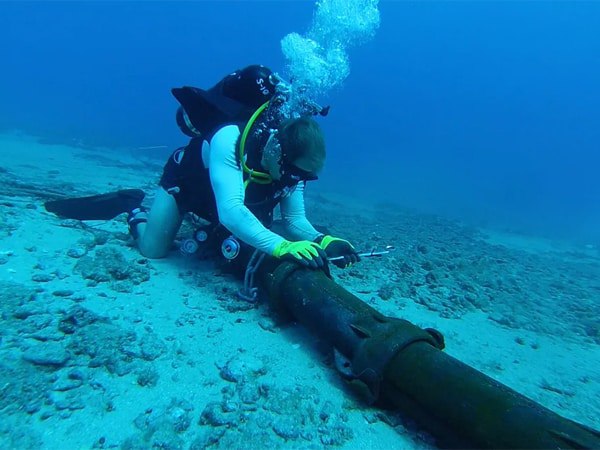
More than $50 million will be invested by Kazakhstani and Azerbaijani operators in laying fiber optic fiber along the bottom of the Caspian Sea. Kazakhstan's minister of digital development Zhaslan Madiev has announced: "Today, a joint venture between Kazakhtelecom JSC (Kazakhstan's national telecommunications company) and Azertelecom LLC has been established, and a tender to select a contractor for designing and laying an underwater FOCL is being finalized." The laying of optics on the bottom of the Caspian Sea will total 370 kilometers. "Investments of Kazakhstan and Azerbaijan telecom operators will total more than 23 billion tenges ($50.6 million)." Madiev also said that introducing 5G mobile communication in Kazakhstan should be completed by the end of 2025. According to him, by the end of 2027 cellular operators will invest almost $1 billion in the country's telecommunications industry. The Trans-Caspian fiber-optic communication line (FOCL) project along the Caspian Sea bed is part of the Digital Silk Road project, which envisages the creation of a digital telecommunications corridor between Europe and Asia. Earlier, it was reported that the deadline for the project's realization was 2025.

Sogd-2024 International Trade Fair Marks First Decade

The international trade fair, Sogd-2024 officially opened at the sports palace in Khojand, Tajikistan, on June 18th. This year marks a decade of the Sogd—Valley of Opportunities fair, which will run from June 18th-19th. More than 500 guests from Tajikistan and abroad have gathered, Andar Rahmani, the head of the press service of the Sogd regional administration informed Sputnik Tajikistan, adding that regional ambassadors are also participating in this important economic event. “Ambassadors and representatives of the diplomatic corps of Russia, Turkey, Uzbekistan, Saudi Arabia, Azerbaijan, Japan, Iran, Belarus, Turkmenistan, Slovakia, Poland, Pakistan, Kyrgyzstan and Kazakhstan visited the region,” Rahmani said. Representatives from the Tashkent, Namangan, Ferghana, Samarkand, Bukhara, and Syr Darya regions of Uzbekistan, and business- people from China’s Shaanxi province and representatives of international financial organizations also participated.

Controversial Kazakh Opposition Figure Aidos Sadykov Shot in Kyiv

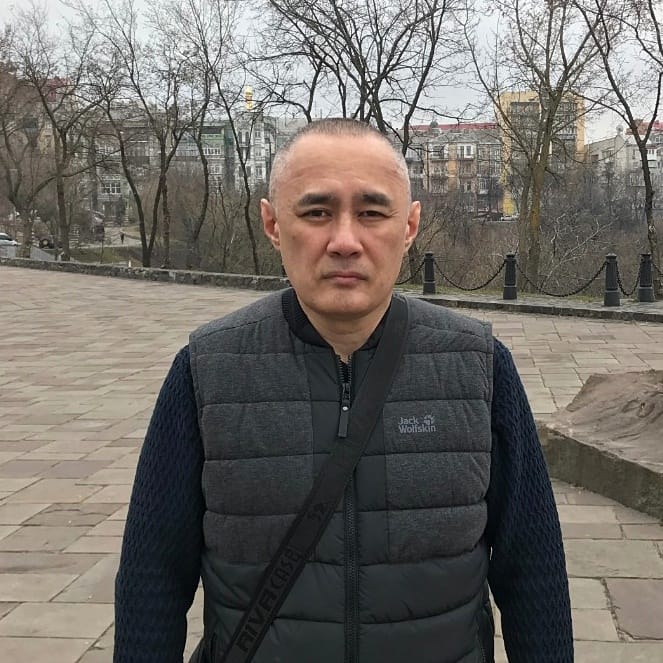
An unknown man in Kyiv fired several shots at Kazakh activist and oppositionist Aidos Sadykov, who has been granted official refugee status in Ukraine. It is reported that the incident occurred in the Shevchenkivskiy district of the Ukrainian capital when Sadykov was approaching his car with his wife, Natalia, who previously worked for Mukhtar Ablyazov’s opposition paper, Respublika. The gunman used a silencer on the firearm. Sadykov's condition is currently assessed as serious; his wife was not injured. As this is a case involving a high-profile individual, the head of the regional police, Andriy Nebytov, was called to the crime scene. Sadykov is the author of the Telegram channel 'Base', which has 59,000 subscribers, and has been permanently residing in Kyiv since 2014. Over the years, he has criticized the current Kazakh authorities, including the current president, Kassym-Jomart Tokayev. In 2020 Base, together with the initiative to create the opposition Democratic Party, became the co-organizers of a rally in Almaty demanding a boycott of the upcoming parliamentary election. The Democratic Party of Kazakhstan, an unregistered political party, was founded and led by Zhanbolat Mamai, a former journalist who was convicted for receiving funds from Ablyazov in 2017. Sadykov and Mamai both actively supported the protests in January 2022 in Kazakhstan, widely seen as an attempted coup. He is wanted in Kazakhstan under the articles on the incitement of discord.