• KGS/USD = 0.01144 0%
  • KZT/USD = 0.00216 0%
  • TJS/USD = 0.10456 0%
  • UZS/USD = 0.00008 0%
  • TMT/USD = 0.28571 0%
  • KGS/USD = 0.01144 0%
  • KZT/USD = 0.00216 0%
  • TJS/USD = 0.10456 0%
  • UZS/USD = 0.00008 0%
  • TMT/USD = 0.28571 0%
  • KGS/USD = 0.01144 0%
  • KZT/USD = 0.00216 0%
  • TJS/USD = 0.10456 0%
  • UZS/USD = 0.00008 0%
  • TMT/USD = 0.28571 0%
  • KGS/USD = 0.01144 0%
  • KZT/USD = 0.00216 0%
  • TJS/USD = 0.10456 0%
  • UZS/USD = 0.00008 0%
  • TMT/USD = 0.28571 0%
  • KGS/USD = 0.01144 0%
  • KZT/USD = 0.00216 0%
  • TJS/USD = 0.10456 0%
  • UZS/USD = 0.00008 0%
  • TMT/USD = 0.28571 0%
  • KGS/USD = 0.01144 0%
  • KZT/USD = 0.00216 0%
  • TJS/USD = 0.10456 0%
  • UZS/USD = 0.00008 0%
  • TMT/USD = 0.28571 0%
  • KGS/USD = 0.01144 0%
  • KZT/USD = 0.00216 0%
  • TJS/USD = 0.10456 0%
  • UZS/USD = 0.00008 0%
  • TMT/USD = 0.28571 0%
  • KGS/USD = 0.01144 0%
  • KZT/USD = 0.00216 0%
  • TJS/USD = 0.10456 0%
  • UZS/USD = 0.00008 0%
  • TMT/USD = 0.28571 0%

Viewing results 4795 - 4800 of 5776

Companies from the Netherlands Consider Investing in Turkmenistan’s Agricultural Sector

A special session on opportunities for Dutch companies in the Turkmen agricultural market was held at the Green Tech Amsterdam 2024 international exhibition. Representatives from the Netherlands and Turkmenistan's business circles and heads of European research and financial institutions attended, Turkmenportal has reported. Turkmenistan's Ambassador to Belgium, Sapar Palvanov, stated that the country's economic situation and business climate provide favorable conditions for foreign investors. "The government creates equal rights for Turkmenistan's private companies and foreign investors. Foreign investors in business in Turkmenistan will receive full support from the government," Palvanov said. Following the presentation, participants asked about entering the Turkmen agricultural market, with Dutch companies expressing a desire to visit Turkmenistan and familiarize themselves with market opportunities. An agricultural mission to Turkmenistan with the participation of interested Dutch companies and institutions is to be organized. The program will include meetings with the relevant government bodies, Turkmen partners, and private sector representatives.

Testing Limits: Marathoners Head For the Shrinking Aral Sea to Run in the Desert

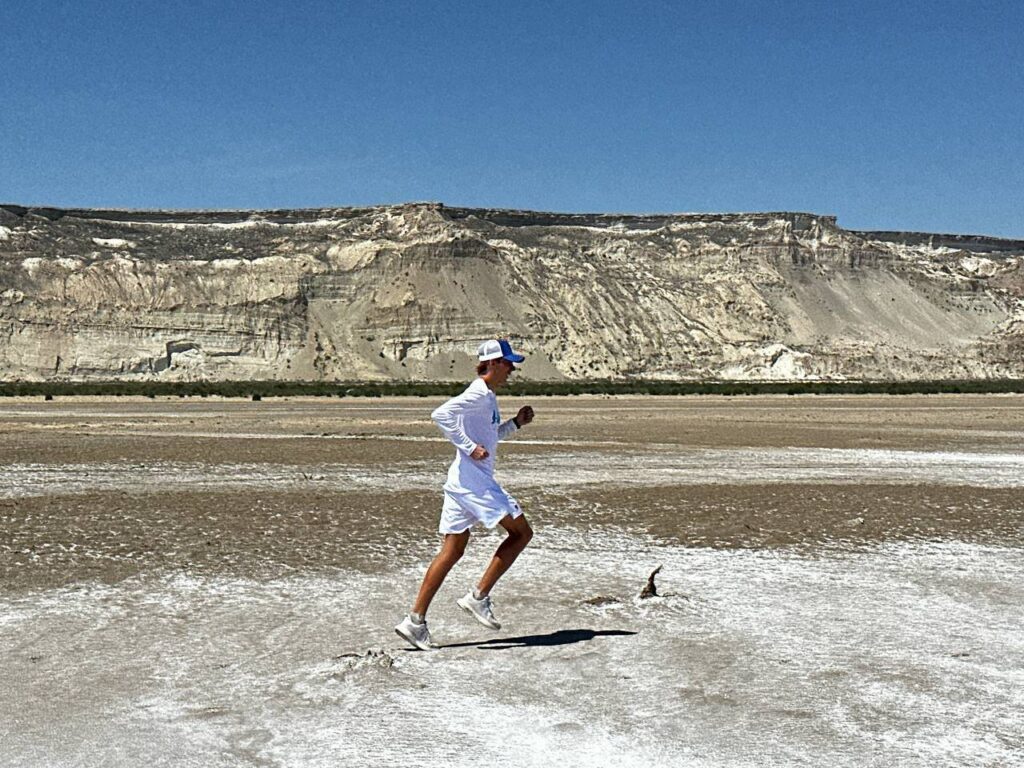
The dry bed of the Aral Sea, a symbol of ecological disaster in Central Asia, will host one of the world’s more extreme marathons on Sunday. Supported by aid stations and medical staff, a small band of athletes will run on sand, gravel and stones, inhaling salty air in scorching temperatures and bracing themselves against strong winds. The Aral Sea Eco Marathon is being held in Karakalpakstan, Uzbekistan and planners aim to draw attention to what was once the fourth biggest saltwater lake and is now about 10 percent of its original size. Race promoters also want to highlight the need for sustainable use of water. The marathon roughly coincides with the United Nations-designated day to combat desertification and drought, which falls on June 17.  Andrey Kulikov, founder of the ProRun running school in Uzbekistan, ran a marathon distance in the area last year with American ultramarathoner Dean Karnazes in 4:51:18. Kulikov planned this year’s event with the help of Aziz Abdukhakimov, Uzbekistan’s minister of ecology, environmental protection and climate change. A limit of 100 runners was set, though far fewer signed up. Still, Kulikov said participants are from countries including Japan, China, France, Pakistan, Kenya, Togo and the Philippines. He hopes to expand the event next year. Uzbek participant Denis Mambetov said in a text interview on Telegram that he is taking part because of “a passion for adventure, for something new and unusual, to test one’s strength, and, of course, to draw the attention of others to an environmental problem of global proportions.” The Aral Sea, which lies between northern Uzbekistan and southern Kazakhstan, began shrinking significantly in the 1960s when water from the rivers that fed it was rerouted for Soviet-led agricultural irrigation. The subsequent emergency of the Aralkum Desert and the sand and dust storms arising from the world’s newest desert have polluted the environment and severely affected health in local communities. There are regional and international efforts to restore the Aral Sea ecosystem, including seed-planting and the implementation of water-saving technologies. The five Central Asian countries - Uzbekistan, Kazakhstan, Kyrgyzstan, Tajikistan and Turkmenistan – formed a group three decades ago, soon after independence from Soviet rule, to address the problem. The gap between goals and results is wide, though the countries are recognizing the wider threat of water scarcity as the planet becomes hotter.  “Colleagues are well aware that the problem of water shortage in Central Asia has become acute and irreversible and will only worsen in the future,” Uzbek President Shavkat Mirziyoyev said at a regional meeting on the Aral Sea last year. “Experts believe that in some regions of Central Asia pressure on water resources will increase three times by 2040. Economic damage could eventually reach 11 percent of regional gross product.” Nurbek Khusanov, who will run the marathon on Sunday,  works at SQB, a top bank in Uzbekistan, and is a leader of its efforts to promote “green” policies that aid the environment. The marathon will “attract more people to the Aral...

Rice Production on the Rise in Turkmenistan

According to the publication ' Turkmenistan Golden Age', over 8,000 hectares of rice were planted in the north of Turkmenistan this year. In response to a marked increase in the state's purchase price , farmers in the Toshkhovuz region are actively expanding rice cultivation with the greatest volume being grown on two specialized farms in the Saparmurod Turkmanboshi district. Thanks to the rice cleaning enterprise built several years ago in the territory  and specialized equipment provided by the renowned brand Satake,  high-quality seed material is available to all of the region's rice farms. At the root of this year's harvest are disease-resistant, and excellent-tasting “Nöküs-2” and “Bereket” varieties. Rice cultivation is traditional to northern Turkmenistan. A leader in the field, the Dashoguz province produces over 35,000 tons of different varieties per year. Farmers in the Lebap region planted rice on more than 10,000 hectares in 2023, of which 50,000 tons went to the state, and  farmers in Chorjevo  harvested over 15 thousand tons from 3,800 hectares.

Uzbek Citizens Still Facing Difficulties When Entering Russia

Migrants from Uzbekistan are facing difficulties when entering Russia, due to which Uzbekistan's embassy in Russia has sent an appeal to Russia's Ministry of Foreign Affairs. Citizens are complaining about excessive additional checks by airport services. According to the embassy, there has been an increase in complaints by Uzbek citizens to the diplomatic mission's call center about difficulties entering the country, or transiting through Moscow's Sheremetyevo airport. Following the terrorist attack at Moscow's Crocus City Hall on March 22nd, which citizens of Tajikistan stand accused or perpetrating, there has been an increase in reports of Central Asian citizens facing difficulties entering Russia. A Moscow official has explained this is due to increased security measures nationwide.

Uzbekistan Joins ILO Convention on Equal Opportunities for Working Family Members

Uzbekistan has ratified the International Labor Organization (ILO) Convention No. 156, ensuring equal opportunities and rights for male and female workers with family responsibilities, Gazeta.uz reports. The country's president Shavkat Mirziyoyev signed a law ratifying this convention, which guarantees equal treatment and opportunities for all workers, regardless of their family obligations. The main objective of ILO Convention No. 156 is to create conditions under which working men and women with family responsibilities can perform paid work without facing discrimination while successfully combining professional and familial obligations. The Senate of the Oliy Majlis of Uzbekistan, the upper house of parliament, when considering the law on ratification, emphasized that all the requirements of the Convention have already been fully implemented in the country's national legislation. To date, 45 out of 187 ILO member states, including Norway, Sweden, Spain, France, Japan, South Korea, Azerbaijan, and Kazakhstan, have ratified the Convention.

Alternative Transport Routes in Kazakhstan: Potential and Current Opportunities

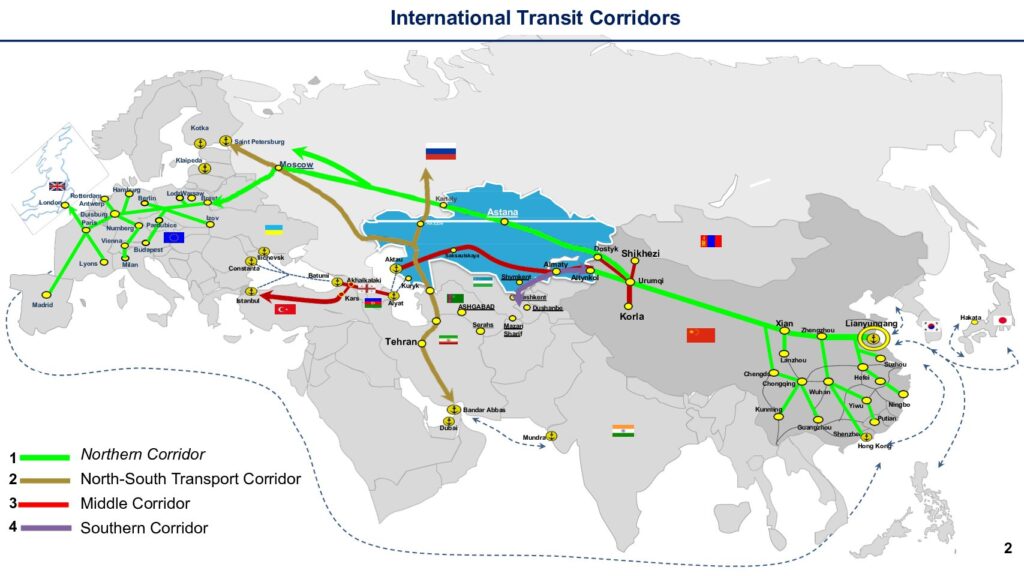
Kazakhstan's President Kassym-Jomart Tokayev has ordered alternative transportation and shipping routes to be drawn up and supply routes to be diversified. Amid ongoing geopolitical shifts, routes passing through Kazakhstan's territory are already seeing relatively high freight flows. Still, to develop them, further measures are needed to enhance international logistics cooperation and increase efficiency along the entire length of the transport corridors. The country's deputy minister for transport Maksat Kaliakparov kindly agreed to answer some questions from The Times of Central Asia. TCA:  Not so long ago, Kazakhstan Temir Zholy (KTZ) announced the launch of a project to create a digital corridor as part of the Trans-Caspian International Transport Route (TITR) with the company Global DTC Pte Ltd. What countries are to be integrated into this project? Can a similar digital trade corridor be considered for the International North-South Transport Corridor (INSTC)? MK: As you know, on August 16, 2022, KZT and the Singaporean company PSA concluded a memorandum according to which one of the identified areas for cooperation is developing a digital trading corridor (DTC). Towards this, a multimodal DTC has been developed. Using this platform, three container trains were sent on the route from Xi'an (China) to Absheron (Azerbaijan) as a test run. Integration with the railway systems of Kazakhstan and Azerbaijan has been carried out. Currently, the process of integration with Georgian systems is underway. Overall, the DTC platform allows for: entering into online contracts with freight forwarding companies; seeing and receiving transportation tariffs from logistics companies; tracking the location of containers along all routes; getting customs status based on transit declarations when crossing borders along the route, etc. This year, it is also planning to launch the commercial operation of a container tracking service in Kazakhstan, Azerbaijan, and Georgia, and it is also planning to be integrated with a Chinese logistics operator. In addition, the Tez Customs platform has been developed. It is part of DTC, created to automate the customs clearance process of railway transit freight on the route China-Kazakhstan-Central Asia/Europe. Tez Customs allows for: automating the process of customs transit clearance at the Kazakhstan-China border; reducing the time of customs procedures (from 4-8 hours to 30 minutes); tracking the status of transit declarations and freight until final departure from the territory of Kazakhstan. Meanwhile, a similar DTC for the INSTC is being considered within the cooperation framework with the UAE company Abu Dhabi Ports. TCA: As part of the development of the INSTC, the railway administrations of Kazakhstan, Russia, and Turkmenistan are planning to create a joint venture (JV). Tell us about the plans for how it is to be formed. How will shares in the JV be allocated between the countries? MK: Yes, indeed, for the further development of the eastern branch of the INSTC, the participating countries are working to create an equal-term JV between KTZ Express, Russian Railways Logistics, and the Transport and Logistics Center of Turkmenistan. Today, the railway administrations of Russia, Kazakhstan, Turkmenistan, and Iran are creating a favorable tariff...