• KGS/USD = 0.01144 0%
  • KZT/USD = 0.00209 0%
  • TJS/USD = 0.10523 0%
  • UZS/USD = 0.00008 0%
  • TMT/USD = 0.28530 0%
  • KGS/USD = 0.01144 0%
  • KZT/USD = 0.00209 0%
  • TJS/USD = 0.10523 0%
  • UZS/USD = 0.00008 0%
  • TMT/USD = 0.28530 0%
  • KGS/USD = 0.01144 0%
  • KZT/USD = 0.00209 0%
  • TJS/USD = 0.10523 0%
  • UZS/USD = 0.00008 0%
  • TMT/USD = 0.28530 0%
  • KGS/USD = 0.01144 0%
  • KZT/USD = 0.00209 0%
  • TJS/USD = 0.10523 0%
  • UZS/USD = 0.00008 0%
  • TMT/USD = 0.28530 0%
  • KGS/USD = 0.01144 0%
  • KZT/USD = 0.00209 0%
  • TJS/USD = 0.10523 0%
  • UZS/USD = 0.00008 0%
  • TMT/USD = 0.28530 0%
  • KGS/USD = 0.01144 0%
  • KZT/USD = 0.00209 0%
  • TJS/USD = 0.10523 0%
  • UZS/USD = 0.00008 0%
  • TMT/USD = 0.28530 0%
  • KGS/USD = 0.01144 0%
  • KZT/USD = 0.00209 0%
  • TJS/USD = 0.10523 0%
  • UZS/USD = 0.00008 0%
  • TMT/USD = 0.28530 0%
  • KGS/USD = 0.01144 0%
  • KZT/USD = 0.00209 0%
  • TJS/USD = 0.10523 0%
  • UZS/USD = 0.00008 0%
  • TMT/USD = 0.28530 0%

Viewing results 4801 - 4806 of 5850

EDB Annual Meeting and Business Forum to Focus on Eurasian Transport Network

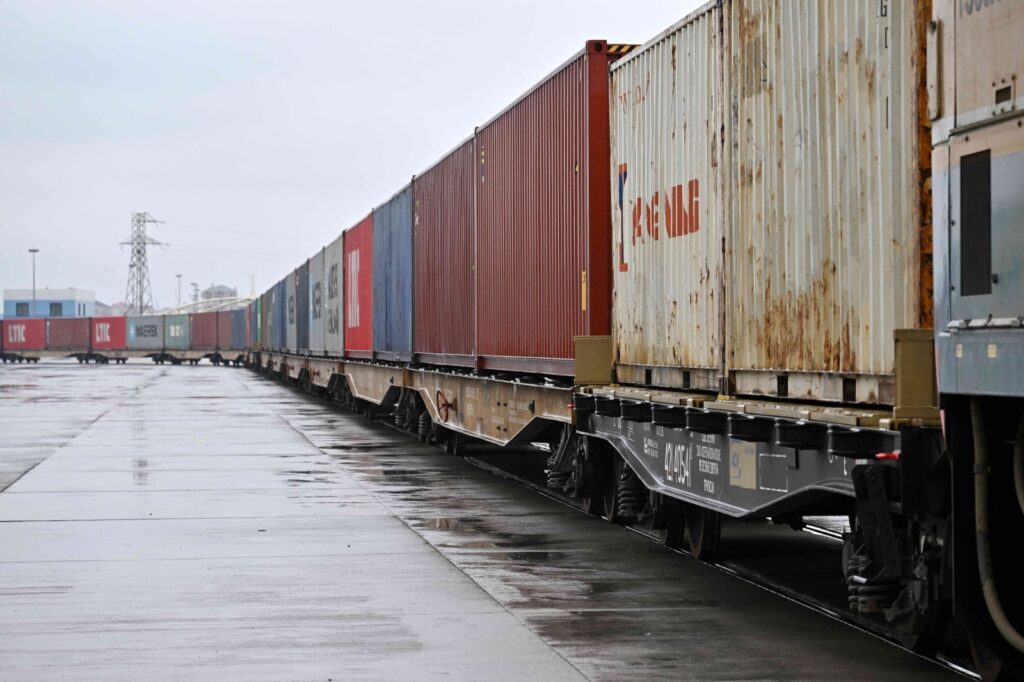
The Eurasian Development Bank’s (EDB) Annual Meeting and Business Forum, to be held in Almaty, Kazakhstan on 27-28 June, is to focus on cross-border transport corridors in Eurasia. The EDB is a multilateral development bank serving Armenia, Belarus, Kazakhstan, Kyrgyzstan, Russia, and Tajikistan. According to the EDB press service, this year’s forum session, “The Eurasian Transport Network: Potential, Challenges and Solutions” will analyse a report on the development of cross-border transport corridors crucial to the region’s economies. The report highlights the significant constraints in economic development posed by the remoteness of Central Asian countries from global markets and their landlocked status. According to EDB estimates, trade costs in some Central Asian nations are 40% higher than those of coastal states. Overcoming the lack of transport connectivity is key to unlocking the strong economic potential of all Central Asian countries. The concept of the transport network is based on the premise that linking East–West and North–South transport corridors generates synergies, creating new routes, logistics opportunities and better through tariffs. The EDB projects that freight traffic along the three main corridors crossing Central Asia (Central Eurasian Corridor, TRACECA and North–South) could potentially increase by almost two-thirds to 1.7 million containers (TEU) by 2030. Implementing this objective will require concerted efforts from all participating countries.    

Uzbekistan Launches Mechanism for Recognizing Foreign Citizens as “Undesirable” Elements

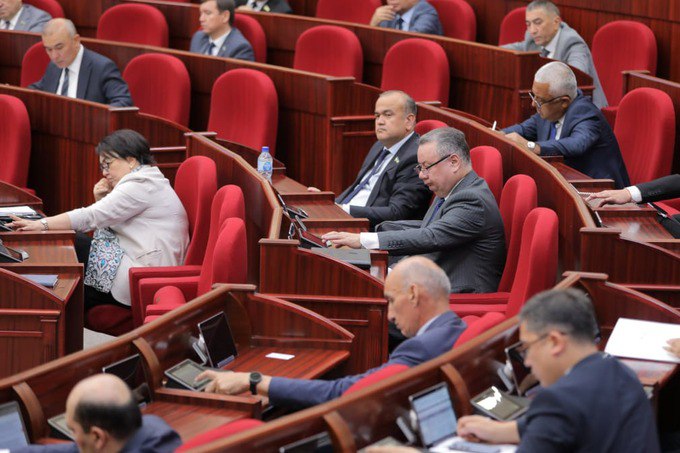
In its second and third readings, the Legislative Chamber of the Oliy Majlis (parliament) approved amendments to the law regulating the legal status of foreign citizens and stateless persons within the country. The key innovation was a move to recognize foreign citizens as undesirable elements who will not be permitted to stay in Uzbekistan. The grounds for declaring the stay of foreign citizens and stateless persons unacceptable may be public calls or actions that contradict state sovereignty, territorial integrity and security of the country, provoke interstate, social, national, racial, and religious enmity, or discredit the honor, dignity, and history of the people of Uzbekistan. The law provides for a five-year ban on such persons entering Uzbekistan, opening bank accounts, acquiring real estate, participating in the privatization of state property, and entering into financial and contractual relations. The document also defines the procedure for deporting persons not permitted to stay in the country. Before this new law can enter into force, it must be approved by the Senate and signed by the president.

Kazakhstan Facing Challenge of Developing Roads in Ninth Largest Country in World

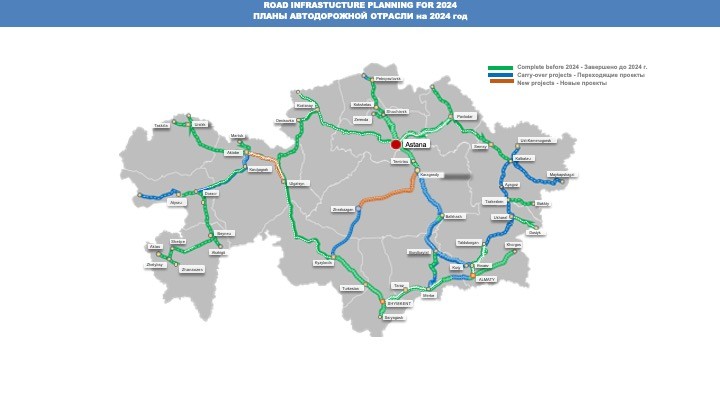
Kazakhstan is one of the most active post-Soviet states in building roads. Over the past decade, KZT4 trillion ($8.55 billion) has been spent on highway construction in the country, yet in a world ranking of road quality, Kazakhstan stands 93rd out of 141 countries. Record year for road construction The focus of the current road construction season is completing the reconstruction of sections of the main road transport corridors: Karaganda–Balkhash–Almaty, Taldykorgan–Ust-Kamenogorsk, Aktobe–Kandyagash, and Atyrau–Astrakhan. Overall, the current season is due to be set new records. There are plans to repair, reconstruct and build twelve thousand kilometers of road. Another feature of the work this year is the implementation of a major new program for the “medium repair” of local roads to strengthen them structurally, which is designed to improve transport links between populated areas. This program is set to repair about 2,500 kilometers of road throughout the country. Betting on tolls In February, the government announced plans to increase tariffs on federal toll roads. However, the initiative is still under consideration. The current tariffs – KZT 1 per kilometer for passenger vehicles (0.002 US cents) and KZT 5-25 per kilometer for freight vehicles depending on the load capacity and transport class – were approved back in March 2013 for the first toll highway built in the country (Astana-Shchuchinsk). Since then, the tariffs have not changed. In 2024, there are plans to roll out a toll system on another 2,400 kilometers of federal roads, namely on the sections Kostanay–Troitsk, Aktobe–Russian border (toward the city of Orenburg), Aktau–Beineu, Kyzylorda–Aktobe Region border, Usharal–Dostyk, Kostanay–Denisovka, Makat–Kandyagash, Taraz bypass, Karaganda bypass, Balkhash–Burylbaital, and Shu– Burylbaital. According to the national company in charge of federal and international roads in Kazakhstan, KazAvtoZhol, the toll system will be introduced only after repair work is completed and the roads fully comply with regulatory requirements. In addition, attention is being paid to transit routes when introducing tolls. This is especially relevant in the context of the government’s plans to develop freight transit through Kazakhstan and make the country a regional transport and logistics hub. Thanks to international transport, including transit, tolls are expected to become a significant contributor to the country’s budget. Today in Kazakhstan, there are 17 toll road sections with a total length of more than 3,200 kilometers, which, along with the state budget, help finance the maintenance of federal roads. According to the Ministry of Transport, KZT60 billion ($130 million) is required annually to maintain the country’s roads. Internationally, road maintenance is financed by taxes allocated for transport, but this is not enough in Kazakhstan – it is one of the largest countries in the world, but has a low population density, meaning its road infrastructure remains underutilized. Because of this, historically, road maintenance in the country was financed from the state budget. Overall, the toll system will be gradually introduced on 11,000 kilometers of road by 2029 as reconstruction work is completed. The further rollout of the system, which aims to support year-round maintenance, should reduce the...

Uzbekistan: Deaf Photographers Document the World Around Them

The assignment for the Uzbek deaf photographers’ workshop: cover a game of kupkari, in which horse-riders jostle for a goat carcass and hustle it to a goal amid shouting, shoving and swirling dust. It didn’t go well for student Murod Yusupov, who arrived late at the event in Piskent, in the Tashkent region, and then struggled to orient himself in the boisterous crowds watching the maelstrom on the field. [caption id="attachment_19449" align="aligncenter" width="599"] Crowds watch a game of kupkari, a traditional sport in Uzbekistan (Photo: Khuvaido Fatihojayeva)[/caption] “Unfortunately, I was a little late, and I had to stay among the fans. Communication with the teacher and participants was almost non-existent. But it was a big problem to take pictures there, there were too many people who came to watch the kupkari, I didn’t have enough experience to find a convenient place and opportunity to take pictures,” Yusupov said through a sign language interpreter in an interview with The Times of Central Asia. He learned from the experience, though. With the help of workshop director Husniddin Ato, 21-year-old Yusupov got accredited for the Asian Weightlifting Championships in Tashkent in February and delivered strong images. Best of all, he enjoyed the assignment. [caption id="attachment_19450" align="aligncenter" width="615"] Uzbek athlete performs during the Asian Weightlifting Championships in Tashkent in February. (Photo: Murod Yusupov)[/caption] --- One recent evening, at the Bon Cafe in Tashkent, Ato, Yusupov and several other participants in the “Deaf Photographers” workshop talked about their experiences and hopes to a correspondent from The Times of Central Asia. Ma’mur Akhlidinov, a sign language teacher at the University of Uzbek Language and Literature who is also deaf, helped to interpret. Cups of sea buckthorn tea were served during a conversation lasting two and a half hours. The deaf photographers were upbeat, often smiling, communicating with each other through hand gestures and showing photos on their phones to each other. --- A decade ago, Ato, a professional photographer, wanted to report on deaf people. Then he decided to let deaf people show in pictures how they feel about the world. While in quarantine during the pandemic, he consulted Akhlidinov, a member of the Deaf Society of Uzbekistan. For many years, Akhlidinov worked as a designer in the editorial office of Ma’rifat, an Uzbek publication, and as the editor-in-chief of the MediaPlus project. Akhlidinov was surprised by the fact that there wasn’t a single internet resource about deaf people and their rights in Uzbekistan. In 2017, he launched a blog for deaf people, their parents and educators. Akhlidinov supported Ato’s proposal for an initial three-month course. and announced the project on the Deaf Society blog, which has more than 1,000 subscribers. An age requirement (18-25) was set for the participants. Nine people signed up. In the fall of 2021, the teaching started. It was slow going at first because of scheduling conflicts and other obstacles. “Later, their interest and enthusiasm wasn’t always there, they didn’t complete their assignments on time, and I had to explain some...

Water in Kazakhstan’s North Aral Sea Rises by Over a Billion Cubic Meters

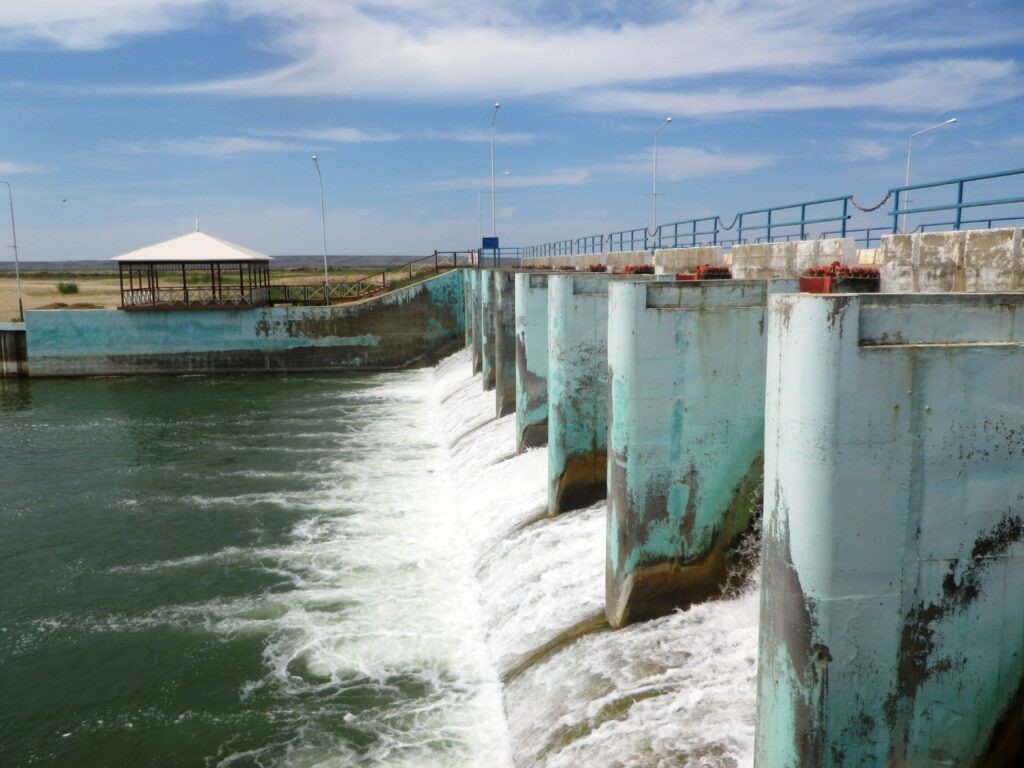
On June 24, the Kazakh Ministry of Water Resources and Irrigation announced that since the beginning of the year, 1.1 billion cubic meters of water have flowed into the North Aral Sea in Kazakhstan, raising the volume to 21.4 billion cubic meters. The North Aral Sea is the portion of the former Aral Sea fed by the Syr Darya River. It split from the South Aral Sea in 1987–‘88 when water levels dropped as a result of water being diverted from the river for agricultural use. At the recent 86th meeting of the Interstate Coordination Water Commission, which includes Kazakhstan, Kyrgyzstan, Tajikistan, Turkmenistan, and Uzbekistan, it was agreed that during this year’s irrigation season, 997 million cubic meters of water would be fed into the North Aral Sea at a rate of at least 30 cubic meters per second. Now, 50 cubic meters of water per second enters the sea, compared to just six cubic meters per second last year. In the 1990s, a dam was constructed to prevent the inflow of water from the North to the South Aral. Rebuilt in 2005, the Kok-Aral Dam enabled water levels to rise in the North Aral Sea. “From the moment the dam was put into operation until today, 46.6 billion cubic meters of water have flowed from the Syr Darya River into the North Aral Sea,” said Moldir Abdualieva, official representative of the Kazakh Ministry of Water Resources and Irrigation. “And over the past 7 years, 13.3 billion cubic meters of water have entered the sea. In recent years, the volume of water in the North Aral had been declining, but since the beginning of 2024 it has begun to grow again and today has reached 21.4 billion cubic meters.” According to the ministry, 75% of the flow of the Syr Darya River comes from Kyrgyzstan, 20% from Uzbekistan, and 5% from Kazakhstan.    

French Company Signs Contract With Karachaganak Consortium

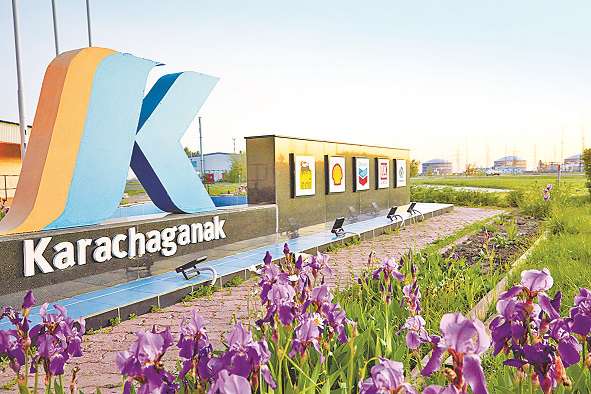
Technip Energies NV, a French engineering and technology company in the energy sector, has entered into a five-year service agreement with Karachaganak Petroleum Operating B.V. (KPO) to develop the Karachaganak field in northwest Kazakhstan. According to representatives of Technip, the agreement covers a wide range of services, from consulting and conceptualization to detailed design of facilities and infrastructure. The project will be implemented through the joint venture TKJV LLP, created by Technip Energies in cooperation with the Kazakh company KPSP. Technip Energies is already engaged in projects in Kazakhstan, including the production of "green hydrogen" (Hyrasia One) and the construction of a gas processing plant at Kashagan. Earlier, Kazakhstan's energy minister, Almasadam Satkaliyev, announced the implementation of investment projects to expand Karachaganak. These projects are planned until 2028 and will maintain the production shelf at 11 million tons annually.