• KGS/USD = 0.01144 0%
  • KZT/USD = 0.00210 0%
  • TJS/USD = 0.10559 0%
  • UZS/USD = 0.00008 0%
  • TMT/USD = 0.28530 0%
  • KGS/USD = 0.01144 0%
  • KZT/USD = 0.00210 0%
  • TJS/USD = 0.10559 0%
  • UZS/USD = 0.00008 0%
  • TMT/USD = 0.28530 0%
  • KGS/USD = 0.01144 0%
  • KZT/USD = 0.00210 0%
  • TJS/USD = 0.10559 0%
  • UZS/USD = 0.00008 0%
  • TMT/USD = 0.28530 0%
  • KGS/USD = 0.01144 0%
  • KZT/USD = 0.00210 0%
  • TJS/USD = 0.10559 0%
  • UZS/USD = 0.00008 0%
  • TMT/USD = 0.28530 0%
  • KGS/USD = 0.01144 0%
  • KZT/USD = 0.00210 0%
  • TJS/USD = 0.10559 0%
  • UZS/USD = 0.00008 0%
  • TMT/USD = 0.28530 0%
  • KGS/USD = 0.01144 0%
  • KZT/USD = 0.00210 0%
  • TJS/USD = 0.10559 0%
  • UZS/USD = 0.00008 0%
  • TMT/USD = 0.28530 0%
  • KGS/USD = 0.01144 0%
  • KZT/USD = 0.00210 0%
  • TJS/USD = 0.10559 0%
  • UZS/USD = 0.00008 0%
  • TMT/USD = 0.28530 0%
  • KGS/USD = 0.01144 0%
  • KZT/USD = 0.00210 0%
  • TJS/USD = 0.10559 0%
  • UZS/USD = 0.00008 0%
  • TMT/USD = 0.28530 0%

Viewing results 5815 - 5820 of 5904

Investigation Launched into Mobile Operators

The Agency for the Protection and Development of Competition of the Republic of Kazakhstan has established that in 2023, a significant price increase from 7.7% to 57.3% was recorded according to the tariff plans of mobile operators, who increased the cost of services provided on more than 30 plans with a monthly subscription fee. “Taking into account paragraph 3 of Article 199 of the Entrepreneurial Code in connection with the repeated detection of signs of anti-competitive coordinated actions in the calendar year, the Agency has now launched investigations against mobile operators Kcell JSC, MT–S LLP (Tele2/Altel) and Kar-Tel LLP (Beeline) under Article 170 of the Entrepreneurial Code," the Agency for the Protection and Development of Competition of the Republic of Kazakhstan said in a statement. Earlier, the Agency had detected signs of anti-competitive coordinated actions by mobile operators in setting the cost of calls per minute and SMS services. In this regard, notifications were sent to mobile operators to reasonably reduce their pricing. The Agency stated that in case of non-compliance by the operators within an established time-frame, an investigation would be launched.

Tajikistan in Penultimate Place in English Language Proficiency

According to Education First, Tajikistan ranked 112th among 113 countries ranked in English language proficiency ratings, followed solely by the Democratic Republic of the Congo, Radio Ozodi has reported. In 2020, Tajikistan ranked last. In the report, Russia ranks 41st, Kyrgyzstan - 90th, Uzbekistan – 93rd, and Kazakhstan - 104th. The Netherlands, Singapore and Austria top the list. The International Educational Center for English Language Education First was founded in 1965 in Sweden. EF is the largest private educational institution in the world, with 600 branches in more than a hundred countries. Contrary to the report, representatives of the Ministry of Education and Science of Tajikistan believe that in recent years the level of English language proficiency has improved in the country. The press secretary of the Ministry of Education and Science, Navruz Jumamurod, said that English language learning is well-established in the country and a vivid proof of this is the participation of almost 8,000 students from Tajikistan in international Olympiads. "This is also one of the indicators that participants from Tajikistan speak English well," he noted. Are the teaching methods outdated? In the capital's school No. 55, English is taught using the old method – reading and translating texts, as well as using the Q&A format. In this school, ten teachers teach 2,093 students, with English lessons taking place twice a week. Matluba Makhmadkulova, the deputy director of the school, said that in recent years the interest of schoolchildren in learning English has grown. "Students are divided into groups and study lessons in special classes," she added. In this school, as in many others in the country, the method of teaching English has not changed much since Soviet times and is often reduced to reading and translating texts. But many modern teachers consider such a technique to be ineffective. English teacher Bakhtiyor Davlatmuradov mainly teaches at private language centers. In his opinion, it is important to use new methods when teaching English. "The main problem is ignorance about some of the innovations of modern teaching. Another problem is the limited use of modern technology in the classroom. Yes, teachers are trying very hard, but now it's the 21st century we need to use technology. For example, you can show some videos, that is, make the lesson interactive," he explained. "A lot depends on the young people themselves" Mukhaye Nozimova, who taught English in Tajikistan for many years, is now studying modern ways of teaching the language in London. According to her, to improve the situation it is necessary to reform the country's education system, though on the other hand, she believes the level of English-language proficiency depends on the young people themselves. "Today, there are many online classes, and even free online courses on social networks which allow young people to learn English or any other language on their own," she said. Tajik youth prefer to study English in private educational centers, but throughout the country not everyone has the means to study at such institutions. According to...

Uzbekistan’s Economy Resilient to Global Challenges, Says IMF

According to the IMF in analysis posted on their website, Uzbekistan’s economy has demonstrated remarkable resilience to recent global challenges. Following geopolitical shocks, the economy saw an influx of migrants and a large increase in remittances in 2022, boosting domestic demand. This, coupled with higher external demand, led to real GDP growth of 5.7% in 2022, the head of an International Monetary Fund staff team said in a statement following their visit to Uzbekistan earlier this month. While remittances have fallen this year to the trend prevailing prior to Russia’s war in Ukraine, a sizable fiscal expansion, and high wage and export growth are expected to sustain real GDP growth at 5.7% in 2023. Strong imports and declining remittances will contribute to a higher external current account deficit this year. International reserves are expected to remain ample at eight-and-a-half months of prospective imports. By the end of 2023, the 12-month inflation rate is projected to decline by more than 3% compared to the same period last year, to 9%, helped by a value-added tax rate cut, and lower international food and energy prices. The IMF says the outlook for 2024 remains positive, and while risks remain, growth is projected to remain above 5%. “Preserving macro-financial stability and continuing structural reforms are key to bolstering resilience and sustaining robust economic growth amidst the challenging current global context,” the statement said. Accelerating World Trade Organization negotiations and cooperating with neighboring countries to improve transport routes will reduce transportation costs and open new markets for Uzbekistan’s products, the IMF statement concludes.

458 Saiga Antelope Killed For Their Horns

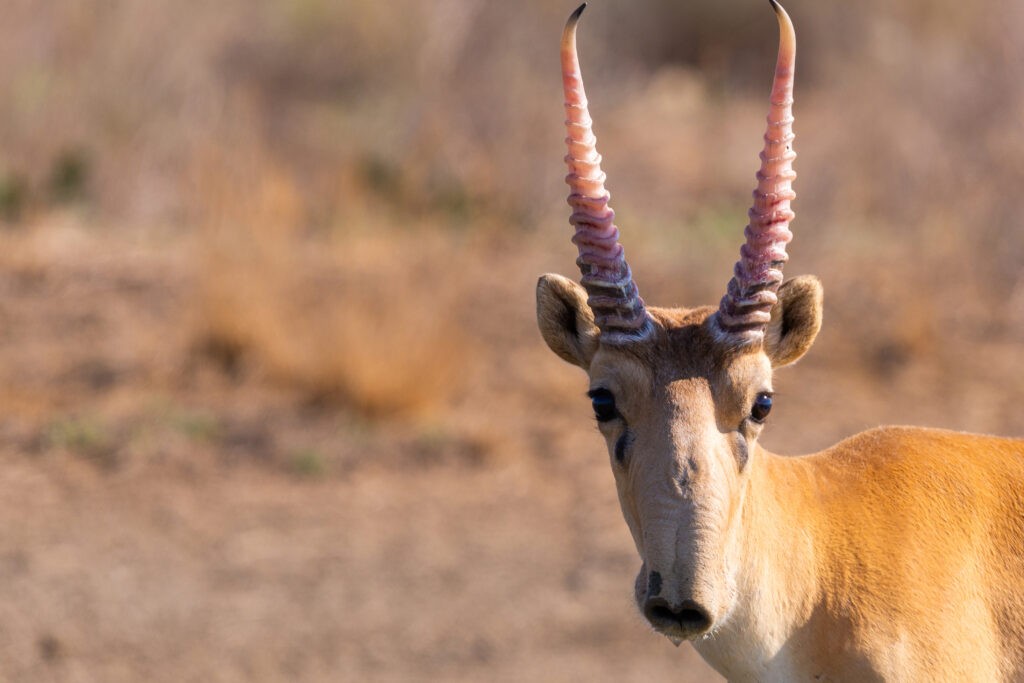
A foreigner tried to take saiga horns worth 2 billion tenge from Kostanay. During a search, 916 saiga horns and about 7.5 million tenge in cash were found in the bags, the Kostanay region police department reported. Presumably, the offender caused about 2 billion tenge in damage to the state. He was arrested and placed in a temporary detention facility. On 25 December, Leonardo DiCaprio, esteemed Hollywood actor and environmentalist, brought attention to the Kazakh government success in saving the saiga population on his Instagram page. “Congrats to the government of Kazakhstan, which invested heavily in anti-poaching initiatives, robust law enforcement, and the establishment of new protected areas”. The antelope species has been reclassified from critically endangered to near threatened on the International Union for Conservation of Nature Red List of Threatened Species, with Kazakhstan population growing from 48,000 in 2005 to over 1.9 million in the wild.

Can Kazakhstan set an example for Central Asia’s key position in the global transition to green economy?

[vc_row][vc_column][vc_column_text css="" woodmart_inline="no" text_larger="no"]If there is one Central Asian country that stood out during the COP 28 summit on climate change in Dubai in late 2023, it was Kazakhstan. Its pledges and initiatives – specifically regarding methane reductions, transition to renewable energy sources, and water security and cooperation – correspond overall to the country’s commitments to a green economy transition. More importantly, such signaling and posturing may have larger repercussions in a region of increasing geopolitical and economic importance, not the least because of its vast resources and potential in terms of growing transportation networks. *** First to consider is Kazakhstan’s announcement of a Methane Reduction Pledge which makes it part of a voluntary agreement known as the Global Methane Pledge to reduce methane emissions by 30 per cent by 2030. This is significant given that Kazakhstan is Central Asia's main oil producer as well as an important gas producer. Stressing the country’s dedication to reducing greenhouse emissions, and in alignment with international efforts to decrease non-CO2 climate super-pollutants, Kazakhstan’s President Kassym Jomart Tokayev acknowledged during his speech at COP28 that cutting methane emissions was the “quickest avenue to immediately slow the rate of global warming". This move earned him praise from the U.S. and the UK. President Joe Biden’s Special Envoy for Climate, John Kerry, issued a joint statement with Zulfiya Suleimenova, Tokayev’s Special Representative on International Environmental Cooperation, underlining the two countries’ “mutual readiness to accelerate the development and implementation of policies and projects to rapidly reduce methane emissions” over the next two years, particularly from the fossil energy industry. The U.S. also said it would work with partners “to mobilize investments to support achieving full methane mitigation potential in Kazakhstan’s oil and gas sector”, which it said will require “at least $1.4 billion in total spending through 2030.” Likewise, British Embassy in Astana posted on X (formerly known as Twitter), to give “Congratulations to President Tokayev and Kazakhstan for joining the Global Methane reduction Commitment at #COP28 in Dubai!”, adding that this was a “significant step towards a sustainable future.” Secondly, President Tokayev unveiled at COP28 an ambitious Joint Energy Transition Partnership (JETP) initiative for Kazakhstan, which will help make the country a key player in the global transition to renewable energy sources. This should be exciting news for people of Kazakhstan as their country is poised to be a major global supplier of critical minerals used in green technologies as the world decarbonises in the coming decades. A generally agreed list of these critical minerals often include lithium, cobalt and nickel (all used in the production of electric batteries), as well as rare earths (which include at least 17 elements such as neodymium, dysprosium and terbium that are necessary for magnets in wind turbines and electric vehicles), and silver (a key component for solar panel manufacturing). Kazakhstan holds the largest chrome ore reserves in the world and ranks first also in terms of their quality. It holds second place globally for uranium and silver reserves, and...

Islamic Extremism in Central Asia: A Threat to Liberal Progress

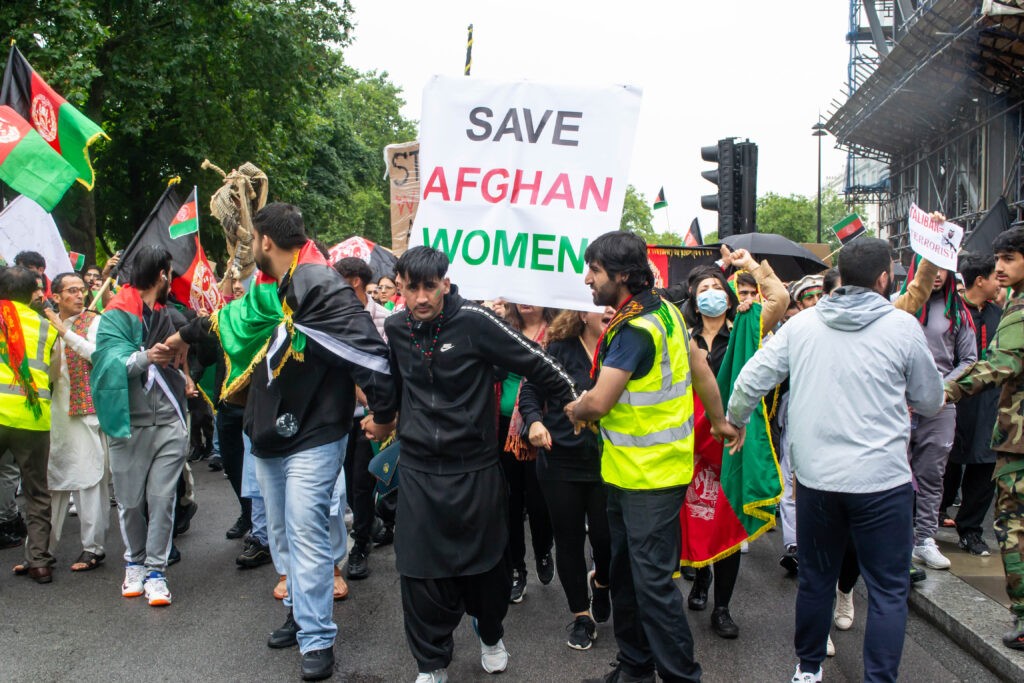
Afghanistan earned its reputation as the “graveyard of empires” due to the significant toll exacted on foreign powers in their efforts to achieve military success in the country. This challenge was evident in the experiences of the British Empire, the Soviet Union, and, most recently, the United States. The persistent and decentralized nature of the country's tribal insurgency made achieving a definitive victory a formidable task. Furthermore, the adherence of groups harbored by the Taliban, such as Al Qaeda, to an extremist religious ideology spread terrorism globally, including in the 9/11 attacks as well as other deadly acts of violence in various parts of the world. While the United States arguably played a constructive role in modernizing Afghanistan, the establishment of democracy and Western values in the country proved to be an insurmountable challenge, even with over $100 billion in foreign aid. With heightened tensions between the Islamic and Western populations reignited in the Levant after the deadly Hamas attack on Israel on 7 October 2023, the threat of Afghanistan-based extremists redirecting their focus towards the West has intensified. Often overlooked is the fact that Salafists jihadists and other radical groups also pose a challenge to the emerging democracies in Central Asia as these Muslim-majority secular republics are seen as areas to spread their undemocratic and potentially violent influence. In this context, policies that may even inadvertently help promote illiberal religious movements threaten the region’s secular identity and the security of its peoples. We should assess Central Asia’s unique position on religious freedoms but also on jihadist threats For the large part, Western countries come from a privileged position of being able to resist the widespread influence from Islamic extremist movements at home thanks mainly to generations of democratic institution building as well as decent geographic distance to areas that would fall under pan-jihadist aspirations. Consider that there is no apparent threat of jihadists entirely displacing Western democratic institutions or imposing a pan-Islamist state encompassing parts of Western nations; most Western lands do not fall on areas some of these groups want to conquer to create an Islamic Caliphate. On the other hand, many other places, including Central Asia, still risk misconstruing the line between defending individual freedoms and combatting religious extremism. Here, the coexistence of extremist Islamic ideologies and democracy remains somewhat precarious. Islamic radicalism continues to pose a serious challenge to the emerging democracies of the region, where the secular republics are trying to keep a lid on certain hostile ideologies. Militant groups spilling over from Afghanistan and infiltrating post-Soviet countries want to spread jihad to the region and create an Islamic Khaganate stretching from Egypt to China. Pan-Islamist Salafists, such as Islamic State-Khorasan Province (ISKP) and Al Qaeda, have a clear goal to overthrow Central Asia’s secular regimes. Moreover, the determination of Salafists jihadists and other groups to spread their illiberal and violent struggle to Central Asia (including from neighboring Afghanistan) has become apparent through their growing presence in the region’s schools and other spheres of public...