• KGS/USD = 0.01144 0%
  • KZT/USD = 0.00216 0%
  • TJS/USD = 0.10562 0%
  • UZS/USD = 0.00008 0%
  • TMT/USD = 0.28530 0%
  • KGS/USD = 0.01144 0%
  • KZT/USD = 0.00216 0%
  • TJS/USD = 0.10562 0%
  • UZS/USD = 0.00008 0%
  • TMT/USD = 0.28530 0%
  • KGS/USD = 0.01144 0%
  • KZT/USD = 0.00216 0%
  • TJS/USD = 0.10562 0%
  • UZS/USD = 0.00008 0%
  • TMT/USD = 0.28530 0%
  • KGS/USD = 0.01144 0%
  • KZT/USD = 0.00216 0%
  • TJS/USD = 0.10562 0%
  • UZS/USD = 0.00008 0%
  • TMT/USD = 0.28530 0%
  • KGS/USD = 0.01144 0%
  • KZT/USD = 0.00216 0%
  • TJS/USD = 0.10562 0%
  • UZS/USD = 0.00008 0%
  • TMT/USD = 0.28530 0%
  • KGS/USD = 0.01144 0%
  • KZT/USD = 0.00216 0%
  • TJS/USD = 0.10562 0%
  • UZS/USD = 0.00008 0%
  • TMT/USD = 0.28530 0%
  • KGS/USD = 0.01144 0%
  • KZT/USD = 0.00216 0%
  • TJS/USD = 0.10562 0%
  • UZS/USD = 0.00008 0%
  • TMT/USD = 0.28530 0%
  • KGS/USD = 0.01144 0%
  • KZT/USD = 0.00216 0%
  • TJS/USD = 0.10562 0%
  • UZS/USD = 0.00008 0%
  • TMT/USD = 0.28530 0%

Viewing results 1459 - 1464 of 2991

Kazakhstan and Uzbekistan Set to Expand Economic Cooperation

On July 12, the 21st meeting of the Kazakh-Uzbek Intergovernmental Commission on Bilateral Cooperation was held in Almaty, co-chaired by the Prime Ministers of Kazakhstan and Uzbekistan, Olzhas Bektenov and Abdulla Aripov. As reported by the Kazakh prime minister’s press service, the parties exchanged views on their bilateral agenda ahead of the upcoming visit of Uzbekistan's President Shavkat Mirziyoyev to Kazakhstan. The prime ministers discussed joint projects in trade, the economy, investment, water and energy sectors, transport, industry, agriculture, ecology, and digitization. It was noted at the meeting that Kazakhstan and Uzbekistan account for 57% of all trade in Central Asia. Last year, the trade turnover between the two countries amounted to $4.5 billion; during the first four months of 2024, the figure exceeded $1.2 billion. The industrial cooperation portfolio of Kazakhstan and Uzbekistan includes 69 projects worth $3.1 billion, which have created more than 14,000 jobs. Furthermore, twelve joint projects worth $217 million have been successfully implemented, creating another 4,500 jobs. The ongoing construction of the International Center for Industrial Cooperation, "Central Asia," in a border area between the Turkestan region of Kazakhstan and the Syr Darya region of Uzbekistan will create additional opportunities for joint projects. Kazakh Prime Minister Bektenov emphasized that Uzbekistan is one of the largest trading partners of Kazakhstan, adding that the heads of the two states have set the task of increasing bilateral trade to $10 billion in the medium term. Uzbek Prime Minister Aripov, meanwhile, stated that relations between Kazakhstan and Uzbekistan have rapidly developed in the spirit of strategic partnership in recent years. Still, he noted, there is enormous potential for their further strengthening.


The State of Civil Aviation in Central Asia Post-Pandemic and Amid Russia Sanctions

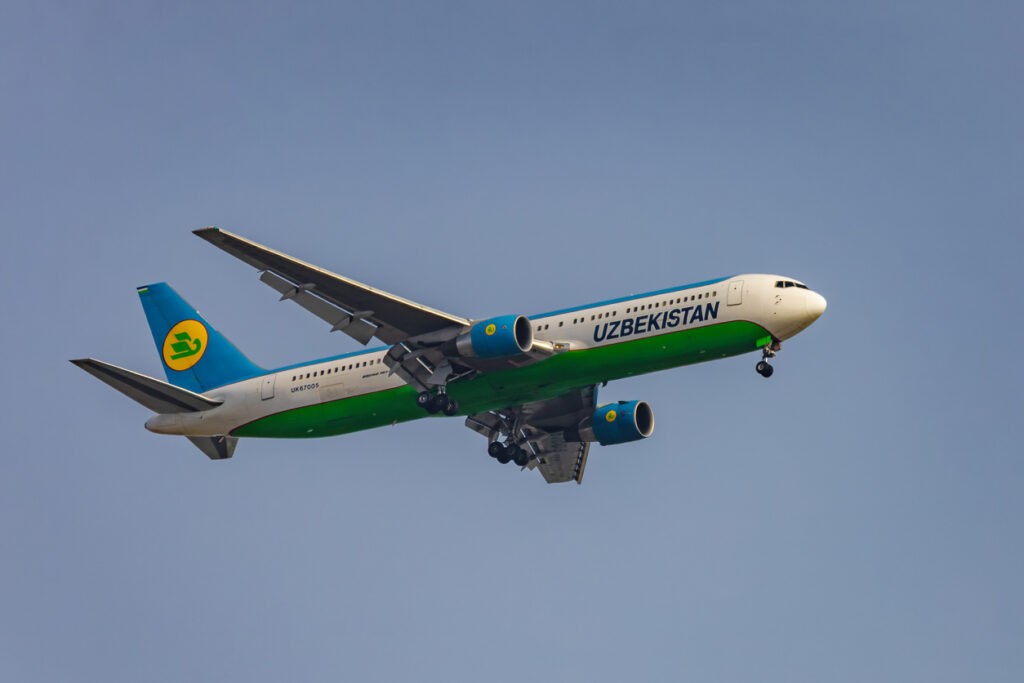
The pandemic of 2020-21 took a toll on civil aviation worldwide, and Central Asia was no exception. However, since then and post-February 2022, the region’s leading economies - Kazakhstan and Uzbekistan - have improved passenger air transport through low-cost carriers and made themselves more attractive for air cargo. In addition, Russia is steadily exiting the market due to sanctions, whilst Beijing is looking to fill the void. Air cargo: Kazakhstan and Uzbekistan Less than a month ago, the Silk Road in the Sky—Kazakhstan Cargo Hub regional forum on cargo transportation and logistics took place. It was held under the auspices of the International Air Cargo Association (TIACA) with the support of Kazakhstan’s Ministry of Transport and the country’s Aviation Administration. The forum hosted talks between various organizations, with documents signed between Astana, Karaganda, and Aktobe airports with MNG Airlines, MSC Air Cargo, Coyne Airways, and Alpha Sky (Kazakhstan). Memorandums of cooperation were also concluded between TIACA and the airports of Aktau, Aktobe, Astana, Karaganda, Uralsk, and SCAT Airlines, as well as between TIACA and the Joint Authorities for Rulemaking on Unmanned Systems (JARUS). More than 300 participants from 30 countries attended the forum, representing organizations across the freight transport chain, including shippers, forwarders, ground service providers, airports, airlines, manufacturers, and IT service providers. According to the Civil Aviation Committee under Kazakhstan’s Ministry of Industry and Infrastructure, the cooperation of local companies with the international community, as well as their use of advanced technologies, is expected to boost Kazakhstan’s trade with the other countries of Central Asia by 2.4 times – from $6.3 billion to $15.0 billion – amid a $560 million increase in Kazakhstani exports. The Government of Uzbekistan, meanwhile, began looking into the idea of making the country a regional transshipment hub back in September 2022, when Central Asia was seeing an influx of emigrants from Russia, especially Russian men fleeing mobilization. The lion's share of Uzbekistan Airways cargo traffic represents China-Europe deliveries transiting through Uzbekistan. For these deliveries, the company has operated routes such as Tianjin–Athens, Hong Kong–Amsterdam, and Shenzhen–Chalons-Vatry (Paris), with plans to increase freight volumes with the routes Tashkent–Guangzhou–Tashkent (currently being implemented), Tashkent–Lahore–Tashkent (to be launched in 2025-26), Tashkent–Xi'an–Tashkent (launch scheduled for this year), Tashkent–Chengdu–Tashkent (planned for 2026), and Tashkent–Dhaka–Tashkent (to be launched in 2027). Foreign players have shown increased interest in Uzbekistan’s transit potential, as well. For example, Poland’s SkyTaxi has launched cargo transportation from China through Uzbekistan to Europe. The first plane landed in Tashkent back on June 11, 2022. Indeed, Tashkent Airport has gained importance as a transfer point for technical stops and refueling. On July 7, 2022, Azerbaijan’s Silk Way West cargo carrier made its maiden flight on the Baku–Navoi–Hong Kong route. The company delivers goods from Europe to Asia, as well as from the U.S. to Africa. In 2020, an open skies policy was introduced across all regions of Uzbekistan, giving international airlines access to the country’s airports and ground services. Meanwhile, Kazakhstan’s open skies policy was extended last year until...

Central Asia Reacts to Trump Assassination Attempt

An assassination attempt was made on former U.S. president Donald Trump last night, as the current Republican presidential candidate spoke at a rally in the town of Butler, Pennsylvania. Trump was wounded by a gunshot to the ear, before being removed from the stage by members of the US Secret Service. Tragically, one audience member died in the assault, and another was injured. A bloodied Trump said afterwards that he was "fine", and was "not going to give up." The Secret Service has announced that the attacker had been killed. The attack on Trump has alarmed Central Asia and its countries' leaders. Several heads of state have already publicly condemned the assassination attempt. Kazakhstan's president Kassym-Jomart Tokayev strongly condemned the attempt on Trump's life and gave him his support, wishing the former president a speedy recovery. The press secretary of Uzbek leader Shavkat Mirziyoyev commented that the president "is deeply concerned about the assassination attempt", and "strongly condemns this act of violence and wishes Donald Trump a speedy recovery." The president of Azerbaijan, Ilham Aliyev, wrote that he was "Appalled and shocked by the attack on President Trump [sic]. We strongly condemn this act of political violence. We wish President Trump [sic] a soonest recovery."

Uzbekistan’s Investment in Kazakhstan Reaches Record Levels

The volume of gross direct investment flow from Uzbekistan to Kazakhstan in 2023 was a record $22.2 million, as reported by Zakon.kz. This is the largest statistic recorded since the end of 2005. Last year, Kazakhstan and Uzbekistan implemented several important investment projects. In particular, $71.2 million was invested into the production of Chevrolet Onix cars in the Kostanay region. A metal rolling plant was built in the Almaty region after a roughly $57 million investment. Lastly, a facility to produce various sterile pharmaceutical and hygiene products was established in Shymkent following an approximately $9.3 million investment. The increase in investment offers from Uzbekistan is reported to be related to the positive business environment in Kazakhstan. The report notes that extremely favorable conditions have been created for business in the neighboring country. The current conditions in Kazakhstan effectively protect the rights of investors and thus encourage investments. The governments of Tashkent and Astana recently signed a Treaty to enhance cooperation between the two countries. The countries agreed to increase the volume of mutual trade to $10 billion and expand business relations soon. According to the Telegram channel “Data Hub,” Uzbekistan had become the third largest foreign investor, surpassing China, regarding the number of companies registered in Kazakhstan. These statistics show that Uzbekistan is increasingly becoming an important trade partner for Kazakhstan.

Boom in Uzbekistan’s International Flights

In the first half of 2024, Uzbekistan's airports processed 53,300 flights of which 16, 300 were domestic and 36,900 international; an increase of 37% compared to the same period last year, according to a report by Uzbekistan Airports' press service. From January to June, Uzbek airports served 6 million 369,384 thousand passengers on domestic flights, 1 million 263,304 thousand passengers on domestic flights, and 5 million 106,80 thousand passengers on international flights; an increase of 36%  compared to the first quarter of  2023. In the first half of the year, 40.7 tons of cargo and mail were transported, 18% more than last year. Today, Uzbek airports provide passenger services on 84 routes. The 15% increase is attributed to the addition of new air carriers and the simultaneous launch of several new routes. Uzbekistan Airports currently  cooperates with 45 airlines.

New Projects Launched in Uzbekistan’s Fergana Region

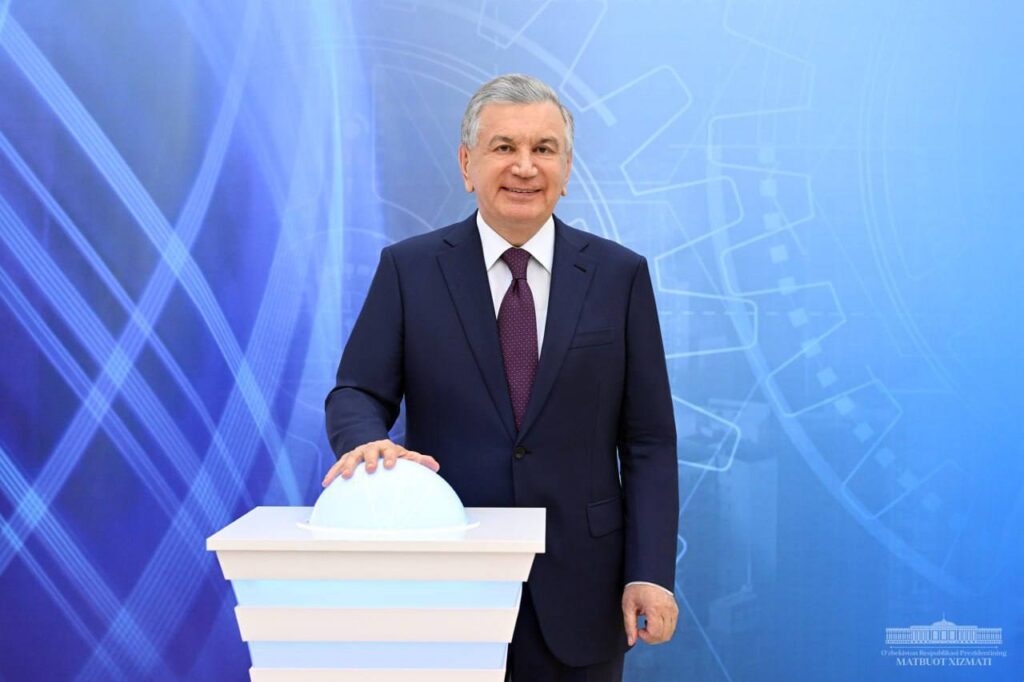
On July 11, Uzbekistan's President Shavkat Mirziyoyev attended a ceremony to launch several new projects in the country’s Fergana region. The first was the second phase of the construction of a mineral fertilizer plant by Singaporean company Indorama. The president then launched the construction of a solar power plant; a $350 million joint project with the German company Hyper Partners. Located in the Besharyk district of Fergana, the plant has  a capacity of 500 megawatts of which 200 megawatts will come online this year . When fully operational in 2025,  it will generate 1.6 billion kilowatt-hours of green energy per year, equivalent to the annual consumption of 675 thousand households. This increase in green energy will save 466 million cubic meters of natural gas. In addition, Mirziyoyev celebrated the start of construction on a $144 million electricity storage system by the Chinese Gezhouba Group. With a capacity of 150 megawatts and the means to automatically turn on when electricity demand increases to ensure stable operation of the power grid, the  facility should be operational before the end of this year Lastly, the president launched two small hydroelectric power plants; one with a capacity of 2.2 megawatts in the village of Shakhimardan, and the other,  with a capacity of 430 kilowatts, in the village of Yukori Vodil. During his speech, President Mirziyoyev noted that the volume of investments in the Fergana region is growing year on year. In 2018, only $90 million was invested in the region, while the figure for last year reached $1.3 billion. The number of enterprises financed with foreign capital currently totals 470. Around one hundred projects worth $370 million have been implemented in the Kokand free economic zone alone, creating 9 thousand new jobs. According to a presidential decree, this economic zone will expand by 210 hectares around the city of Kuvasay, house 185 new projects worth $1 billion, and create 12,000 jobs. In addition, a special Uzbek-Chinese industrial zone spanning  ​​230 hectares will be created in Kokand.