• KGS/USD = 0.01144 0%
  • KZT/USD = 0.00210 0%
  • TJS/USD = 0.10528 0.19%
  • UZS/USD = 0.00008 0%
  • TMT/USD = 0.28490 0%
  • KGS/USD = 0.01144 0%
  • KZT/USD = 0.00210 0%
  • TJS/USD = 0.10528 0.19%
  • UZS/USD = 0.00008 0%
  • TMT/USD = 0.28490 0%
  • KGS/USD = 0.01144 0%
  • KZT/USD = 0.00210 0%
  • TJS/USD = 0.10528 0.19%
  • UZS/USD = 0.00008 0%
  • TMT/USD = 0.28490 0%
  • KGS/USD = 0.01144 0%
  • KZT/USD = 0.00210 0%
  • TJS/USD = 0.10528 0.19%
  • UZS/USD = 0.00008 0%
  • TMT/USD = 0.28490 0%
  • KGS/USD = 0.01144 0%
  • KZT/USD = 0.00210 0%
  • TJS/USD = 0.10528 0.19%
  • UZS/USD = 0.00008 0%
  • TMT/USD = 0.28490 0%
  • KGS/USD = 0.01144 0%
  • KZT/USD = 0.00210 0%
  • TJS/USD = 0.10528 0.19%
  • UZS/USD = 0.00008 0%
  • TMT/USD = 0.28490 0%
  • KGS/USD = 0.01144 0%
  • KZT/USD = 0.00210 0%
  • TJS/USD = 0.10528 0.19%
  • UZS/USD = 0.00008 0%
  • TMT/USD = 0.28490 0%
  • KGS/USD = 0.01144 0%
  • KZT/USD = 0.00210 0%
  • TJS/USD = 0.10528 0.19%
  • UZS/USD = 0.00008 0%
  • TMT/USD = 0.28490 0%

Viewing results 1603 - 1608 of 2913

Favorable Water Volumes Forecast for Uzbekistan’s Amu Darya and Syr Darya Rivers

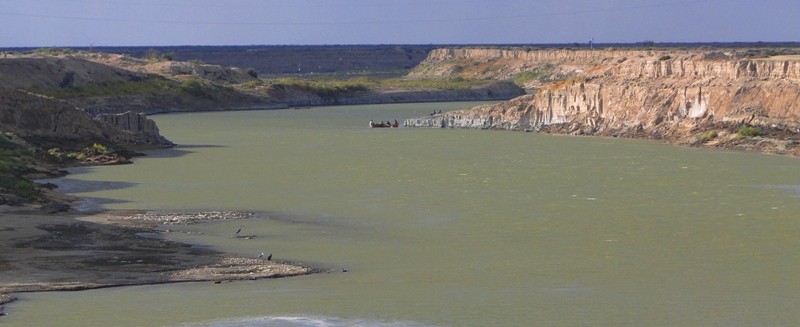
 According to the news agency UzA, Uzbekistan's Minister of Water Management Shavkat Hamroyev told a parliamentary hearing that watersheds from the Amu Darya and Syr Darya rivers are forecast as favorable this year. The announcement was made in response to Muqaddas Tirkasheva, a member of the lower house of parliament, who inquired, "water limits are agreed with Central Asian countries every year. Today, when we meet with voters, they often refer to the water shortage. There are concerns about whether the construction of the Qosh Tepa canal will affect the water of Amu Darya. How does this year's forecast volume of water in the Amu Darya, Syr Darya, Zarafshan rivers  compare to previous years? What measures are being taken to ensure guaranteed water supply to economic sectors?” Minister Hamroyev continued, "there are agreements among five countries regarding water allocations. Our recent meeting in Shymkent addressed reservoir water levels. Due to this year's precipitation, it's anticipated that water levels in the Amu Darya and Syr Darya rivers will match last year's levels. Projections suggest 85–90% water in the Syr Darya and 90–95% in the Amu Darya compared to historical averages. Our reservoirs currently hold 1.5 billion cubic meters more water than last year."

Victory Day Comes in Central Asian Countries Without Much Pomp, but Plenty of Feeling

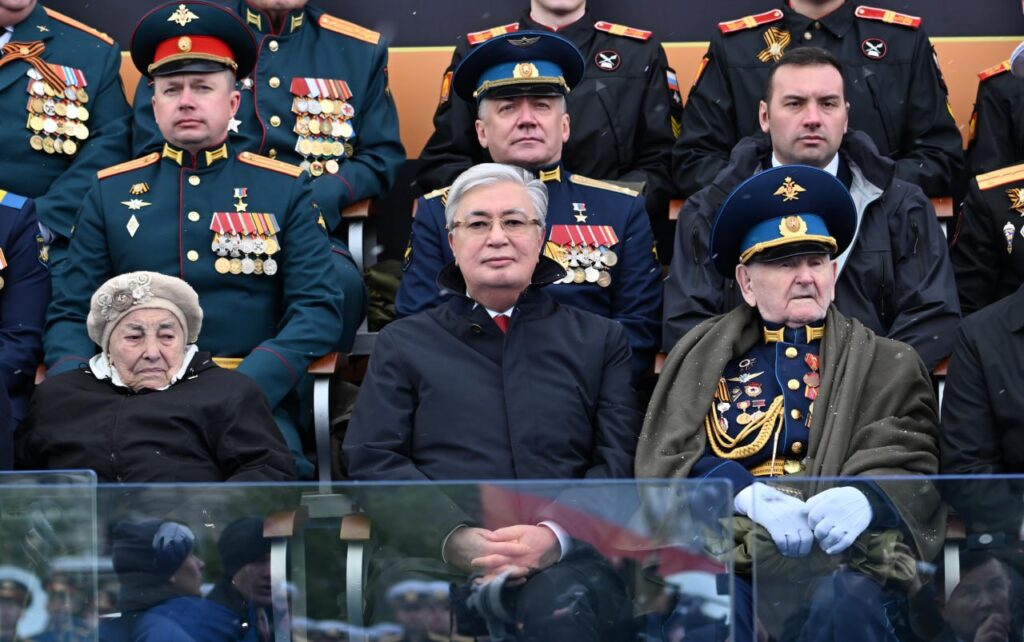
This year, as in previous years, the attitude toward Victory Day celebrations in Central Asian countries serves as an important political marker. The leaders of Kazakhstan, Kyrgyzstan, Tajikistan and Turkmenistan are scheduled to attend the Victory Day parade in Moscow on May 9. The leaders of Belarus, Cuba, Laos and Guinea-Bissau will also take part in the celebrations. The absences of the presidents of Uzbekistan, Armenia and Azerbaijan are particularly noticeable in that list. It's noteworthy that the Russian press is commenting on the different stances taken by the Central Asian countries in an extremely negative way -- deliberately agitating discord between Russia and the region. It's even been stated that Victory Day has been "canceled" in the region. Such are the broadcasts taking place against a backdrop of analysts' opinions: that in the coming decades, Central Asian countries won't be able to break the ties that bind them to their former Soviet master, as the economic dependence on Russia is only growing. This is especially true for Kazakhstan, as the lion's share of Kazakhstan's oil goes through Russian pipelines to Europe. In addition, a project increasing the transshipment of Russian hydrocarbons to China through Kazakhstan is in the works. However, contrary to the opinion of Russian tabloids, the Central Asian countries remain reverent and respectful of the cultural institution that is Victory Day. Most residents of the republics are proud of their fathers and grandfathers who fought on the fronts of World War II. In particular, for several years in a row, Kazakhstan has maintained a leading role in terms of doling out state budget payments to veterans of World War II. According to statistics, the size of a lump-sum social payment commemorating Victory Day in Kazakhstan, where 148 veterans live, averages $3,800. In Tajikistan there are 24 surviving veterans of World War II, and their payments amounted to $2,200-$2,300. Veterans in Uzbekistan received about $1,500, and in Belarus, Azerbaijan and Kyrgyzstan, about $1,100 apiece. Russia's 12,500 surviving veterans in Russia will receive the least -- the equivalent of only $107. To be sure, Kazakhstan has not held military parades in honor of the holiday for a year. That move is explained by the need to save money. This spring, unprecedented floods -- which affected almost half of the country -- have pushed President Kassym-Jomart Tokayev's administration to tend towards being thrifty and instead fund humanitarian aid and reconstruction. According to the Ministry of Defense of Kazakhstan, the parade requires spending about 4 billion tenge ($9 million) -- such a huge sum of money can be spent more impactfully on providing housing for the victims. Along with large-scale, WWII-related festive events in Kazakhstan, other important projects, such as international forums, have been canceled. Nevertheless, in his speech, President Tokayev not only congratulated veterans, but also emphasized the need to prepare for the 80th anniversary of the May 1945 victory, which is scheduled to be widely celebrated next year. In Uzbekistan, May 9 is considered a Day of Remembrance, but...

Kazakhstan, Kyrgyzstan, and Uzbekistan Favor EEU Economic Integration

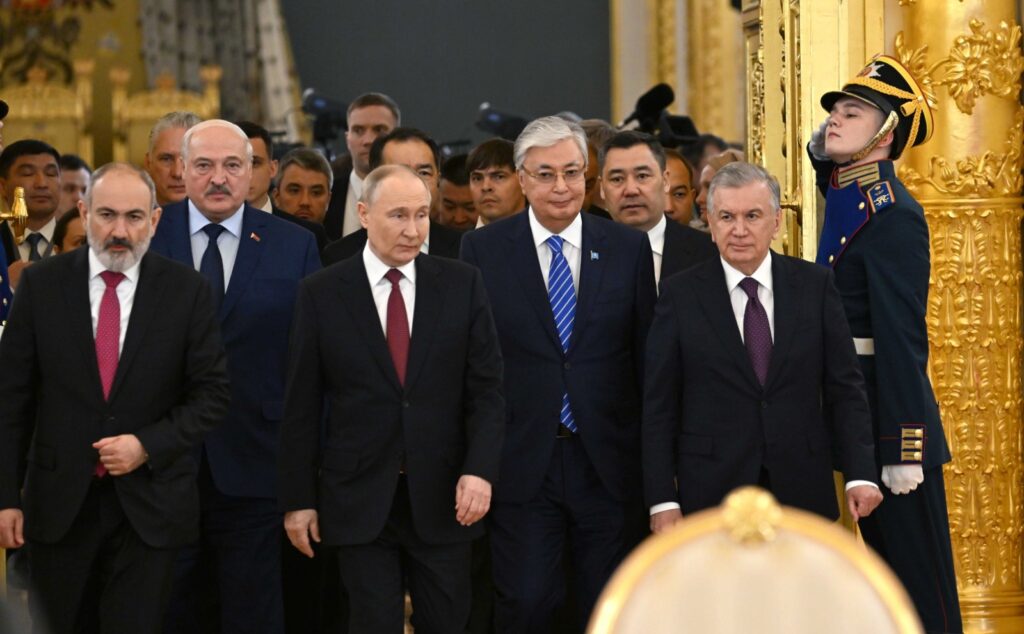
On May 8, Russian President Vladimir Putin, President of Belarus Alexander Lukashenko, President of Kazakhstan Kassym-Jomart Tokayev, President of Kyrgyzstan Sadyr Japarov, and Prime Minister of Armenia Nikol Pashinyan convened in Moscow for a meeting of the Supreme Eurasian Economic Council - the governing body of the Eurasian Economic Union (EEU). The event, which marked the tenth anniversary of the establishment of the Russian-led economic integration bloc, was also attended by heads of the EEU observer states, President of Cuba Miguel Diaz-Canel Bermudez and President of Uzbekistan Shavkat Mirziyoyev. In his address, Kazakhstan President Tokayev remarked that in the relatively short period since the Treaty on the Eurasian Economic Union was signed in Astana ten years ago, cooperation between the parties has contributed greatly to the development of Kazakhstan’s economy, and stated: “The correctness of the chosen vector of development of our association has been confirmed by the macroeconomic results of the past decade. Thus, Kazakhstan’s trade turnover with the EEU member countries has increased 1.7-fold and reached $28.5 billion.” Referencing the positive potential for EEU cooperation with rapidly developing countries in Asia, Africa, and the Middle East, he urged EEU member states to join the Ashgabat Agreement on the creation of an International Transport Corridor to engage with markets in the Persian Gulf. The Kazakh president also emphasized the need for improvements to trade links between Europe and Asia, North and South, and warned that unless renewed, the existing infrastructure in the Eurasian region will continue to deteriorate. Citing the modernization and expansion of transport and logistics infrastructure as a key priority, he stated, “In Kazakhstan, we plan to repair 11,000  and build over 5,000  kilometers of new railways by 2030. As part of the Belt and Road initiative, a Kazakh terminal, built in the Chinese city of Xi’an, accounts for up to 40% of all container traffic on the China-Europe route. There are also plans to launch 5 cross-border transport and logistics hubs on Kazakhstan’s borders with Russia, China, Uzbekistan, and Kyrgyzstan, and on the Caspian Sea.” Kyrgyz President Japarov announced that further development of Eurasian economic integration, including the creation of a single market for goods and services without barriers, a common energy market, and freedom of movement of labor resources, remains a priority for Kyrgyzstan. Regarding benefits afforded by Kyrgyzstan’s membership of the EEU, Japarov said that the country’s trade with EEU member states has grown by 76%, from $2.5 billion to $4.4 billion, its exports to EEU countries have tripled from $410 million to $1.23 billion, and its imports  increased by more than 50%, from $2 billion to $3 billion. Apart from gold, 80% of Kyrgyzstan’s exports go to the EEU countries. The Kyrgyz president also emphasized the importance of linking the EEU and the Chinese Belt and Road initiative. Despite the current observer status of his country and the EEU, Uzbek President Mirziyoyev reported that over the past three years, trade between Uzbekistan and the EEU has grown by 60 percent. Looking ahead, he announced, “Uzbekistan is interested in expanding practical partnership and...

Uzbekistan and the EU Celebrate 30 Years of Mutually Beneficial Cooperation

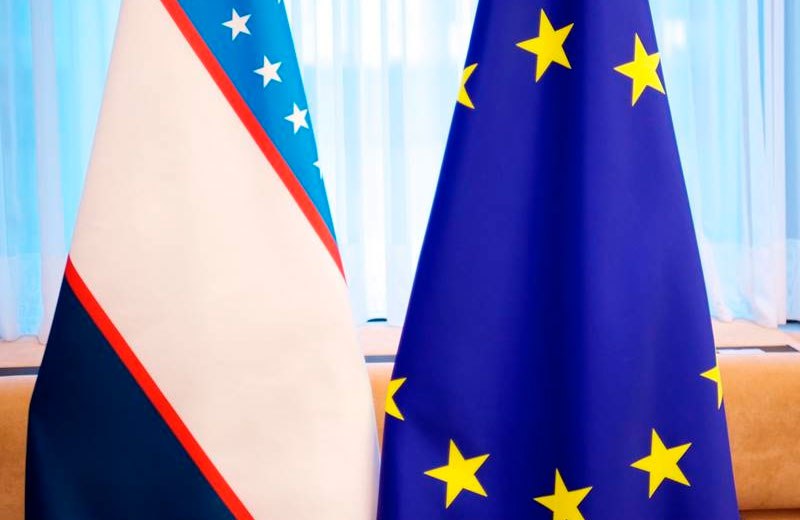
A festival to celebrate the 30th anniversary of cooperation between Uzbekistan and the European Union (EU) will be held on 18 May at Tashkent's Botanical Garden. Welcoming the event, EU Ambassador to Uzbekistan Charlotte Adrian, stated,  "The partnership between the European Union and Uzbekistan remains strong, from the signing of the Enhanced Partnership and Cooperation Agreement (EPCA) to the strengthening of GSP+ [Generalized Scheme of Preference Plus] trade relations and joint commitments to improve human rights." The festival will feature an exhibition of EU-funded projects including an interactive platform for young people, students and other visitors.   The 'Climate Change and Resilience in Central Asia' project will be highlighted through an interactive game, quizzes and question-and-answer sessions, whilst  'Made in Uzbekistan'  will showcase goods from EU-AGRIN (Uzbek Agriculture Knowledge and Innovation System) in tasting sessions of local produce. Celebrations will close  with a grand gala concert dedicated to the 30th anniversary of the partnership. Interaction with the EU , one of the main priorities of Uzbekistan's foreign policy, is evidenced by the country's accession in 2021 to the GSP+ system of preferences, which enables   6,200 categories of goods to be exported to Europe duty-free. In this regard, General Director of BMB Trade Group Mirgulom Usmanov noted that agri-food companies in Uzbekistan are now growing and processing varieties of fruit and vegetables to meet the demands of  the European market. In the first 10 months of 2023 alone, the volume of mutual trade between Uzbekistan and the EU grew by 36 percent year-on-year to $4.8 billion. An important step towards revitalizing the partnership  was taken in the adoption of a resolution that calls for a review of the EU's strategy towards Central Asian countries and as stressed by  the report,  "The EU is extremely interested in deploying efficient trade and energy corridors between Europe and Asia, bypassing Russia."

Uzbek Businesswoman Diora Usmanova Recounts Own History of Marital Violence

Diora Usmanova, the owner of two restaurants and some clothing brands in Uzbekistan, has spoken on her Instagram page about the beatings she suffered from her first husband, Babur Usmanov, who was the nephew of the billionaire Alisher Usmanov. Usmanova herself is related to Ziroatkhon Mirziyoyeva, the wife of Uzbek president Shavkat Mirziyoyev. Usmanova wrote that the story could cause her harm, but that she believes the benefits will "outweigh the risks a hundredfold" and will "change perceptions or somehow affect women who endure domestic violence and abuse," Gazeta.uz reported. "We loved each other and fought very hard for our marriage. Subsequently, when he started to raise his hand against me and when these beatings went on, and the beatings continued for four years, there were concussions, and a lot of blood, and bruises, and [my] whole body in bruises, and a lot of broken furniture, doors, everything," she said. Domestic violence is not only the man's fault, but also the woman's, Usmanova said. "We don't value ourselves enough, we're not brave enough, we're not strong enough, we're afraid to give a backhand, we're afraid to tell our parents, we're afraid to go back to our parents, we're afraid to start everything again. For the fact that we hope that it will change, that it will [bear] some good fruits in the future, that it will survive -- this is all our problem," Usmanova said. In her opinion, women should terminate harmful relationships and find the strength to leave -- and most importantly, learn to respect themselves. "You have to leave such relationships. [That's] because of the fact that you forgive once, forgive the second time, and then it becomes a habit, a person realizes that it is forgiven, it can end very badly, [a] whole life just poisoned. I did not find the strength then, and now after 10 years, I look back and realize how many mistakes were made on my part and how much is my fault. Just like [it was] his," she stated. On May 8, 2013, Babur Usmanov was involved in a fatal car accident in Tashkent. In 2016, Usmanova married businessman Batyr Rakhimov.

Central Asian Countries Allocate Various Sums to WWII Veterans

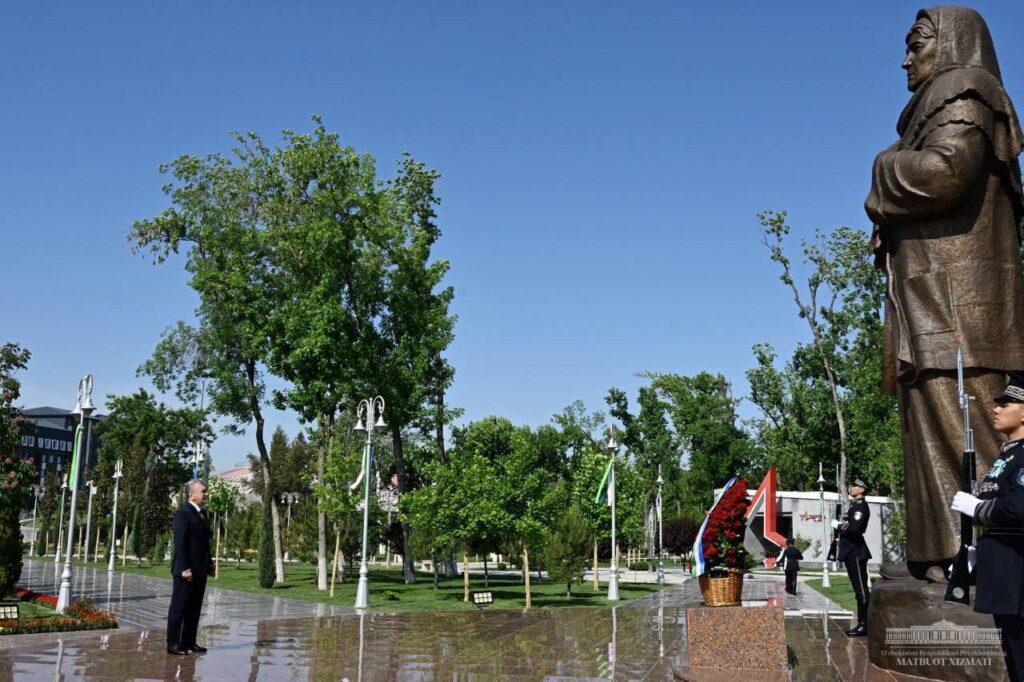
According to the news publication Centralasia.media, countries in the region will be awarding funds to veterans, survivors, and those affected by World War II in honor of Victory Day (May 9). The payments will range from $10 to $6,825. The government of Turkmenistan allocated the smallest amount for gifts to veterans. On behalf of the President of the Republic, 200 manat ($57 at the state exchange rate or $10 at the black-market exchange rate) will be given to the participants in the war. It's not clear how many people will receive the payments. According to the report, Kazakhstan’s one-time payment to soldiers who served at the front is 1.5 million tenge ($3,412). A total of 3 billion tenge (more than $ 6.8 million) has been allocated from the country's budget for the so-called bonuses for veterans. This money will be distributed to more than 50,000 people who are related to the Great Patriotic War in one way or another. Among them are front-line workers, residents of besieged Leningrad, and the widows of soldiers. There are 148 veterans of WWII front-line combat in Kazakhstan. Those veterans can also expect payments, the amount of which will be determined by local authorities. However, it has been confirmed that a total of 3 million tenge ($6,825) was allocated to six veterans from Kazakhstan's Akmola region on the occasion of the May 9 holiday. In Tajikistan, 24 front-line combat veterans will receive 40,000 somoni ($,3662) as part of the national campaign recognizing contributions to the Great Patriotic War. In Kyrgyzstan, meanwhile, 100,000 som ($1,113) will be allocated from the fund of the President of the Republic to each participant in the conflict before May 9. According to the press service of the President of Uzbekistan, a one-time monetary award of 20 million som ($1, 578) will be given to every participant and disabled person affected by World War II. On May 9, Uzbekistan marks the Day of Memory and Honor, and the 79th anniversary of the victory in World War II. On May 8, President Mirziyoyev attended a memorial ceremony and laid a wreath at the Ode to Fortitude monument in Tashkent’s Victory Park. In a statement, Mirziyoyev congratulated veterans and the entire people of Uzbekistan on “the glorious holiday of May 9 - the Day of Memory and Honor and the 79th anniversary of the Great Victory in World War II. Today, commemoration events are being held in all our cities and villages, where we again remember how much grief and incalculable losses the cruel war brought to our people,” the president said. During the Second World War, almost two million soldiers were mobilized from Uzbekistan to the front. More than 538,000 died, more than 158,000 went missing, and 870,000 were injured, with 60,000 returning from the front disabled. Over 170 plants and factories were relocated to Uzbekistan from western regions of the Soviet Union occupied by the Nazi Germany. “Our people sent a huge amount of military equipment, weapons, medicine, clothing, and food...